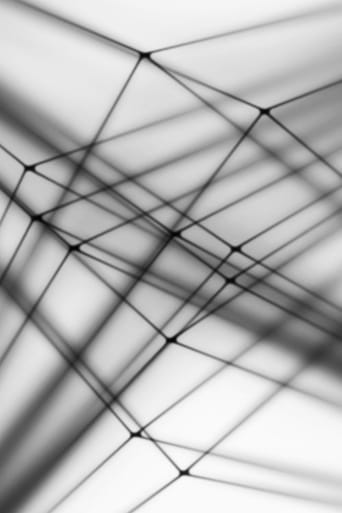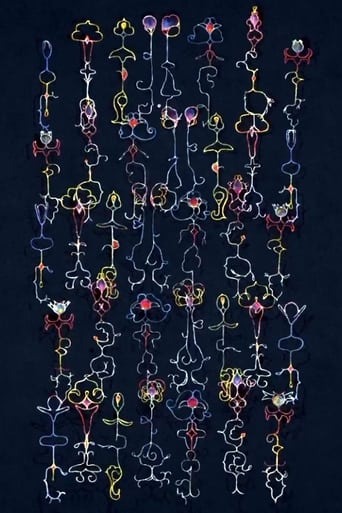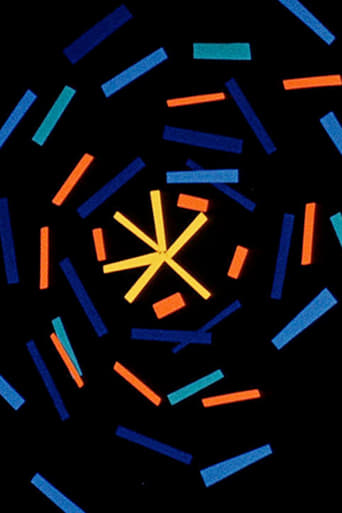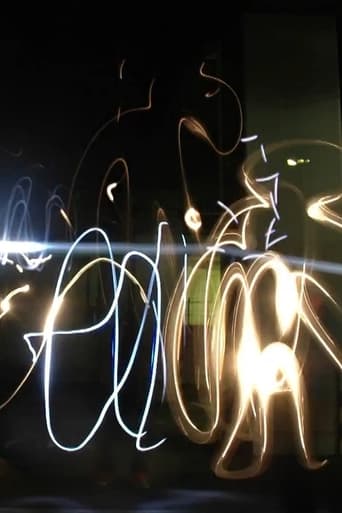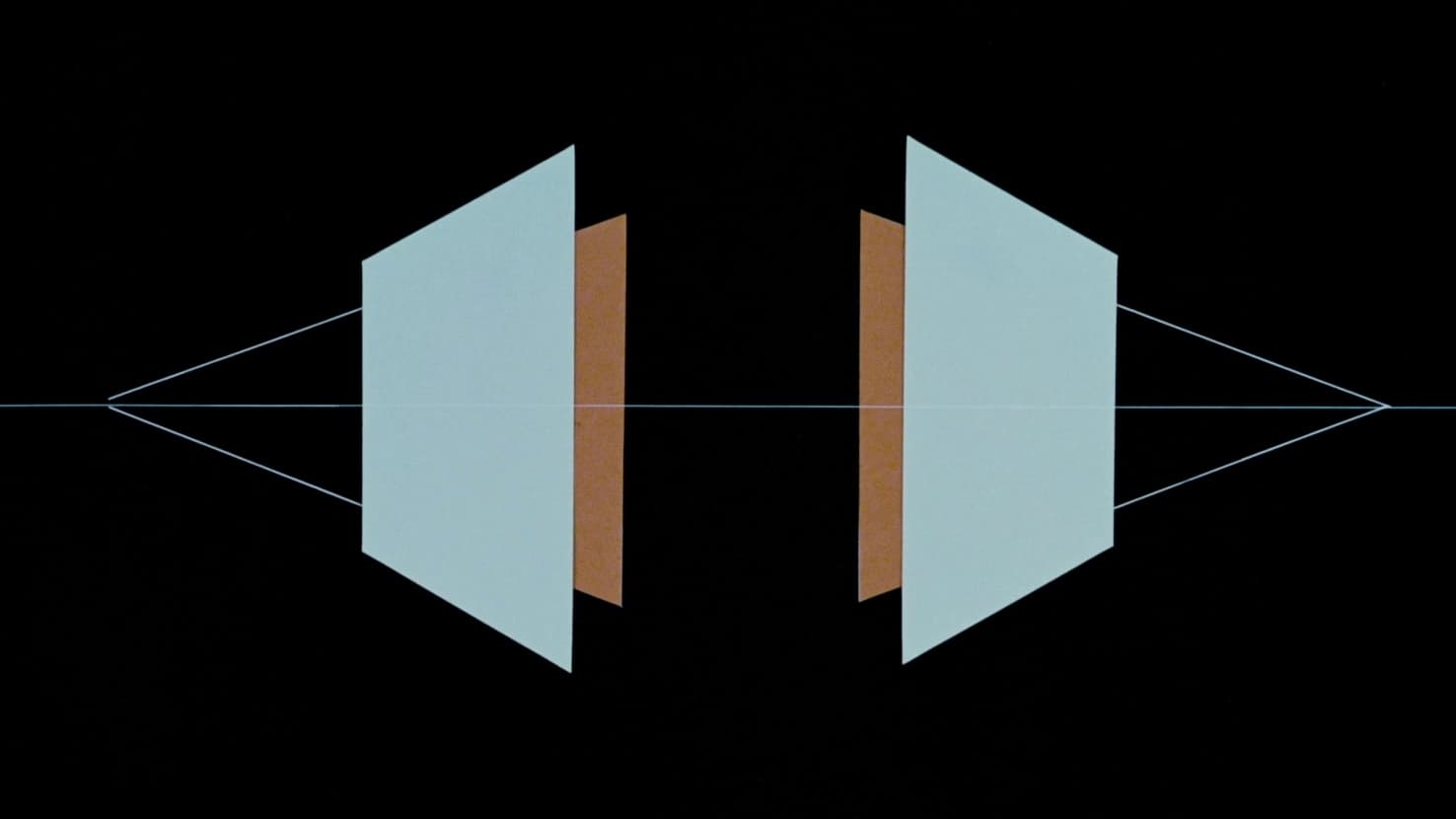
In this animated short, simple geometric forms as thin and flat as playing cards constantly form and re-form to the sound of the koto, a 13-stringed Japanese instrument.
Social & External
This is a didactic film in disguise. A progression of brilliant geometric shapes bombard the screen to the insistent beat of drums. The filmmaker programmed a computer to coordinate a highly complex operation involving an electronic beam of light, colour filters and a camera. This animation film, without words, is designed to expose the power of the cinematic medium, and to illustrate the abstract nature of time.
A mathematical play on one repeated movement. It imparts a sense of possibilities: that something simple can produce complex and unexpected patterns. As with an atom, the variety of possibilities from a base movement is potentially infinite.
In the darkness of a cave, one man who had never seen even his own figure found a hollow flooded with light. An expression of a chaotic world. This experimental graduation film is a mixture of different animation techniques
This visual poetry is a celebration of the full spectrum of womanhood, from the complex vulnerability to the hidden power.
The idea of JAM was conceived while I was attending the Ottawa International Animation Festival in 2008.After returning to Japan, I soon began making the film and completed it in four months.This film is based on a very simple idea: the increasingly varied the sounds, the greater is the number of creatures. I wanted to rid myself of the frustrating experience of making Devour Dinner, which was highly unsatisfactory from the viewpoint of the movement in the film. My intention in this film was to fill the screen with chaotic movements.
A horse goddess gives birth to three powerful brothers who set out into the Underworld to save three princesses from three evil dragons and reclaim their ancestors' lost kingdom.
The film was produced applying mixed techniques on Super 8 film support.
Hand painted directly onto film stock by Margaret Tait, this film features animated dancing figures, accompanied by authentic calypso music.
Three books: a film festival catalogue, a dictionary, the Bible. Three works whose materiality has become obsolete by the digital dematerialization. A commentary on the fragility of culture.
This is no animation, it's one picture. Short experimental film by Mirai Mizue
This short experiments with the flow of oil ink over the surface of the water. Mizue manipulated the ink by blowing with straws or stirring with toothpicks and used stop motion animation techniques to shoot the resulting effects.
This newly rediscovered short was created in Jim's home studio in Bethesda, MD around 1961. It is one of several experimental shorts inspired by the music of jazz great Chico Hamilton. At the end, in footage probably shot by Jerry Juhl, Jim demonstrates his working method.
An abstract animated film inspired by the work of jazz musician Chico Hamilton.
Coping Strategies is a stop-motion animation created from the screen prints of Ellie Honel
The story of Adam and Eve with jazzy music. Short experimental animation without words.
Confined to an endlessly burning waiting room, a dying sedentary woman experiences herself blurring in and out of her body. In her last remaining fragments she tries to make amends with her spirit before her remaining fragments either decay or create.
Three memories that become one. An attempt to merge heterogeneous materials: a film sequence shot in Rome, a photo from the 1930s, a noisy soundtrack. Fragmented lines, exploding bass frequencies and flickering.
Animated work detailing the unrequited love that a line has for a dot, and the heartbreak that results due to the dot's feelings for a lively squiggle.
A pioneer of visual music and electronic art, Mary Ellen Bute produced over a dozen short abstract animations between the 1930s and the 1950s. Set to classical music by the likes of Bach, Saint-Saëns, and Shoshtakovich, and replete with rapidly mutating geometries, Bute’s filmmaking is at once formally rigorous and energetically high-spirited, like a marriage of high modernism and Merrie Melodies. In the late 1940s, Lewis Jacobs observed that Bute’s films were “composed upon mathematical formulae depicting in ever-changing lights and shadows, growing lines and forms, deepening colors and tones, the tumbling, racing impressions evoked by the musical accompaniment.” Bute herself wrote that she sought to “bring to the eyes a combination of visual forms unfolding along with the thematic development and rhythmic cadences of music.”