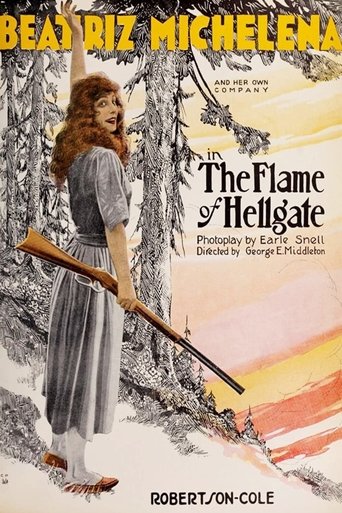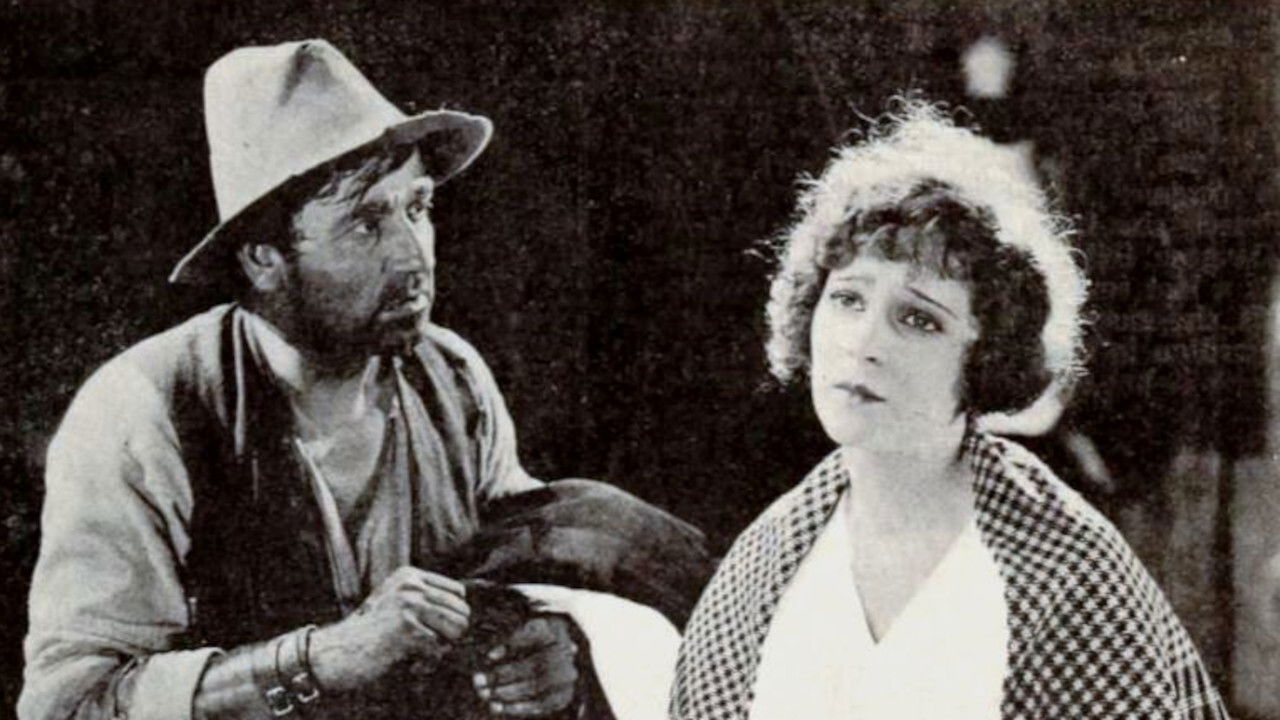
A friend of a Montana sagebrusher advertises for a potential wife for him.
Social & External
Dr. Barnes
Mary Warren
Sim Gage
Annie Squires
Big Aleck (as Gordon Russell)
Frederick Waldhorn
Charlie Dornewald (as Thomas O'Brien)
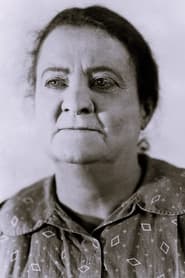
Mrs. Jensen
Wid Gardner
Curley Smith, a lieutenant of the Texas Rangers, gets chased by a band of smugglers after getting caught spying on them and becomes injured. Anita, the daughter of the chief smuggler tends to him and the two of them fall in love. Dean, a member of the renegade, becomes jealous of their romance, and will do whatever he can to get rid of Curley - fair or foul.
After the train station clerk is assaulted and left bound and gagged, then the departing train and its passengers robbed, a posse goes in hot pursuit of the fleeing bandits.
A lost film. Teddy Drake is a pleasure-seeking aristocrat who ends up expelled from his exclusive Fifth Avenue club for playing practical jokes and other rambunctious antics. He decides to reform his selfish ways and boards a train heading heading for the Southwest.
Jack Pepper accidentally fires his gun while forcing a newspaper editor to retract his statement regarding Miss Tulip Hellier, and the sheriff goes after Jack. While hiding out, Jack finds a liquor cache on the Hellier ranch and knows it was placed there as a ruse to distract the sheriff while an outlaw gang runs dope across the border.
A saloon owner loans her lover the money to buy a house, which he has led her to believe they will live in after they're married. Instead, he takes the money and buys a saloon in another town.
During the raid on an emigrant train the girl and her brother, the only survivors, are attacked by the villain who kidnaps the girl and takes her to the camp of Calamity Anne, who takes a liking to the girl and becomes her guardian angel. The girl's brother is killed and a ranger takes the locket containing the girl's picture from his neck and recognizes the girl in Calamity Anne's camp. Later, Calamity Anne holds the villain and his band at bay and the girl and the ranger make their escape. The girl and the ranger come to the spot where the girl's brother is buried and here she asks the ranger if he is going to leave her there alone. His answer is to take her into his arms.
In this story the young wife concerned is called upon to solve a rather momentous question. After separating from her husband, whom she has discovered to be a brute and a criminal, she is about to give herself to another man, believing her husband dead, when he appears before her fleeing from justice. Shall she deliver him to the law or surrender to his claims? She yields in one instance, but not in the other. Then justice intervenes.
A foppish Londoner joins the Royal Canadian Mounties and tries to break a smuggling ring.
Braggs, the young western settler, comes into view leading his broncho while he leads his little child on the horse's back. Placing the child on the ground and watering the pony, he takes his knife from his pocket to make an extra hole in the saddle strap. The knife slips and penetrates his wrist, severing an artery. His wife comes to his assistance, makes a tourniquet with strips of her apron, jumps on the broncho's back, bids her husband to care for the child and keep up courage while she rides to town for the doctor.
In the farewell beams of evening the pioneer with his wife and child stop the prairie-schooner and strike stakes for the night. Sounds of the Indian war cry disturb the quiet calm, and seen approaching in the distance is a band of savage red men. Terror-stricken, the settler seizes his gun and stands ready to defend his family. At the first volley from the Indians' rifles he falls dead. The brave wife makes a desperate resistance to protect her child. The poor woman is quickly slain by the hostile savages, leaving the helpless babe to their mercy.
Padre Dominguis, the village priest of a quiet little spot in old Mexico, has been on a visit to the daughter of his dead sister and is about to return to his charges. He is much surprised and more than a little pleased to find that his niece is in love with John Brown, a progressive American, who has settled among them, for the Padre is a broad-minded man and knows that Mexico needs the influx of American energy to make her a great country.
It is a beautiful morning in Indian Summer, and White Doe is out in her birch bark canoe, engaged in a fishing expedition for food. She paddles home under the overhanging trees and vines, lights the small fire in front of her tepee and cooks her primitive breakfast. The air is bracing, the birds are singing, life is free and good. Also White Doe is happy for she had caught a gleam of admiration in the eyes of a stalwart cowboy, when she visited a ranch a few days before with her offering of plaited baskets and the famous blankets of her Navajo tribe. She begins her work of basket weaving, dreaming the love dreams of her people and her heart singing with coquetry and the happiness of conquest, for she is also loved by a brave of her tribe, a wealthy son of a chief with a hundred horses.
Tony Valero, a lusty young vaquero, is enamored of Clarita Montes, whose father is fairly well off, as the middle class Mexicans figure. Clarita prefers Tony to her numerous admirers, but the father has selected, for his future son-in-law, a young dandy called Jose Rodreguis, who has a certain amount of money which allows him more ease than his neighbors. Jose trades upon this fact and presses his attentions upon Clarita. He bitterly resents her preference for Tony and does all in his power to belittle his rival.
A Navajo Indian has crossed the great desert, and his water bottle has been emptied. He is in a frenzy from thirst and sees mirages of water everywhere. He comes upon Nat Perry, a young settler, who is conveying his household goods across the burning sands. Perry has just taken a drink from his precious canteen when the Indian falls at his feet and implores a little water. The young pioneer heartlessly turns him over with his foot and leaves him to die.
Robert Burton was an only son and his indulgent mother had spoiled him. Bob was not all bad, but he was woefully weak and could not stick long at any one task. Also he paid more attention to rolling cigarettes than he did to his work. One day he was discharged by the foreman of the crockery store where he worked and appeared at home disgusted and sullen. His mother tried to comfort him, but the boy was anxious to have his way and announced his intention of going west, where he thought there would be better opportunities for him.
John Burton, a railroad clerk from the east, was spending his vacation hunting in the wild lands about John Walsh's shack. One morning, as he was eagerly following a large hawk, which he had already wounded, he lost his balance on the edge of a cliff and plunged down to the stony ground below. His cries for help attracted Walsh's attention and he was taken to the latter's cabin, where he was tenderly cared for by Walsh and his wife, until he was able to return to his duties in the east. Walsh's wife was the apple of his eye, but, like most things that we love, she did not last, and twenty years later we find him a broken old man, living in the days that are gone.
A short silent western produced by Gaston Mèliès in San Antonio.
After graduating from an Indian school where he has acquired an education and schooling in the ways of the white man. Ta-wa-wa, a young Indian, returns to his native territory and far western home. On the way to the tribe's encampment he stops at Vail's ranch, meets Kawista, his boyhood sweetheart, who greets him cordially and with a frank admiration for his gentlemanly appearance. While they are exchanging greetings the postman enters and hands a letter to Mr. Vail from Col. Leigh, an Englishman, stating that he will visit the ranch with Lord Wyndham, an English lord who expresses a desire to see a real Indian powwow.
Full of booze, bluster, and fight "Black Pete," a big "bad man" of the wild west comes from the local saloon ready to put daylight through anybody and everybody within the range of his voice and the reach of his gun and, to further convince the crowd that he is the terror of the territory, lands on an inoffensive bystander knocking him down. "Billy" is an entirely different sort of a citizen; he is a young chap living with his sister whom he loves very dearly; their love is mutual. Billy has received a letter and stops on his way home in an opening in the woods to read it. While thus engaged, an Indian girl is making her way through the woods. "Black Pete" coming along the pass sees and attacks her. Billy springs to her defense and knocks "Pete" down; in falling he strikes his head on a stone and is killed.
In the mountain wilds of Tennessee there is no end to the manufacture of moonshine whiskey. Whole families live on this nefarious trade and many of them die by it. The men who work at this business are constantly hunted by United States revenue officers as violators of the law for manufacturing of liquor without a special license. The "Mountain wife" loves her husband and stands by and shields him from his enemies, the officers; when they are on his track she hides him, then throws them off his trail, giving him time to escape in the mountain fastnesses, as we are shown in this interesting and thrilling picture.