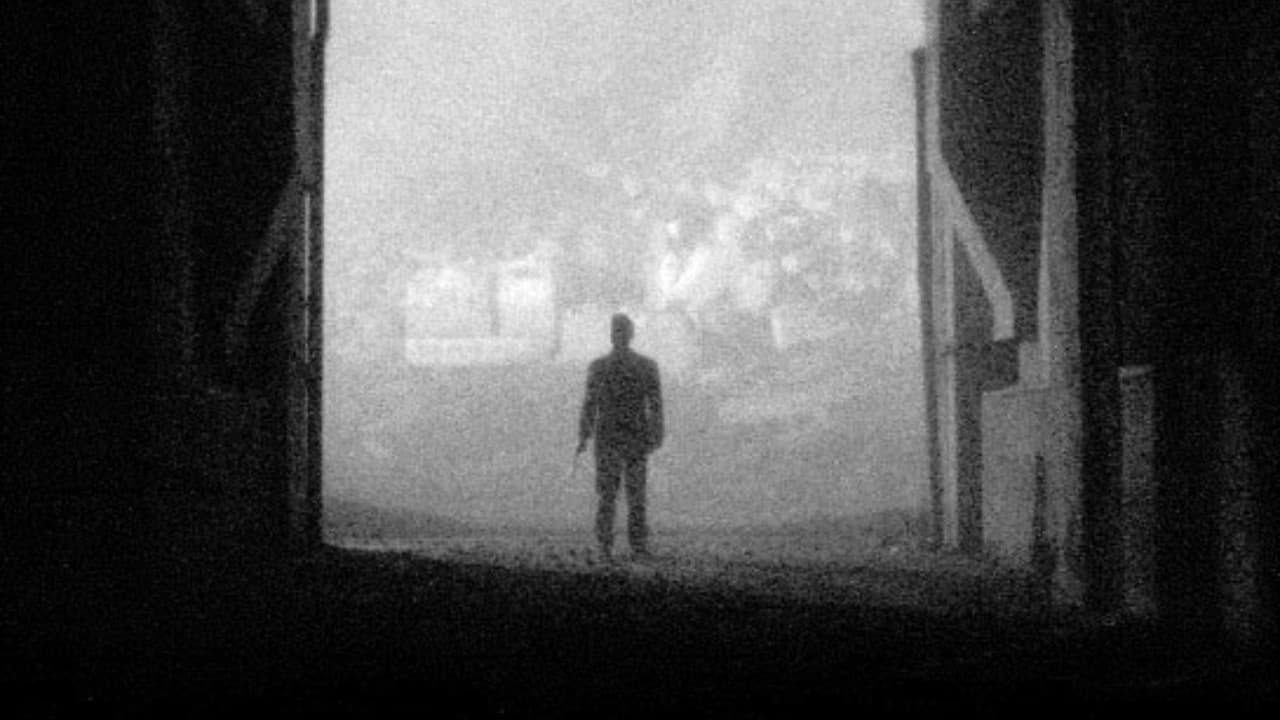
Set against the backdrop of post-unification Germany, the film explores the breakdown of relations in a decaying social structure.
Social & External
Walter
Sylvia
Gina
Rene
Kellnerin
Sylvias Kollegin
Unknown Role
The former athlete Barbara follows her husband to the province and attempts to masters her new life, even after her separation from him.
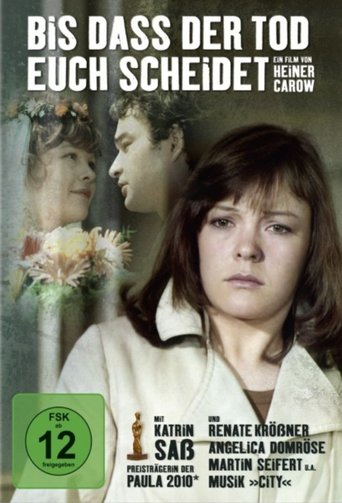
Scenes from an East German marriage. A young couple, Sonya and Jens, are very much in love; they get married and have a child. When Sonya wants to go back to work after her maternity leave, they clash for the first time; Jens insists that she remain a full-time wife and mother. Until Death Do Us Part turns an actual police report into a gripping drama, as the director explores the depths of his characters' emotions, driving the conflict to a catastrophic climax.
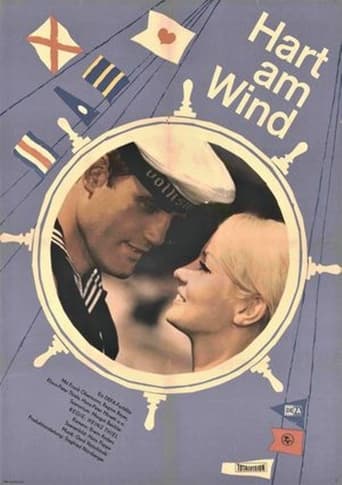
The electrician Peter Drews is a brigadier at a Baltic Sea dockyard. His men are among the most reliable and diligent workers at the dockyard. Their motivation, however, increasingly suffers from Peter’s narcissism and imperiousness. Even his girlfriend Brigitte who is also a member of the brigade finds it increasingly difficult to accept his behavior. One day, Peter decides that the entire group must enter the navy - just because he has received his conscription call. While four men follow Peter into the navy, Brigitte, who has broken up with Peter, takes over the control of the brigade. During the work at the ship on which Peter is based at she meets the charming lieutenant Asmus.
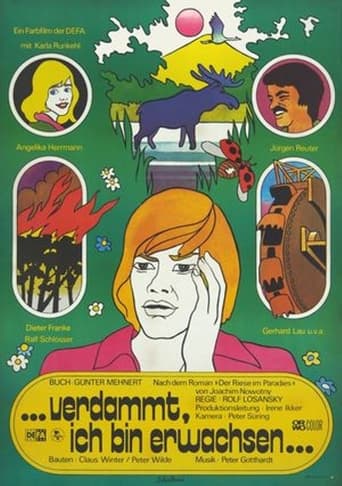
15-year old Klaus Kambor, called Kurbel, is living in a village in Lusatia and already thinks of himself as an adult. He can hold a lot of rhubarb wine and has already kissed a girl. But with his new method of lawn mowing, which he thinks is brilliant, Klaus makes a big mistake: He causes a wild fire in the forest. Then he does not react adult-like at all, but shirks the responsibility, which leads to the break-up with his girlfriend Daniela. Furthermore, Klaus does not realize that several of the places he likes the most in his environment are now going to be sacrificed to mining. When Klaus becomes friends with the teacher Konzak and with the construction worker Jule, he feels understood for the first time and starts to take more responsibility.
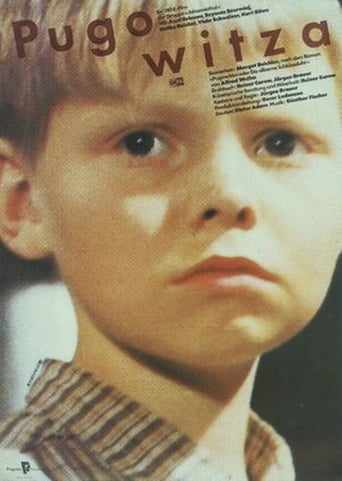
World War II is over and Heinrich, a young German boy, influenced by the Russians, starts to act according to Communist principles in a small German village.
The brothers Theo and Gustav Benthin pull profits through smuggling in divided Germany: Theo in the West and Gustav in the East. The East German police catch on quickly, however, and Gustav is arrested. The small band of smugglers disperses, with Gustav’s chauffer Peter Naumann fleeing to the West and his sister choosing the East after struggling to find work and lodging in the West.
Based on a true story, Miguel Alexandre's two-part drama focuses on an East German woman and the fight for her children. Spring 1982: Sara Bender, living with her daughters Silvia and Sabine in the East German town of Erfurt, wants to marry her colleague Peter, but shortly before the wedding, her father is killed in a road accident. As the funeral takes place in West Germany, she isn't allowed to got there, so she starts planning to leave her communist home country forever. Trying to flee via Romania, she is caught by the secret service. After years in jail, Sara is ransomed by the West German government, but without her daughters. To draw the world's attention on her desperate situation, she starts demonstrating at the Berlin border crossing Checkpoint Charlie
Paul Schulte takes a spa stay on the Baltic Sea to have his heart condition treated. His wife Barbara accompanies him and finds interest in the valuable art objects in a nearby church. Together with her accomplice and lover Klaus Grunow, she plans to break into the church. But Paul Schulte sees through his wife's plans and tries to dissuade her. One morning, Paul Schulte is found dead.
At the end of the 1950s, the production of optics in the German Democratic Republic has reached top quality and instigates interest in the West. When national demand rises strongly and at the same time the export to South America heavily decreases, the Volkspolizei - the GDR police force - starts to look into the case. Two seemingly unrelated cases are the starting point for the investigation by second lieutenant Schellenberg of the department for optics racketeering: An old woman who was arrested in the Berlin city railway for trying to smuggle a pair of binoculars to West Berlin, and a dead person in an area of allotments who was involved in obscure dealings with optical devices.
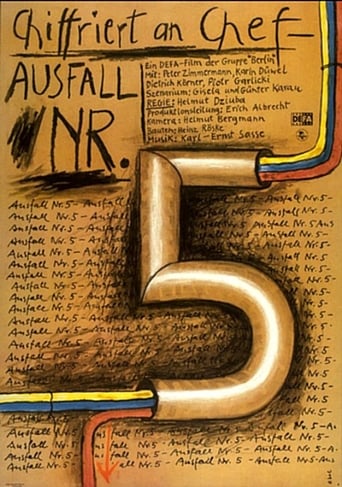
A high-rise building in the center of Berlin in the GDR on July 11, 1982. The final match of the soccer World Cup is being broadcast on television. Five episodes revolve around this event: Soccer fanatic Kneutzsch is torn between the exciting match and the rather irritated woman by the unexpected visit of a lady to whom he has written a marriage announcement ... Dr. Kobermann - on painkillers - has mistaken the bathroom door for the corridor door and locked herself out. Her husband is sitting in front of the TV with headphones on and doesn't hear her ringing, so she seeks refuge in her nightgown with a neighbor, a flautist. After his ex-love Carmen leaves him and wants to return home, the exiled Andrés follows the game - in the knowledge that his father, thousands of kilometers away, is also watching...
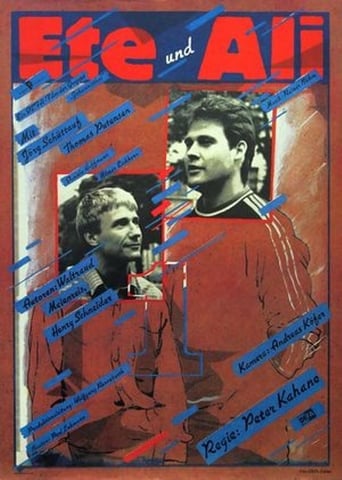
Ete and Ali are discharged from the army. Since Ete knows that his wife is having an affair, he doesn't want to go home. Ali tries to persuade his friend to stand up for himself and to kick the other man out. But since Ete obviously lacks courage, Ali himself goes into action and gets rid of the rival lover. At first, Mary and Ete seem to reconcile, but repairing their marriage won't work.
High-school senior Peter considers the adults around him to be hypocritical, self-congratulatory, and immersed in the past. He gets suspended for writing an essay that his teachers consider to be a challenge to the state. Just Don't Think I'll Cry became one of twelve films and film projects-almost an entire year's production-that were banned in 1965-1966 due to their alleged anti-socialist aspects. Although scenes and dialogs were altered and the end was reshot twice, officials condemned this title as "particularly harmful." In 1989, cinematographer Ost restored the original version, and this and most of the other banned films were finally screened in January 1990. Belatedly, they were acclaimed as masterpieces of critical realism.
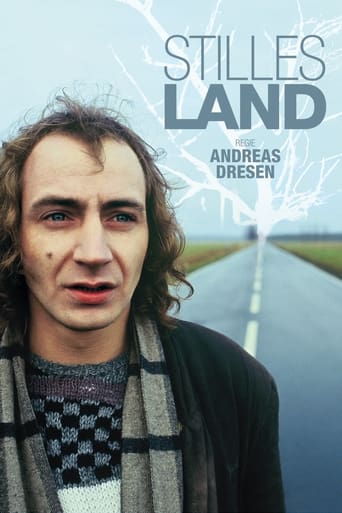
15-year-old Elfie literally and metaphorically inhabits a no-man’s-land between the two Germanies shortly after the fall of the Berlin Wall. The film deploys a neorealist aesthetic to reinforce the difficulties confronting the girl, and by inference, Germany.
Jette and Johannes have been living together for two years when Johannes suggests that they "legalize" their relationship. Jette loves him, but the proposal of marriage terrifies her.
In August of 1914, amidst the public ecstasy surrounding the impending war, Hans Gastl, the young son of a Munich bürger, makes a decision: he will not take part in this war. This resolution signifies a turning point in his life; a farewell to his class and his family.
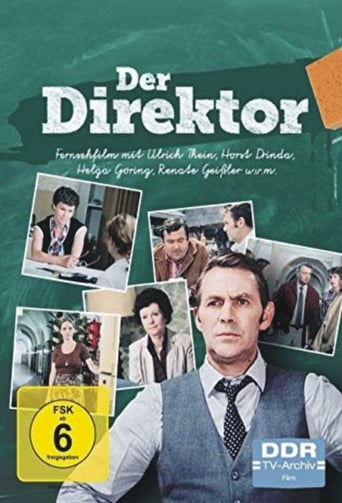
The school authorities want to read success stories in director Joachim Faber's reports. But they cannot simply be produced on an assembly line. Pupils, for example, use the wrong tone. The matter draws circles until the superiors finally talk about refusal to work. Director Faber is caught between the efforts to resolve the conflict with pedagogical means and the pressure from above.
Wolf Brandin is in his mid-twenties and lives with his wife and child in East Berlin at the end of the 1950s. In West Berlin, the student of electrical engineering is recruited by the American secret service CIA. But Brandin immediately notifies the State Security of the German Democratic Republic and from then on lives a dangerous life as a double agent. When Brandin reaches the breaking point, his marriage starts to unravel because Brandin is not allowed to tell his family about his double life.
Sister Agnes helps in all situations and does not only make friends. She has just fallen out with the new mayor. The consequences leave an entire community upside down.
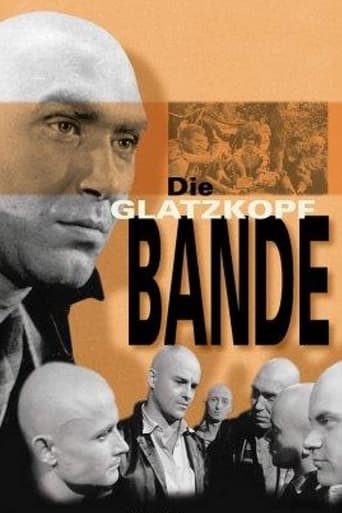
August 1961. The former Foreign Legionnaire, King, has collected a gang of hooligans, with whom he creates mischief in the GDR. After some careless work on a construction site, an event during which two people lose their lives, they move to a campsite on the Baltic Sea. With sputtering mopeds, loud radios, and occasional outbursts, the gang makes the vacationers' lives living hell. Unfortunately for them, Lieutenant Czernik discovers the connection between them and the accident at the construction site. To stop them from fleeing to West Berlin, Lieutenant Czernik and the police need to arrest them, one at a time, with King as the last.
The movie tells a true story in the life of well-known German actor Manfred Krug. Living in the German Democratic Republic he is forced to leave the country after protesting against the expatriation of singer/songwriter Wolf Biermann in 1976.
When an explosion at a gas station kills a policeman, "Gebbels" from homicide is assigned to the case. The investigation leads him to the trail of a bomb maker and kidnapper, behind dozens of attacks in Poland initiating a confrontation and all-out war.
In the difficult Roman neighborhood of Tor Bella Monaca, Mauro, recently abandoned by his girlfriend, is about to discover whether evil is something one is born being, or one becomes.
The ambitious scientist Franz Walter doesn't hesitate when he is promised a professorship at the university. He immediately accepts, pledges absolute loyalty to the system and agrees to work for the GDR's foreign intelligence service until he can take up his new position. Together with his colleague Dirk, he is sent on foreign assignments to West Germany. Franz soon has to use blackmail to get innocent people to talk. But his superiors go even further: GDR refugees and their relatives are targeted to be psychologically destroyed, forged letters, medical diagnoses, surveillance and wiretapping are on the agenda. However, this is more than Franz can bear: he feels powerless and increasingly isolates himself. When he then decides to steal secret documents for a later defection to the West, this results in an unfortunate chain reaction leading to his arrest and ultimately to his execution...
A rich industrialist is brutally kidnapped. While he physically and mentally degenerates in imprisonment, the kidnappers, police and the board of the company of which he is director negotiate about the ransom of 50 million euro.
Judith leads a double life between Switzerland and France. On the one hand Abdel, with whom she is raising a little girl, on the other Melvil with whom she has two older boys. Little by little, this fragile balance, made up of lies, secrets and back and forth, cracks dangerously. Trapped, Judith chooses to head forward, at the risk of losing everything.
Julián, a middle-aged single doctor, is reunited with Pablo, a childhood friend who has just married Elena, a beautiful young woman.
Luigi looks after his mother and his little brother since their abusive father Franco left when he was 10. Now a young man brimming with rage, he joins a far-right gang in search of belonging just as Franco shows up again in their life.
A bright student in Nigeria takes on the academic establishment when she reports a popular professor who tried to rape her. Based on real events.
Driss and Manuel both grew up on the same council estate. An estate where the sense of belonging to your patch is much stronger than the sense of belonging to a country, a nation or a culture... Manuel has assimilated this belonging, and he has even benefited from it and built his life on it. Driss, meanwhile, has shunned it. They will both have to face up to the consequences of their decisions – because they will each have a price to pay…
Summer 2019. Just graduated from Sciences Po, Madeleine leaves to prepare the orals of the ENA in Corsica with Antoine, her lover with whom she shares very left-wing political convictions. On a small deserted road, an unexpected encounter will seal their fate.
The film tells different stories in a kind of parallel Germany about love, affection and hatred.
A special agent has for 8 years been deep undercover in Asia's lucrative organized crime trade as he plays protégé to one of the key players, Banker. Now, Nick has but he has started to feel loyalty to his new environment and to the money.
A troubled young woman becomes obsessed with her mysterious new neighbor, who bears a striking resemblance to the girl's dead mother.
One night, Leo, a Spaniard working in Brussels as a subway driver, sees a young man on the edge of the platform, just before he falls onto the tracks.
When Maurício becomes a student at a top medical school, he becomes obsessed with a mystery linked to the dead bodies used for dissection.
Malboro and Cucu, the starring characters, are two brothers who split after the older one, Malboro, went to prison five years. One day he is set free, willing to return to his life. Cucu is the younger brother, who has become a boxer with possible success, if only the beater he keeps somewhere inside, didn't arise in the worst moments. The relationship between the two brothers is somehow ambiguous, there's something unclear that caused Malboro's arrest. To complete the triangle is Uncle Jesus who has been like a father to them; a retired boxer who's always thinking about his past. Sara is Malboro's great love, a woman full of shame and resented after almost leaving her whole life behind to follow Malboro, but he failed in their attempt to run away because that same night, he got arrested by Rojas. Rojas is Sara's husband, a police officer who hates Malboro and will do anything to get him out of his way...
The head of a giant European investment bank desperately clings to power when an American hedge fund company tries to buy them out.
The harmony of a seemingly idyllic neighborhood is disrupted when a dog attacks a young girl.
Mathieu, a member of the French institute in Irkutsk, is arrested overnight by the Russian authorities. Imprisoned and accused of sexual abuse on his own daughter, he realises he is a victim of a Kompromat. With the help of the FSB, someone has built up a case to frame him. Isolated, he has no one to turn to. Proving his innocence is impossible: the only solution is to escape.
The protagonist Vlad is a man of about forty; he lives and works as watchman in an old sanatorium that is due to be demolished. He obviously needs this work to live the life of a hermit. One night a married couple appears at the sanatorium: Vera and Stas. They are on the run. They are pursued by former friends and business partners of Stas. Vlad decides to help them, because he too is hiding from the past. Each character is threatened with the inevitable payment for wrong choices in the past, but helping each other, they try to expiate these faults.