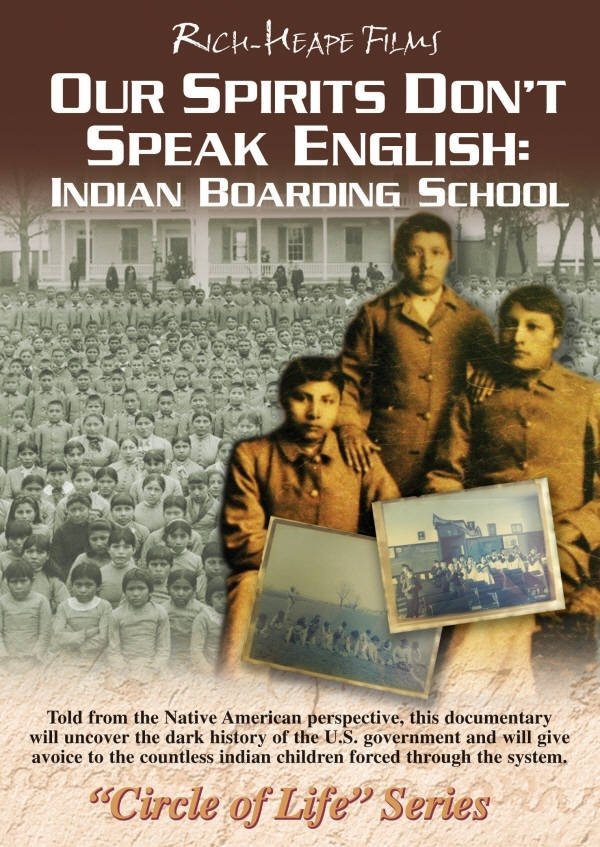
Told from the Native American perspective, this documentary will uncover the dark history of the U.S. government and will give a voice to the countless Indian children forced through the system.
Social & External
Self
Narrator (voice)
In the history of “The Simpsons,” few characters outside the title family have had as much cultural impact as Apu Nahasapeemapetilon, the Springfield convenience store owner. Comedian Hari Kondabolu is out to show why that might be a problem.
Native Americans, ranchers, government officials, and environmental activists battle over the yearly slaughter of America's last wild bison, based on fear that migrating animals will transmit the disease brucellosis to cattle. Join a 500-mile spiritual march across Montana led by Lakota elder Rosalie Little Thunder expressing her people's cultural connection to bison, an environmental group engaging in civil disobedience and video activism, and a ranching family caught in the crossfire.
The film looks at men and women of color in the U.S. Merchant Marine from 1938-1975. Through chronicling the lives of these men and women who, with a median age of 82, are beset with a host of life-threatening illnesses, the movie tells how they navigated issues of racism, disparities in the workplace, gender and familial relations.
The documentary adresses the meaning of music and the musical diversity present in Umbanda (a Brazilian religion with afroindigenous roots). With interviews with four umbandistas from Fortaleza - Ceará, Crossroads of the Sound pays reverence to the enchanted dimension where the sounds cross each other to make the spirits dance.
The story of an American hero and the Cherokee Nation's first woman Principal Chief who humbly defied all odds to give a voice to the voiceless.
On May 16th, 2019, the State of Maine made history by passing LD 944 An Act to Ban Native American Mascots in All Public Schools, the first legislation of its kind in the country. For Maine's tribal nations, the landmark legislation marked an end to a decades long struggle to educate the public of the harms of Native American mascotry. Fighting Indians chronicles the last and most contentious holdout in that struggle, the homogeneously white Skowhegan High School, known for decades as "The Home of the Indians". This is the story of a small New England community forced to reckon with its identity, its sordid history, and future relationship with its indigenous neighbors. It is a story of a small town divided against the backdrop of a nation divided where the "mascot debate" exposes centuries old abuses while asking if reconciliation is possible.
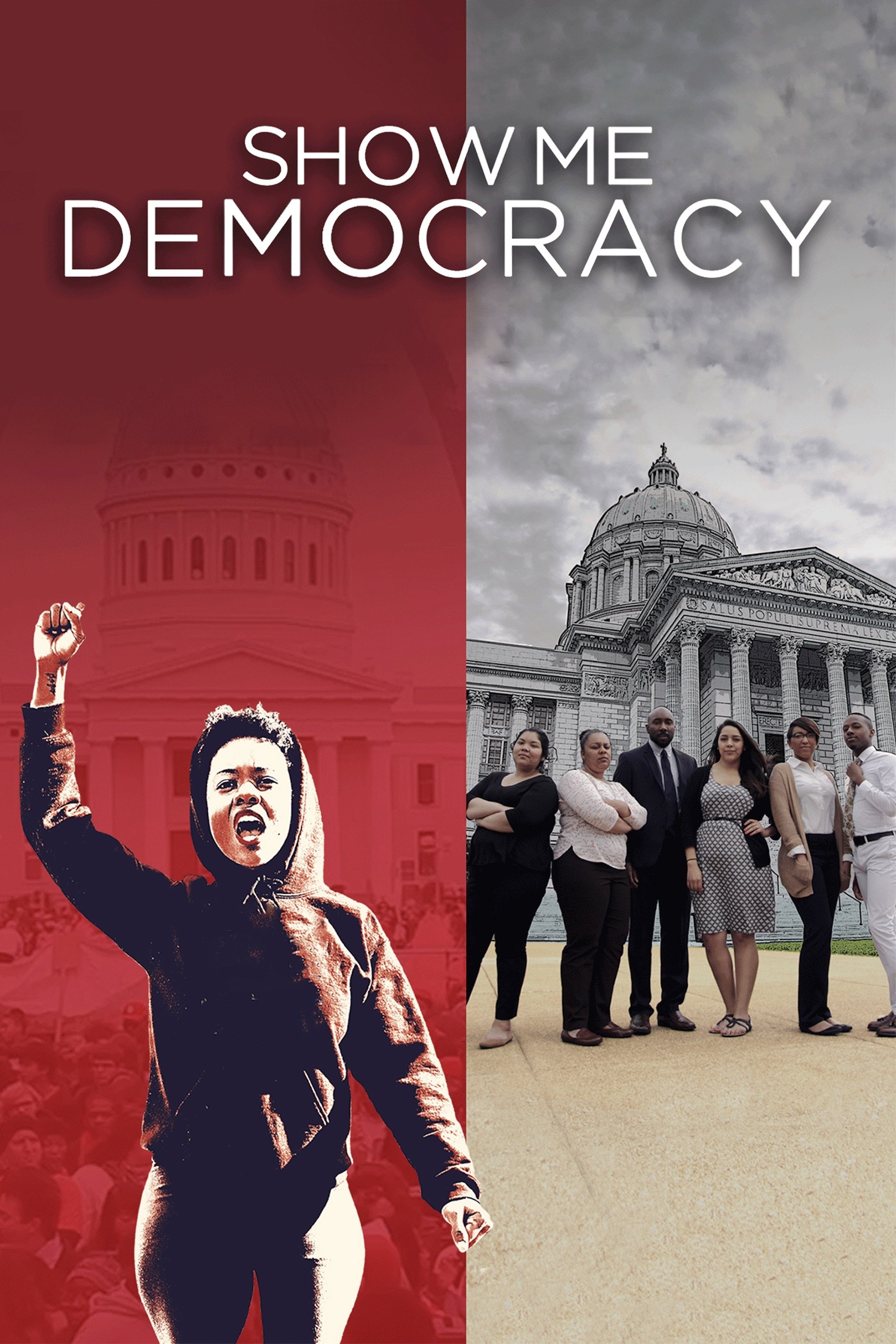
Amidst the storm of Ferguson, 7 St. Louis college students evolve into advocates and activists as they demand change through policy and protest
“In Gaza you have to get there in the evening, in spring, lock yourself in your room and from there listen to the sounds coming in through the open window.... It's 2018. I am 25 years old and a foreign traveler. I meet young Palestinians my age..”
The title of this video, taken from the texts of the architect Kengo Kuma, suggests a way of looking at everything as “interconnected and intertwined” - such as the historical and the present and the tool and the artifact. Images and representations of two structures in the Portland Metropolitan Area that have direct and complicated connections to the Chinookan people who inhabit(ed) the land are woven with audio tapes of one of the last speakers of chinuk wawa, the Chinookan creole. These localities of matter resist their reduction into objects, and call anew for space and time given to wandering as a deliberate act, and the empowerment of shared utility.
The last surviving Native Americans on Long Island are the focus of The Lost Spirits. The film chronicles their struggles as an indigenous people to maintain their identity amidst relentless modernization and a heartless bureaucracy.
A film about small Ontario town's struggle to restore a desecrated African-Canadian cemetery and the resulting turmoil over it.
Waters’ LIFT project, ᏗᏂᏠᎯ ᎤᏪᏯ (Meet Me at the Creek), is the fourth of a quartet of films, and focuses on interconnectedness and Cherokee values through the lifelong fight of Rebecca Jim, a Cherokee Nation citizen and waterkeeper warrior, as she leads the effort to restore Tar Creek in Miami, Oklahoma.
Approximately, because so-called "ethnic" statistics are prohibited, there are an estimated 3.3 million black French citizens. Distant descendants of slaves from the Caribbean or "indigenous" peoples from the French colonial empire in Africa, they constitute a minority that is often discriminated against. Isabelle Boni-Claverie, a mixed-race woman raised in the affluent neighborhoods of Paris, daughter of an Ivorian politician and granddaughter of Alphonse Boni, a Black man who became a magistrate of the French Republic in the 1930s, examines what is blocking the social advancement of Black French people and the full recognition of their citizenship.

A key overview of twentieth-century American fascism and antifascism produced in 1991 by the John Brown Anti-Klan Committee.
Documents the cultural and ecological impacts of coal stripmining, uranium mining, and oil shale development in Utah, Colorado, New Mexico, and Arizona – homeland of the Hopi and Navajo.
Recy Taylor, a 24-year-old black mother and sharecropper, was gang raped by six white boys in 1944 Alabama. Common in Jim Crow South, few women spoke up in fear for their lives. Not Recy Taylor, who bravely identified her rapists. The NAACP sent its chief rape investigator Rosa Parks, who rallied support and triggered an unprecedented outcry for justice. The film exposes a legacy of physical abuse of black women and reveals Rosa Parks’ intimate role in Recy Taylor’s story.

An experimental look at the origin of the death myth of the Chinookan people in the Pacific Northwest, following two people as they navigate their own relationships to the spirit world and a place in between life and death.
Filmmaker and educator Janine Windolph ventures from Saskatchewan to Quebec with her two teens and younger sister, tracing their familial origins to the Cree First Nation of Waswanipi. Against the scenic backdrop of these Traditional Lands, Elders offer newfound interdependence and hands-on learning, transforming this humble visit into a sensory-filled expression of reclamation and resilience. Our Maternal Home lovingly establishes a heart-centred form of resistance to confront and heal from the generational impacts of cultural disconnection, making space for what comes next.
On June 21 2007, the Howard Federal Government launched an intervention into Aboriginal communities in the Northern Territory. It was one of the most dramatic policy shifts in the history of Aboriginal affairs. Relentless media attention focuses on ideological arguments for and against the Intervention, while the voices of those affected by the policy are rarely heard. For this film more than 40 Alice Springs town camp residents were interviewed in depth over the course of eight months to find out the answer to the question - is it working?
Despite the perceived progress the world has made over the years, it's become increasingly clear that racism continues to run through our culture. This is abundantly apparent on the streets of London. This difficult documentary explores racism in today's climate through stories from people of various races.