Social & External
A docu-film that traces the victorious ride of Mancini's Azzurri, from the debut match to the final against England. A troupe lived with the Azzurri for a month, to bring the spectators into the lives of the players and all the members of the staff, between training sessions, matches, travels and celebrations. An adventure told through the voices of the protagonists, who confided dreams, joys, pains and hopes to the cameras. "Blue Dream, the road to Wembley" is the completion of a project started a year ago together with the FIGC, to tell the national team's approach to the European Championships through the 4 episodes aired in the days immediately preceding the European Championship, bringing the new television language of the docu-series to one of the most important time slots of the first generalist network. "Blue Dream, the road to Wembley" is a project of the New Formats Development Department
Uli Köhler and Nick Golücke have visited the protagonists of the 1990 World Cup 20 years after their championship win and looked back together. The Writers Nick Golücke and Uli Köhler have, 20 years after World Cup triumph of the German national soccer team in Rome in 1990, visited the protagonists of back then once again and indulge with them together in memories.
"...a charming depiction of life as I knew it with my grandparents in my own village..." Clara Caleo Green, Cinema Italia UK "The sum of the individual fates and life choices paints a picture, the validity of which extends far beyond this village." Joachim Manzin, Black Box This documentary records the thoughtful and emotional confrontation with time, change, loss and hope related by the members of a small community in the idyllic Ligurian countryside who are dealing with a rapidly changing agricultural industry, transformed by globalisation and technological advances and an increasing number of foreigners buying the empty houses in their village. Forgoing the use of music and voice over, the film lets Aracà's inhabitants tell their own stories and allows the audience to dive into the rich soundscape of the ligurian alpine countryside.
William Friedkin attends an exorcism with Father Gabriele Amorth, as he treats an Italian woman named Cristina for the ninth time. Prior to filming, Cristina had purportedly been experiencing behavioural changes and “fits” that could not be explained by psychiatry, and which became worse during Christian holidays.
After the World War I, Mussolini's perspective on life is severely altered; once a willful socialist reformer, now obsessed with the idea of power, he founds the National Fascist Party in 1921 and assumes political power in 1922, becoming the Duce, dictator of Italy. His success encourages Hitler to take power in Germany in 1933, opening the dark road to World War II. (Originally released as a two-part miniseries. Includes colorized archival footage.)
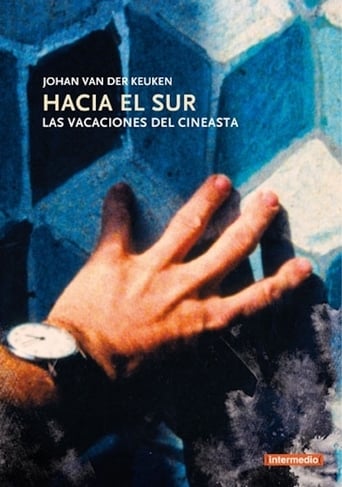
Johan van der Keuken went against the grain in 1980: from Amsterdam (on April 30 with the coronation riots and squatting actions) via Paris, southern France and Italy to Egypt. He made his personal travelogue in three parts for VPRO television. Later, he fused the three parts into one long movie.
It's a condition known as "hypertrichosis" or "Ambras Syndrome," but in the 1500s it would transform one man into a national sensation and iconic fairy-tale character. His name: Petrus Gonsalvus, more commonly known today as the hairy hero of Beauty and the Beast.
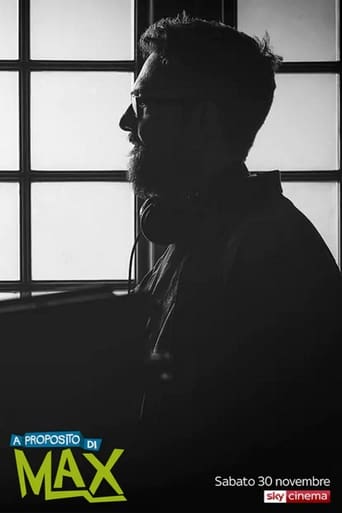
The intimate and passionate portrait of the late Max Croci in a documentary that recalls the human and cultural depth with the testimonies of friends and colleagues.
He is considered the greatest European poet of the Middle Ages and his work unfolds the whole panopticon of occidental education – theology, philosophy, sciences, politics and literature. But who has really read it, the “Divine Comedy”? Who knows more of its creator Dante Alighieri than that he had an eagle-like profile and was in love with a woman named Beatrice? 700 years after Dante’s death, the filmmaker Adolfo Conti travels through Italy with Dante’s words in mind and eyes to see the world as Dante did. As the film encounters the beauty of arts and the Tuscan landscape, the forces of nature, a dramatic life story is unfolded.
Onde Nostre is a lifestyle documentary film that shows the peculiarity of the Italian surf scene and the beauty of this sport, even in a country that's not usually considered a top destination for catching waves. With this film we intend show the passion and high level of the Italian surfers. The film is shot mainly in 16mm and super 8 and only a small part is shot digital in order to emphasize the beauty of the landscape. The film has a romantic approach to surfing. Action has a great relevance, with slow motion segments and an emotional editing. Onde Nostre also shows Italian surfers lifestyles and the endless search for good waves in the Mediterranean sea.
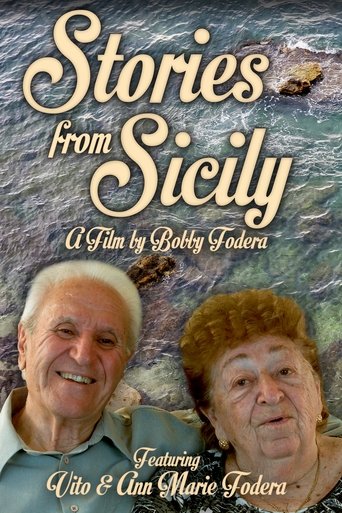
The film follows Vincent Schiavelli as he returns to Polizzi Generosa, the very town in Sicily his grandparents emigrated from in 1901.
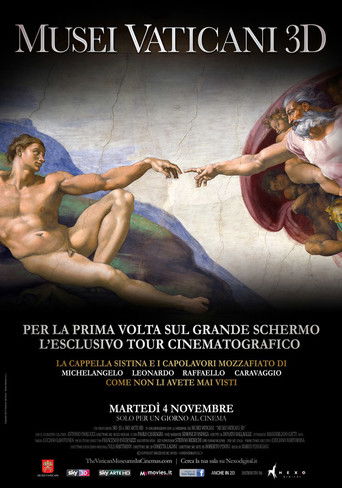
An extraordinary voyage of discovery to see the most impressive collection of works of art built up over two thousand years of history. VATICAN MUSEUMS 3D, a SKY production in collaboration with the Vatican Museums Directorate, for the very first time brings Ultra HD 4K/3D film cameras inside the Vatican Museums and the Sistine Chapel, to show the masterpieces in these collections as they have never been seen before.
The capture of Naples, the first great European city to be liberated, revealed the magnitude of the tasks involved in re-creating the means of livelihood and the machinery of government in a devastated, starving and disease-ridden city.
Drawing inspiration from his personal encounter with the Italian refugee child Giovanna during World War II, Markus Imhoof tells how refugees and migrants are treated today: on the Mediterranean Sea, in Lebanon, in Italy, in Germany and in Switzerland.
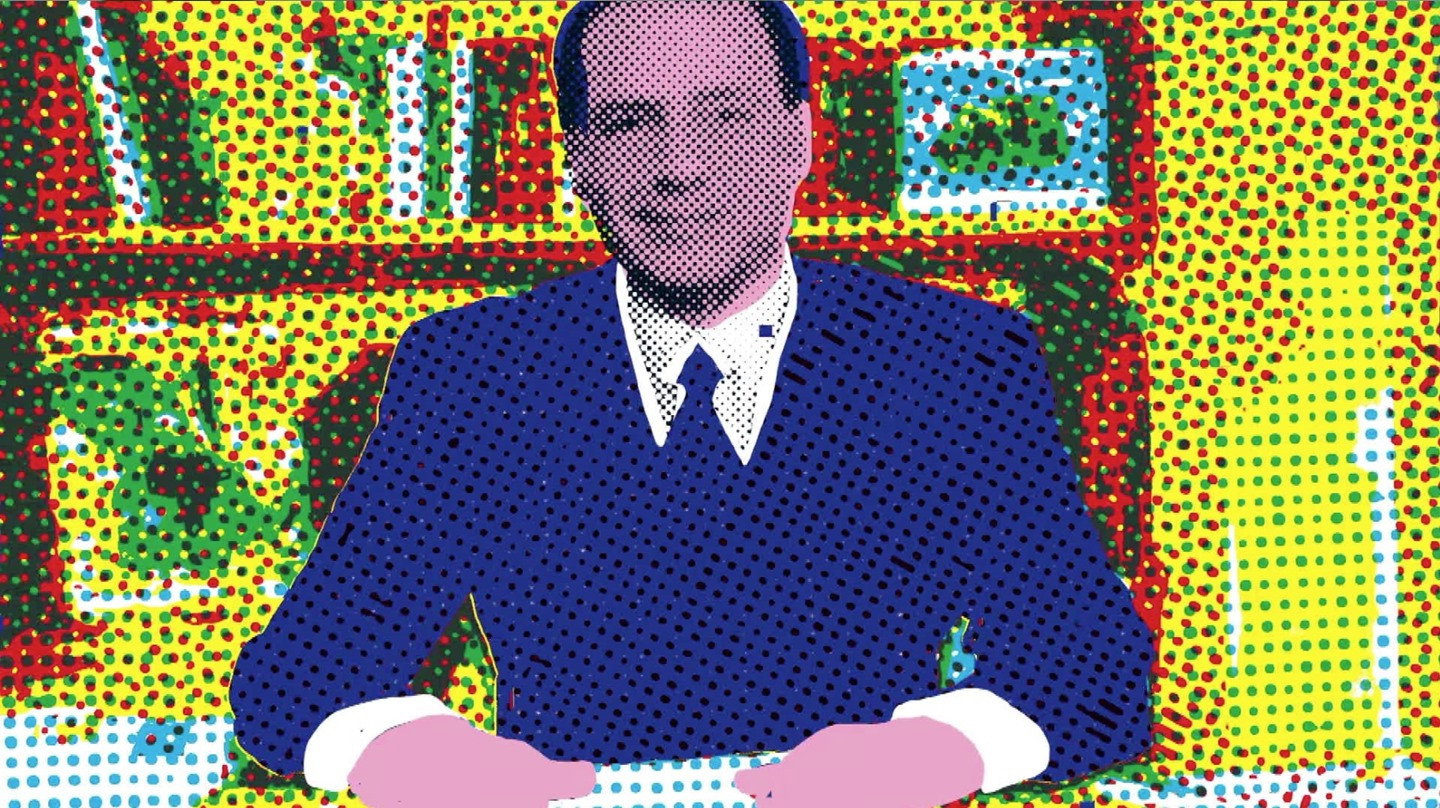
Lawsuit-proof satirical "unauthorized biography" of Silvio Berlusconi told using only words spoken by the man himself in interviews, rallies, or other public statements.
Songs and singers from Naples, musicians and poets, real and legendary characters are the protagonists of a film that crosses one of the most beautiful, famous and controversial metropolises in the world. An exceptional orchestra for a repertoire that speaks of love, sex, jealousy, immigration, protest.
Luca and Gustav, two men in their 30s, have been a stable couple for eight years. Nothing to get worked up about in a western European country, you would think – and you’d be wrong. Even in Euroland there are places where the acknowledgment of the basic civil rights of same-sex couples is a hot issue. Suddenly, Gustav’s and Luca’s quiet private life has been turned upside down. When the Italian center-left coalition initiates legislation about same-sex partnerships in Italy, a national debate is triggered instantly. In a matter of days it turns into the hottest political and cultural issue on the national agenda while intolerant homophobic attacks increase dramatically.
Six big north faces of the Alps. The film consists of six films: "Die Wand der Wände" (Eger by Robert Jasper, Roger Schäli), "Das letzte Wort hat der Berg" (Matterhorn by Michael Lerjen, Jorge Ackermann), "Selig, wer in Träumen stirbt" (Grandes Jorasses by Felix Berg, Robert Steiner), "Licht und Schatten" (Piz badile by Hansjörg Auer), "Grenzen der Felskletterei" (Drei Zinnen by Alexander Huber) and "Der zerfallene Berg" (Petit Dru by Steve House, Andy Parkin).