This Screenliner short looks at the dress and customs of Nazaré, a fishing village on Portugal's Atlantic coast.
Social & External
Narrator (voice)
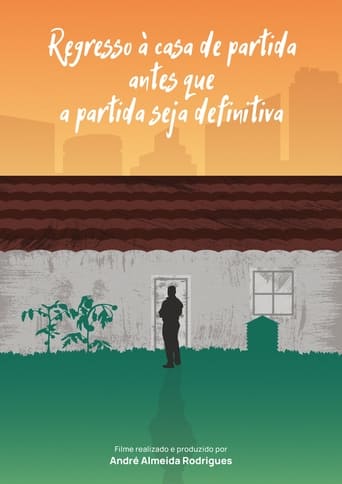
The reception ebbs and flows as the unfamiliar landscape whirls by the window of a plane or train or car. Communication is delayed, fragmented, interrupted. Memories of a distant country.
Fernando Lemos, a Portuguese surrealist artist, fled from dictatorship to Brazil in 1952 searching for something better. The movie follows the last moments of his journey and the struggle for the preservation of his legacy, trying to fulfill his last great desire: to be a good dead man.
Documentary short film on the city of Évora, Portugal. Usually regarded as the first film of the Portuguese New Wave.
The film is a cinematic interpretation of the travel book “Armenia” by Russian poet Andrei Bely.
To popularize the idea of automobile travel, Ford Motor Company produced Ford Educational Weekly, a film magazine distributed free to theaters. One 1916 series featured "Visits to American Cities." In this episode, Los Angeles is featured at the very beginning of the boom created by oil, movies and aircraft. On the occasion of its centennial in 1953, Ford donated its film to the National Archives and Records Service; this copy derives from a fine grain master printed from the Archive's preservation negative. Music by Frederick Hodges.
Sports enthusiast Ernest is to cover 6,000 kilometers on his motorcycle in 15 days, crossing Austria, Italy, Switzerland, the Balkans and Czechoslovakia.
Botanical gardens in Bombay plus the highly decorative Jain Temple in Calcutta.
Poet, agricultural engineer and revolutionary Amílcar Cabral was born in Guinea-Bissau to Cape Verdean parents. After studying in Portugal, he emerged as the charismatic leader of the anti-colonial struggle against Portuguese rule. With his utopian ideas, he sparked a cultural and an armed uprising that went on to inspire other African liberation movements.
Travel films have an established format with their own conventions, history and baggage. It is a medium that has all too often sought to control, define and dictate perceptions of ”other” places. Comprised of footage shot while travelling on group excursions across Russia in 2019, An Uncountable Number of Threads is an attempt to draw out the ethical restrictions of a travelogue, while questioning how (and why) to make one. At times there is an awkward tourist-gaze, aware of its outsider position. But as a self-reflexive work that considers its own creation, it ultimately unravels, as the artist rationalises themselves out of a particular way of working, inviting the viewer into their uncertainty.
When Tomoko finds some messages for a 'Mr Smith' on a lost mobile phone, she finds herself on an 'Alice in Wonderland' journey through Tokyo's boulevards and back alleys. From the tyranny of symmetry in soaring office blocks - to buildings that look like space-ships, this creative documentary shows us the city's soul.
A woman narrates the thoughts of a world traveler, meditations on time and memory expressed in words and images from places as far-flung as Japan, Guinea-Bissau, Iceland, and San Francisco.
Bruce Brown's The Endless Summer is one of the first and most influential surf movies of all time. The film documents American surfers Mike Hynson and Robert August as they travel the world during California’s winter (which, back in 1965 was off-season for surfing) in search of the perfect wave and ultimately, an endless summer.
Early film of a crowded street scene in an unidentified Indian city.
Pure tranquillity in rural Somerset, a world away from the war raging on the continent.
Take a revealing tour along a coast of contrasts, from the folksy freshness of Whitby to the coaly Tyne, queen of all rivers.
This short film was made by filmmaker (later archivist) Liam Ó Laoghaire (aka Liam O’Leary) and was commissioned by the Cultural Relations Committee of the Irish Department of External Affairs. The film was designed to promote the city of Dublin to its inhabitants and to potential visitors from abroad. Brendan J. Stafford’s crisp black and white cinematography serves the city’s elegant architecture well while the narrator tells of the city’s cultural, literary and architectural history and its many venerable inhabitants. The elegant Georgian squares, the bustling markets, the tranquil parks and the sparkling nightlife present a city that is vibrant, cultured and steeped in history.
This early travelogue film, made in a Kenyan train station, captures an impromptu musical performance. Some passengers eagerly join in while others sleep—blissfully unaware of the performance taking place around them.
Launch of a competition, organized by the newspaper O Século, entitled Statues of Portugal.