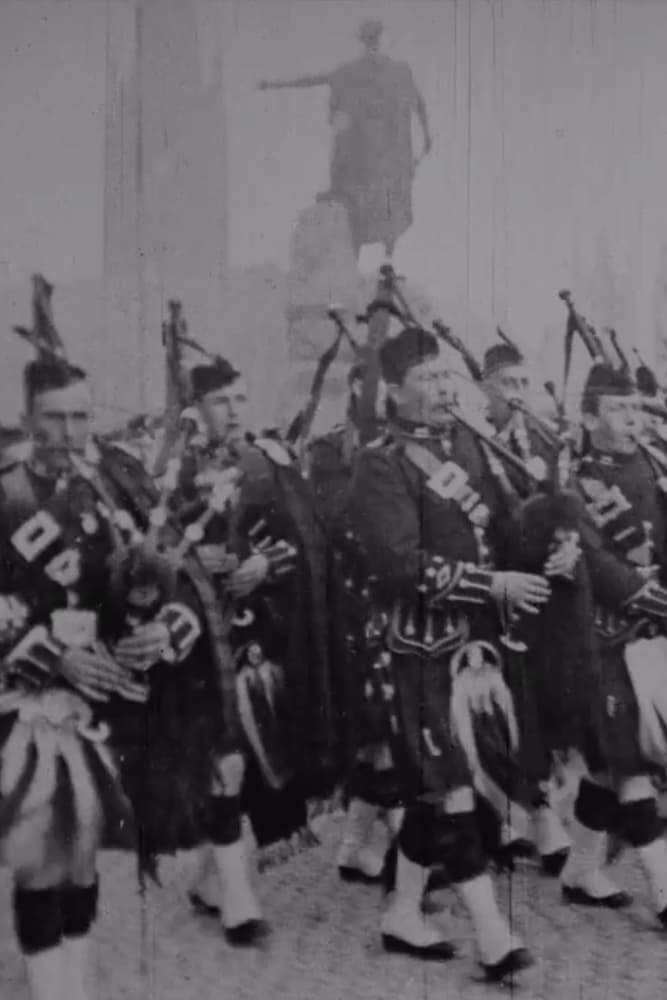
A parade of Gordon Highlanders in dress uniform march through the centre of Aberdeen on their way to the Boer War. Small children run around in excitement but are moved aside by a member of the regiment. Directed by Robert W. Paul.
Social & External
Themselves
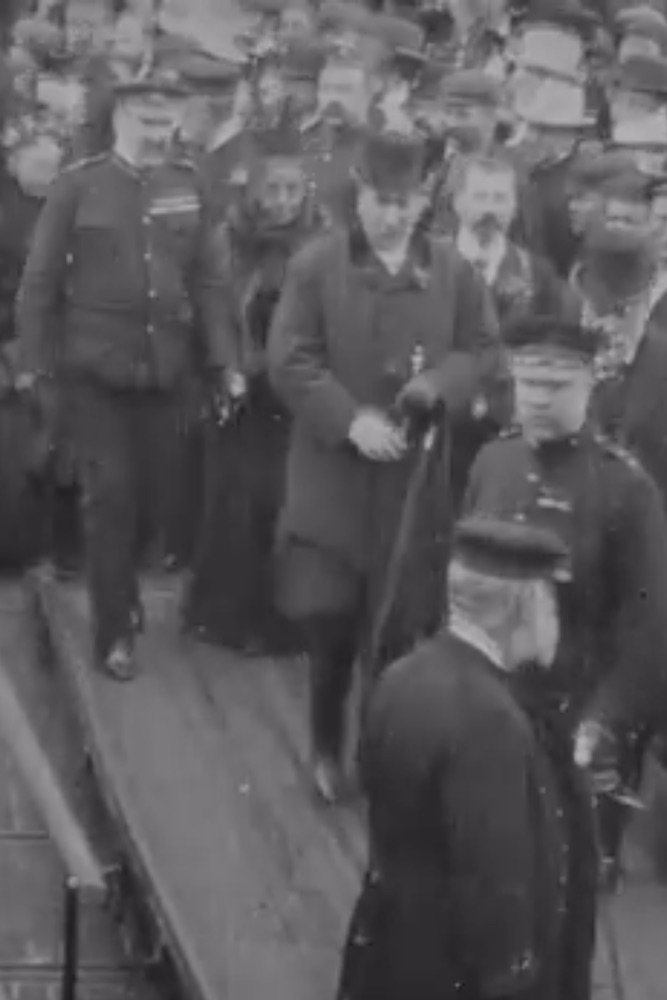
Watched by crowds, Sir Redvers Buller, Lady Buller, the Mayor of Southampton and others walk along the gangway leading to the ship towards the camera. Sir Redvers pauses to be introduced to one of the ship's officers before embarking. According to BFI programme notes, the filmmaker William K.L. Dickson can be seen bottom left, attempting to introduce himself to General Buller as he passes. Film companies were in competition to film reportage of the Boer War and Dickson was one of those filmmakers keen to do so.
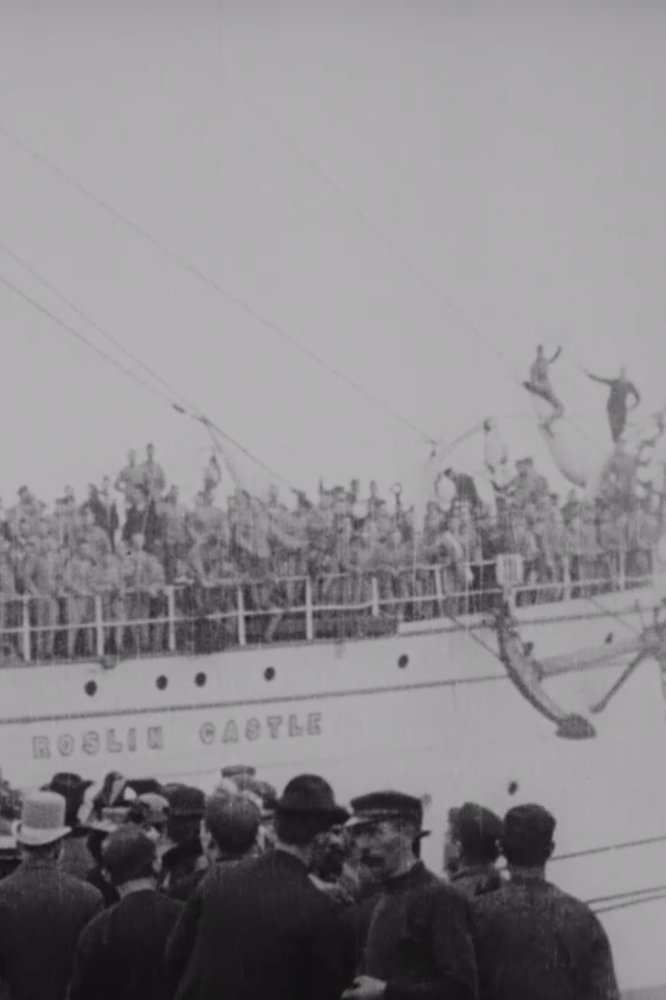
Spectators on the quayside at Southampton wave farewell as the crowded troopship Roslin Castle moves away to the right of the picture. Large numbers of troops on board wave back to loved ones and the crowd including thr 2nd Battaliion West Yorkshires. Date: 20th October 1899.
A depiction in the hanging of Edward Heinson, an assumed criminal assault convict in Jacksonville, Florida.
After an abrupt and violent encounter with a French warship inflicts severe damage upon his ship, a captain of the British Royal Navy begins a chase over two oceans to capture or destroy the enemy, though he must weigh his commitment to duty and ferocious pursuit of glory against the safety of his devoted crew, including the ship's thoughtful surgeon, his best friend.
An 1897 travelogue of a bullock turning a cog to work a water pump in Egypt. Director/Cinematographer - Henry Short. Made as part of a follow-up series of travelogue films following a collection made for R.W. Paul in 1896.
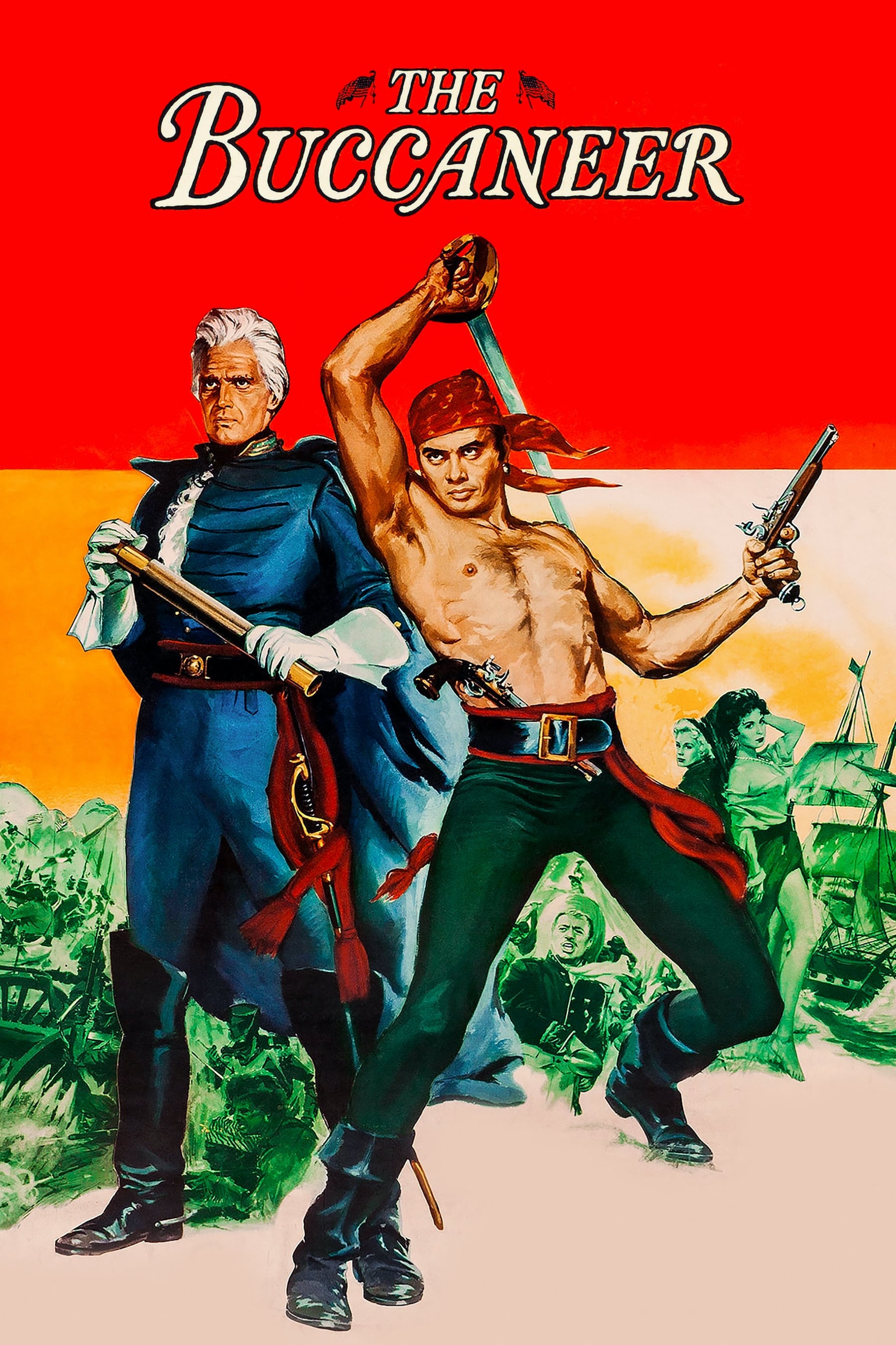
During the War of 1812 against Britain: General Andrew Jackson has only 1,200 men left to defend New Orleans when he learns that a British fleet will arrive with 60 ships and 16,000 men to take the city. In this situation an island near the city becomes strategically important to both parties, but it's inhabited by the last big buccaneer: Jean Lafitte. Although Lafitte never attacks American ships, the governor hates him for selling merchandise without taxes - and is loved by the citizens for the same reason. When the big fight gets nearer, Lafitte is drawn between the fronts. His heart belongs to America, but his people urge him to join the party that's more likely to win.
In the final days of the American Civil War, an emigre Hungarian military officer attempts to map the situation of the enemy. Many veterans of the 1848 War of Independence in Hungary fought on the northern side. Experienced Fiala, Boldogh who struggles with homesickness and the reckless Vereczky all experience their enforced emigration in different ways and news of impending peace elicits different reactions from them all.
In 1892, Ellis Island, in New York Bay, became the main gateway to the United States for immigrants arriving increasingly from Europe. The story of immigration to the United States from 1892 to 1954, an enthralling polyphonic narrative that embraces both small and great history.
In 1800, as Napoleon Bonaparte rises to power in France, a rivalry erupts between Armand and Gabriel, two lieutenants in the French Army, over a perceived insult. For over a decade, they engage in a series of duels amidst larger conflicts, including the failed French invasion of Russia in 1812, and shifts in the political and social systems of Europe.
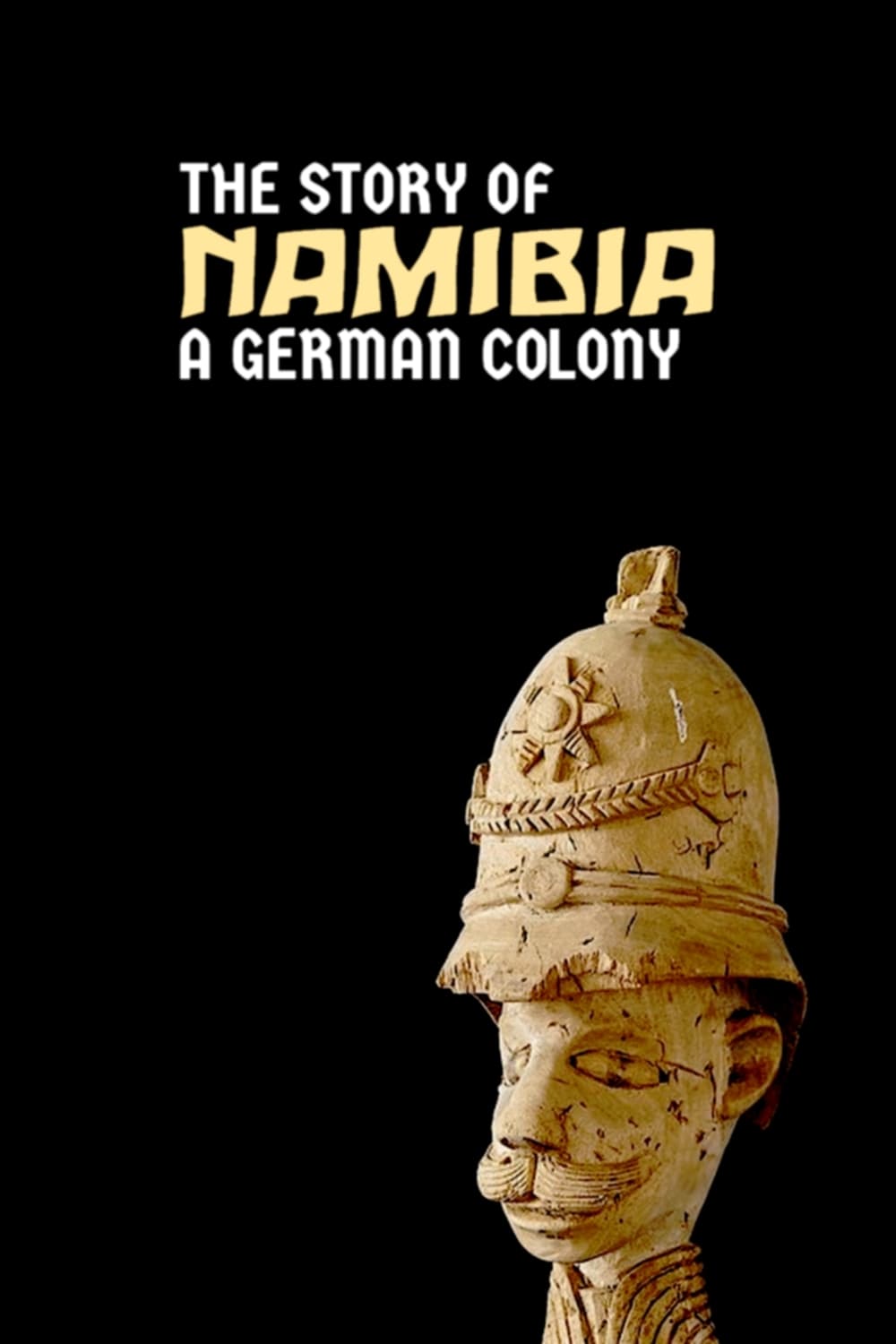
Germans colonized the land of Namibia, in southern Africa, during a brief period of time, from 1840 to the end of the World War I. The story of the so-called German South West Africa (1884-1915) is hideous; a hidden and silenced account of looting and genocide.
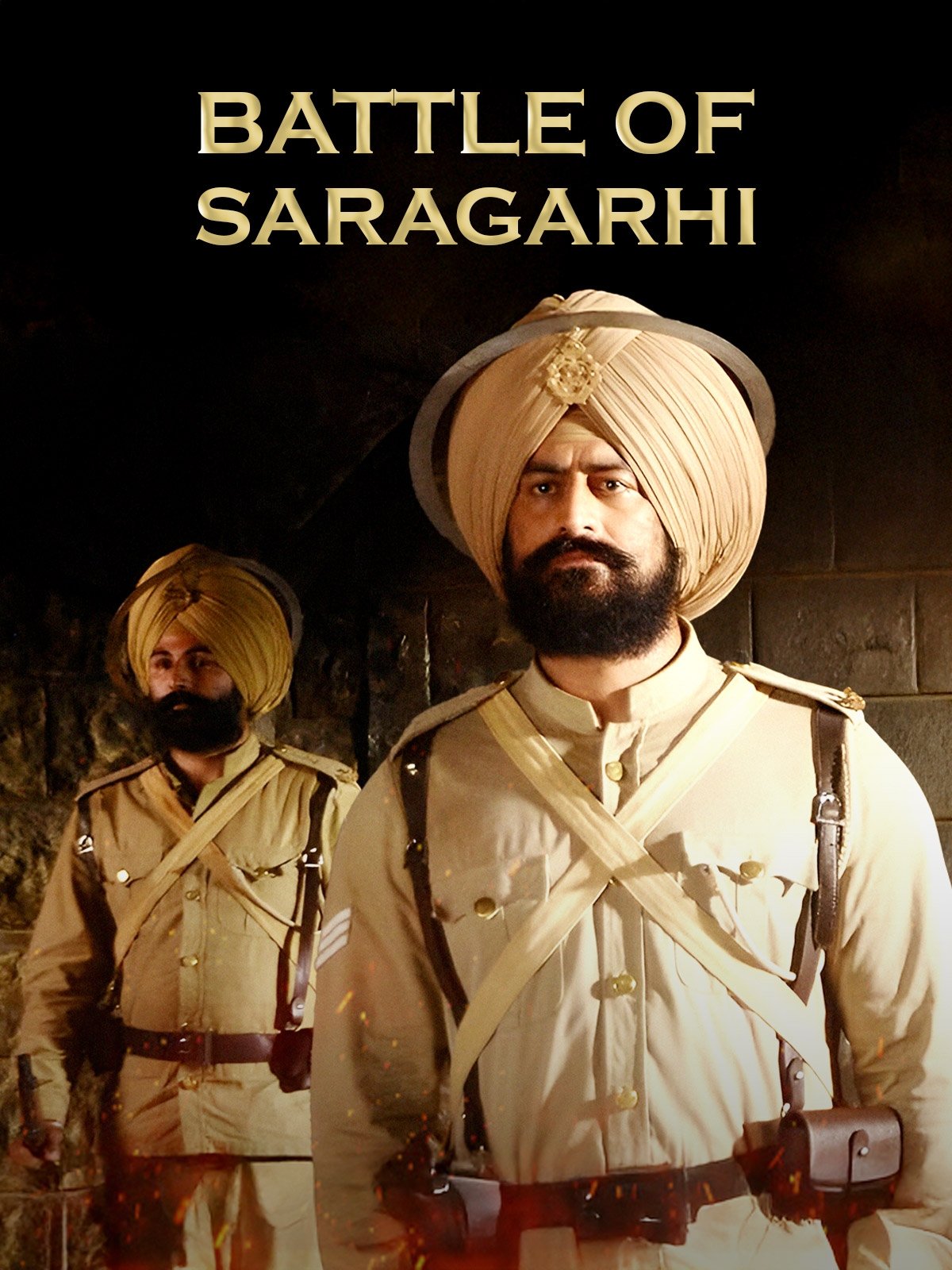
Based on the 19th century battle when 12,000 Afghans attacked a British Indian Contingent, also comprised of 21 Sikhs who went on to become the heroes.
A stationary camera, looking diagonally across a racetrack toward the infield, records the horses as they race past. Once they are out of view and the race is over, police officers run onto the infield. The crowd moves around.
An actuality and reportage film. This film captures Lord Frederick Roberts (British Army rank Field Marshal) departing England for South Africa on 23rd December 1899, where he commanded British forces for a year in the Second Boer War. The ship in this film is the RMS Dunottar Castle. Going with Roberts is his chief of staff, Lord Kitchener, whose future role as Secretary Of State for War during World War One awaits him. This film was produced and distributed by the Warwick Trading Company, a London based company at its peak at this time, involved in the majority of British films.The Warwick Trading Company specialised in travel, reportage and actuality films and had substantial catalogues. Charles Urban had taken over as managing director in 1897 and was in that role when this film was produced. According to the BFI programme entry, the company had a large amount of resources already in South Africa. This meant they could capture historic moments as part of its Boer War coverage.
An account of the last two centuries of the Anthropocene, the Age of Man. How human beings have progressed so much in such a short time through war and the selfish interests of a few, belligerent politicians and captains of industry, damaging the welfare of the majority of mankind, impoverishing the weakest, greedily devouring the limited resources of the Earth.
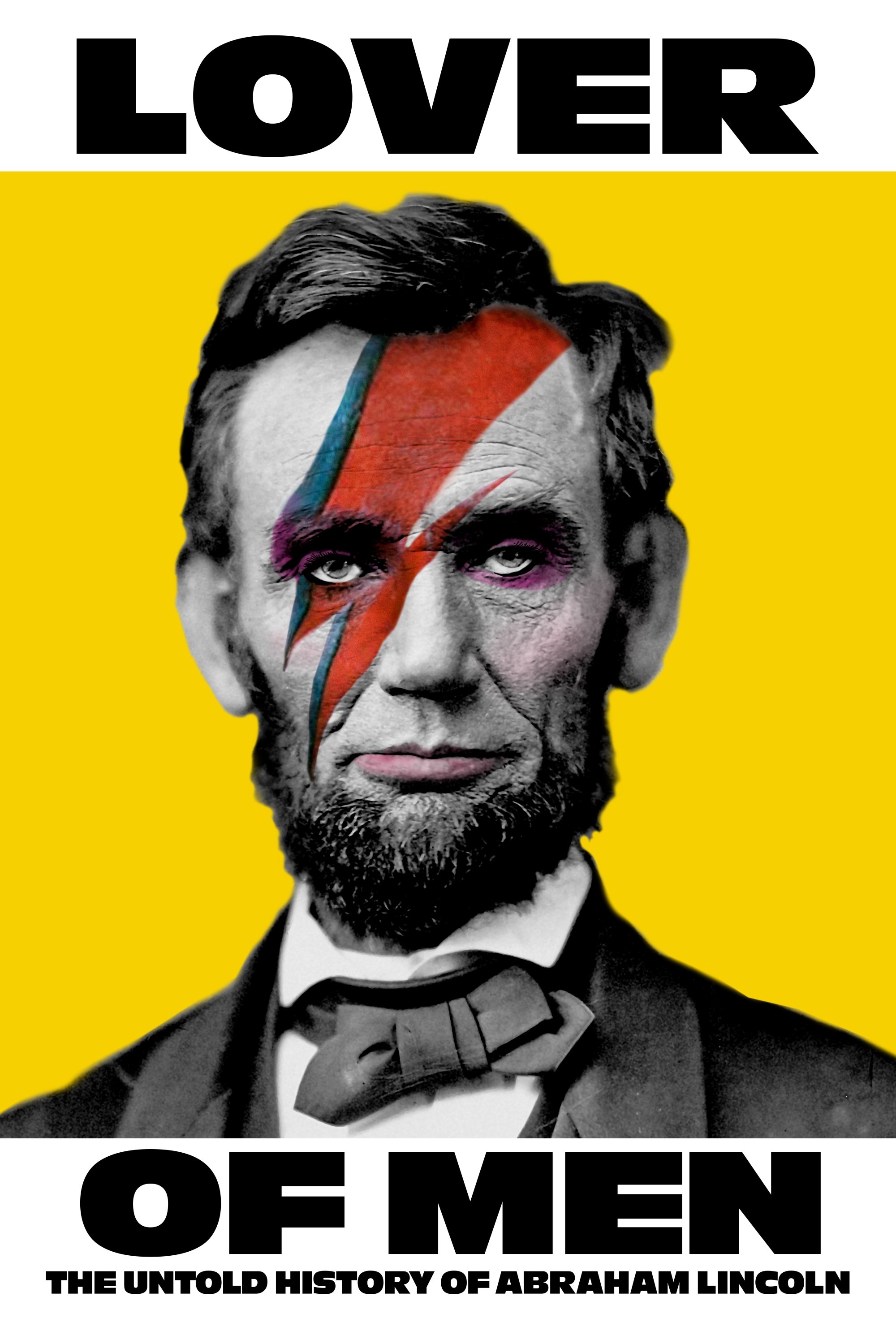
An examination of the intimate life of America's most consequential president, Abraham Lincoln. As told by preeminent Lincoln scholars and never before seen photographs and letters, Lincoln's romantic relationships with men is detailed. The lens is widened into the history of human sexual fluidity and focuses on the profound differences between sexual mores of the 19th century and those we hold today.
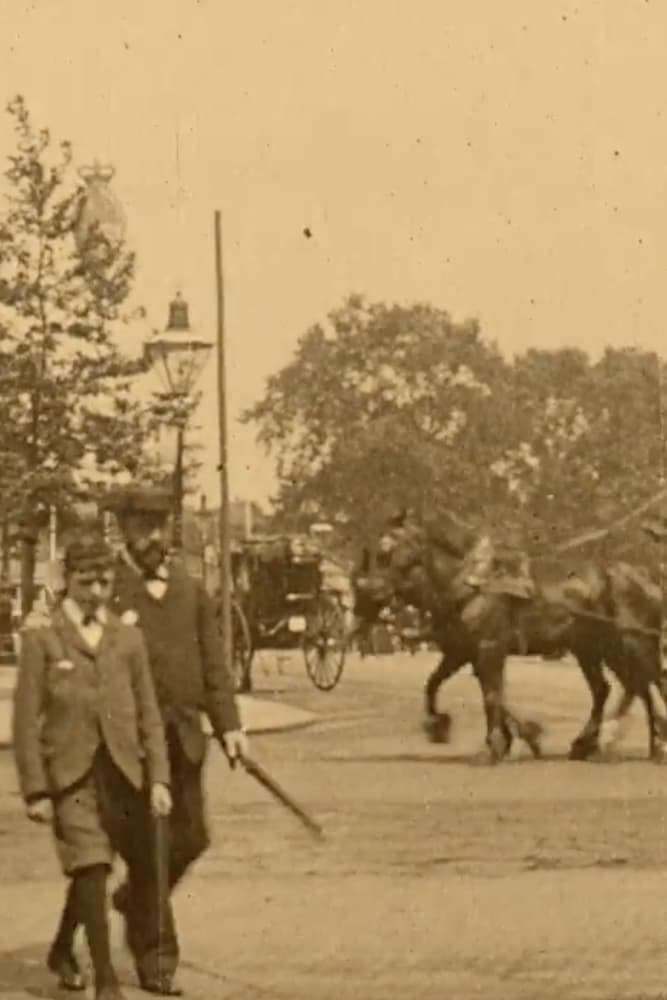
Film made at Hyde Park Corner in 1896 by an unknown filmmaker. It looks south west across Grosvenor Place. The southern wing of St George's Hospital (today the Lanesborough Hotel) can be seen on the right of the picture. The road stretching away in the centre of the picture is Grosvenor Crescent. The busy two way horsedrawn traffic movement is seen on what would today be Grosvenor Place and Apsley Way (the road layout now is different to 1896). The approximate camera position would be today on Apsley Way, just east of the Royal Artillery Memorial. Not to be confused with another Hyde Park Corner film by British Pathé made in the same year but with a different view. (That film looks north towards the triumphal arch at the corner of Hyde Park next to Apsley House.)
A troubled and neurotic Italian Countess betrays her entire country for a self-destructive love affair with an Austrian Lieutenant.
The story of a family of Quakers in Indiana in 1862. Their religious sect is strongly opposed to violence and war. It's not easy for them to meet the rules of their religion in everyday life but when Southern troops pass the area they are in real trouble. Should they fight, despite their peaceful attitude?
With a divine answer to a humble prayer at age 14, Joseph Smith began to fulfill his inspired mission. He translated the ancient Book of Mormon and restored the everlasting gospel of Jesus Christ. Many flocked to the American frontier to worship with the Church of Jesus Christ of Latter-day Saints, led by the Prophet Joseph's dynamic and courageous example. Unstopped by his martyrdom at age 38, Joseph's legacy continues today in the dedicated lives of Saints throughout the world who still sing; "Praise to the Man who Communed with Jehovah!"
Prelude to War was the first film of Frank Capra's Why We Fight propaganda film series, commissioned by the Pentagon and George C. Marshall. It was made to convince American troops of the necessity of combating the Axis Powers during World War II. This film examines the differences between democratic and fascist states.
In the highlands of Scotland in the 1700s, Rob Roy tries to lead his small town to a better future, by borrowing money from the local nobility to buy cattle to herd to market. When the money is stolen, Rob is forced into a Robin Hood lifestyle to defend his family and honour.
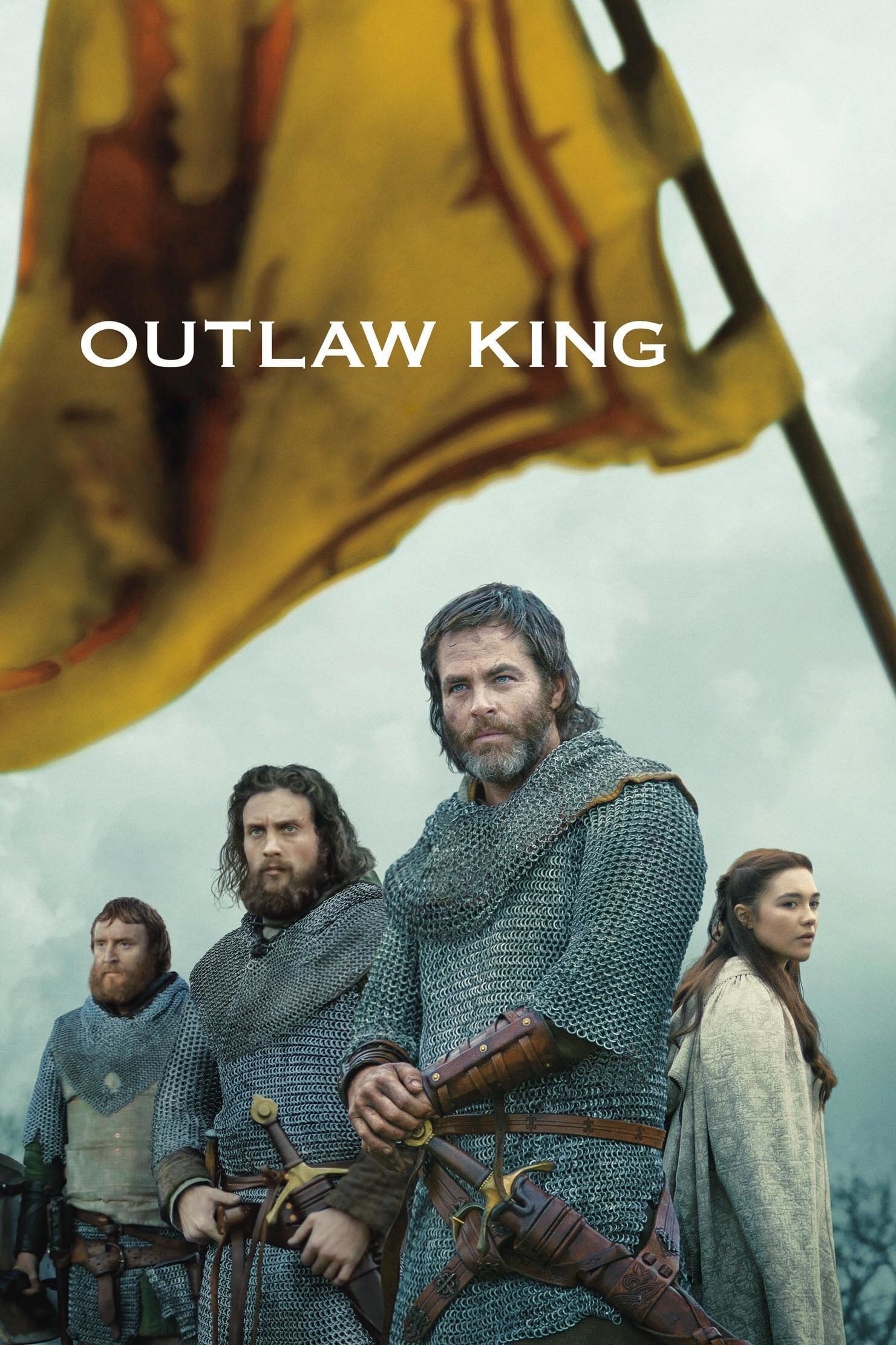
Forced into exile by the English after being crowned King of Scotland, legendary warrior Robert the Bruce fights to reclaim the throne.
In September 1942, the German Afrika Korps under Rommel have successfully pushed the Allies back into Egypt. A counter-attack is planned, for which the fuel dumps at Tobruk are a critical impediment. In order to aid the attack, a group of British commandos and German Jews make their way undercover through 800 miles of desert, to destroy the fuel dumps starving the Germans of fuel.
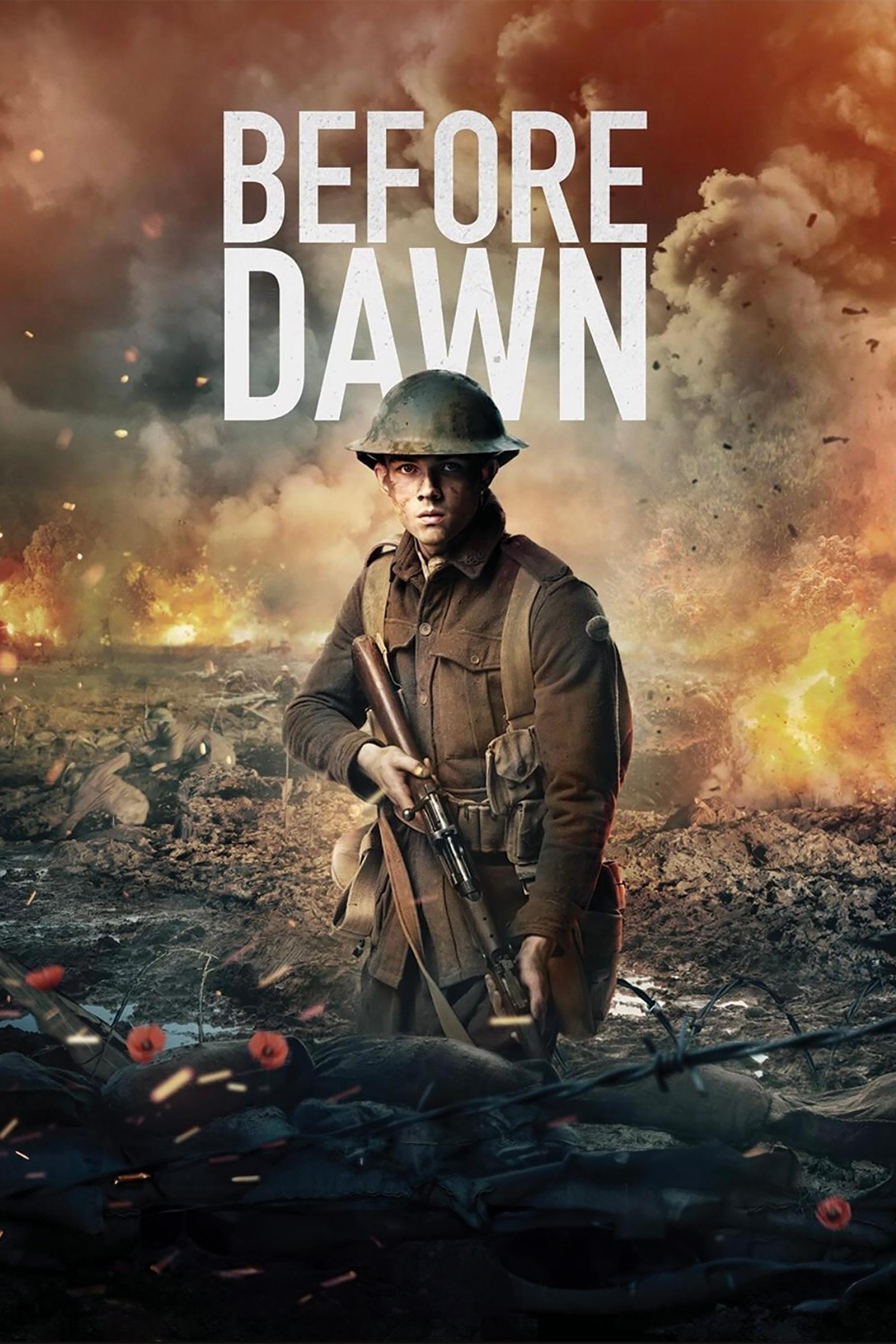
A WWII veteran escapes his care home in Northern Ireland and embarks on an arduous but inspirational journey to France to attend the 75th anniversary of the D-Day landings, finding the courage to face the ghosts of his past.
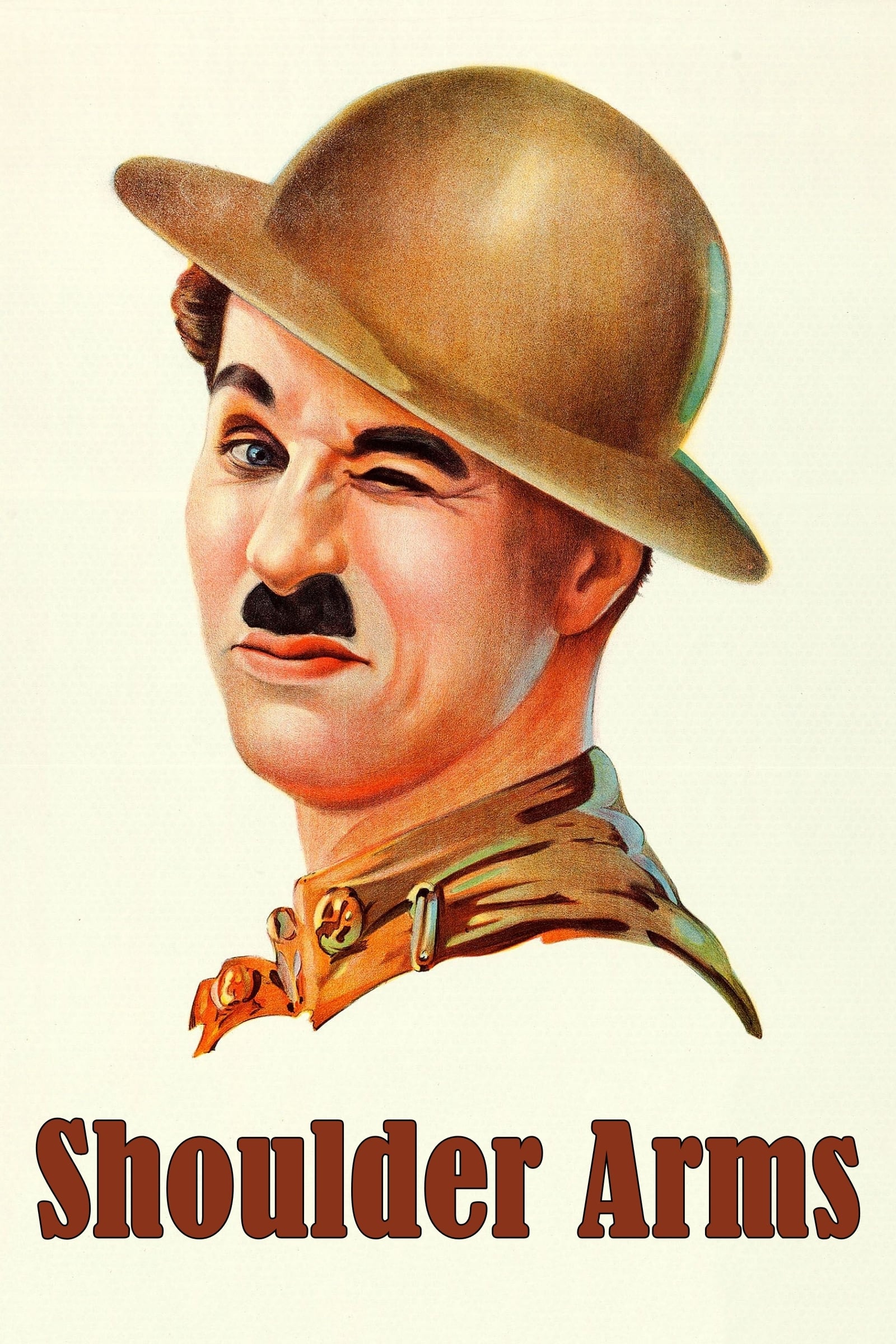
An American doughboy, stationed in France during the Great War, goes on a daring mission behind enemy lines and becomes a hero.
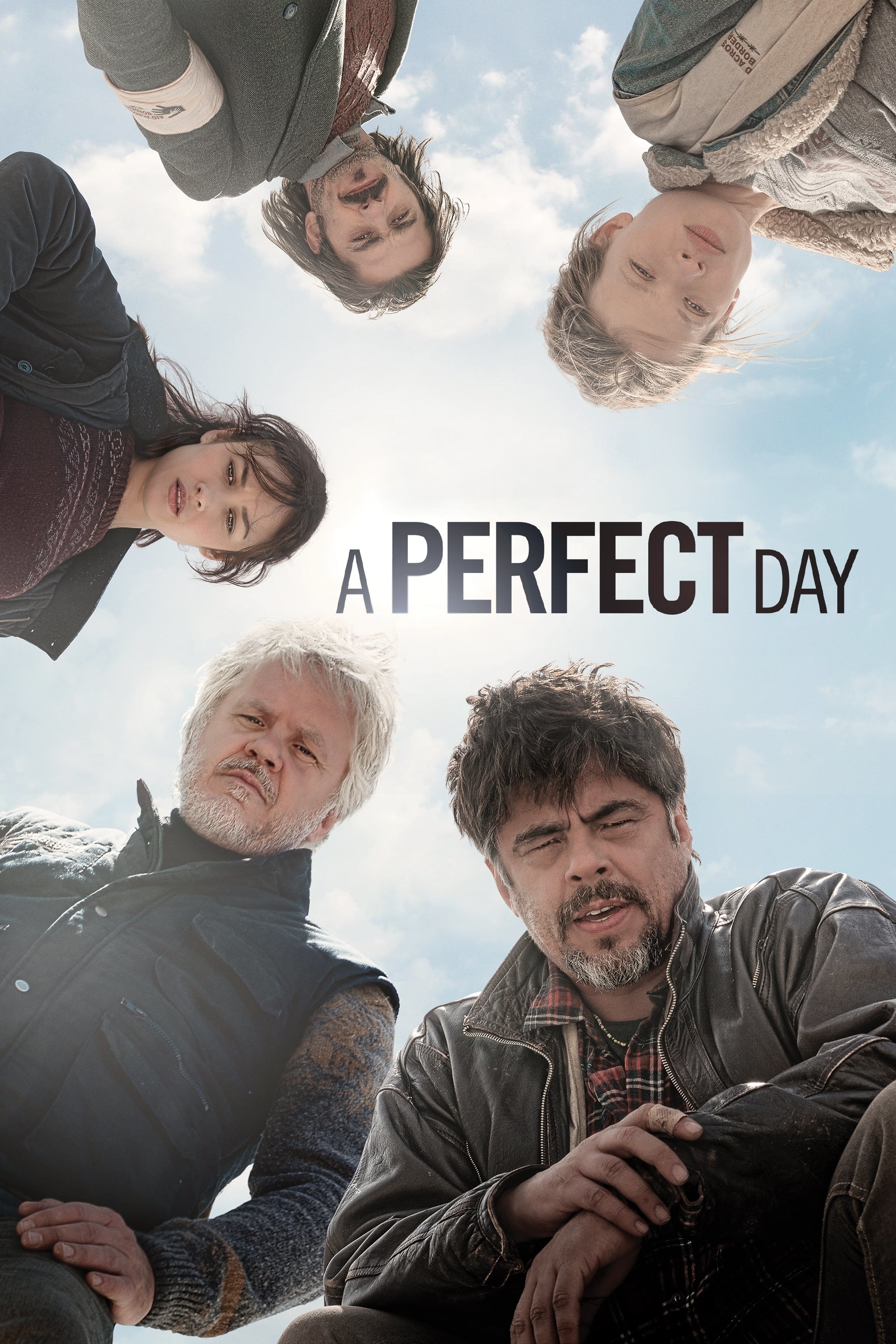
Somewhere in the Balkans, 1995. A team of aid workers must solve an apparently simple problem in an almost completely pacified territory that has been devastated by a cruel war, but some of the local inhabitants, the retreating combatants, the UN forces, many cows and an absurd bureaucracy will not cease to put obstacles in their way.
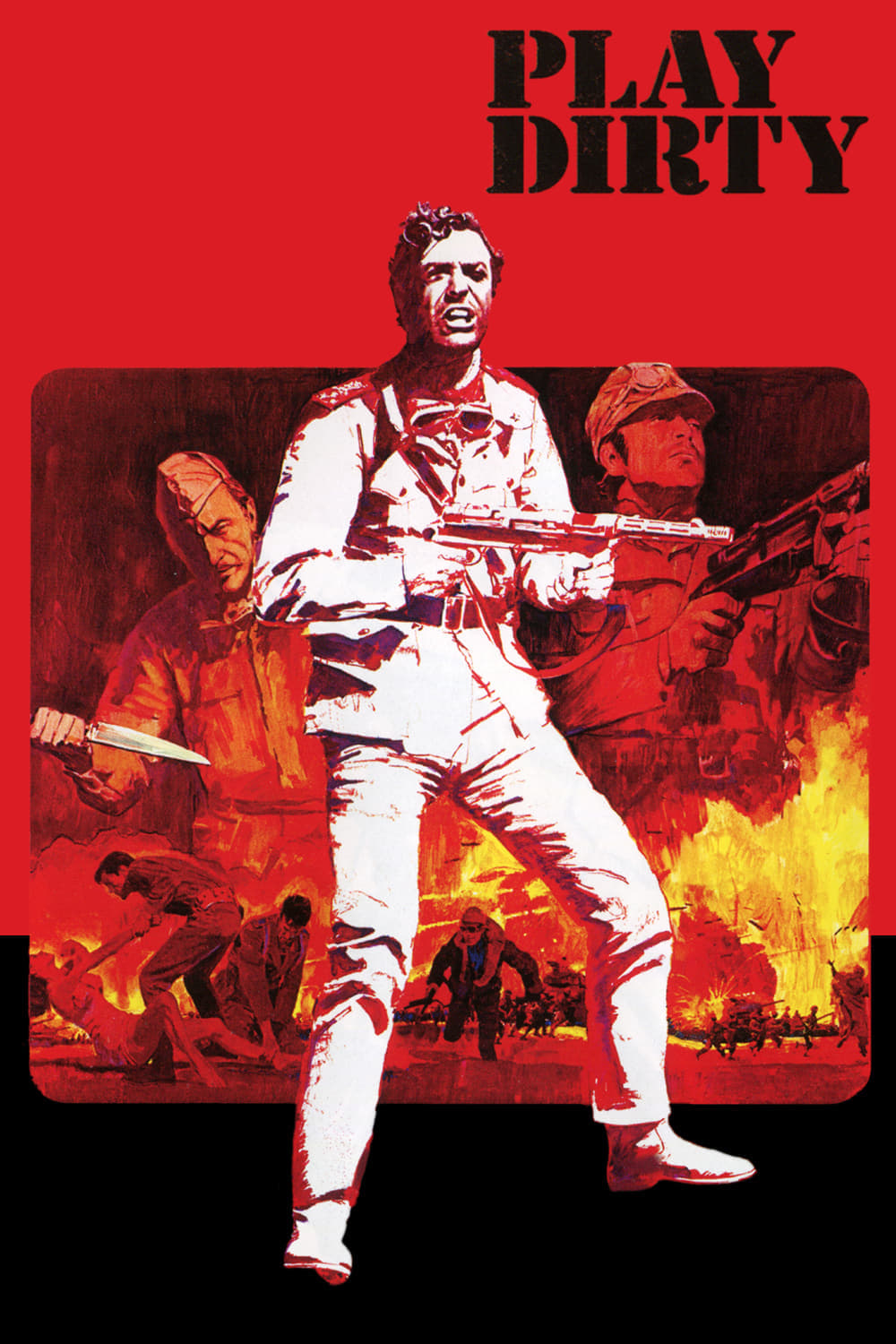
During World War II in North Africa, a group of British commandos disguised as Italian soldiers must travel behind enemy lines and destroy a vital Nazi oil depot.
After leaving his family's sheep farm in the Australian outback, a young man joins his countrymen on the western front of World War I with hopes of helping expedite an end to the bloody conflict. But as war rages on, he is forced to grapple with the brutal realities of trench warfare, including a near-constant battle to keep himself alive—without leaving another man behind. Inspired by the real-life diary entries of local ANZACs, the feature film details the untold story of some of Australia’s greatest military victories.
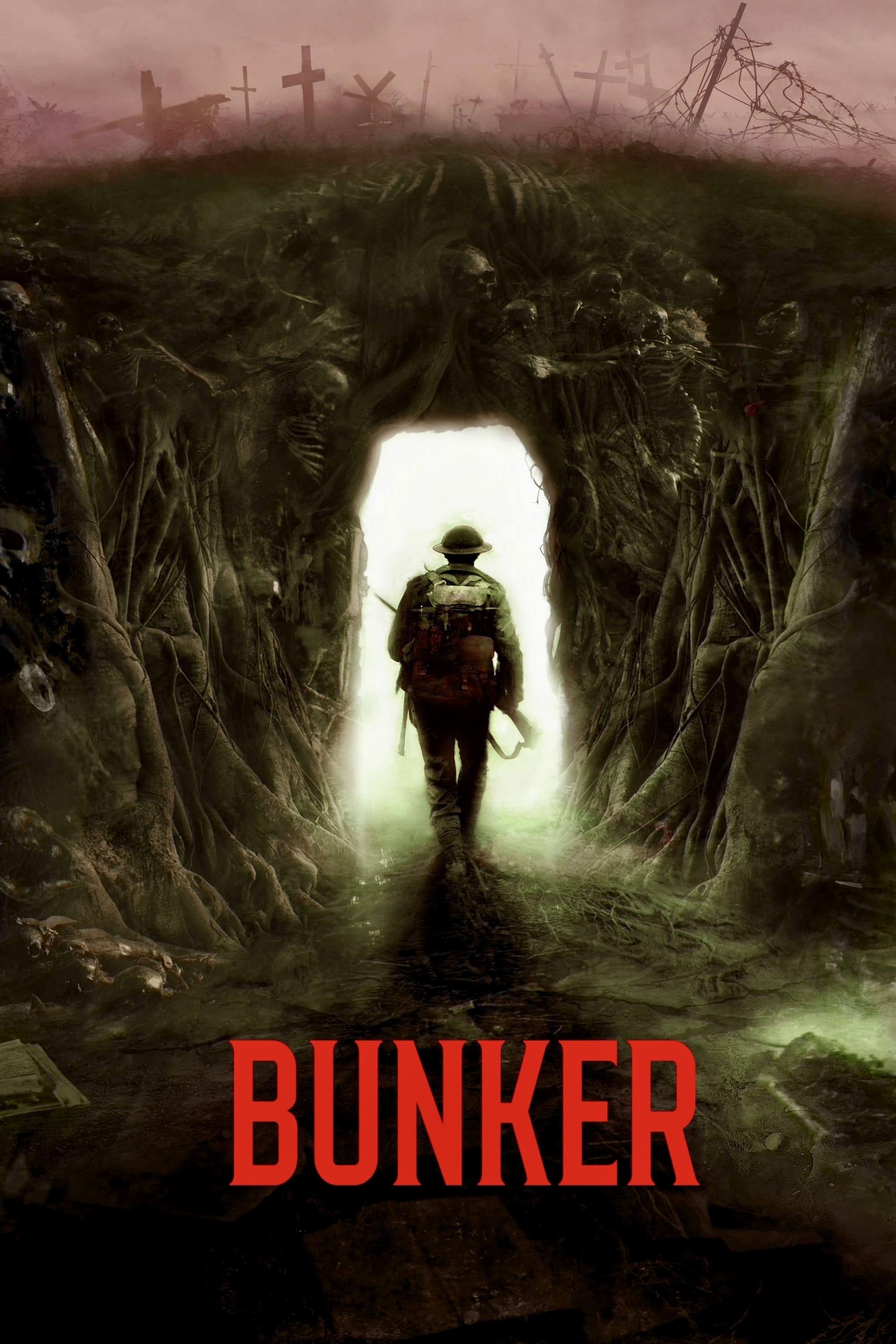
Trapped in a bunker during World War I, a group of soldiers are faced with an ungodly presence that slowly turns them against each other.
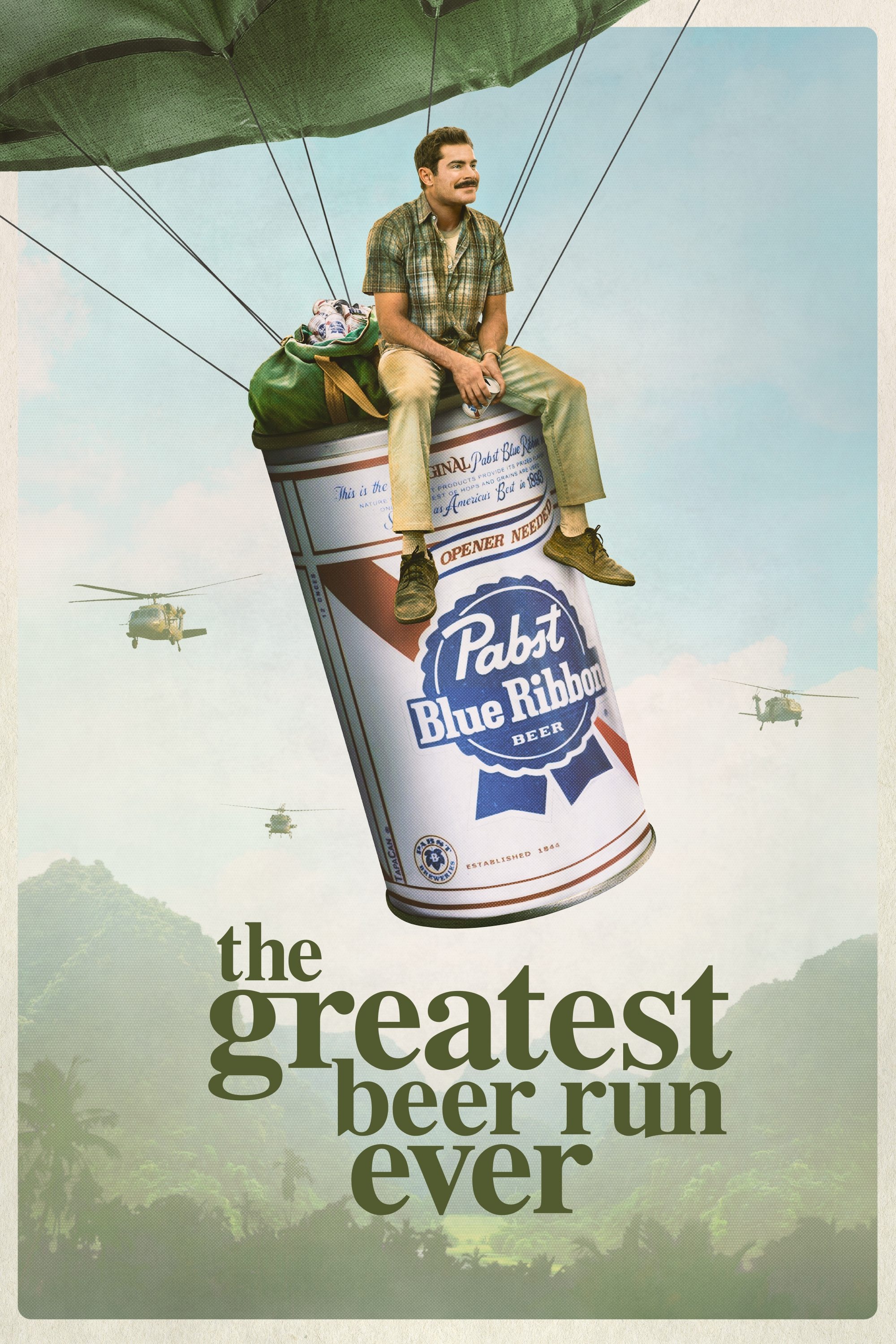
Chickie wants to support his friends fighting in Vietnam, so he does something wild—personally bring them American beer. What starts as a well-meaning journey quickly changes Chickie's life and perspective.
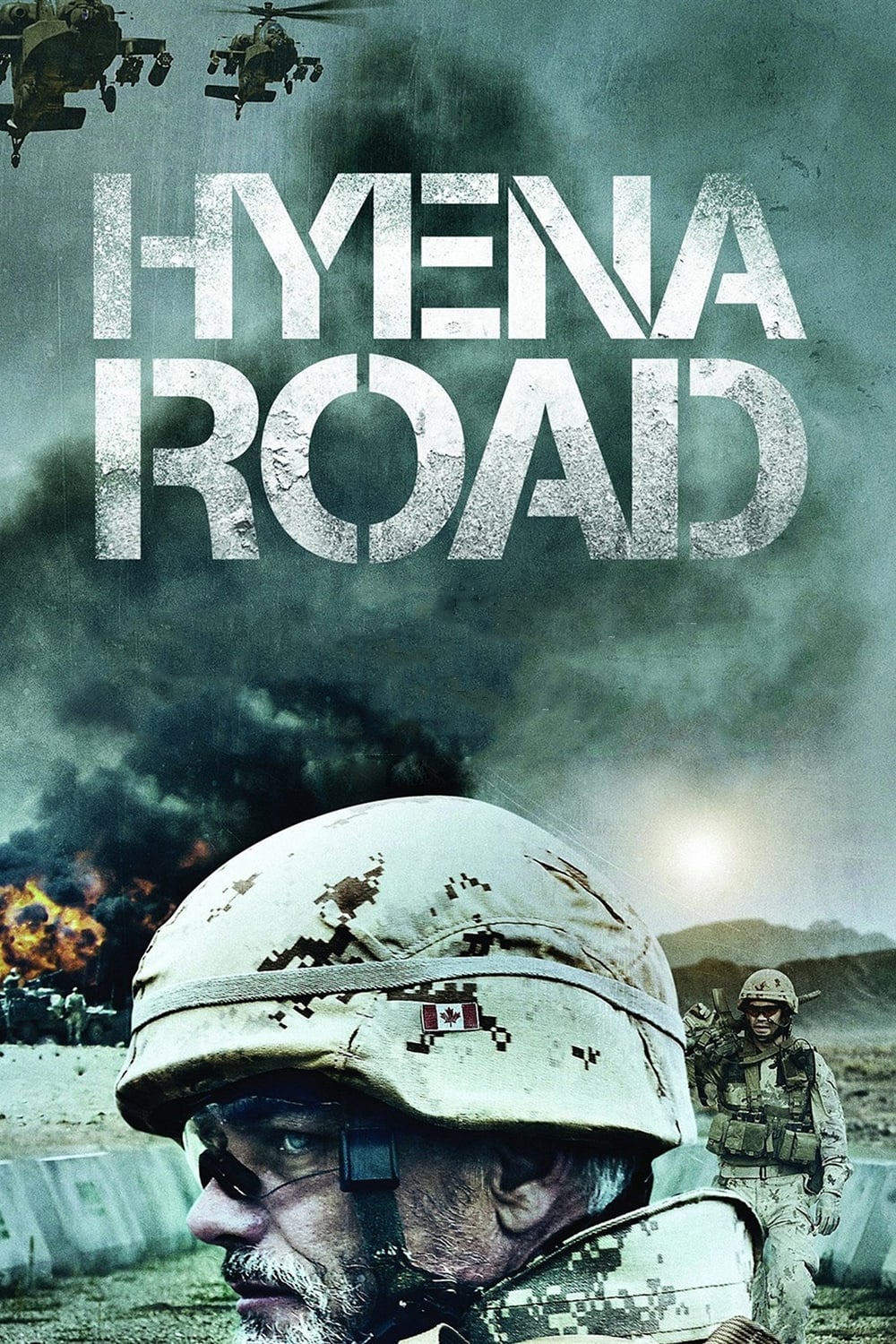
Three different men, three different worlds, three different wars – all stand at the intersection of modern warfare – a murky world of fluid morality where all is not as it seems. A unique and dramatic look at the Canadian Army in Afghanistan.
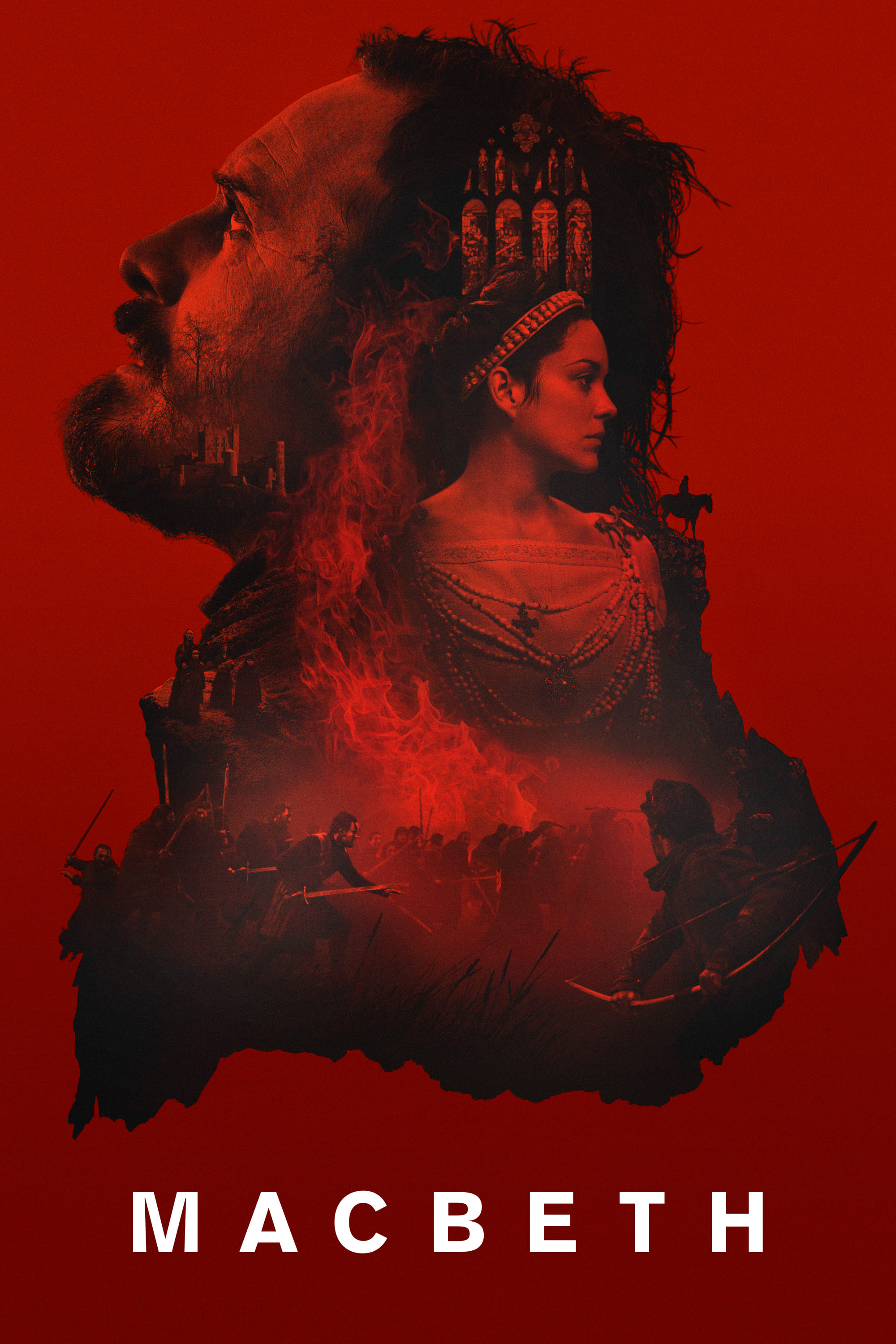
Feature film adaptation of Shakespeare's Scottish play about General Macbeth whose ambitious wife urges him to use wicked means in order to gain power of the throne over the sitting king, Duncan.
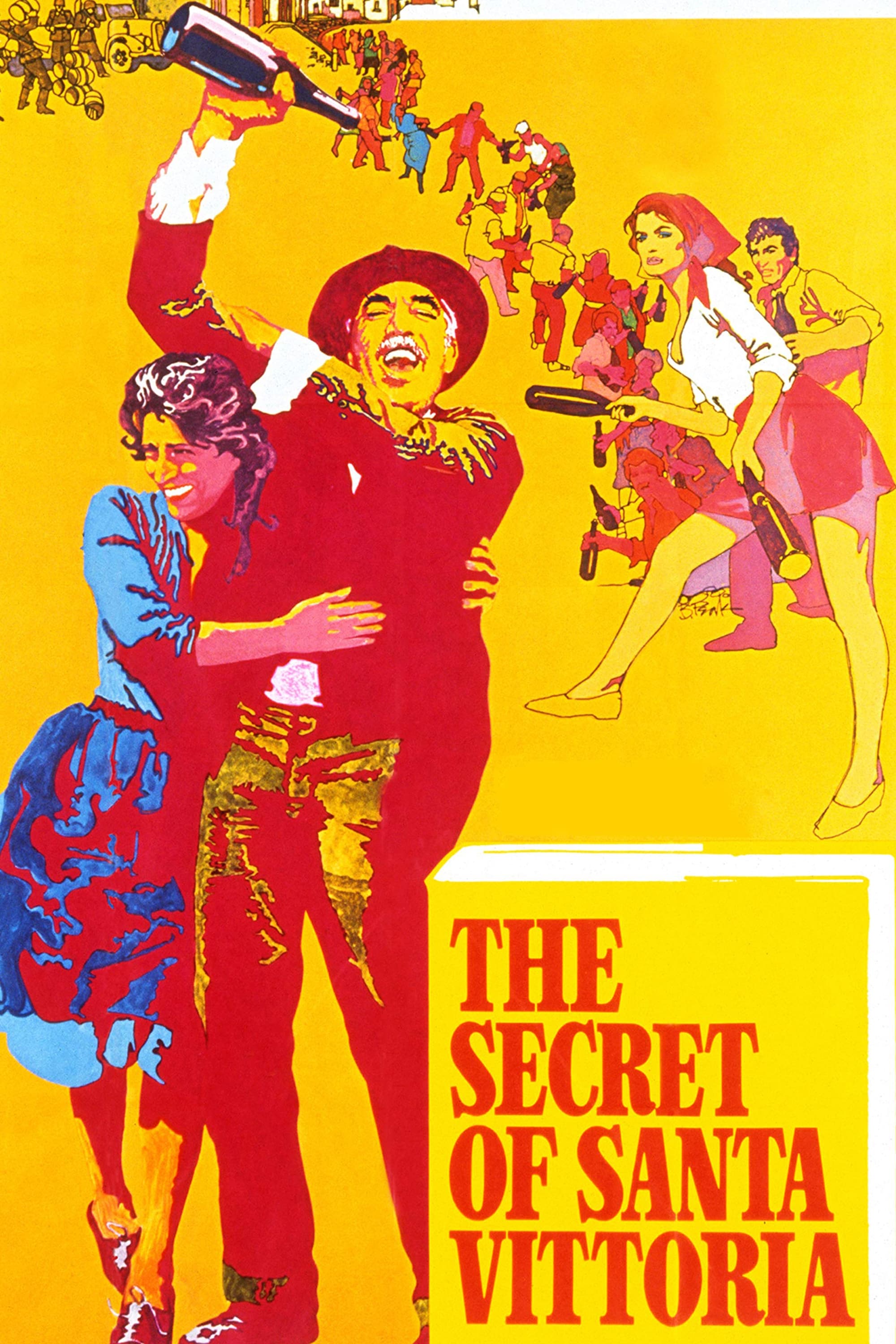
During World War II, Italian villagers hide their wine from the German army.
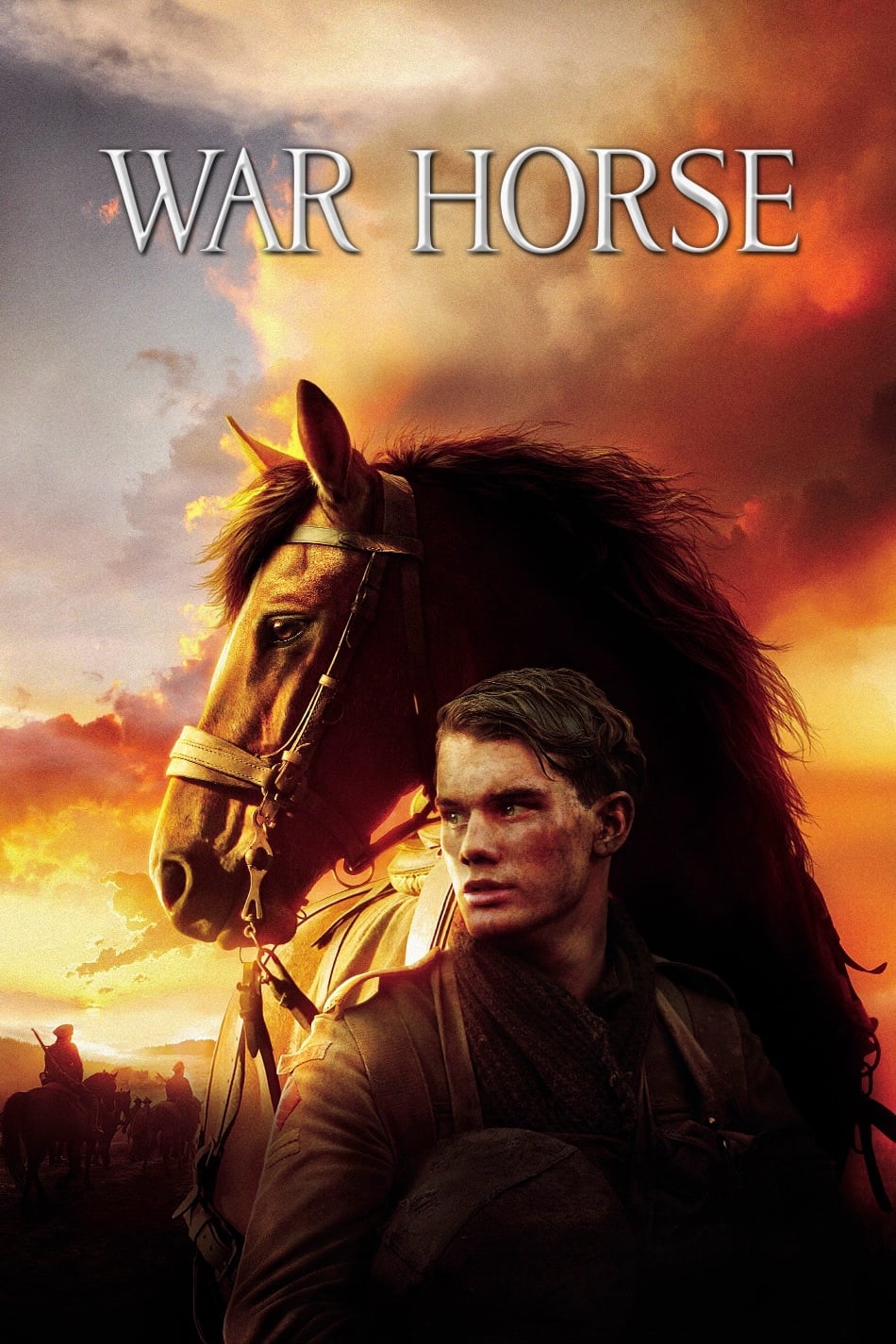
On the brink of the First World War, Albert's beloved horse Joey is sold to the Cavalry by his father. Against the backdrop of the Great War, Joey begins an odyssey full of danger, joy, and sorrow, and he transforms everyone he meets along the way. Meanwhile, Albert, unable to forget his equine friend, searches the battlefields of France to find Joey and bring him home.
Amid the failing counteroffensive, a journalist follows a Ukrainian platoon on their mission to traverse one mile of heavily fortified forest and liberate a strategic village from Russian occupation. But the farther they advance through their destroyed homeland, the more they realize that this war may never end.
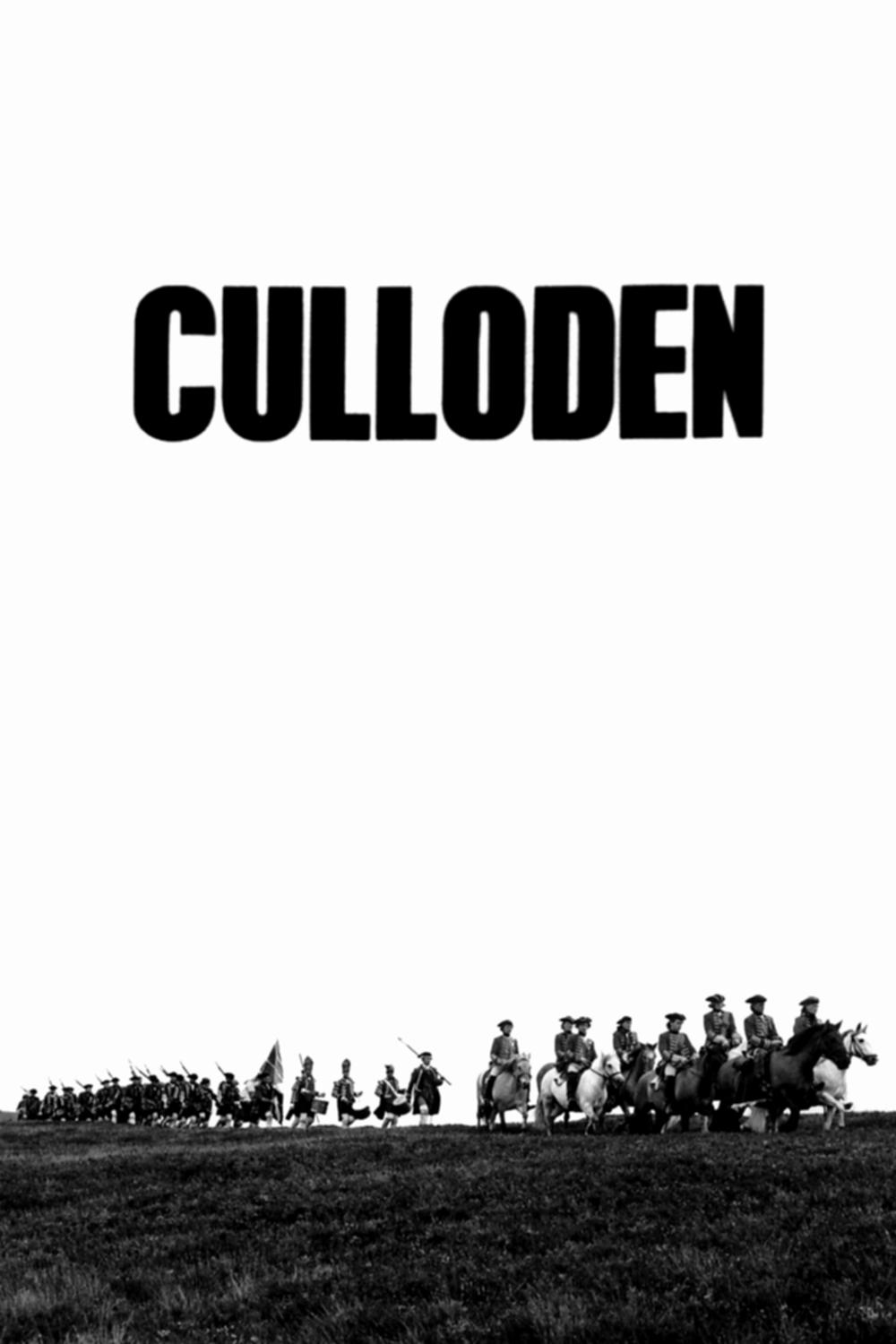
Culloden, Scottish Highlands, April 16th, 1746. It was one of the most mishandled and brutal battles ever fought in Great Britain. Its aftermath was tragic. The men responsible for such a disaster must be exposed. The men, women and children who suffered because of it must be remembered.
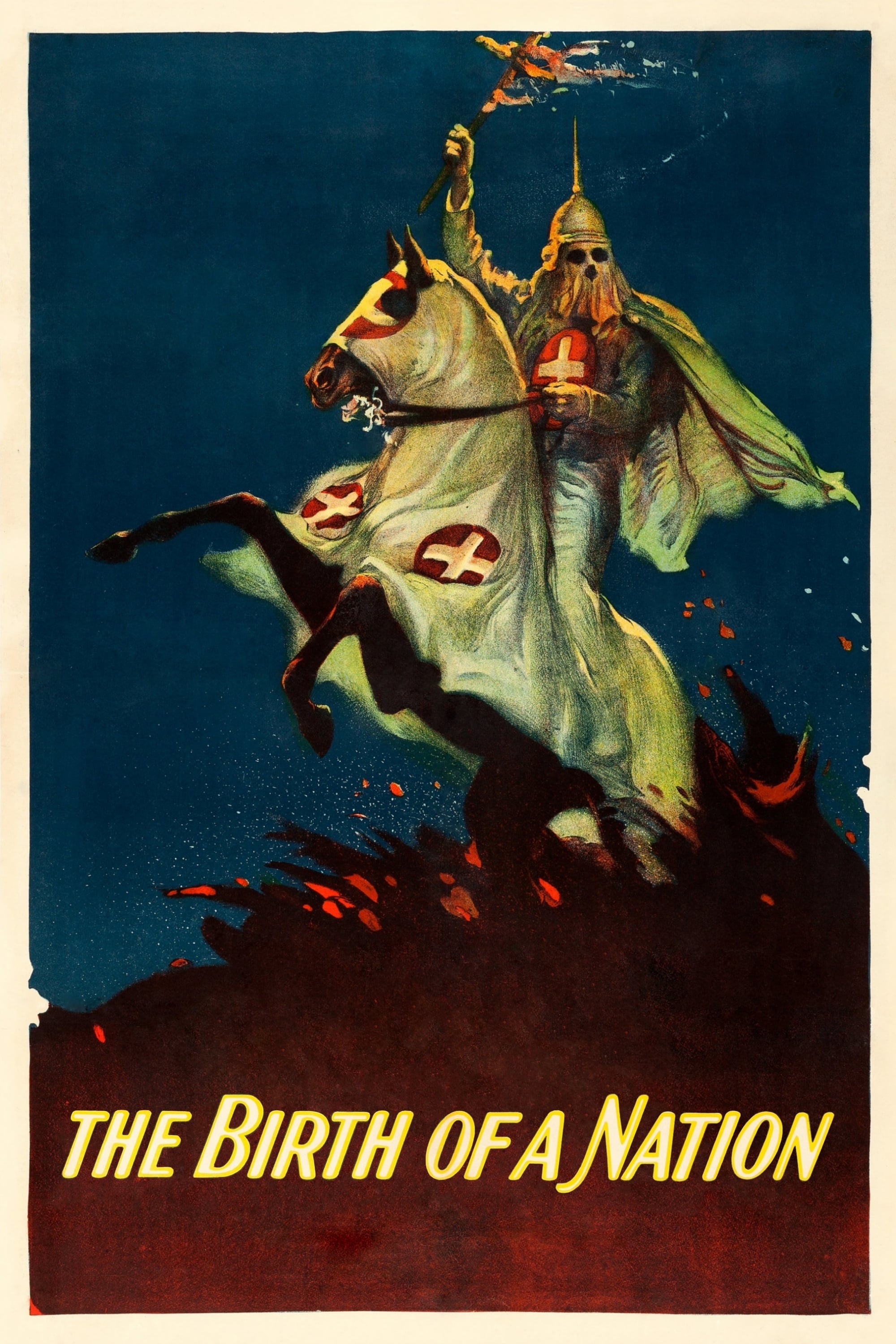
Two families, abolitionist Northerners the Stonemans and Southern landowners the Camerons, intertwine. When Confederate colonel Ben Cameron is captured in battle, nurse Elsie Stoneman petitions for his pardon. In Reconstruction-era South Carolina, Cameron founds the Ku Klux Klan, battling Elsie's congressman father and his African-American protégé, Silas Lynch.
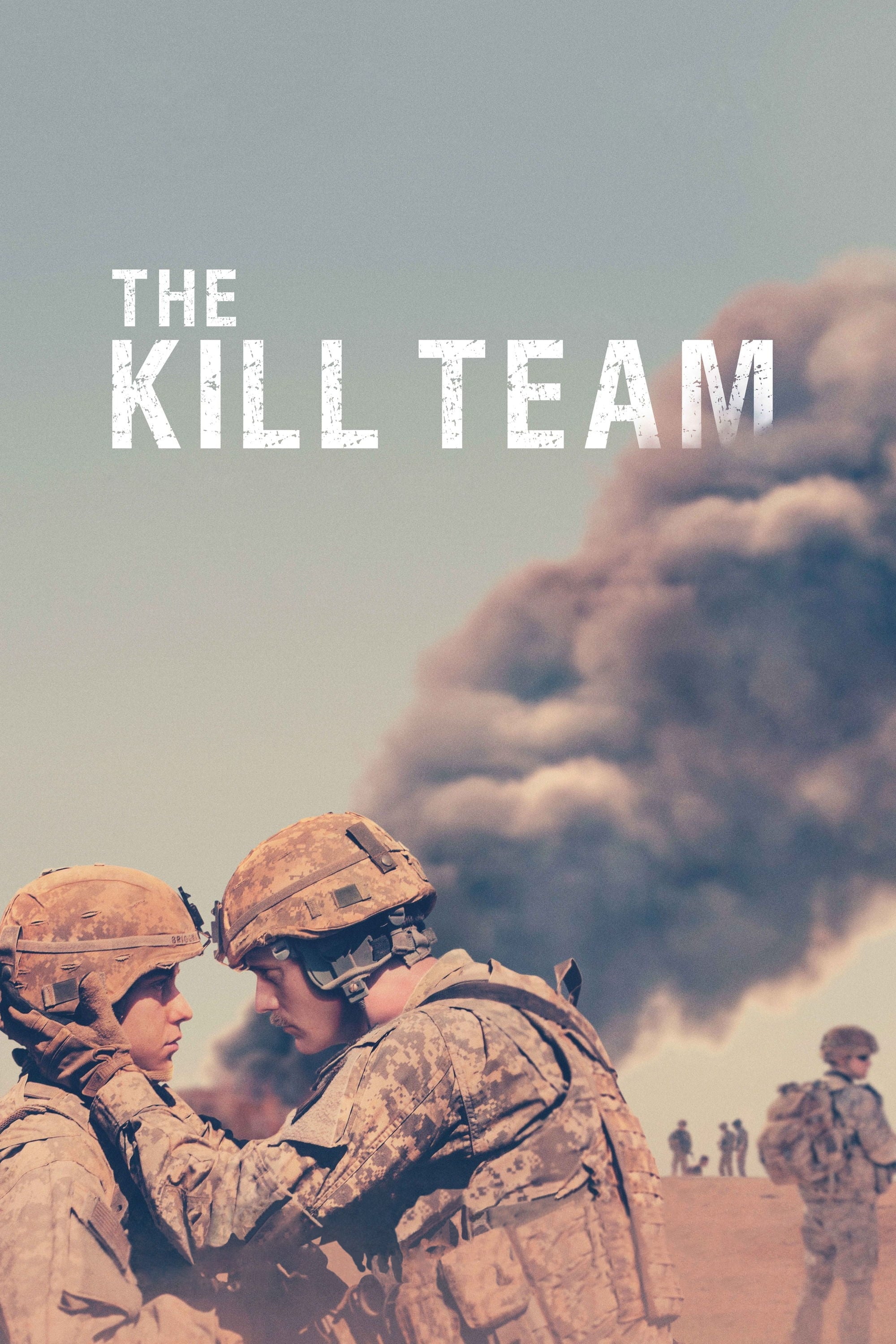
When Andrew Briggman — a young soldier in the US Army during the invasion of Afghanistan — witnesses the murderous behavior of fellow soldiers, under the direction of a malevolent Sergeant, he faces a moral dilemma. His increasingly-violent platoon becomes suspicious that someone in their ranks has turned on them, and Andrew begins to fear for his safety. A fictionalized dramatization based on a true story.
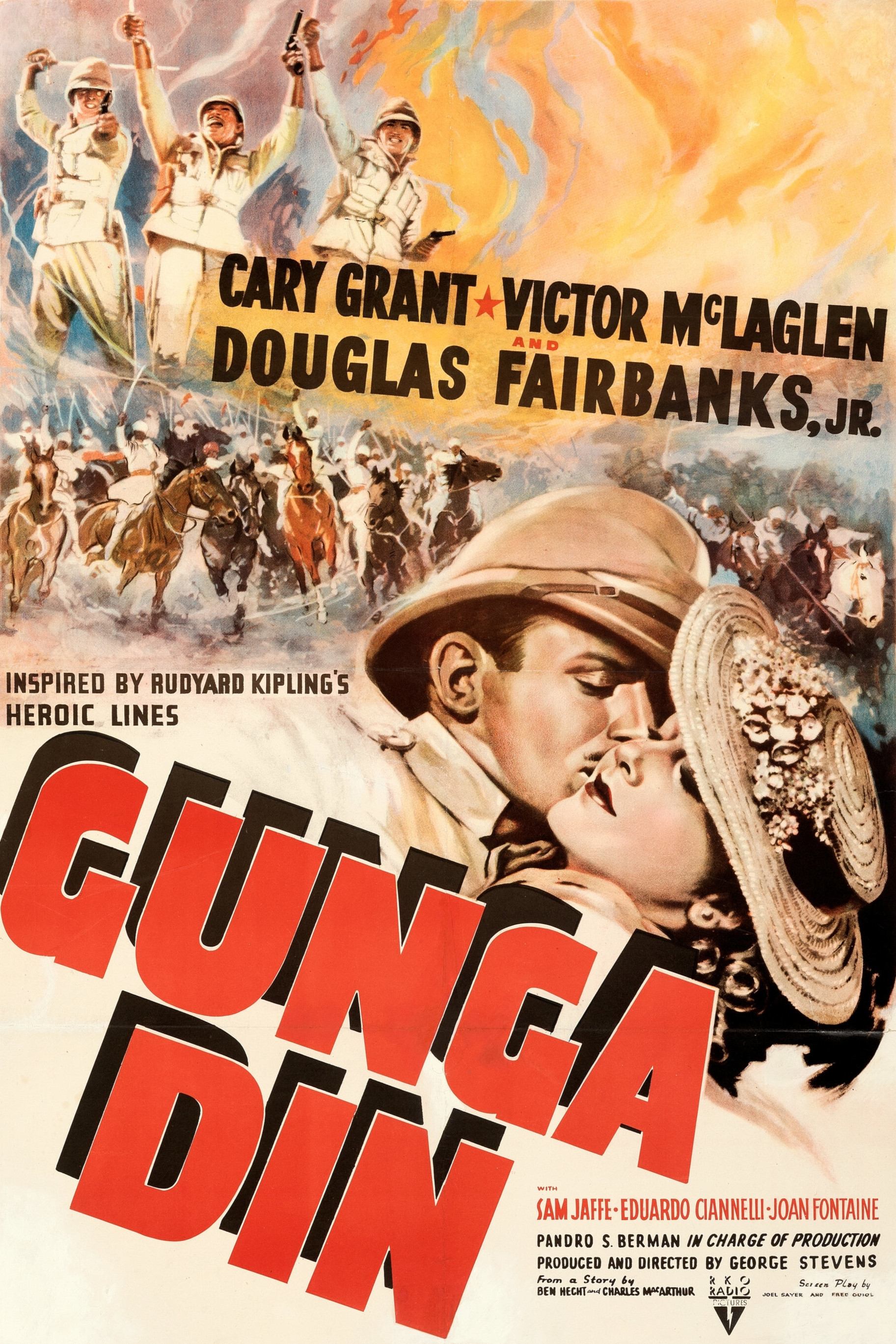
British army sergeants Ballantine, Cutter and MacChesney serve in India during the 1880s, along with their native water-bearer, Gunga Din. While completing a dangerous telegraph-repair mission, they unearth evidence of the suppressed Thuggee cult. When Gunga Din tells the sergeants about a secret temple made of gold, the fortune-hunting Cutter is captured by the Thuggees, and it's up to his friends to rescue him.