"Of all the major studios, one was family."
An intimate portrait and saga of four film pioneers--Harry, Albert, Sam and Jack who rose from immigrant poverty through personal tragedies persevering to create a major studio with a social conscience.
Social & External
The people behind it
Cass Warner
Narrator
Dennis Hopper
Self

Sherry Lansing
Debbie Reynolds
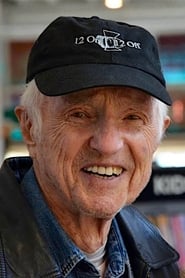
Haskell Wexler
Norman Lear
George Segal
Angie Dickinson
Samuel Goldwyn Jr.
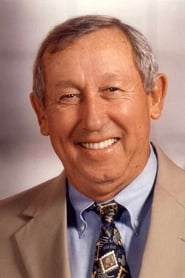
Roy Edward Disney
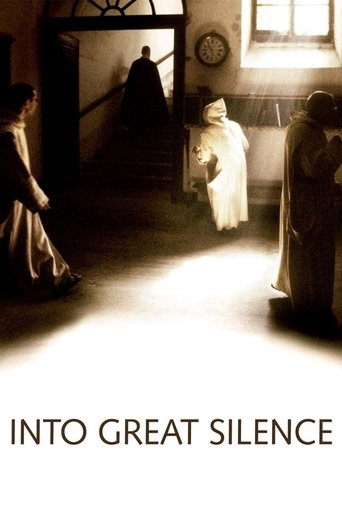
An intimate portrayal of the everyday lives of Carthusian monks of the Grande Chartreuse, high in the French Alps (Chartreuse Mountains). The idea for the film was proposed to the monks in 1984, but the Carthusians said they wanted time to think about it. The Carthusians finally contacted Gröning 16 years later to say they were now willing to permit Gröning to shoot the movie, if he was still interested.
Examines the early 1980s Hong Kong filmmaking community. Tony Rayns interviews some of the new generation of filmmakers and figures from the wider film culture.
Perhaps it is his distinctive velvet smooth voice and calming demeanor that made Morgan Freeman a household name. World-renowned actor, Freeman has starred in over 100 movies in just three decades and continues to break barriers.
Documentary covering the current state of both the theoretical and practical development of the various scientific basic principles that served, as per Gene Roddenberry's dictum, as a believable basis at the time for The Original Series. Several real-world scientists are interviewed, not a few of them unabashedly admitting they went into their chosen field of profession because of Star Trek: The Original Series.
Profile of famed dance director Busby Berkeley's career, in particular "The Gang's All Here"
State of Bacon tells the kinda real but mostly fake tale of an oddball group of characters leading up to the annual Blue Ribbon Bacon Festival. Bacon-enthusiasts, Governor Branstad, a bacon queen, Hacksaw Jim Duggan, members of PETA, and an envoy of Icelanders are not excluded from this bacon party and during the course of the film become intertwined with the organizers of the festival to show that bacon diplomacy is not dead.
Winston Churchill understood the power of films, but the true extent of his use of cinema as a propaganda tool is rarely explored. In 1934, one of Britain's most celebrated film producers, Alexander Korda, signed Churchill up as a screenwriter and historical advisor. It was the start of a unique collaboration. Churchill provided script notes for Korda's productions and penned an epic screenplay. When war broke out, their collaboration took on national importance. Korda was sent on a mission to Hollywood to help bring America into the war, with positive results. With access to previously undiscovered documents, this film documentary examines that mission and a friendship that underpinned a unique, creative partnership.
A documentary incorporating footage of Montgomery Clift’s most memorable films; interviews with family and friends, and rare archival material stretching back to his childhood. What develops is the story of an intense young boy who yearned for stardom, achieved notable success in such classic films as From Here to Eternity and I Confess, only to be ruined by alcohol addiction and his inability to face his own fears and homosexual desires. Montgomery Clift, as this film portrays him, may not have been a happy man but he never compromised his acting talents for Hollywood.
Charismatic and resourceful, seducer and daredevil, Jean-Paul Belmondo has always played his roles as he lived, at a thousand miles an hour. He had only one passion: to entertain the public with his smile, his naturalness, his energy, his stunts. But contrary to appearances, his destiny was full of pitfalls. This film lifts the veil on a founding childhood that allowed him to overcome many obstacles throughout his life thanks to the tutelary figures of his father and mother. Told from the inside with the help of his autobiography, interviews and unpublished archives, this epic story traces the career of this turbulent young actor who launched the New Wave in Breathless before becoming the popular Bebel, an indestructible and provocative vigilante. From film to film, this documentary paints an intimate portrait of a man who built himself up to reach the top: his triumphs but also his trials, his doubts, his secrets, his angers, his clowning, his disappointments or his personal dramas.
Hawaii, May 1977. After the success of Star Wars, George Lucas and Steven Spielberg meet to find a new project to work on together, the former as producer, the latter as director. The story of how the charismatic archaeologist Indiana Jones was born and how his first adventure, released in 1981, triumphed at box offices around the world.
A strange and mischievous documentary on an archeological site in the Qaytarieh hills in Tehran. This short narrates the story of the dead people who wished never to be found.
A documentary about James Bond in the Bahamas.
A documentary about Ian Fleming.
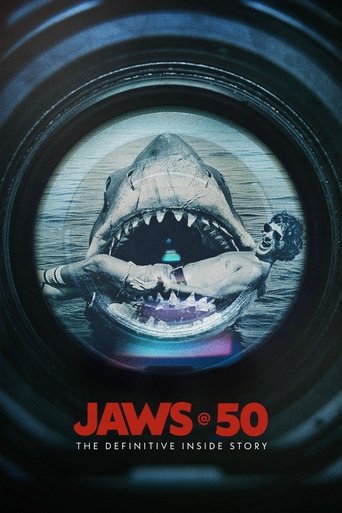
In the summer of 1975, the young director Steven Spielberg set new standards for cinema worldwide with an oversized shark bite, a plastic shark fin and an unmistakable two-note main theme composed by John Williams. With the horror from the deep, a man-eating, gigantic great white shark, the film of the same name became a similarly traumatic reference as Alfred Hitchcock's "Psycho": it triggered lasting primal fears across generations. On the beaches of the world, there was clearly a "before" and an "after". Steven Spielberg, who was only 28 at the time, not only set new standards for the thriller genre, but also hid his biting criticism of US capitalism in the 1970s behind it.
Pianist Richard Glazier offers a unique view of Broadway and Hollywood music using fascinating interviews, piano performances and commentary in this broadcast special.
As director Hakim Belabbes chronicles his journey from his home in Chicago to visit his family in his hometown of Boujad in Morocco, his exploration of family relationships is self-conscious and at times painfully honest. We witness his most private moments with his family. The film intimately explores the domestic spaces and religious rituals of intra-family relationships, especially when compounded by one member's break with traditional values.
Caught between chasing his past and accepting his impending end, a man follows his childhood memories through the dark alleyways and desolate cemeteries of Boujad, Morocco.
TCM host Robert Osborne discusses his life and career with guest interviewer Alec Baldwin in commemoration of Osborne's 20 years with the network.
Robert Altman's life and career contained multitudes. This father of American independent cinema left an indelible mark, not merely on the evolution of his art form, but also on the western zeitgeist. With its use of rare interviews, representative film clips, archival images, and musings from his family and most recognizable collaborators, Altman is a dynamic and heartfelt mediation on an artist whose expression, passion and appetite knew few bounds.
The definitive documentary on the history of nudity in feature films from the early silent days to the present, studying the changes in morality that led to the use of nudity in films while emphasizing the political, sociological and artistic changes that shaped that history. Skin will also study the gender inequality in presenting nude images in motion pictures and will follow the revolution that has created nude gender equality in feature films today.
An intense portrait of the iconic filmmaker, writer, actor, comedian and musician Woody Allen: his life, family and friends; his writing and directing habits, and his relationship with performers.
The history of cinematic sound, told by legendary sound designers and visionary filmmakers.
Since the invention of cinema, the standard format for recording moving images has been film. Over the past two decades, a new form of digital filmmaking has emerged, creating a groundbreaking evolution in the medium. Keanu Reeves explores the development of cinema and the impact of digital filmmaking via in-depth interviews with Hollywood masters, such as James Cameron, David Fincher, David Lynch, Christopher Nolan, Martin Scorsese, George Lucas, Steven Soderbergh, and many more.
In 1974, Chilean-French director Alejandro Jodorowsky embarked on the quixotic project of adapting Frank Herbert's influential novel Dune (1969) for the big screen. After investing two years, and millions of dollars, the gigantic project ended in failure; but the artists Jodorowsky brought together to carry it out continued to work together, and ended up laying the foundations for modern science fiction cinema.
The epic life story of Alice Guy-Blaché (1873–1968), a French screenwriter, director and producer, true pioneer of cinema, the first person who made a narrative fiction film; author of hundreds of movies, but banished from history books. Ignored and forgotten. At last remembered.
Filmmaker Lawrence Shapiro discusses voice-over acting with the talented people behind the characters.
Told through performances, TV interviews, home movies, family photographs, private letters and unpublished memoirs, the film reveals the essence of an extraordinary woman who rose from humble beginnings in New York City to become a glamorous international superstar and one of the greatest artists of all time.
An unprecedented and intimate look at the life, work and enduring legacy of British actress Audrey Hepburn (1929-1993).
Cast, crew and fans explore the "Back to the Future" time-travel trilogy's resonance throughout our culture, thirty years after Marty McFly went back in time.
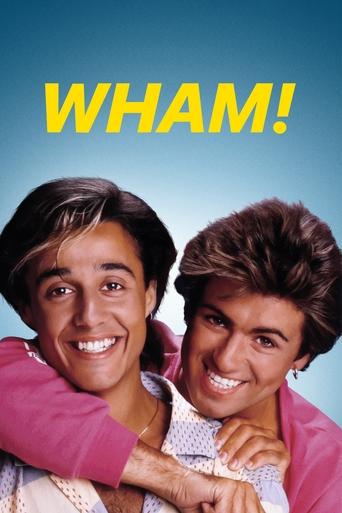
Through archival interviews and footage, George Michael and Andrew Ridgeley relive the arc of their Wham! career, from 70s best buds to 80s pop icons.
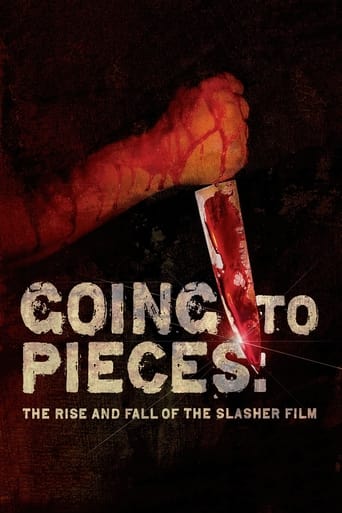
This historical and critical look at slasher films, which includes dozens of clips, begins with Halloween, Friday the 13th, and Prom Night. The films' directors, writers, producers, and special effects creators comment on the films' making and success. During the Reagan years, the films get gorier, budgets get smaller, and their appeal wanes. Then, Nightmare on Elm Street revives the genre. Jump to the late 90s, when Scream brings humor and TV stars into the mix.
In the final decades of the 20th century, the Philippines was a country where low-budget exploitation-film producers were free to make nearly any kind of movie they wanted, any way they pleased. It was a country with extremely lax labor regulations and a very permissive attitude towards cultural expression. As a result, it became a hotbed for the production of cheapie movies. Their history and the genre itself are detailed in this breezy, nostalgic documentary.
Over seven decades, actor and activist George Takei journeyed from a World War II internment camp to the helm of the Starship Enterprise, and then to the daily news feeds of five million Facebook fans. Join George and his husband, Brad, on a wacky and profound trek for life, liberty, and love.
Michael Moore comes home to the issue he's been examining throughout his career: the disastrous impact of corporate dominance on the everyday lives of Americans (and by default, the rest of the world).
Long-lost footage from Elvis Presley's legendary Las Vegas residency in the 1970s woven together with rare 16mm footage from Elvis on Tour, and 8mm from the Graceland archive, plus recordings of Elvis telling "his side of the story" rediscovered during Baz Luhrmann's research for his 2022 film, Elvis.
A deep dive into the making of the Paranormal Activity films with first time ever interviews with cast and crew, never-before-seen footage from the movies, and a preview of the seventh installment in the franchise.
Since the late 18th century American legal decision that the business corporation organizational model is legally a person, it has become a dominant economic, political and social force around the globe. This film takes an in-depth psychological examination of the organization model through various case studies. What the study illustrates is that in the its behaviour, this type of "person" typically acts like a dangerously destructive psychopath without conscience. Furthermore, we see the profound threat this psychopath has for our world and our future, but also how the people with courage, intelligence and determination can do to stop it.
A look at the first years of Pixar Animation Studios - from the success of "Toy Story" and Pixar's promotion of talented people, to the building of its East Bay campus, the company's relationship with Disney, and its remarkable initial string of eight hits. The contributions of John Lasseter, Ed Catmull and Steve Jobs are profiled. The decline of two-dimensional animation is chronicled as three-dimensional animation rises. Hard work and creativity seem to share the screen in equal proportions.