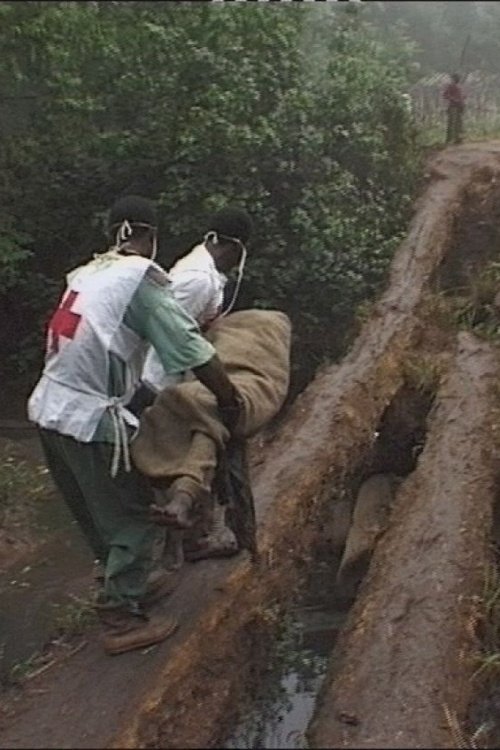
A quartet of powerful, hard-hitting short films that lay bare the disturbing reality of everyday life in the Democratic Republic of Congo.
Social & External
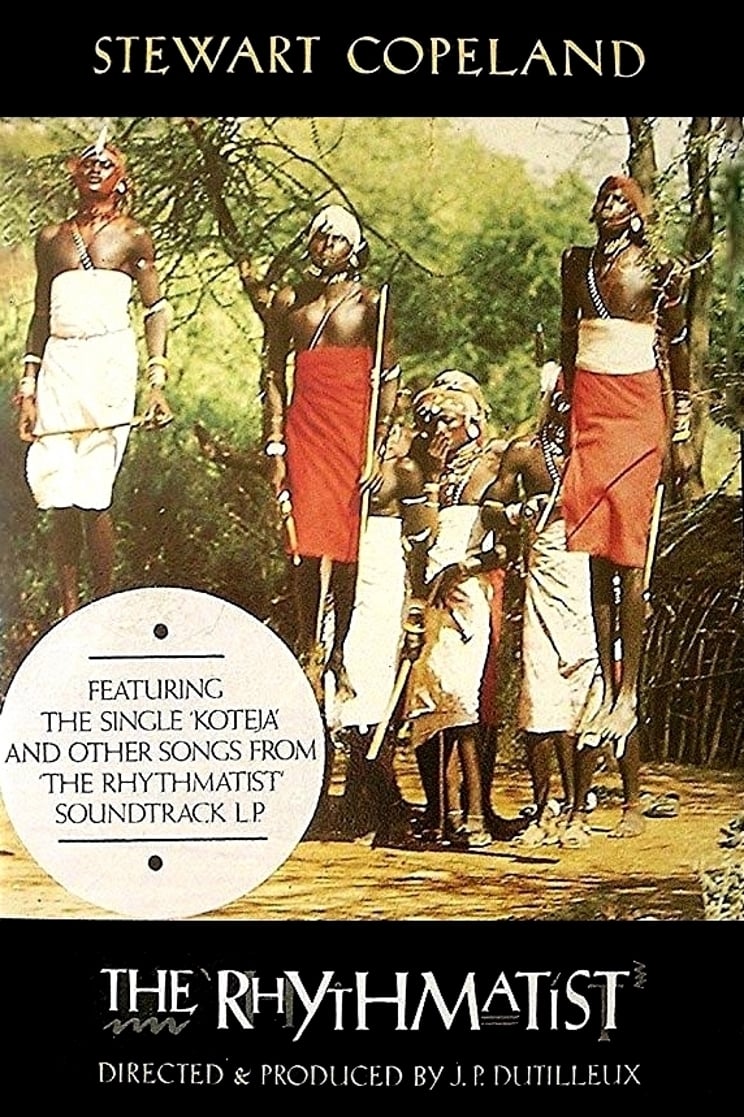
Short ethnographic documentary showing a leopard dance based upon footage shot by director Luc de Heusch in Congo in 1954 reassembled by Damien Mottier (Université Paris Nanterre) and Grace Winter (CINEMATEK).
The Democratic Republic of the Congo is a vast, mineral rich country the size of Western Europe. Alastair Leithead takes an epic journey from the Atlantic Ocean to the far reaches of the Congo river to explore how history has shaped the Congo of today and uncover the lesser told stories of this beautiful, if troubled country. In the largest rainforest outside of the Amazon he comes face to face with its gorillas and hunts with pygmies, he travels into the heart of the Ebola outbreak with United Nations peacekeepers, and explores the cobalt mines which will drive our electric cars of the future.
A visual travel diary on the expedition led by Brondeel in 1934. This expedition to Belgian Congo, by truck, became a testimony to the social conditions of Africans during the colonial era.
A chronicle of the violence that occurred in much of the African continent throughout the 1960s. As many African countries were transitioning from colonial rule to other forms of government, violent political upheavals were frequent. Revolutions in Zanzibar and Kenya in which thousands were killed are shown, the violence not only political; there is also extensive footage of hunters and poachers slaughtering different types of wild animals.
The critically important work by renowned naturalist Claudine Andre to save the endangered bonobo apes of the Congo is presented in this visually stunning feature film.
An investigation of the emotional and economic value of Africa's most lucrative export: filmed poverty. Deep in the interiors of the Congo, Dutch artist Renzo Martens single-handedly undertakes an epic journey and launches an emancipatory program that helps the poor become aware of what is their primary capital resource: Poverty. After three years of traveling through the Democratic Republic of the Congo he asks the question: "Who owns poverty?
As if they were showing their film to a few friends in their home, the Johnsons describe their trip across the world, which begins in the South Pacific islands of Hawaii, Samoa, Australia, the Solomons (where they seek and find cannibals), and New Hebrides. Thence on to Africa via the Indian Ocean, Suez Canal, North Africa, and the Nile River to lion country in Tanganyika. (They are briefly joined in Khartum by George Eastman and Dr. Al Kayser.) Taking a safari in the Congo, the Johnsons see animals and pygmies, and travel back to Uganda, British East Africa, and Kenya.
The modern history of the Congo, the heart of Africa, is a terrifying tale of appalling brutality: how the greedy and incredibly ruthless King Leopold II of Belgium (1935-1909) turned a vast country into his private estate (1885-1908) and how he plundered the land and raped the bodies and souls of its defenceless inhabitants, causing countless victims; and what exactly is the true impact of this often forgotten story of crime and horror today.
Documentary about African political leader Patrice Lumumba, who was Prime Minister of Zaire (now Congo) when he was assassinated in 1961.
Sven Nykvist, best known as Ingmar Bergman cinematographer, made this film as a tribute to his father who was a missionary in Kongo in the early 20th century. The story of his father Gustav Natanael Nykvist is told through his own photos, letters, and films. Director & cinematographer: Sven Nykvist. Narrators in the English dubbed version: Liv Ullmann & Sean Connery. Produced by Ingmar Bergman (Cinematograph AB). Digitally restored in 2022.
Some kids in Brussels play a game based upon objects that were brought back from the Congo and which were used during the Hutereau expedition.
1961 - the year when Swedish UN soldiers are in the crisis-ridden Congo and Secretary General Dag Hammarskjöld dies in a plane crash. Swedish film's biggest hit, "Are there angels?", has its premiere with Christina Schollin in one of the roles. Yuri Gagarin becomes the first man in space and the Volvo P 1800 appears on the roads. Ewy Rosqvist is a rally ace and in April the regal ship Vasa is lifted up after 333 years at the bottom of Stockholm's stream. In August, the Berlin Wall is built and outside the Stockholm archipelago, Radio Nord broadcasts music and news.
John Bishop encounters one of the most endangered animals on Earth, and discovers they and his family have more in common than he ever imagined. Filming in the jungles of Rwanda for John Bishop’s Gorilla Adventure, the comedian realises adolescent male mountain gorillas are just like his teenage sons – bulging muscles but no sense. Plus they fart, flirt and pick their noses. We follow John as he joins a group of vets who have dedicated their lives to saving the, sadly, precious few mountain gorillas left in the wild rugged mountains and valleys between the borders of Rwanda, Congo and Uganda, which were made famous to UK viewers by David Attenborough’s iconic sequence filmed among them in the 1970s.
With unprecedented access to the UN Department of Peacekeeping, The Peacekeepers provides an intimate and dramatic portrait of the struggle to save "a failed state" The film follows the determined and often desperate maneuvers to avert another Rwandan disaster, this time in the Democratic Republic of Congo (the DRC). Focusing on the UN mission, the film cuts back and forth between the UN headquarters in New York and events on the ground in the DRC. We are with the peacekeepers in the "Crisis Room" as they balance the risk of loss of life on the ground with the enormous sums of money required from uncertain donor countries. We are with UN troops as the northeast Congo erupts and the future of the DRC, if not all of central Africa, hangs in the balance. In the background, but often impinging on peacekeeping decisions, are the painful memory of Rwanda, the worsening crisis in Iraq, global terrorism, and American hegemony in world affairs.
In June 2010, French actress Marion Cotillard spent a week in the heart of the tropical forests of the Democratic Republic of Congo with members of Greenpeace France and Greenpeace Africa. She delivers in video a strong testimony on the looting of Congolese forests which benefits a few industrial groups, often European.
Jazz and decolonization are intertwined in a powerful narrative that recounts one of the tensest episodes of the Cold War.
Commissioned for the Irish representation at the 55th Venice Biennale in 2013, The Enclave is an immersive, six-screen video art installation by Irish contemporary artist Richard Mosse. Partly inspired by Joseph Conrad’s modernist literary masterpiece Heart of Darkness, the visceral and moving work was filmed in the Democratic Republic of Congo using 16mm colour infra-red film, which captures otherwise invisible parts of the spectrum. The resulting imagery in Mosse’s work is hallucinatory and dream-like with the usual greens of jungle and forest replaced by shimmering violet. The Enclave depicts a complicated, strife-ridden place in a way that reflects its complexity, using a strategy of beauty and transfixion to combat the wider invisibility of a conflict that has claimed so many.
Documentary about the inhabitants, both human and animal, of the Belgian Congo.
“In the beginning, women lived apart, unaware of the existence of men. Until one day, when the first woman, Toli, who was brave and adventurous traveled deep into the forest. Toli discovered solitary creatures with big muscles who knew how to climb trees and harvest wild honey. When Toli tasted their honey, she thought they should all live together….” That is how one of the creation stories of the Aka people from the tropical rainforest of the Congo Basin goes. Akaya, Kengole, Dibota and their friends and family are hunters-gatherers (and also great story-tellers) who guide us through their world. They explain their origins, myths, and the very spiritual meaning of life.
An ex-mercenary turned smuggler. A Mende fisherman. Amid the explosive civil war overtaking 1999 Sierra Leone, these men join for two desperate missions: recovering a rare pink diamond of immense value and rescuing the fisherman's son, conscripted as a child soldier into the brutal rebel forces ripping a swath of torture and bloodshed countrywide.
A woman narrates the thoughts of a world traveler, meditations on time and memory expressed in words and images from places as far-flung as Japan, Guinea-Bissau, Iceland, and San Francisco.
A documentary on the expletive's origin, why it offends some people so deeply, and what can be gained from its use.
A searing account of war correspondent Michael Ware's seven years reporting in Iraq--an extraordinary journey that takes him into the darkest recesses of the Iraq War and the human soul.
Daniel Craig candidly reflects on his 15 year adventure as James Bond. Including never-before-seen archival footage from Casino Royale to the upcoming 25th film No Time To Die, Craig shares his personal memories in conversation with 007 producers, Michael G Wilson and Barbara Broccoli.
Shot over three years on the borders between Iraq, Kurdistan, Syria and Lebanon, the film depicts the everyday struggles of people attempting to rebuild their lives amongst the devastating effects of civil wars, dictatorships, foreign invasions, and the deadly presence of ISIS.
Lyrical and powerfully personal essay film that reflects on the deaths of her husband Lou Reed, her mother, her beloved dog, and such diverse subjects as family memories, surveillance, and Buddhist teachings.
After the high-profile killing of Damilola Taylor, Cornelius' family move out of London. But when they discover their new town is run by racists, Cornelius takes a drastic step to survive.
Capturing life on the Italian island of Lampedusa, a frontline in the European migrant crisis.
The strange story of John McAfee, who went from millionaire software mogul to yogi, Kurtz-like jungle recluse to potential murderer, and most recently a prospective presidential candidate for the American Libertarian Party.
Documentary filmmaker Amy Berg investigates the life of 30-year pedophile Father Oliver O'Grady and exposes the corruption inside the Catholic Church that allowed him to abuse countless children. Victims' stories and a disturbing interview with O'Grady offer a view into the troubled mind of the spiritual leader who moved from parish to parish gaining trust ... all the while betraying so many.
Director Michael Apted revisits the same group of British-born adults after a 7 year wait. The subjects are interviewed as to the changes that have occurred in their lives during the last seven years.
Martin Scorsese, Robert De Niro, Joe Pesci, and Al Pacino in conversation about The Irishman.
A depiction of the Wrangelkiez neighbourhood in Berlin. The people portrayed tell their life stories. One woman came to the neighbourhood a decade ago to work in Berlin’s still unfinished Brandenburger Airport, one man reminisces his childhood on a Tobacco farm in Kentucky, another speaks of an exceptional day in an otherwise monotonous workplace. These portraits are interwoven with the story of Elpi, a Greek woman who is waiting for the long overdue visit of an old important friend. The outcome of this mixture is a film which captures the lives and perspectives of some of Wrangelkiez’s most commanding citizens, while at the same time evoking the loss that change and time passing means for places and for people.
A film shot during the summer of 1968 in Oakland, California around the meetings organised by the Black Panthers Party to free Huey Newton, one of their leaders, and to turn his trial into a political debate. They tried and succeeded in catching America’s attention.
Petra heads to New York in search of her older sister after a long time of being separated. They are both movie actresses and heirs of the wounds of the Brazilian dictatorship. But Petra has only a few clues: home movies, newspaper clippings, a diary...
An intimate portrait of the small shops and shopkeepers of the Rue Daguerre in Paris, a picturesque street that has been the filmmaker’s home for more than 50 years.
In the hospital where she works in Brest, France, a lung specialist discovers a direct link between suspicious deaths and state-approved medicine. She fights single-handedly for the truth to come out.
In the early 1920s, Georges Laffont, traumatized by the horrific trench warfare, decides to leave his life behind and travel to West Africa. In the vast territories of Upper Volta he - with the help of Diofo, artist and also survivor of the Great War - try to recruit the villagers as labor for plantations in Ghana. But his adventure leads him to a dead-end, and he comes back to Paris desperate to find his place in the world.