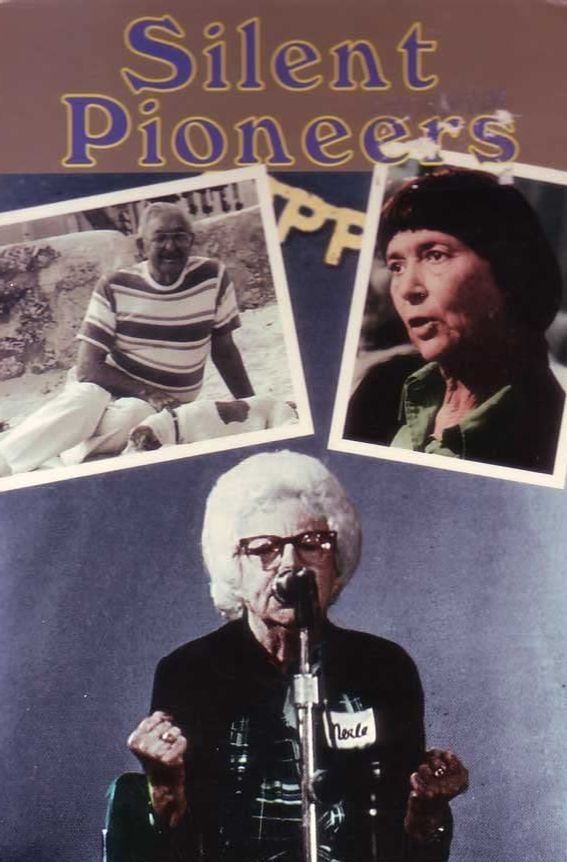
"The untold story of the British Deaf community's fight to be heard."
Unseen footage from the British Deaf Association archives is used to tell the story of the Deaf community's fight for civil rights.
Social & External
Documentary on Seattle's Pike Place Market, and those who have saved it from destruction over its first 100 years of existence. Covers the history of the Market, the people who live and work there, and the ghosts who still haunt it.
Now We Live on Clifton follows 10 year old Pam Taylor and her 12 year old brother Scott around their multiracial West Lincoln Park neighborhood. The kids worry that they'll be forced out of the neighborhood they grew up in by the gentrification following the expansion of DePaul University.
In front of the camera, a woman relates how soldiers raped her during the war in the Democratic Republic of Congo. Another victim is filmed while bathing in a lake: 'Every time I smell their odour, I take a bath.' By expressing themselves and participating in support group meetings, raped Congolese women fight for recognition. At one meeting, men first point at the women's provocative clothing. But a soldier extends his support to the activists, just like a reverend does with a scathing sermon to his parishioners. The documentary switches back and forth between hope and sorrow. Two men took their wives back, one of them even participates in the information meetings now. But a young woman who tells about her rape will probably never get married. 'She will become a prostitute', her father sighs. The filmmakers meet with a condemned offender in jail, but he does not show any remorse.
The film tells the story of two friends who want to disappear from life. While their country Belgium is falling apart, two lost souls cling to each other.
An ode to the actor Jeroen Willems, who died suddenly on 3rd December 2012, while on stage.
“A Short History of the Highrise” is an interactive documentary that explores the 2,500-year global history of vertical living and issues of social equality in an increasingly urbanized world. The centerpiece of the project is four short films. The first three (“Mud,” “Concrete” and “Glass”) draw on The New York Times's extraordinary visual archives, a repository of millions of photographs that have largely been unseen in decades. Each film is intended to evoke a chapter in a storybook, with rhyming narration and photographs brought to life with intricate animation. The fourth chapter (“Home”) comprises images submitted by the public. The interactive experience incorporates the films and, like a visual accordion, allows viewers to dig deeper into the project’s themes with additional archival materials, text and microgames.
FAR FROM POLAND is probably the first American non-fiction film (Godmilow calls it a "drama-tary") to explode cinema verite's mythic claim to be the only trustworthy mode of representation for discussing the real world, and in particular, social and political issues, on film. Refused a visa to travel to Poland, "Jillski" (her Polish nickname in the film) has to literally re-invent the documentary to deal with the Polish situation and she does so with a particular eye to deconstructing not only documentary's specific claims to objectivity, but also the bourgeois audience's desire to sit comfortably in their seats, feel compassion, feel themselves part of the solution (not part of the problem) by having felt compassion for the poor oppressed Poles, who, Godmilow would argue, are far more acutely aware of their situation and what forces oppress them than the liberal American folk in the movie house.
What are the social climate and cultural traditions in Costa Rica which nurture "machismo" and allow the domination of women to continue in Latin America?
Person is a documentary about the life and work of filmmaker Luiz Sérgio Person. The documentary brings the reconstruction of the history of the São Paulo filmmaker through the personal journey of his daughter, Marina. Through interviews with friends, family, and people who worked with Person, she seeks to discover more than dates and biographical data.
In 2003, the infant Chinese twin sisters Mia and Alexandra were found in a cardboard box. They ended up in an orphanage and were put up for adoption, at which time the authorities apparently decided that it was a good idea to separate them, and to keep silent about the fact that they were twins. Twin Sisters tells their story from the perspective of both sets of adoptive parents: one from Sacramento, California, the other from a tiny village in picturesque Norway. Through a series of coincidences that they later attribute to fate, the parents meet each other during the adoption procedure in China and launch an investigation that reveals the little girls are sisters.
In Echigo, Japan, the snow often lies several feet deep well into May, covering landscapes and villages. Over the centuries, the inhabitants have organised their lives accordingly. In order to record their very distinctive forms of everyday life, their festivals, and religious rituals, Ulrike Ottinger journeyed to the mythical snow country – accompanied by two Kabuki performers. Taking the parts of the students Takeo and Mako, they follow in the footsteps of Bokushi Suzuki, who in the mid-19th century wrote his remarkable book “Snow Country Tales”.
Andrea and Paula, homosexuals of 23 and 25 years, will show us, through their personal experience, the reality of young lesbians of their generation in Madrid, London and Berlin. Traveling through these three cities, we will meet different organized groups who will describe their proposals and attitudes towards their sexual orientation. With a riveting and edgy style, Born Naked (MLB) introduces us to individuals who refuse to be labeled by society. A generation who fights for their right to reinvent themselves.
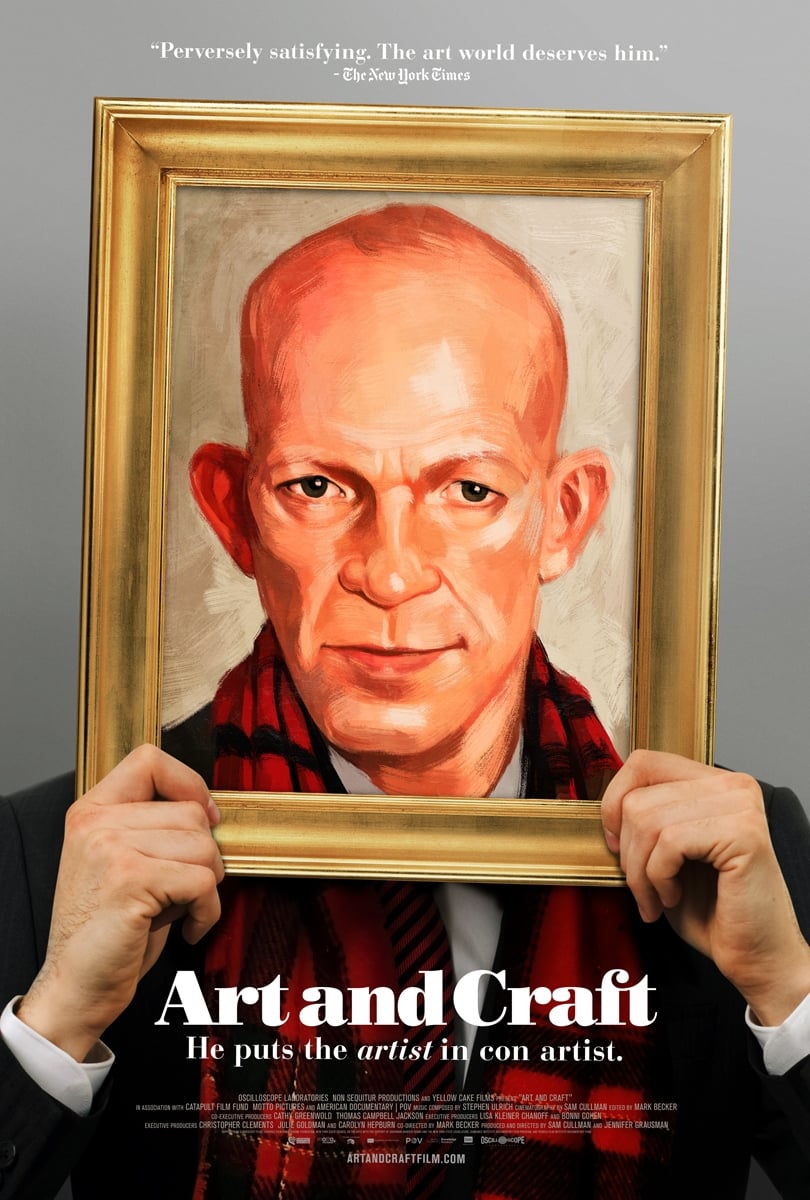
In this entrancing documentary on performance artist, photographer and underground filmmaker Jack Smith, photographs and rare clips of Smith's performances and films punctuate interviews with artists, critics, friends and foes to create an engaging portrait of the artist. Widely known for his banned queer erotica film Flaming Creatures, Smith was an innovator and firebrand who influenced artists such as Andy Warhol and John Waters.
Tongue-in-cheek look at the French Riviera, especially in summer when it overflows with tourists. Reviews its history and famous visitors; displays its faux-exotic buildings, its crowded beaches, its trees and monuments; and, pokes fun at the colors women wear and the vagaries of fashion. The film celebrates the use of "Eden" as a place name, suggesting that paradise comes to the coast after all are gone, perhaps only on a remote island beach.
A three part story of the North African immigration to France.
After Prisoners of the war and On the Heights all is Peace, this film concludes Yervant Gianikian and Angela Ricci Lucchi's trilogy on the first world war. From the emblem of totalitarianism to individual physical suffering, the directors use this representation of man's rampaging violence to draw up an anatomical inventory of the damaged body and examine the consequences of the conflict on children, from 1919 to 1921. From the deconstruction to the artificial reconstruction of the human body, they try to understand how humanity can forget itself and perpetuate these horrors.
After several farmyard analogies featuring chicks and calves, the well-spoken narrator and director of the film, Winifred Holmes, considers the subject of girls and how they reach adulthood and readiness for the 'important job of motherhood.
'History is always made in the middle of the night. And when it happens, you are so damned tired, that you couldn't care less,' says Robert Cooper, an EU peace negotiator whose job it is to get Serbia and Kosovo to reach an agreement about peaceful coexistence. National pride and compromise are on everyone's lips, and much is at stake: Kosovo wants to come closer to independence, the Serbs have been promised EU membership if they can reach an agreement, and the EU tries to strengthen its credibility. But how far is each party willing to go? It is the unique characters that make this fascinating film about a delicate political game so vivid and loveable. The stoic, Serbian negotiator has a great passion for rock music, his colleague from Kosovo does not want to miss out on his daily visit to the hairdresser, and Cooper himself has a closet full of ties - one for every conceivable occasion.
This character-driven film considers the evolving sex trafficking landscape as seen by the main players: the exploited, the pimps, the johns that fuel the business, and the cops who fight to stop it.