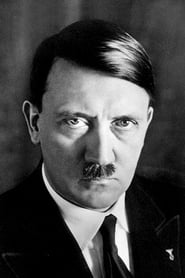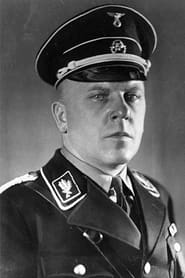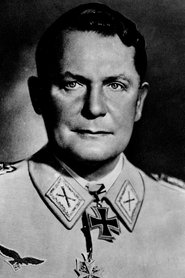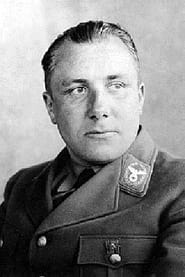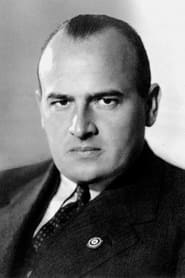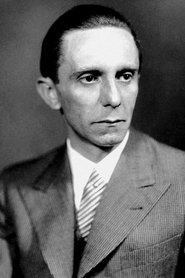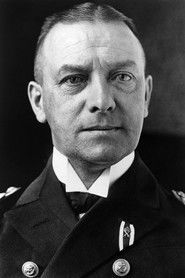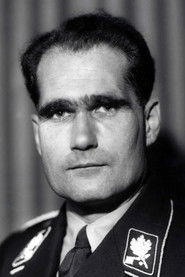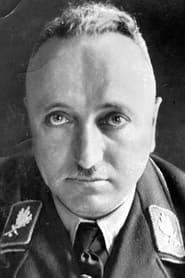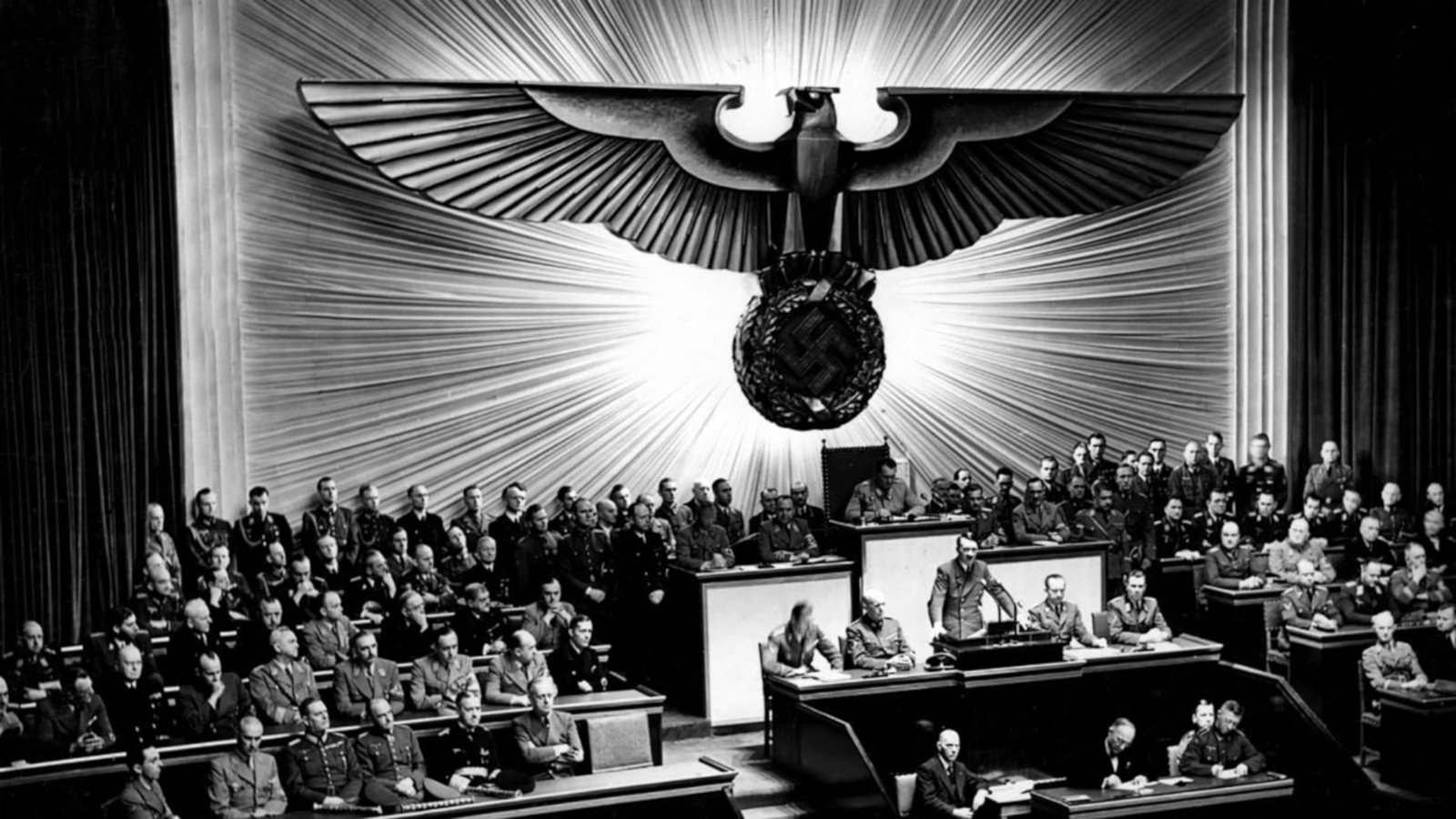

A showcase of German chancellor and Nazi Party leader Adolf Hitler at the 1934 Nuremberg Rally.
Stream
Social & External
Self
The space of the junkyard allows various ‘crash’ narratives to unfold, with the stories of actual crashes and the remnants and afterlife of these machines becoming metaphors for economic decline. This is an investigation of planes as they are parked during the economic downturn, stored and recycled, revealing unexpected connections between economy, violence and spectacle, finding perfect example in the form of the Boeing 4X-JYI, an aircraft first acquired by film director Howard Hughes for TWA, which was subsequently flown by the Israeli Airforce before finding its way to the Californian desert to be blown up for the Hollywood blockbuster Speed. Through intertwined narratives of people, planes and places Steyerl reveals cycles of capitalism incorporating and adapting to the changing status of the commodity, but also points at a horizon beyond this endless repetition.
The first Women’s Air Derby was flown in 1929 with brave women making history by breaking into a competition that was thought to be for men only. They encountered sabotage, death, and all the difficulties of flying at the dawn of aviation. Today the Powder Puff Derby continues as the Air Race Classic. The modern-day racers carry out the legacy of the original racers with their adventurous spirit.
The story of an American hero and the Cherokee Nation's first woman Principal Chief who humbly defied all odds to give a voice to the voiceless.
The Head of a Pin reveals the awkward ruminations of the filmmaker and her friends as they attempt to learn about nature. Starting out as an examination of the differences between urban and rural life, between the daily grind and summer vacations, the film turns unexpectedly into a portrait of what happens when city dwellers encounter a country spider.
After a twenty year period of multiple illnesses and injuries, the filmmaker turns the camera on herself as a way to analyze her chances for a happier, healthier life. In the process, she captures the frustration, tedium and petty annoyances of a revolving-door relationship with the medical establishment, while portraying the complicated web of emotions that accompany any medical problem. With humor and honesty, The Odds of Recovery uses the filmmaker's medical history as a means to address a perennial human problem: the desire to avoid conflict and deny the need for radical change.
Robert De Niro, Sr., was a celebrated painter obscured by the pop-art movement. His life and career are chronicled in the artist's own words by his contemporaries and, movingly, by his son, the actor Robert De Niro.
One Saturday morning, filmmaker Madison Thomas has a revelation: she’s just like her mother. As she thinks about a friend going through tough times, she feels the sudden urge to clean. Through the scrubbing and wiping and rinsing, Madison's thoughts drift to her mother — and her obsessive need to tidy. Madison’s mother survived a traumatic childhood: her own mother never reconciled what she went through at residential school. Cleaning offers moments of control that she didn’t have as a child. She’s fought hard, against all odds, to become a strong woman. They say trauma is in the genes, that it’s passed from one generation to the next. But strength is inherited too. Through rituals as simple as spending time together and smudging, Madison and her mother are beginning to mend the cycle of pain in their family. Declutter is an intimate look into a private moment between mother and daughter and the strength that carries them both.
From a school band from Essen to an internationally celebrated thrash metal legend: To mark Kreator's 40th anniversary in 2024, frontman Mille Petrozza plans to re-record his greatest hits at the famous Hansa Studios in Berlin together with greats from the metal scene such as Metallica, Sepultura, Slayer, Anthrax and many more. With exclusive private archive material, the story of Kreator is told for the first time.
Art, activism and disability are the starting point for what unfolds as a funny and intimate portrait of five surprising individuals. Director Bonnie Sherr Klein (Not a Love Story, and Speaking Our Peace) has been a pioneer of women's cinema and an inspiration to a generation of filmmakers around the world. SHAMELESS: the ART of Disability marks Klein's return to a career interrupted by a catastrophic stroke in 1987. Always the activist, she now turns the lens on the world of disability culture, and ultimately, the transformative power of art.
This movie takes us in the daily battle of 12 cartoonists around the world : France, Mexico, Israël, China, Russia, Ivory Coast...
More than 2.000 years ago, Narbonne in today's Département Aude was the capital of a huge Roman province in Southern Gaul - Gallia Narbonensis. It was the second most important Roman port in the western Mediterranean and the town was one of the most important commercial hubs between the colonies and the Roman Empire, thus the town could boast a size rivaling that of the city that had established it: Rome itself. Paradoxically, the town that distinguished itself for its impressive architecture, today shows no more signs of it: neither temples, arenas, nor theaters. Far less significant Roman towns like Nîmes or Arles are full of ancient sites. Narbonne today is a tranquil town in Occitania
Through an intimate and artistic lens, yet investigative and political, Milk brings a universal focus on the politics, commercialization and controversies surrounding birth and infant feeding over the canvas of stunningly beautiful visuals and poignant voices from around the globe.
A documentary chronicling the adolescent years of Elie Wiesel and the history of his sufferings. Eliezer was fifteen when Fascism brutally altered his life forever. Fifty years later, he returns to Sighetu Marmatiei, the town where he was born, to walk the painful road of remembrance - but is it possible to speak of the unspeakable? Or does Auschwitz lie beyond the capacity of any human language - the place where words and stories run out?
The story of how newspapers were distributed during the Blitz, stressing the importance of an accurate and objective press on the home front.
From May 10, 1940, France is living one of the worst tragedies of it history. In a few weeks, the country folds, and then collapsed in facing the attack of the Nazi Germany. On June 1940, each day is a tragedy. For the first time, thanks to historic revelations, and to numerous never seen before images and documents and reenacted situations of the time, this film recounts the incredible stories of those men and women trapped in the torment of this great chaos.
Margaret Tait documents her house, studio and garden in Buttquoy, Orkney as the seasons pass. She had lived there from the age of seven and often returned. At the time of filming, the house was about to be taken back by the council - this film is an effective 'goodbye'. Margaret Tait said it 'was meant to define a place, or the feeling of being in one place, with the sense this gives one, not of restriction but of the infinite variations available.'
Journey to the seemingly idyllic world of Native Hawaiians, whose communities are surrounded by experimental test sites for genetically engineered seed corn and pesticides sprayed upwind of their homes, schools, hospitals, and shorelines.
Twenty years ago, novelist Salman Rushdie was a wanted man with a million pound bounty on his head. His novel, The Satanic Verses, had sparked riots across the Muslim world. The ailing religious leader of Iran, the Ayatollah Khomeini, had invoked a little-known religious opinion - a fatwa - and effectively sentenced Rushdie to death. This film looks back on the extraordinary events which followed the publication of the book and the ten year campaign to get the fatwa lifted. Interviews with Rushdie's friends and family and testimony from leaders of Britain's Muslim community and the Government reveal the inside story of the affair.
See how alt-right icon Steve Bannon’s years as a documentary filmmaker catapulted him to Breitbart News and the Trump White House.
This animated fairy tale for kids tells the classic story of a dapper, automobile loving fellow named Mr. Toad, whose passion becomes a problem when he's framed for stealing cars by a band of rogue weasels.
This impressionistic portrait of the 1964 Tokyo Summer Olympics pays as much attention to the crowds and workers as it does to the actual competitive events. Highlights include an epic pole-vaulting match between West Germany and America, and the final marathon race through Tokyo's streets. Two athletes are highlighted: Ethiopian marathon runner Abebe Bikila, who receives his second gold medal, and runner Ahamed Isa from Chad, representing a country younger than he is.
A glamorous film star rebels against the studio, her pushy press agent and a family of hangers-on.
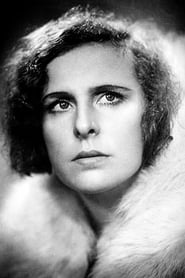
Starting with a long and lyrical overture, evoking the origins of the Olympic Games in ancient Greece, Riefenstahl covers twenty-one athletic events in the first half of this two-part love letter to the human body and spirit, culminating with the marathon, where Jesse Owens became the first track and field athlete to win four gold medals in a single Olympics.
Djé arrives in Paris without money, with its charm as only weapon. He seized every opportunity to work, love, sleep. And to kill...
A meaningful account of the personal and professional life of the great Swedish filmmaker Ingmar Bergman (1918-2007) that explores his film legacy, with interviews with his closest collaborators and a new generation of filmmakers.
Facing mounting odds, a small but determined band of American soldiers venture into dangerous enemy territory on a mission to stop an advancing German unit from breaking through the Allied line.
Jim Gordon commands a unit of the famed Flying Tigers, the American Volunteer Group which fought the Japanese in China before America's entry into World War II. Gordon must send his outnumbered band of fighter pilots out against overwhelming odds while juggling the disparate personalities and problems of his fellow flyers.
In London's contemporary art world, everyone has a hustle. Art Spindle runs a high-end gallery: he hopes to flip a Mondrian for millions. One of his assistants, Beth, is sleeping with Art's most acquisitive client, Bob Macclestone. Beth wants Bob to set her up in her own gallery, so she helps him go behind Art's back for the Mondrian. Bob's wife, Jean, sets her eye on a young conceptual artist, Jo, who lusts after Art's newest assistant, Paige. Meanwhile, self-absorbed videographer Elaine is chewing her way through friends and lovers looking to make it: if she'll throw Dewey, her agent, under the bus, Beth may give her a show. And the Mondrian? No honor among thieves.
Gogi is about to test his flying machine, so everyone better take cover!
Newlyweds Parker and Madeline move into their dream home. As they settle in, they discover a box of old love letters written to the original owner. And as the couple digs into the increasingly obsessive correspondence, a mysterious woman arrives with a horrifying secret that threatens their lives.
The fourth of Frank Capra's Why We Fight series of seven propaganda films, which made the case for fighting and winning the Second World War. It was released in 1943 and concentrated on the German bombardment of the United Kingdom in anticipation of Operation Sea Lion, the planned German invasion.
In rural Sicily, the fishermen live at the mercy of the greedy wholesalers. One family risks everything to buy their own boat and operate independently.
An Episcopal Bishop, Henry Brougham, has been working for months on the plans for an elaborate new cathedral which he hopes will be paid for primarily by a wealthy, stubborn widow. He is losing sight of his family and of why he became a churchman in the first place. Enter Dudley, an angel sent to help him. Dudley does help everyone he meets, but not necessarily in the way they would have preferred. With the exception of Henry, everyone loves him, but Henry begins to believe that Dudley is there to replace him, both at work and in his family's affections, as Christmas approaches.
This pioneering documentary film depicts the lives of the indigenous Inuit people of Canada's northern Quebec region. Although the production contains some fictional elements, it vividly shows how its resourceful subjects survive in such a harsh climate, revealing how they construct their igloo homes and find food by hunting and fishing. The film also captures the beautiful, if unforgiving, frozen landscape of the Great White North, far removed from conventional civilization.
When a group of idealistic young men join the German Army during the Great War, they are assigned to the Western Front, where their patriotism is destroyed by the harsh realities of combat.
Monsieur Hulot, Jacques Tati’s endearing clown, takes a holiday at a seaside resort, where his presence provokes one catastrophe after another. Tati’s masterpiece of gentle slapstick is a series of effortlessly well-choreographed sight gags involving dogs, boats, and firecrackers; it was the first entry in the Hulot series and the film that launched its maker to international stardom.
High school seniors and best friends, Sonny and Duane, live in a dying Texas town. The handsome Duane is dating a local beauty, while Sonny is having an affair with the coach's wife. As graduation nears and both boys contemplate their futures, Duane eyes the army and Sonny takes over a local business. Each struggles to figure out if he can escape this dead-end town and build a better life somewhere else.
A group of people are standing along the platform of a railway station in La Ciotat, waiting for a train. One is seen coming, at some distance, and eventually stops at the platform. Doors of the railway-cars open and attendants help passengers off and on. Popular legend has it that, when this film was shown, the first-night audience fled the café in terror, fearing being run over by the "approaching" train. This legend has since been identified as promotional embellishment, though there is evidence to suggest that people were astounded at the capabilities of the Lumières' cinématographe.
A weekend at a marquis’ country château lays bare some ugly truths about a group of haut bourgeois acquaintances.