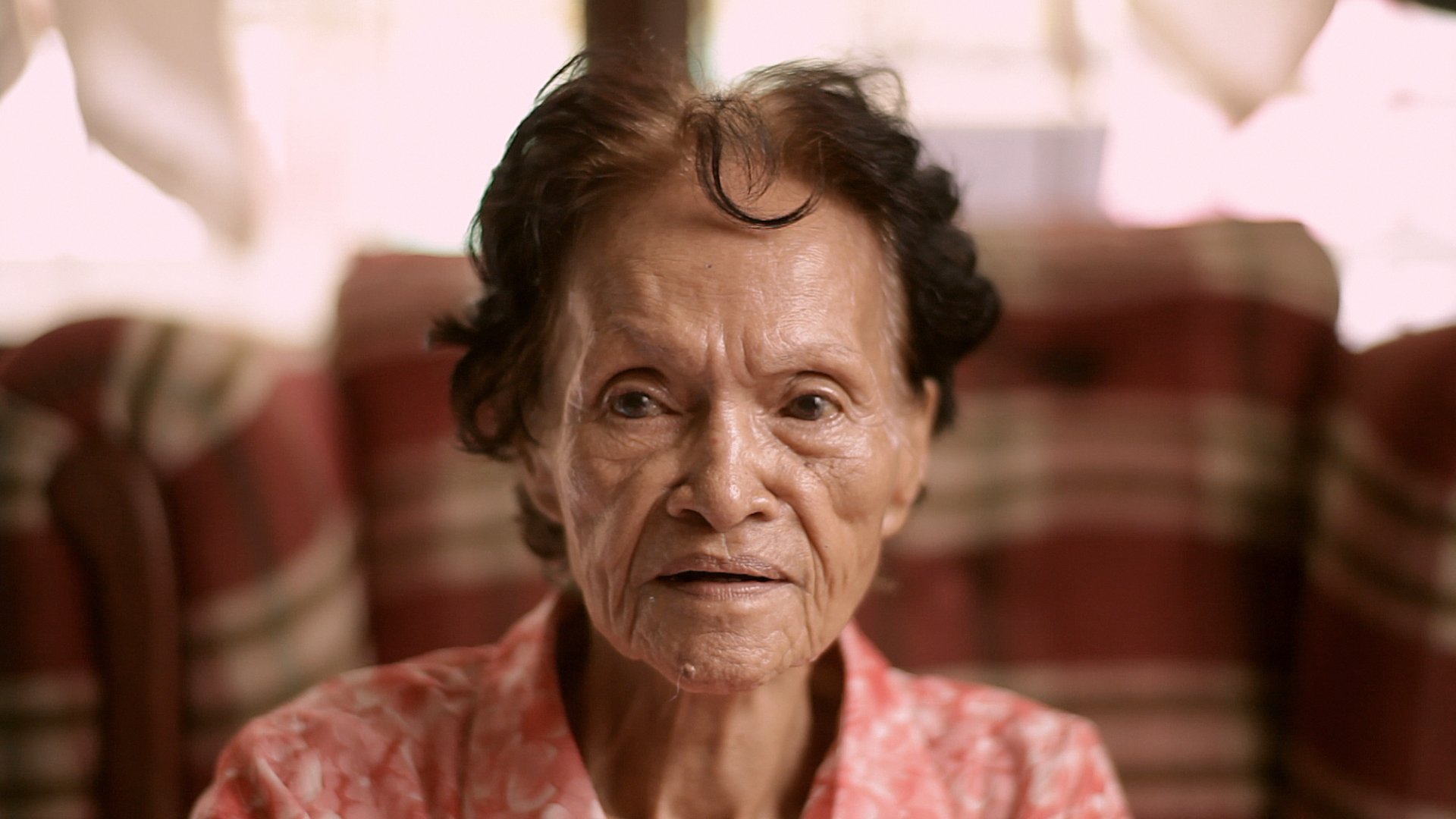
"The Apology" explores the lives of former "comfort women," the more than 200,000 girls forced into sexual slavery during World War II. Today, they fight for reconciliation and justice as they struggle to make peace with the past.
Social & External
Starting with a long and lyrical overture, evoking the origins of the Olympic Games in ancient Greece, Riefenstahl covers twenty-one athletic events in the first half of this two-part love letter to the human body and spirit, culminating with the marathon, where Jesse Owens became the first track and field athlete to win four gold medals in a single Olympics.
Part two of Leni Riefenstahl's monumental examination of the 1938 Olympic Games, the cameras leave the main stadium and venture into the many halls and fields deployed for such sports as fencing, polo, cycling, and the modern pentathlon, which was won by American Glenn Morris.
The film analyzes the efforts by the families of 9/11 victims to create the 9/11 Commission and what information was revealed by it in the 9/11 Commission Report.
Like many Palestinian families, the Amers live surrounded by the infamous West Bank Wall where their daily lives are dominated by electrified fences, locks and a constant swarm of armed soldiers. Through director Carolina Rivas' sensitive lens, we discover the private world of all eight members of the family. As their dramas unfold, we catch a glimpse of their constant struggles and the small, endearing details that sustain them, including olive trees, two small donkeys and their many friendships. Constructed with a combination of verité scenes and re-enactments, this poignant and richly crafted film offers its audience a much needed opportunity to reflect on the effects of racial segregation, the meaning of borders and the absurdity of war
In 2012 Dalya and her mother Rudayna fled Aleppo for Los Angeles as war took over. Months before, Rudayna learns a secret that destroys her marriage, leaving her single at midlife. Arriving in LA, Dalya enrolls as the only Muslim at Holy Family Catholic High School. Can mother and daughter remake themselves while holding on to their Islamic traditions?
An epic cinematic and musical collaboration between SHERPA filmmaker Jennifer Peedom and the Australian Chamber Orchestra, that explores humankind's fascination with high places.
Georgiana Halmac is turning 15 this winter, but she has no time for teenage dreams when her mother, who's on unemployment, moves to Torino to find work. Georgiana is left in charge of her six siblings in a social housing condo on the outskirts of Bacau, Romania. Caught between adolescence and the responsibilities of adulthood, Georgiana does the best she can, improvising with parenting advice from the television and the occasional phone call with her mother. As she handles her own issues and high-school dramas, Georgiana must also deal with admonishing neighbours who threaten to turn the whole family into social services. With incredible calm and stoicism, Georgiana amazes as she holds everything together in an ingenious and delicate balance.
October 2004. Uruguay. After three years away Mariana returns to her country to be reunited with her family and also to vote. After the economic crisis that plunged the country into a terrible depression, Uruguay is on the brink of a real change. We are shown day to day life in Melo, a small provincial city, we are given an intimate insight into a family of militant leftists, and we accompany a Latin American people in the month leading up to a historic political event: the first ever election victory in Uruguay of a party from the political left, the Frente Amplio.
Per Persson left Sweden 40 years ago. In Pakistan he fell in love and became the father of two daughters. Trouble starts when the girls grow up and the family decides to emigrate to Sweden. When they end up living in a caravan outside Hässleholm, all their expectations are dashed.
The Kitades run a butcher shop in Kaizuka City outside Osaka, raising and slaughtering cattle to sell the meat in their store. The seventh generation of their family's business, they are descendants of the buraku people, a social minority held over from the caste system abolished in the 19th century that is still subject to discrimination. As the Kitades are forced to make the difficult decision to shut down their slaughterhouse, the question posed by the film is whether doing this will also result in the deconstruction of the prejudices imposed on them. Though primarily documenting the process of their work with meticulous detail, Aya Hanabusa also touches on the Kitades' participation in the buraku liberation movement. Hanabusa's heartfelt portrait expands from the story of an old-fashioned family business competing with corporate supermarkets, toward a subtle and sophisticated critique of social exclusion and the persistence of ancient prejudices.
A documentary that explores AIDS activism in Frankfurt, focusing on activists, affected individuals, and organizations fighting the epidemic, raising awareness, and advocating for policy changes. Directors Lou Deinhart, Evi Rohde, and Zoë Struif incorporate 1980s/90s theatre productions, news footage, and protest recordings into their research. Alternating between present-day encounters and historical media, they interview numerous witnesses, constructing a collage of diverse memories rather than a single narrative, highlighting grassroots movements' struggles, solidarity, and impact.
The cultural roots of coal continue to permeate the rituals of daily life in Appalachia even as its economic power wanes. The journey of a coal miner’s daughter exploring the region’s dreams and myths, untangling the pain and beauty, as her community sits on the brink of massive change.
All the feature is given prestige to by the narration in Caetano Veloso's voice, that also signs one of the segments of the project. São Paulo is the largest city of the Southern Hemisphere, with an incessant dynamics of cultural mixtures, with immigrants of all the world and migrants of all parts of Brazil. The gathering of these peculiarities are seen through the 13 film directors's sensibilities and their segments.
Extravagantly expensive massaging mats, rejuvenating ampoules and sets of steam pots are only a few of the vast spectrum of objects sold by young salesmen at suspicious commercial presentations for old-age pensioners. Protagonists of the film are five friends fascinated by such presentations. They spend their savings on such products not out of necessity, but in the attempt to fill the emptiness in their lives. The absurdity of these purchases shows their fight against getting old and against their loneliness.
As Ariel Ortega thinks about the history of contact of the Mbya-Guarani, he tries to understand how his people got expelled from their land.
An immersion in spirituality and everyday life of the Mbya-Guarani from the Koenju village in Southern Brazil.
Diana The Woman Inside highlights Diana as a woman and mother, rather than just a tragic icon.
From inside Bolivia's craziest prison a cocaine worker, a drug mule and his little sister reveal the countries relationship with cocaine.
Since the late 18th century American legal decision that the business corporation organizational model is legally a person, it has become a dominant economic, political and social force around the globe. This film takes an in-depth psychological examination of the organization model through various case studies. What the study illustrates is that in the its behaviour, this type of "person" typically acts like a dangerously destructive psychopath without conscience. Furthermore, we see the profound threat this psychopath has for our world and our future, but also how the people with courage, intelligence and determination can do to stop it.
Seven young women from Berlin discuss their experiences with the pill in a studio setting and react to the ideas that young men of the same age have about this contraceptive. The film is based on the work of the women's group "Brot und Rosen" and their book "Frauenhandbuch Nr.1 Abtreibung und Verhütung".
A young writer is invited to the remote compound of a legendary pop star who mysteriously disappeared thirty years ago. Surrounded by the star's cult of sycophants and intoxicated journalists, she finds herself in the middle of his twisted plan.
Shimmy, a monkey newly discover superhero powers and learns how to control his extraordinary transformative abilities and prevent powerful demonic forces from sending the universe into chaos.
Hana spends twenty years suppressing a maleficent curse that was placed upon her bloodline, only to have a family member knowingly release it forcing her to kill or to be killed.
Three years after the death of her beloved child, Elouise, Mara still feels her presence when she sits on the butterfly bedding in front of the jar with her ashes in it. Mara arranges a twelfth birthday party for Elouise, further alienating her from her husband, Richter, and remaining daughter, Hannah. Although Mara eventually vacates Elouise's room at the insistence of her husband, she does find a way to stay close to Elouise. Before long, however, Hannah discovers her mother's secret.
Sayen follows a lead to the picturesque desolation of the Atacama Desert. There, she reluctantly teams up with a young Atacameño girl, Quimal, looking to clear her father’s name and save her town from becoming an arid wasteland due to Acteon’s exploitative water usage.
Inspired by events in A.D. 60, Boudica follows the eponymous Celtic warrior who rules the Iceni people alongside her husband Prasutagus. When he dies at the hands of Roman soldiers, Boudica’s kingdom is left without a male heir and the Romans seize her land and property. Driven to the edge of madness and determined to avenge her husband’s death, Boudica rallies the various tribes from the region and wages an epic war against the mighty Roman empire.
Outskirts of Moscow. A girl comes to an unfamiliar apartment to look after a dog. After a while, she realizes that the owner of the apartment has disappeared. She finds herself into a series of people that have been taking care of the dog for years in that same apartment, creating a weird community around this strange absence of the owner.
Armored truck security guard James Brody is working with his son Casey transporting millions of dollars between banks when a team of thieves led by Rook orchestrate a takeover of their truck to seize the riches. Following a violent car chase, Rook soon has the armored truck surrounded and James and Casey find themselves cornered onto a decrepit bridge.
When a rare Lakota Ghost Shirt falls into the black market in a small town in South Dakota, the lives of local outsiders and outcasts violently intertwine.
After the death of his grandmother, Tom Lee discovers he is part of a long lineage of magical protectors known as the Guardians. With guidance from a mythical tiger named Hu and the other Zodiac animal warriors, Tom trains to take on an evil force that threatens humanity.
An expert hacker is targeted by a sentient AI after she realizes the threat it poses, and she must try to stay off its radar long enough to stop it.
Tanjiro ventures to Asakusa for his second mission with the Demon Slayer Corps. A recap of Kimetsu no Yaiba episodes 6–10, with new footage and special end credits.
A veteran Muay Thai expert goes on a take-no-prisoners mission of revenge after his wife and daughter are brutally murdered by mysterious forces.
McWalter, a legendary American elite agent, is falsely accused of a series of attacks all around the globe. Determined to clear his name, he goes on the run to solve the mystery, thwart a earthwise conspiracy, and save the world…
Instead of joining the graduation trip with her friends, Mabel is forced to travel with her parents to a ski station in Chile. Only she didn't expect this freezing retreat could introduce her to a secret group of friends and a potential new love.
The life of Henri Grouès, known as Abbé Pierre, from his time in the Resistance in WWII to his fights against poverty and for the homeless.
San Francisco filmmaker Konrad Steiner took 12 years to complete a montage cycle set to the late Leslie Scalapino’s most celebrated poem, way—a sprawling book-length odyssey of shardlike urban impressions, fraught with obliquely felt social and sexual tensions. Six stylistically distinctive films for each section of way, using sources ranging from Kodachrome footage of sun-kissed S.F. street scenes to internet clips of the Iraq war to a fragmented Fred Astaire dance number.
20 years after the events of Transmorphers, a newer, more advanced species of alien robot descends on a rebuilt Earth, threatening once again to destroy the planet.
Alana discover the truth about her origin: she’s not an ordinary human being. She may be the gift for humanity and become its protector as Sri Asih. Or a destruction, if she can’t control her anger.
A man tries to make a film but gets sick.