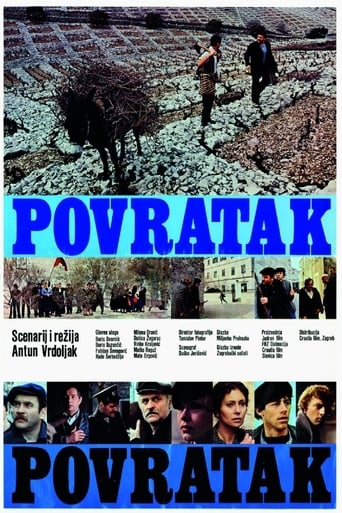
A Partisan unit goes into battle with the enemy twice stronger, somehow resists detachment to attack deep into the night, where the fraud are captured combatants from all units and thrown to the terrible torture and eventually murder.
Social & External
The people behind it
Toni Laurenčić
Dujan Čović
Žarko Radić
Ivan Šinković 'Iko'
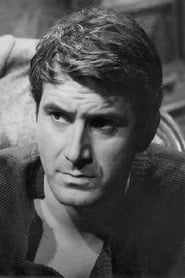
Miha Baloh
Komandir odreda
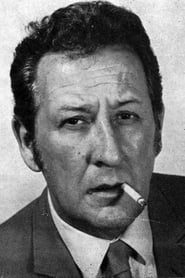
Antun Nalis
Policajac
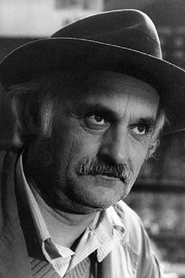
Fabijan Šovagović
Sudac
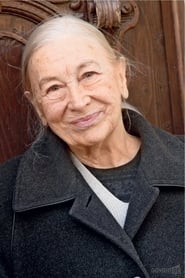
Štefka Drolc
Gospođa Šinković

Helena Buljan
Cvita
Tana Mascarelli
Starica koja pravi sir
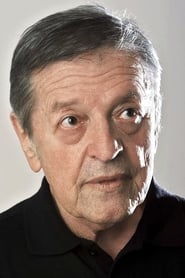
Marko Nikolić
Povjerenik glavnog ustaškog stana
Ilija Ivezić
Žandarski narednik
A remote village in Serbia in 1941. Through the fate of rural residents and the destiny of a partisan detachment reflected is the horror and absurdity of war in Serbia during World War II. On one hand, ordinary people and partisans; the Germans and the Chetniks on the other.
Down under the constant attacks of the German and Bulgarian forces, headquarters one of the partisan detachment in the midst of a severe winter and snow and difficult terrain, with many wounded, he decided to leave the mountain Jastrebac. Gvozden, a peasant from that area, brave warrior, opposes such a decision, was gets ready to leave the unit before detachment. In the interests of discipline, however, Gvozden was convicted and executed on the spot, although it regrets the whole squad.
After the war, a Yugoslav army captain, Vladimir, is in charge of suppressing armed supporters of the former king's regime, led by major Momir. After Vladimir's best friend is killed, he joins the rebels pretending to be one of the king's supporters. However, one of Momir's supporters, a man who harbors rebels, has an attractive daughter who is engaged to marry Momir. She knows that Vladimir is an officer of the Yugoslav army, because she has seen him wearing a Yugoslav uniform. Vladimir fears that she might betray him.
A partisan battalion who was surrounded from all sides brings up decision to enter the city, so that the fighters could rest and recover. Due to fear of one of the partisans, the enemy discovers their plan, but fails to sabotage it.
A group of partisan illegals entangled in a love triangle during Ustasha reign in Nazi-occupied Zagreb.
During a freezing WWII winter, two Soviet partisans on a mission to gather food contend with the temperature, the occupying Germans, and their own psyches.
In the Nazi occupied city of Rome, an assault on an SS brigade draws retaliation from the military governship. "Massacre in Rome" is the true story of how this partisan attack led to the mass execution of Italian nationals under the orders of SS-Lieutenant Colonel Kappler.
Grandma's recount of her journey to school, but she was never alone in the forest.
A group of young illegals collect weapons in order to help partisans to liberate the occupied city of Belgrade.
Led by British officers, partisans on Crete plan to kidnap the island's German commander and smuggle him to Cairo to embarrass the occupiers.
Silent Gunpowder (Serbo-Croatian: Gluvi barut) is a Yugoslavian war film Based on a novel by Branko Ćopić and set during World War II, the film tells the story of a Serbian village in the mountains of Bosnia and its villagers who found themselves divided along two opposing ideological lines, represented by the Chetniks and the Partisans. These two opposing sides are personified in the Partisan commander Španac and a former Royal Army officer Radekić. Španac sees Radekić as the cause of villagers' resistance to the new, Communist, ideology and so the main plot axis is the conflict between them. At the 1990 Pula Film Festival, the film won the Big Golden Arena for Best Film, as well as the awards for Best Actor in a Leading Role (Branislav Lečić), Best Film Score (Goran Bregović). The film was also shown at the 1991 Moscow International Film Festival, where both Branislav Lečić and Mustafa Nadarević won the Silver St. George Award for their performances.
In Vojvodina during the war, a partisan commander Zarki fell into the hands of the local Germans. They bound him in chains and take him from one village to another, torturing him in public so he could tell the names from his movement. Bewildered by his resisting power, the Germans tend to break him down and destroy the pride which is his answer to their torture. Frenzied of powerlessness, they ultimately choose the most horrifying death - they buried him alive in the sand that will cover the last trait of him, but he died victorious: He died for his thing.
Lado Tajovic, a student, is charged by the communist party to go to his home in the Montenegrin Mountains, to illegally spread the liberation movement's propaganda. Alone, surrounded by enemies, always awake and ready to evade traps and ambushes, Lado fights on the verge of sleep, against people which are cowards ready to betrayal. He fights his own temptations, hallucinations that constantly besiege him. Although he perseveres in holding to party directives: no killing and no revenge, Lado at one moment of weakness falls to a primal human act vengeance.
A wartime drama set in a 1944 military hospital where wounded officers and staff from opposing political camps confront ideological conflict and moral uncertainty.
1944. Communist militiaman take a post in a little town in the east of Poland. He has to stand against his own men that are not happy with new authorities.
Banovina, sometime during the 1940s. A communist intelectual from Zagreb is summoned to act as a comissar for a small squadron of soldiers, left to fend on their own against the rapidly advancing enemy forces. But, the ethnic and religous tensions between the men soon lead to them showing their true colors.
Upon returning home at war's end, a young lieutenant discovers that his family has been murdered by the Nazis. It's all the handiwork of a treasonous "Chetnik," who during the war worked against the partisans on behalf of the Germans. In bitter retaliation, the lieutenant sets about to decimate the Chetnik's family. He stops short, however, when he realizes that the sins of the fathers are not always passed down to the innocent children.
Yugoslav farmer-turned-partisan Slavko Babić starts an uprising against the fascist Germans and their allies.
A group of 19 young women, led by a partizan man, are the only people available to escort a number of partisan wounded in the struggle for freedom, in the mountain ranges invaded by the Nazi army. The crossing of difficult tracks, and a few encounters with enemy patrols provide danger, and death for some heroines. Two girls are in love with the column's commander, but love for the motherland and freedom will prove stronger.
This is a movie about the start of people's uprising in Montenegro in World War II. After the capitulation of the Yugoslav Royal Army in April 1941, the Italians managed to infiltrate their puppet regime in Montenegro. However, people dissatisfied with the new authorities, on July 13, 1941 decided that the Communists led start to fight for freedom.
During the harrows of WWII, Jo, a young shepherd along with the help of the widow Horcada, helps to smuggle Jewish children across the border from southern France into Spain.
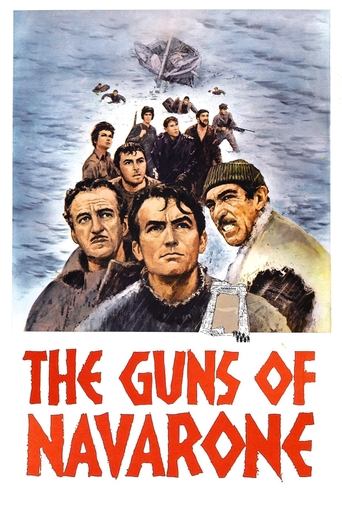
A team of allied saboteurs are assigned an impossible mission: infiltrate an impregnable Nazi-held island and destroy the two enormous long-range field guns that prevent the rescue of 2,000 trapped British soldiers.
Manuel Artiguez, a famous bandit during the Spanish civil war, has lived in French exile for 20 years. When his mother is dying he considers visiting her secretly in his Spanish home town. But his biggest enemy, the Spanish police officer Vinolas, prepared a trap at the hospital as a chance to finally catch Artiguez.
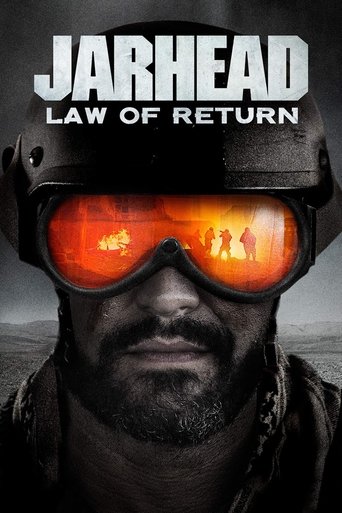
Major Ronan Jackson, an accomplished fighter pilot for the Israel Defense Forces and son of a U.S. Senator, is shot down while flying through Syrian airspace. After miraculously surviving the crash, Jackson is taken captive by a group of Hezbollah militiamen. A squad of elite soldiers, led by Gunnery Sergeant Dave Torres, risk their own lives in the hopes of saving an ally they've never met.
Prelude to War was the first film of Frank Capra's Why We Fight propaganda film series, commissioned by the Pentagon and George C. Marshall. It was made to convince American troops of the necessity of combating the Axis Powers during World War II. This film examines the differences between democratic and fascist states.
World War II, 1943. Mallory and Miller, the heroes who destroyed the guns of Navarone, are sent to Yugoslavia in search of a ghost from the past.
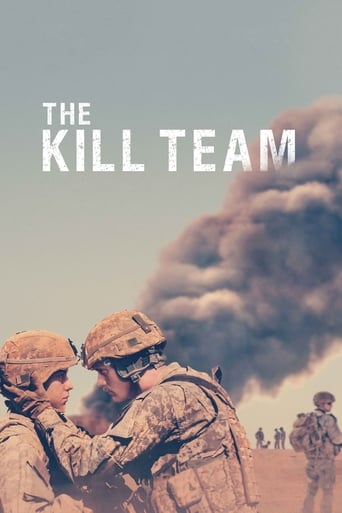
When Andrew Briggman — a young soldier in the US Army during the invasion of Afghanistan — witnesses the murderous behavior of fellow soldiers, under the direction of a malevolent Sergeant, he faces a moral dilemma. His increasingly-violent platoon becomes suspicious that someone in their ranks has turned on them, and Andrew begins to fear for his safety. A fictionalized dramatization based on a true story.
In Korea, on 6 September 1950, Lieutenant Benson's platoon finds itself isolated in enemy-held territory after a retreat. Soon they are joined by Sergeant Montana, whose overriding concern is caring for his catatonic colonel. Benson and Montana can't stand each other, but together they must get the survivors to Hill 465, where they hope the division is waiting. It's a long, harrowing march, fraught with all the dangers the elusive enemy can summon.
A conflict develops between a troubled Vietnam veteran and the sister he lives with when she becomes involved romantically with the army buddy who reminds him of the tragic battle they both survived.
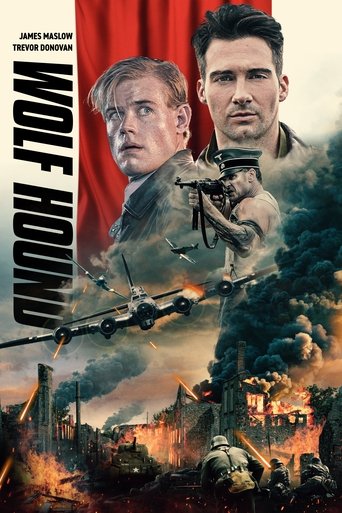
Inspired by the real-life German special operations unit KG 200 that shot down, repaired, and flew Allied aircraft as Trojan horses, "Wolf Hound" takes place in 1944 German-occupied France and follows the daring exploits of Jewish-American fighter pilot Captain David Holden. Ambushed behind enemy lines, Holden must rescue a captured B-17 Flying Fortress crew, evade a ruthless enemy stalking him at every turn, and foil a plot that could completely alter the outcome of World War II.
A by-the-book Captain is ordered to capture a strategic village in Italy. The Italian soldiers are willing to surrender, if they can have a festival first. The lieutenant convinces the Captain this is the only way. Because of aerial reconnaissance, they must look like they are fighting. To sort this out an intelligence officer is sent in. Meanwhile the festival gets complicated with the Mayors daughter.
During the war in Afghanistan a Soviet tank crew commanded by a tyrannical officer find themselves lost and in a struggle against a band of Mujahadeen guerrillas in the mountains.
A small unit of U.S. soldiers, alone at the remote Combat Outpost Keating, located deep in the valley of three mountains in Afghanistan, battles to defend against an overwhelming force of Taliban fighters in a coordinated attack. The Battle of Kamdesh, as it was known, was the bloodiest American engagement of the Afghan War in 2009 and Bravo Troop 3-61 CAV became one of the most decorated units of the 19-year conflict.
A dwindling group of German soldiers battle to return to their lines on the harsh Eastern Front.
Trapped in a bunker during World War I, a group of soldiers are faced with an ungodly presence that slowly turns them against each other.
Allied agents infiltrate the Nazi rocket complex at Peenemunde in order to obtain their secrets and sabotage the plant. The film alternates between German developments of the V-1 missile and V-2 rocket (with a German cast speaking their own language) and discovery by British Intelligence of the weapon.
12 American military prisoners in World War II are ordered to infiltrate a well-guarded enemy château and kill the Nazi officers vacationing there. The soldiers, most of whom are facing death sentences for a variety of violent crimes, agree to the mission and the possible commuting of their sentences.
A team of special forces head into Afghanistan in the aftermath of the September 11th attacks in an attempt to dismantle the Taliban.
Fr. Hugh O'Flaherty is a Vatican official in 1943-45 who has been hiding downed pilots, escaped prisoners of war, and Italian resistance families. His activities become so large that the Nazis decide to assassinate him the next time he leaves the Vatican.
A WWII veteran escapes his care home in Northern Ireland and embarks on an arduous but inspirational journey to France to attend the 75th anniversary of the D-Day landings, finding the courage to face the ghosts of his past.