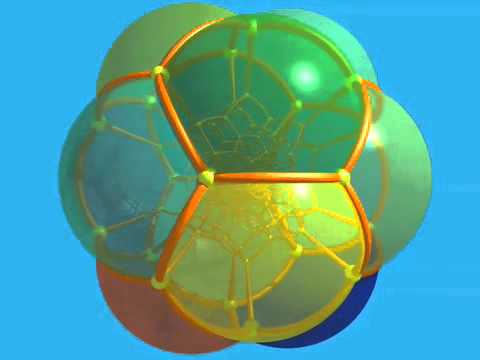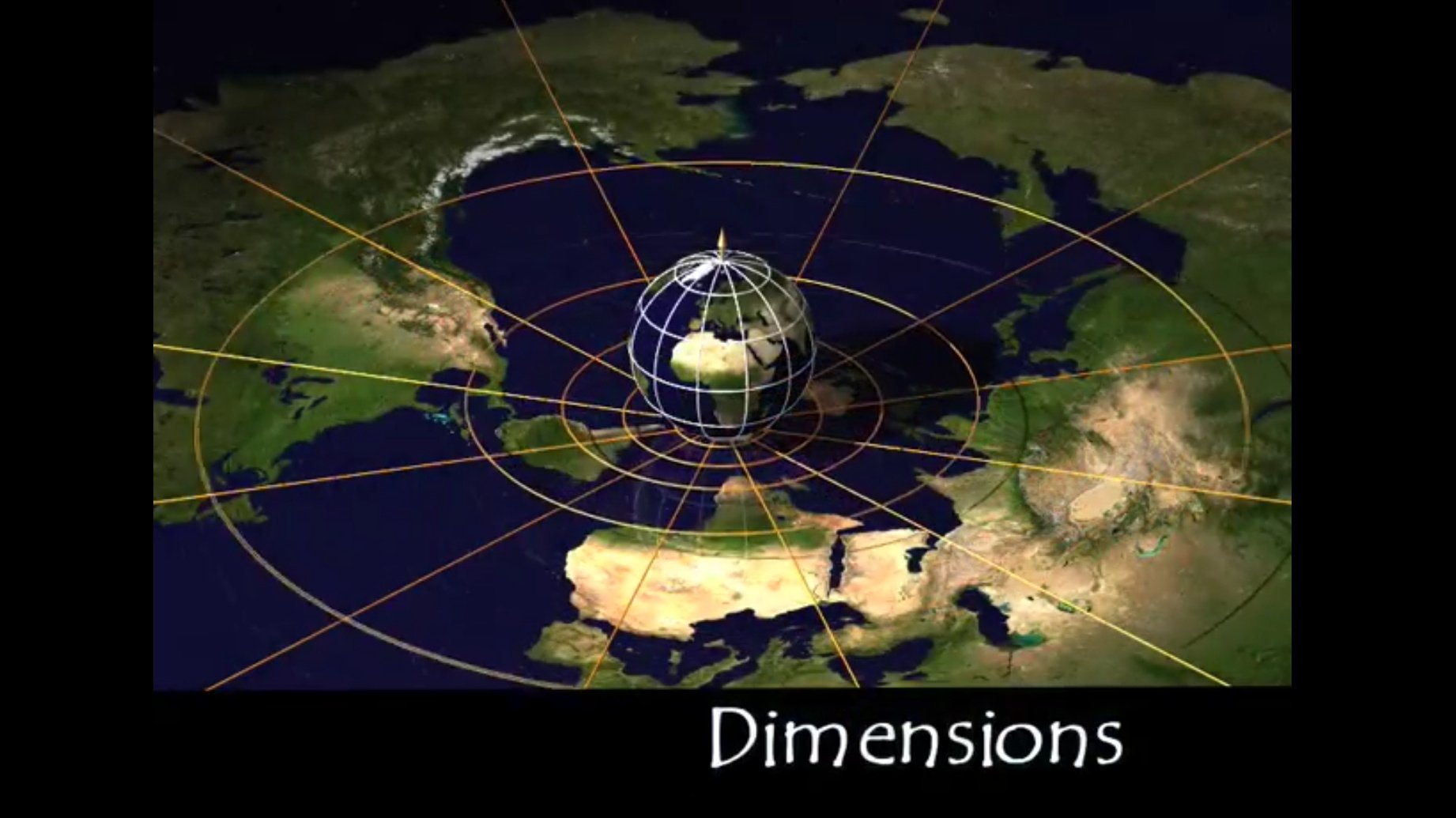
Nine chapters, two hours of maths, that take you gradually up to the fourth dimension. Mathematical vertigo guaranteed!
Social & External
Unknown Role
What is Bitcoin? With the advent of Bitcoin, the world's first digital currency, for the first time in history money is no longer controlled by banks or governments, but by the people who use it. But where did this currency come from? How does it work? And is it truly the way forward, or just a flash in the pan? Magic Money answers these questions and more as it explores the mysterious origins of Bitcoin, its role in society, and how it could shape the future.
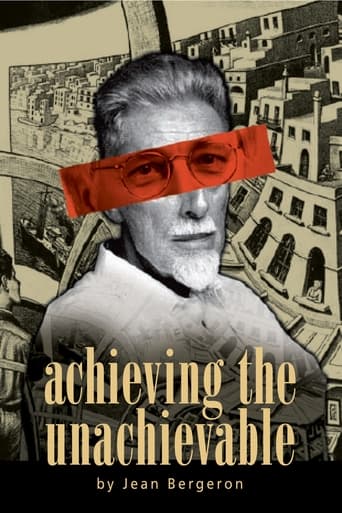
A documentary about the life and works of the artist M. C. Escher. Maurits Cornelis Escher (1898-1972) usually referred to as M. C. Escher, was a Dutch graphic artist. He is known for his often mathematically inspired woodcuts, lithographs, and mezzotints. These feature impossible constructions, explorations of infinity, architecture, and tessellations.
Made entirely on Roger Wagner's HyperStudio software, Chris Marker explores set theory, using Noah's Ark as an example.
Narrated by Oscar-winning actor Jeremy Irons, The Genius of George Boole assembles academics and industry leaders from across the globe to explore the life and importance of one of the world’s greatest unsung heroes.
Disney used animation here to explain through this wonderful adventure of Donald how mathematics can be useful in our real life. Through this journey Donald shows us how mathematics are not just numbers and charts, but magical living things.
M.C. Escher is among the most intriguing of artists. In 1956 he challenged the laws of perspective with his graphic Print Gallery and his uncompleted master-piece quickly became the most puzzling enigma of modern art. Fifty years later, can mathematician Hendrik Lenstra complete it? Should he?
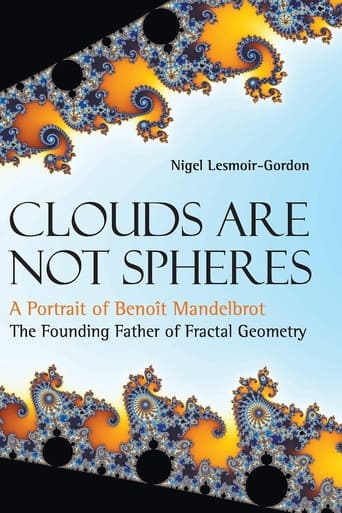
Until recently geometry was 'cold', incapable of describing the irregular shape of a cloud, the slope of a mountain or the beauty of the human body. With fractal geometry, Benoit Mandelbrot gave us a language for our natural world. In this captivating documentary, the man himself explains this groundbreaking discovery.
Flatland is a two-dimensional universe occupied by living geometric figures - squares, triangles, circles, etc. A Square, Attorney At Law, finds himself in the middle of two upheavals: the rise of martial law by the circular leadership of Flatland, and the arrival of A Sphere, CEO Of Messiah, Incorporated, a creature from a hitherto-unknown third dimensional world.
Set in a world of only two dimensions inhabited by sentient geometric shapes, the story follows Arthur Square and his ever-curious granddaughter Hex. When a mysterious visitor arrives from Spaceland, Arthur and Hex must come to terms with the truth of the third dimension, risking dire consequences from the evil Circles that have ruled Flatland for a thousand years.
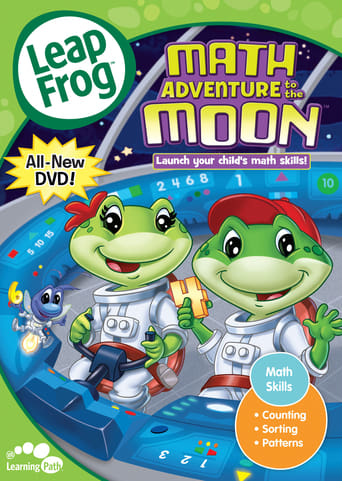
Join Tad and Lily a they blast off on an exciting educational adventure! Tad and Lily need the perfect collection of things to take to school for their math assignment. When they finally decide on moon rocks, there's just one problem - how will they get them? With some magical help from their firefly friend, Edison, they board a rocket to start their quest. Soon the twins learn that math is everywhere, even in outer space!
Created as a demonstration of multi-disciplinary thinking, this film was produced in association with UCLA Mathematics professor, Ray Redheffer. With the exclusive use of storytelling through animation this lively and exuberant presentation of the “architecture of algebra,” the film explains the behavior of specific exponents and concludes with the general laws that all exponential expressions obey – all achieved without the use of narration. Council on International Non-Theatrical Events (C.I.N.E.) Gold Eagle Award, 1975. Columbus International Film Festival Bronze Chris Plaque Award-C, 1975. New York International Animation Festival Bronze Praexinoscope Award, 1975. Melbourne Film Festival Selected for Participation, 1976.
“If abstract films are really abstract films… they deal exclusively with those abstract relations that can be expressed in terms of shape and motion” wrote Robert Fairthorne in Film Art in 1936. A mathematician and information scientist, Fairthorne saw aesthetic potential in an animation made as a teaching aid by Salt, and proposed this collaboration. (Tate.org.uk)
During the 1995 Summer Institute at The Geometry Center, a team of undergraduates, middle and high school mathematics teachers and Center staff developed curriculum materials supporting The Shape of Space video. The team developed a comprehensive curriculum, covering many areas related to the video. The following materials were selected for distribution based on their direct relevence to understanding the video itself.
Not Knot is a guided tour into computer-animated hyperbolic space. It proceeds from the world of knots to their complementary spaces -- what's not a knot. Profound theorems of recent mathematics show that most known complements carry the structure of hyperbolic geometry, a geometry in which the sum of three angles of a triangle always is less than 180 degrees.
A sharp, witty, mind-expanding and exuberant foray into the world of logic with Computer Scientist Dave Cliff. Following in the footsteps of the award-winning The Joy of Stats and its sequel, Tails You Win - The Science of Chance, The Joy of Logic takes viewers on a new Wingspan roller-coaster ride through philosophy, maths, science and technology all of which, under the bonnet, run on logic. Wielding the same wit and wisdom, animation and gleeful nerdery as its predecessors, this film journeys from Aristotle to Alice in Wonderland, Sci-Fi to Supercomputers to tell the fascinating story of the quest for certainty and the fundamentals of sound reasoning itself.
One of a humorous series of films devised to explain in graphic terms the concepts of basic mathematical functions.
An attempt to visualize a secret knowledge about the nature of man —a philo-clip—, through the use of structures of dissociated geometry and laser beams, with direct references to the Renaissance, Leonardo da Vinci and the work of Agrippa von Nettesheim.
The computer animation Outside In explains the amazing discovery, made by Steve Smale in 1957, that a sphere can be turned inside out by means of smooth motions and self-intersections. Through a combination of dialogue and exposition accessible to anyone who has some interest in mathematics, Outside In builds up to the grand finale: Bill Thurston's "corrugations" method of turning the sphere inside out.
The salutary tale of a genius mathematician who discovers that mankind is heading for environmental disaster. Ignored by all, he sets out to prove it — however the proof, represented by “a little black box”, is taken up by those previous doubters and exploited.