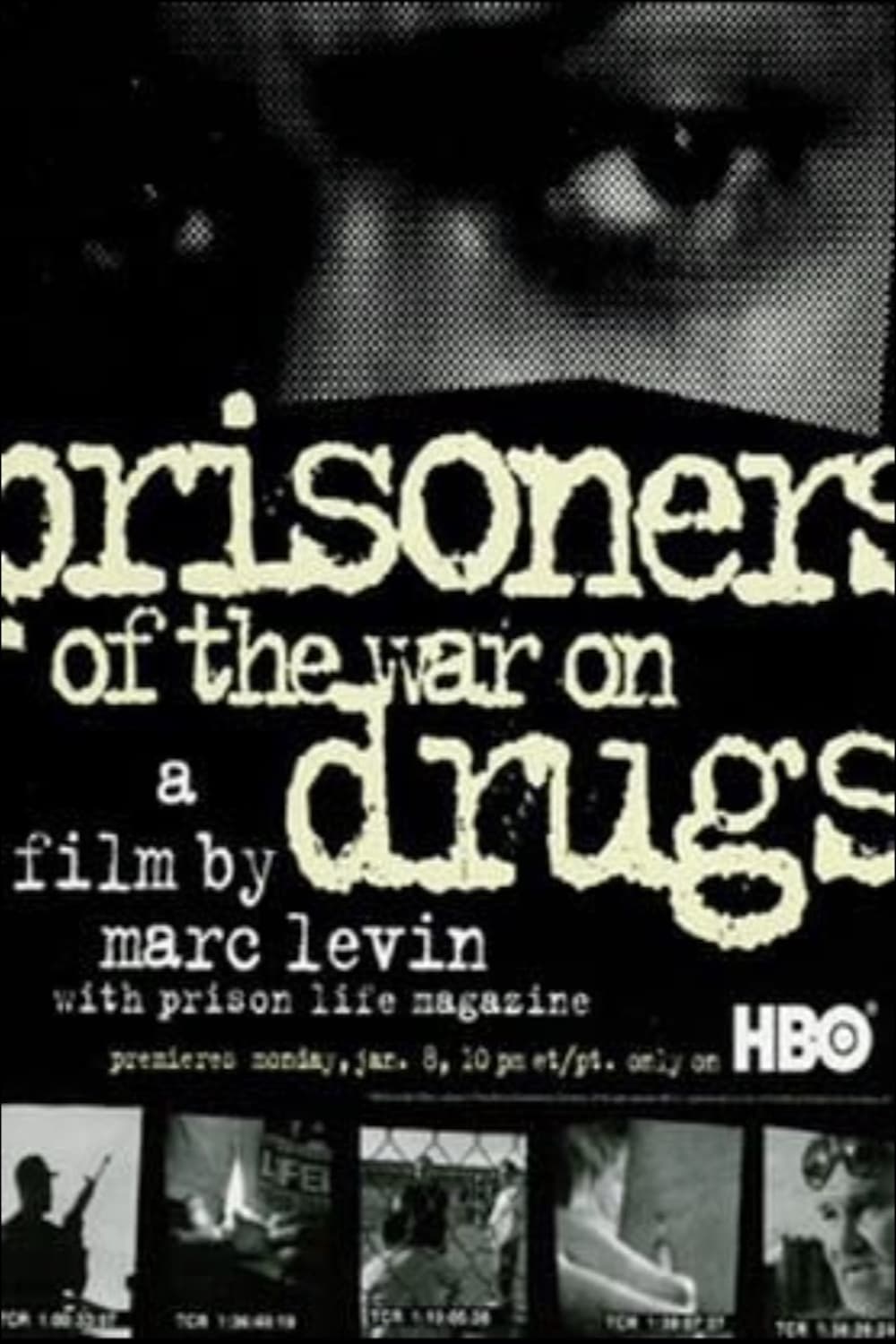
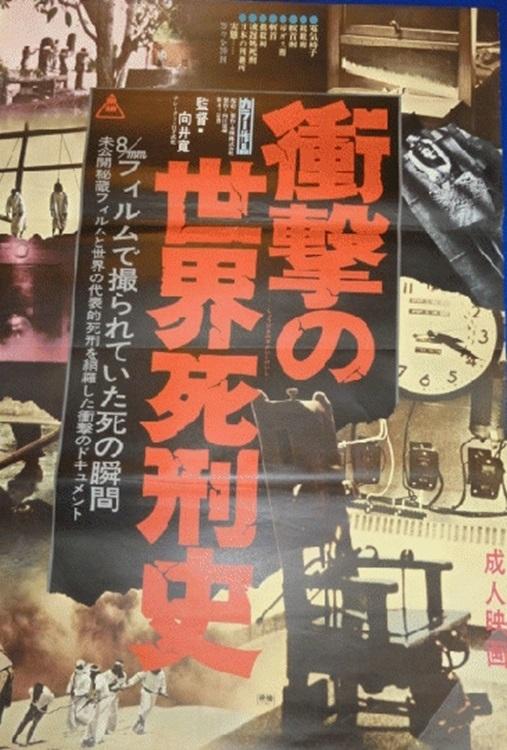
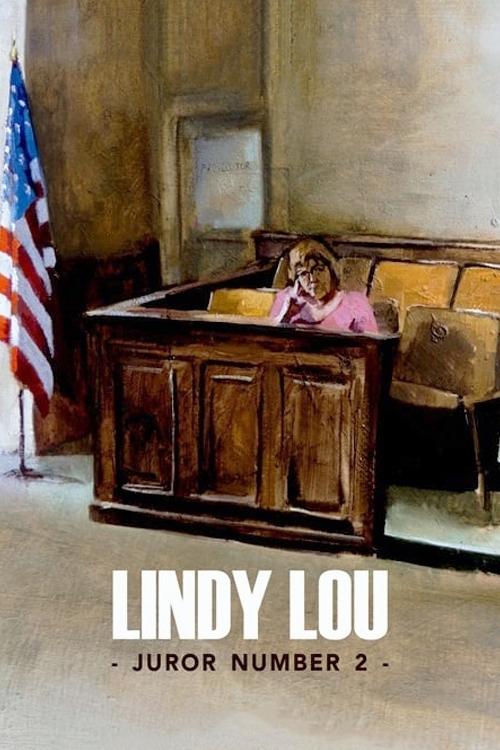
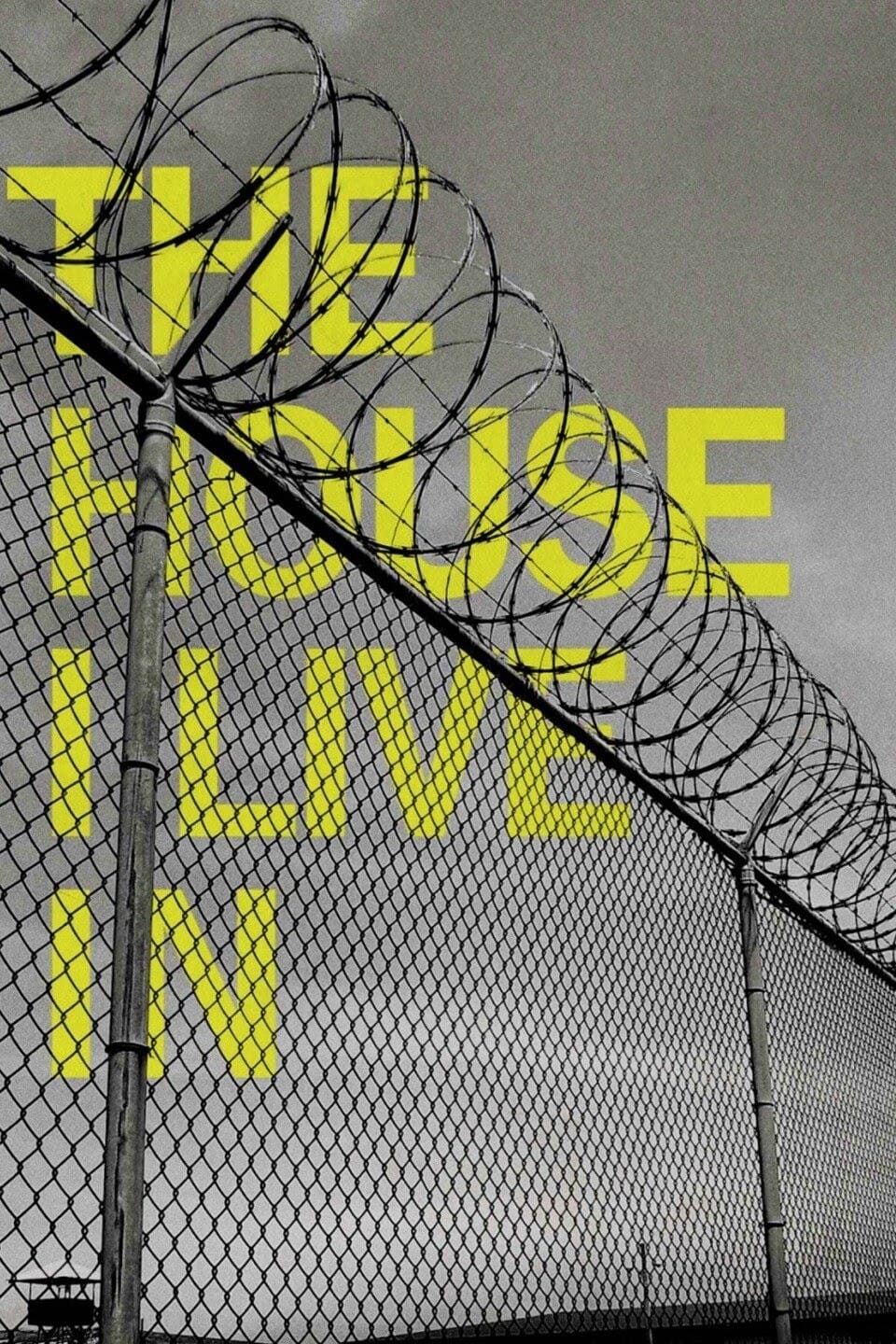
Explores the realities of death-row inmates inside Huntsville (Texas) Unit, a prison with the highest number of executions in 1997. Features interviews with prisoners, guards, officials, lawyers and victims' family members.
Social & External
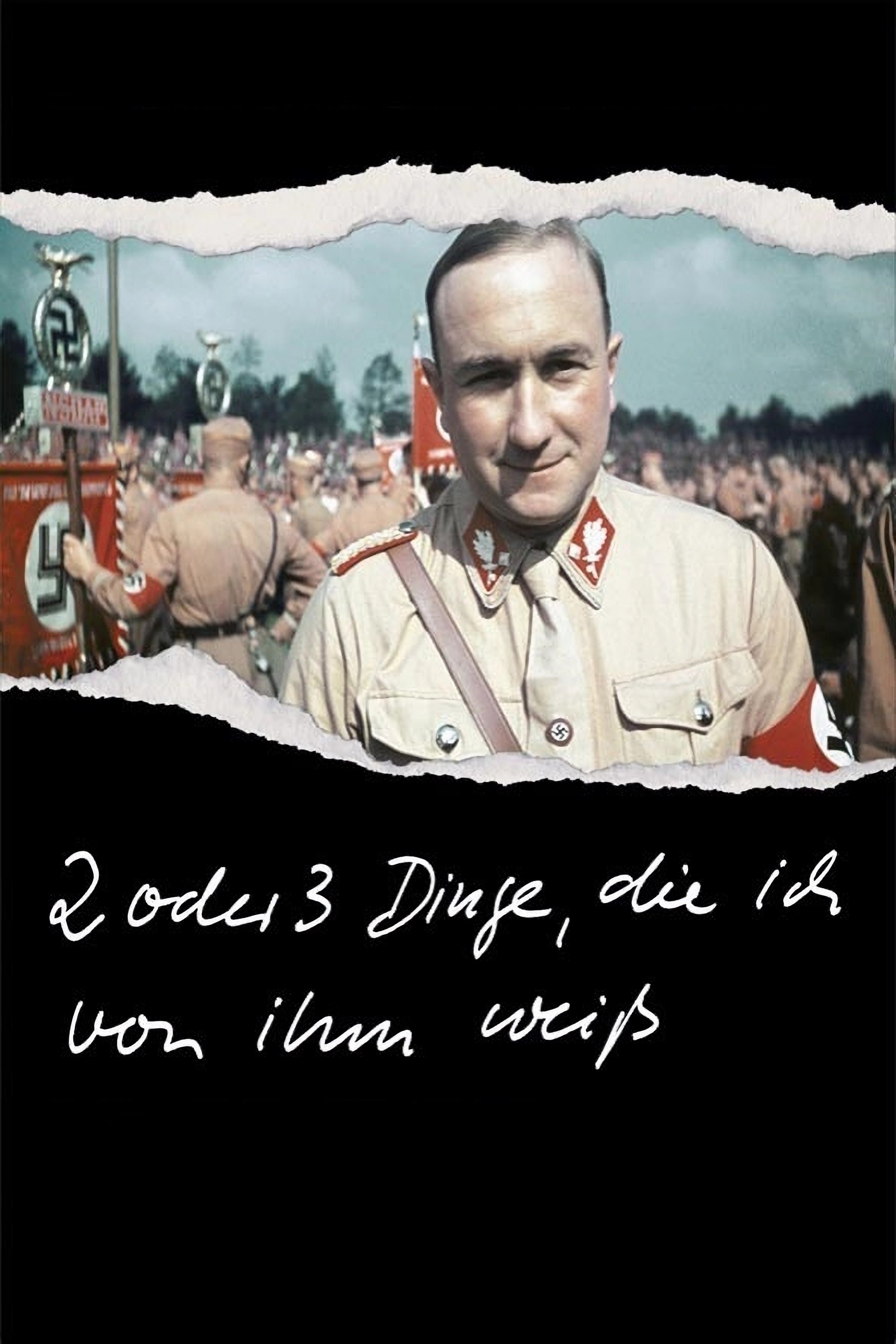
What would your family reminiscences about dad sound like if he had been an early supporter of Hitler’s, a leader of the notorious SA and the Third Reich’s minister in charge of Slovakia, including its Final Solution? Executed as a war criminal in 1947, Hanns Ludin left behind a grieving widow and six young children, the youngest of whom became a filmmaker. It's a fascinating, maddening, sometimes even humorous look at what the director calls "a typical German story." (Film Forum)
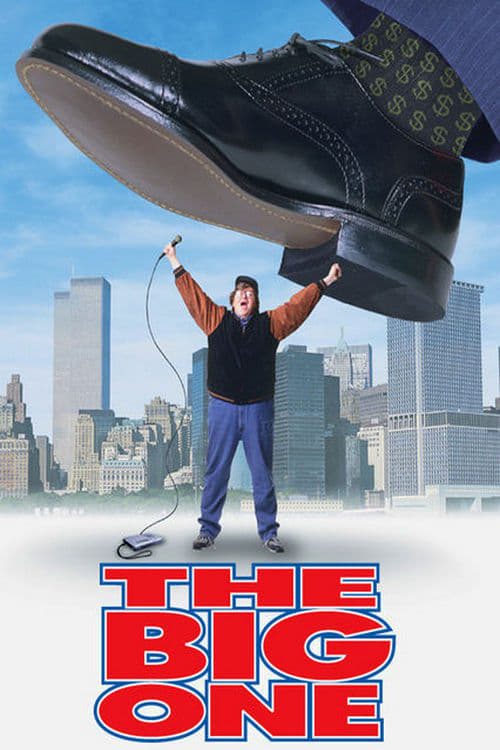
The Big One is an investigative documentary from director Michael Moore who goes around the country asking why big American corporations produce their product abroad where labor is cheaper while so many Americans are unemployed, losing their jobs, and would happily be hired by such companies as Nike.
Chennu committed his first crime when he was 15 years old: being a street kid. And he entered hell: Pademba Road. The adult prison in Freetown. In hell, Mr. Sillah is in charge, and there is no hope. Chennu got out after four years. Now he wants to go back.
For the third time, HBO cameras go inside Trenton State Maximum Security Prison--and inside the mind of one of the most prolific killers in U.S. history--in this gripping documentary. Mafia hit man Richard Kuklinski freely admits to killing more than 100 people, but in this special, he speaks with top psychiatrist Dr. Park Dietz in an effort to face the truth about his condition. Filled with more never-before-revealed confessions, it's the most chillingly candid Iceman special yet as it combines often-confrontational interview footage between Kuklinski and Dietz with photos, crime reenactments and home movies that add new layers to this evolving and fascinating story.
An absurd game of “finding happiness” is being played by local Latvian coyotes* and illegal immigrants on the Russian and the European Union border. It is a game with no winner – all participants are driven to play by the sense of despair. While one side leaves home and undertakes a perilous journey to the other side of the globe, hoping to spend the rest of their lives in a free country, the other side risks their freedom to earn a chance to stay right where they are, in their homeland. *coyote – someone who smuggles illegal immigrants
200 young people under 25 have died in custody since 1992 in England and Wales. This is the story of three of them; young men who died behind bars - told by the people who knew them best, it explores the flaws in the system and the lapses in care that contributed to their deaths.
On a blustery January day bishops arrive for the opening of the new Knutsford Test School.
Survivors of violent crimes and prisoners incarcerated for murder connect to undergo astonishing transformations, liberating themselves from the debilitating constraints of trauma, and shattering preconceptions of "us and them."
A portrait of the life and career of the infamous American execution device designer Fred A. Leuchter, Jr. Mr. Leuchter was an engineer who became an expert on execution devices and was later hired by holocaust revisionist historian Ernst Zundel to "prove" that there were no gas chambers at Auschwitz. Leuchter published a controversial report confirming Zundel's position, which ultimately ruined his own career. Most of the footage is of Leuchter, working in and around execution facilities or chipping away at the walls of Auschwitz, but Morris also interviews various historians, associates, and neighbors.
Eight men escape from the most isolated prison on earth. Only one man survives and the story he recounts shocks the British establishment to the core. This story is the last confession of Alexander Pearce.
The Execution of Wanda Jean chronicles the life-and-death battle of Wanda Jean Allen, the first black woman to be put to death in the United States in the modern era.
Forty years after the bloodiest one-day encounter between Americans since the Civil War, the dead remain buried along with the truth. Until now. Based on interviews with eyewitnesses who just now are telling their stories, as well as access to newly discovered documents, the film sheds new light on exactly what happened at Attica between September 9-13, 1971. Criminal Injustice raises compelling new questions about the 39 deaths at Attica, White House involvement, and the corrupting influence of Nelson Rockefeller’s political aspirations before, during, and long after the deadly retaking of the prison. Former hostage Michael Smith said that “the cover up started as soon as the shooting stopped.” This film reveals that the truth actually may have been concealed long before that.
On 15 August 2004, a 16-year-old girl was hanged in a public square in Neka, a small Iranian town by the Caspian Sea. Atefeh Sahaaleh's death sentence was for "crimes against chastity". Despite Iran being a signatory to an international convention that promises not to sentence to death or execute those under 18, permission was obtained from Iran's Supreme Court by the local mullah and head of the city's administration to do exactly that. Eyewitness accounts and dramatic reconstructions, plus undercover filming in Atefah's hometown tell the powerful story of the life and tragic death of an ordinary girl.
Scott Panetti was tried for the capital murder of his parents-in-law on September 8, 1992 in Gillespie County, Texas. He was subsequently sentenced to death on September 22, 1995. Panetti has an extensive history of mental illness, including schizophrenia, manic depression, auditory hallucinations and paranoia. Panetti was hospitalized, both voluntarily and involuntarily for mental illness fourteen times in six different hospitals before his arrest for capital murder in 1992. Following his conviction, Panetti’s former wife, and daughter of the victims, Sonja Alvarado, filed a petition stating that Panetti never should have been tried for the crimes as he was suffering from paranoid delusions at the time of the killings.
In the Youth Prison of Catalonia live around around 300 youngsters between the ages of 18 and 23. Five of them picked up a camera for a year to tell how is life behind the walls of a prison. One year to talk about darkness, the passage of time, death and freedom. Particularly freedom.
This unique documentary dramatically re-enacts the crime scene and investigation of a police officer's murder in Dallas.
Elementary Genocide is a documentary executive produced by award winning journalist/filmmaker Rahiem Shabazz. The documentary appeals to a wide general viewership by addressing the social, cultural, political and personal ramifications of how the federal government allots money to each state, to build prions based on the failure rate of 4th and 5th graders. In America, where half of the 4th grade is reading below grade level and more African-American males are in jail than are in college, Elementary Genocide serves as a striking reminder of a flawed system in need of repair.
Rahiem Shabazz continues the conscience-raising dialogue generated by his acclaimed documentary Elementary Genocide: The School To Prison Pipeline with his equally hard-hitting Elementary Genocide 2: The Board of Education vs The Board of Incarceration. The Board of Education vs The Board of Incarceration uncovers the true purpose of today’s educational system and how it’s failing the African child. Going beyond the school-to-prison pipeline headlines and conspiracy theories, The Board of Education Vs. The Board of Incarceration proves that something sinister is afloat by digging deep to explore its origin, its existence and how to plot its destruction to save every Black child.

World renowned journalist, and award-winning filmmaker Rahiem Shabazz presents the third installment of his docu-series Elementary Genocide: Academic Holocaust. The first two documentaries in the series; The School To Prison Pipeline and Elementary Genocide 2: The Board Of Education vs. The Board of Incarceration received critical acclaim and launched Shabazz as a political pundit and academic ambassador for the African American community. Elementary Genocide: Academic Holocaust adds more statistical proof of the scholastic inequalities faced by Original people around the country. The documentary revisits the importance of education and its impact on self-image, family structure, financial freedom, and the collective future of African/indigenous people in America and abroad.
Metamorphosis is a documentary-style film giving the true account Bill Troester and the transformation he experienced by Jesus out of a life of violence, crime and drug addiction.