A "scenic picture from a hobo's point of view".
Social & External
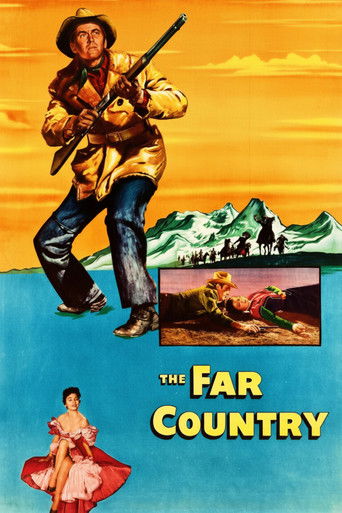
During the Klondike Gold Rush, a misanthropic cattle driver and his talkative elderly partner run afoul of the law in Alaska and are forced to work for a saloon owner to take her supplies into a newly booming but lawless Candian town.
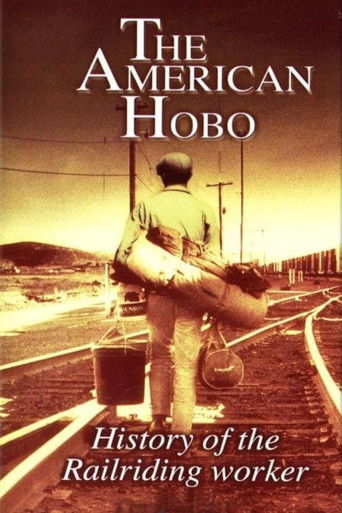
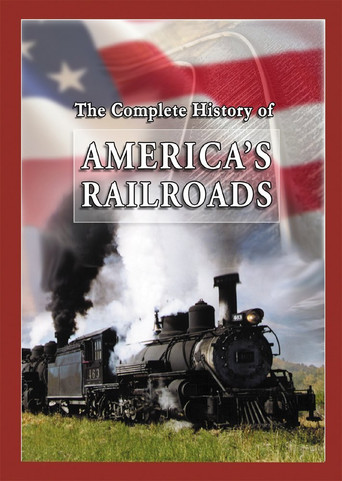
Ernest Borgnine, star of the classic train movie Emperor of the North, hosts and narrates this remarkable examination of the uniquely American Hobo.
"Who Is Bozo Texino?" is a film study on the 100-year-old tradition of hobo and railworker graffiti. Mostly shot on freight trips across the western US, the film includes interviews with some of the railroad’s greatest graffiti legends: Colossus of Roads, The Rambler, Herby (RIP) and the granddaddy of them all, Bozo Texino. The film also catches some of the socio-economic history of hobo subculture from its roots after the Civil War to the present day. The range of the interviews, and the film’s style deal with both the clichés and the harsh realities of tramp life.
Experience the power of the mighty Union Pacific as it conquers its toughest run, the Blue Mountains of eastern Oregon. Packed with the thrilling scenes of the latest GE wide cab diesels, Volume 1's dramatic footage covers all the excitement from La Grande to Huntington. You'll climb out of the Grande Ronde Valley from La Grande on the way to Antelope Canyon and North Powder. Race across the Baker Valley and enjoy scenes from Quartz, Encina, the famous Oxman curve and through the Burnt River Canyon.
Experience the power of the mighty Union Pacific on its toughest run, the Blue Mountains of Eastern Oregon - in the dead of winter! Video Rails brings you the finest contemporary Union Pacific footage. You'll travel the "snow zone" of the Blue Mountains, from North Powder to Meacham. Climb up two steep grades to the summits at Telocaset and Kamela, and across the Grande Valley through La Grande, Oregon.
Donner Pass – the name evokes daunting obstacles with good reason. Steep grades and seven months a year of winter weather put a railroad's resources to the test. Yet the need to transport goods over the Sierras produces a nonstop parade of trains over this famous line, and that was especially true in 1988 when Video Rails captured incredible Southern Pacific action over Donner Pass. Starting at the classification yards in Roseville, California, you'll follow Southern Pacific's trains up and over "The Hill." SP's 6-axle SD40s, SD40T-2s, SD45s, and SD45T-2 tackle 138 miles of up to 2.4 percent grades. Up to 11 units are needed for the climb. The standard arrangement for these 10,000-ton trains is 4 by 6, with four engines leading and 6 mid-train helpers, but you'll also see long trains with six units leading, six mid-train helpers, and an end-of-train helper.
An experimental look at the origin of the death myth of the Chinookan people in the Pacific Northwest, following two people as they navigate their own relationships to the spirit world and a place in between life and death.
A short film documentary about the reconstruction of Lac-Mégantic following the 2013 railway tragedy.
A fearless horse bonds two men to each other and to the traditions that define their community.
The film explores the destruction of a unique train station in Zurich and the construction of the new prison and police centre in its place. From the perspective of the filmmaker’s window, and with testimony from prisoners awaiting deportation, the film probes how we deal with the extinction of history and its replacement with total security.
An unexpected speeding freight train ploughs into the film crew, a camera assistant is struck and killed by the locomotive. The film's director is subsequently charged with criminal trespass and involuntary manslaughter. An Australian crime author starts to dig and an exhaustive three-year investigation ensues, uncovering shocking new evidence of cover up, collusion and corruption.
Hip-Hop Culture and Graffiti Video Magazine
Several films have been made about the lives of train hobos, but Aleksi Pohjavirta's A Good Day to Die is probably the first Finnish documentary on the subject. The film follows Billy, who travels in a pump on freight trains. In the way of life, the feeling of freedom and letting yourself be carried away by chance are attractive and they make the train bomb strive for a windy ride again and again.
Tracing the eastern banks of the upper Mississippi River is BNSF’s St. Croix Subdivision, a mostly double-tracked route providing access for a nonstop parade of traffic from La Crosse, Wisconsin to Minneapolis/St. Paul, Minnesota. Pentrex takes you across the entire sub in the late 1990s, filming throughout the seasons to bring you a unique perspective on this important, busy line. Starting at the Grand Crossing diamond in La Crosse, where BNSF crosses Canadian Pacific trackage, we follow intermodal, coal, grain, taconite, manifest, and other trains along the shores of the Mississippi. Bald Eagles are seen circling overhead, boats ply the waters, and train whistles echo off the surrounding bluffs.
Year-round Metal Enjoyment explores the New England origins of North American freight train graffiti, tracing the narratives of several members of the prolific YME and Circle T crews, and giving unparalleled access into the fastest growing subculture in the graffiti movement. Challenged by the illegal nature of their passions, dangerous locales, and the pressures of a society that will not accept or understand them, these artists reveal what drives them to return, time after time, to execute their artwork on a canvas that is forever changing, moving and vanishing into oblivion. Both snapshot of a fading history and love-letter to the trains themselves, Year-round Metal Enjoyment captures the voices, faces and thoughts of artists, railfans and train-workers alike, while showcasing the unlikely beauty of the trains in their environment.
John T. Davis stashes a camera in his bedroll, catches out, and rides the rails from Minneapolis to Seattle with Beargrease - a part-time hobo and full time philosopher, who narrates their way through the incredible scenery of the Northwest and gives us his views on life, liberty, and the pursuit of happiness. Along the way, the pair meet with several other men living life on the margins.
Short documentary on the shunters in the Darling Island, Sydney, Australia railyard. Filmed in 1977.
A documentary about the search for the legendary Bigfoot, a large humanoid creature (also known as Sasquatch) who is rumored to inhabit the forests of the U.S. Pacific Northwest.
The Great American Hobo produced in 1980 features the music of Supertramp's "Take the Long Way Home" documenting the men and women who rode freight trains. Shot in 14 states and culminates with the Hobo Convention in Britt Iowa. Premiered the Independent Eye series for PBS in 1980.
Outlaw gangs are plundering the freight lines that bring supplies into Yellow Creek. The only thing that will save the town is the insurance money on the freight, but the outlaws are looking to steal that also. Lane comes to town as the best man for the wedding of Tom and Judy, but it will be up to him to find the outlaw boss.
The epic tale of the development of the American West from the 1830s through the Civil War to the end of the century, as seen through the eyes of one pioneer family.
When a handful of settlers survive an Apache attack on their wagon train they must put their lives into the hands of Comanche Todd, a white man who has lived with the Comanches most of his life and is wanted for the murder of three men.
A wandering cowboy gets caught up in a range war.
After the train station clerk is assaulted and left bound and gagged, then the departing train and its passengers robbed, a posse goes in hot pursuit of the fleeing bandits.
An outlaw band flees a posse and rides into Refuge, a small town where no one carries a gun, drinks, or swears. The town is actually Purgatory, and the peaceful inhabitants are all famous dead outlaws and criminals such as Doc Holiday and Wild Bill Hickok who must redeem themselves before gaining admittance to Heaven... or screw up and go to Hell.
Karl Westover, an inexperienced farm boy, runs away after unintentionally killing a neighbor, whose family pursues him for vengeance. He meets Barbarosa, a gunman of near-mythical proportions, who is himself in danger from his father-in-law Don Braulio, a wealthy Mexican rancher. Don Braulio wants Barbarosa dead for marrying his daughter against the father's will. Barbarosa reluctantly takes the clumsy Karl on as a partner, as both of them look to survive the forces lining up against them.
When her husband dies en route to America, Martha Price and her daughter Hilary are left to carry out his dream: the introduction of Hereford cattle into the American West. They enlist Sam "Bulldog" Burnett in their efforts to transport their lone bull, a Hereford named Vindicator, to a breeder in Texas, but the trail is fraught with danger and even Burnett doubts the survival potential of this "rare breed" of cattle.
A cattle-vs.-sheepman feud loses Connie Dickason her fiance, but gains her his ranch, which she determines to run alone in opposition to Frank Ivey, "boss" of the valley, whom her father Ben wanted her to marry. She hires recovering alcoholic Dave Nash as foreman and a crew of Ivey's enemies. Ivey fights back with violence and destruction, but Dave is determined to counter him legally... a feeling not shared by his associates. Connie's boast that, as a woman, she doesn't need guns proves justified, but plenty of gunplay results.
A group of young gunmen, led by Billy the Kid, become deputies to avenge the murder of the rancher who became their benefactor. But when Billy takes their authority too far, they become the hunted.
Two tough westerners bring home a group of settlers who have spent years as Comanche hostages.
An aging group of outlaws look for one last big score as the "traditional" American West is disappearing around them.
A buffalo hunter has a falling-out with his partner, who kills for fun.
When Edward Creighton leads the construction of the Western Union to unite East with West, he hires a Western reformed outlaw and a tenderfoot Eastern surveyor. Preserved by the Academy Film Archive in partnership with Twentieth Century Fox Film Corporation in 2000.
John Russell, disdained by his "respectable" fellow stagecoach passengers because he was raised by Indians, becomes their only hope for survival when they are set upon by outlaws.
A man and his partner arrive at a small Western town to kill its most powerful man because the former blames him for his wife's death.
Put-upon lawman John Dorsey is on the verge of losing his wife and his job as sheriff, so he posses up with bullish U.S. Marshall Butch Hayden to hold outlaw Emily Rusk hostage. A battle of wills ensues as Emily turns the posse on themselves, but as her marauding husband and his gang approach, Emily and John realize they will need each other to survive.
Chico, one of the remaining members of The Magnificent Seven, now lives in the town that they (The Seven) helped. One day someone comes and takes most of the men prisoner. His wife seeks out Chris, the leader of The Seven for help. Chris also meets Vin another member of The Seven. They find four other men and they go to help Chico.
Jake Remy leads a gang of outlaw cutthroats making their escape toward Mexico from a successful robbery. Barring their way is a river--crossable only by means of a ferry barge. The barge operator, Travis, refuses to be bullied into providing transport for the gang and escapes across river with most of the local populace--leaving Remy and his gang behind, desperately seeking a way across. A river-wide stand-off begins between the gang and the townspeople, both groups of which have left people on the wrong side of the river.
Legends (and myths) from the life of famed American frontiersman Davy Crockett are depicted in this feature film edited from television episodes. Crockett and his friend George Russel fight in the Creek Indian War. Then Crockett is elected to Congress and brings his rough-hewn ways to the House of Representatives. Finally, Crockett and Russell journey to Texas and the last stand at the Alamo.
During the war for Texas independence, one man leaves the Alamo before the end (chosen by lot to help others' families) but is too late to accomplish his mission, and is branded a coward. Since he cannot now expose a gang of turncoats, he infiltrates them instead. Can he save a wagon train of refugees from Wade's Guerillas?