Social & External
The documentary focuses on the annual Mani Rimdu festival of Tibet and Nepal, an event which encapsulates the Himalayan Buddhist experience.
Amid Guanajuato's vibrant streets, an aging filmmaker becomes a modern Don Quixote, joined by a spirited young animator as his loyal Sanchia. Together, they navigate themes of mortality, unfulfilled dreams, and the fragile line between madness and clarity, uncovering the transformative power of light, art, and the landscapes that shape our souls.
Examined Life pulls philosophy out of academic journals and classrooms, and puts it back on the streets. Offering privileged moments with great thinkers from fields ranging from moral philosophy to cultural theory, Examined Life reveals philosophy's power to transform the way we see the world around us and imagine our place in it.
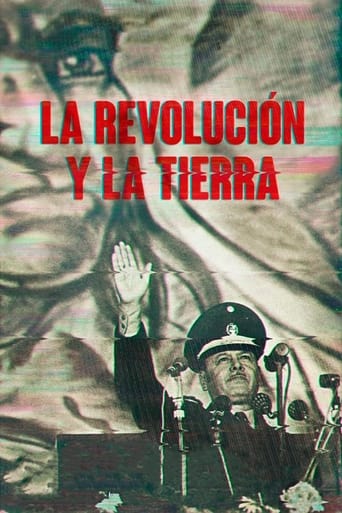
The long fight over the land, which demolished the wall between master and serf, continues to divide Peru to this day. But the 1969 agrarian reform marked a before and after in the country's story - a profound change that Peruvian cinema reflected and encapsulated, creating great imagination we continue to discover today. 50 years after the social experiments of the revolution, we ask ourselves whether Peru really messed up or not with Juan Velasco Alvarado.
The impact of Marx on the 20th century has been all-pervasive and world-wide. This program looks at the man, at the roots of his philosophy, at the causes and explanations of his philosophical development, and at its most direct outcome: the failed Soviet Union.
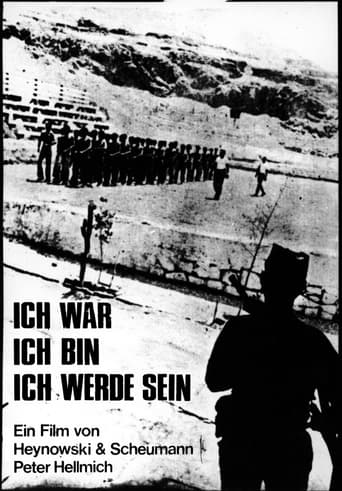
In the spring of 1974, a camera team from Studio H&S succeeded against the explicit orders of the Junta’s Chancellery, entered into two large concentration camps in the north of the country - Chacabuco and Pisagua - leaving with filmed sequences and sound recordings.
Argentine filmmaker Andrés Habegger embarks on a deeply personal journey in this documentary, seeking to recover memories and information about his father, Norberto Habegger, a journalist and Montonero activist who disappeared in Brazil in 1978 during a joint operation between the Argentine and Brazilian military. Traveling to places that were part of his life and revisiting old photos and his childhood diaries, the director fills in the gaps in a family history that was interrupted.
Explores the life and work of English journalist Robert Cox, the former editor of "The Buenos Aires Herald" daily newspaper, whose investigative reporting in the late 1970s exposed the shocking human rights crimes of Argentina's military dictators.
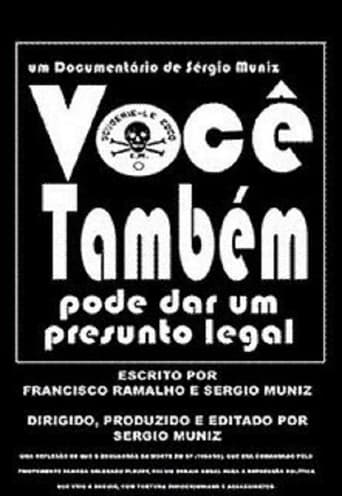
Amid the civil-military dictatorship implanted with the 1964 coup, Sergio Muniz had the idea of making a documentary about the action of the Death Squad. At the time, the press still had some freedom to disseminate the work of these death squads formed by police officers of various ranks, and that he acted on the outskirts of cities like Sao Paulo and Rio de Janeiro. The victims of police repression (as today) were men, poor and black, and this condition is supposed criminals.
A feature length documentary which invites the viewer to rediscover an enchanted cosmos in the modern world by awakening to the divine within. The film examines the re-emergence of archaic techniques of ecstasy in the modern world by weaving a synthesis of ecological and evolutionary awareness,electronic dance culture, and the current pharmacological re-evaluation of entheogenic compounds.
In a time of resurgence of social protests, political radicalization and distrust of power, Arendt's thought has never been more relevant: A critical thinker according to some or a conservative according to others, this great figure of the intellectual world remains, in many ways, an enigma. Who was Hannah Arendt?
Published in 1949, The Second Sex became the bible of global feminism. An essential work that passionately advocates for gender equality, women's independence, and the liberation of morals. Today, how does this seminal work continue to resonate in our contemporary world? Conceived as an initiatory journey to the origins of Simone de Beauvoir's thinking, the film The Second Sex: In the Footsteps of Simone de Beauvoir takes us to the United States, to the places that inspired the philosopher and nourished her theories. An American road trip bringing together the worst and the best, predatory capitalism and mad love. A unique reinterpretation in the company of the great thinkers of our century.
A story of life and death, featuring Lozinski's six-year-old son Tomaszek and elderly people spending time on the benches of a Warsaw park. Riding his scooter, Tomaszek asks the elderly very adult, though basic, questions, which they are happy to answer. The boy's ideas of future and life are confronted with those of men at the end of their lives.
In 1968, Orlando Lovecchio was made victim of a guerilla's bomb terrorist attack, which main objective was to fight against the Military Regime. Orlando lost one leg after the world-reckoned attack against the U.S. Consulate in Sao Paulo.
A documentary on the war between the Guatemalan military and the Mayan population, with first hand accounts by Nobel Peace Prize winner Rigoberta Menchú.
102 Years in the Heart of Europe: A Portrait of Ernst Jünger (Swedish: 102 år i hjärtat av Europa) is a Swedish documentary film from 1998 directed by Jesper Wachtmeister. It consists of an interview by the journalist Björn Cederberg with the German writer, philosopher and war veteran Ernst Jünger (1895-1998). Jünger talks about his life, his authorship, his interests and ideas. The actor Mikael Persbrandt reads passages from some of Jünger's works, such as Storm of Steel, The Worker, On the Marble Cliffs and The Glass Bees.
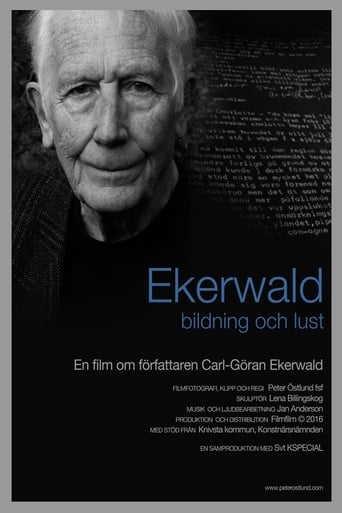
The author Carl-Göran Ekerwald has written more than 50 books. At the age of 87, a new chapter in his life begins when he meets the journalist and author Sigrid Kahle. Ekerwald is a man of eductation and lust.
Al Pacino's deeply-felt rumination on Shakespeare's significance and relevance to the modern world through interviews and an in-depth analysis of "Richard III."
A look at the origins, history and conspiracies behind the "Majestic 12", a clandestine group of military and corporate figureheads charged with reverse-engineering extraterrestrial technology.
Bruce Conner’s most celebrated film for a reason: it takes historical moments that were replayed over and over on television—chilling repetition of Kennedy assassination coverage—and repurposes them into a meditation on how the media tries to exert authority and apply a sense of order to the anarchic. And though it may sound perverse to say so, the film is also—not incidentally—a thrill to watch. -- The A.V. Club
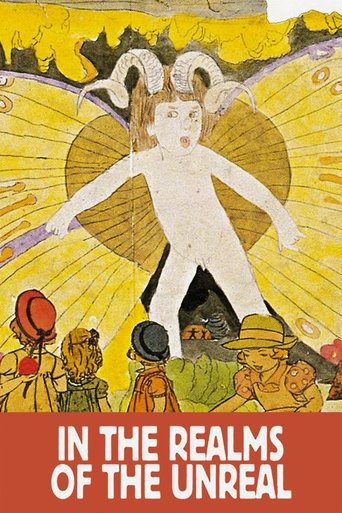
In the Realms of the Unreal is a documentary about the reclusive Chicago-based artist Henry Darger. Henry Darger was so reclusive that when he died his neighbors were surprised to find a 15,145-page manuscript along with hundreds of paintings depicting The Story of the Vivian Girls, in What is Known as the Realms of the Unreal, of the Glodeco-Angelinnian War Storm, Cased by the Child Slave Rebellion.
Martin Scorsese’s portrait of writer and social commentator Fran Lebowitz, celebrated for her sharp wit and observations on modern life. Filmed at New York’s Waverly Inn and intercut with archival footage and interviews, the documentary captures Lebowitz’s distinctive worldview through her spontaneous monologues and public appearances.
A subjective documentary that explores various theories about hidden meanings in Stanley Kubrick's classic film The Shining. Five very different points of view are illuminated through voice over, film clips, animation and dramatic reenactments.
Alexander McQueen's rags-to-riches story is a modern-day fairy tale, laced with the gothic. Mirroring the savage beauty, boldness and vivacity of his design, this documentary is an intimate revelation of McQueen's own world, both tortured and inspired, which celebrates a radical and mesmerizing genius of profound influence.
This searing investigative work shadows a group of activists risking unimaginable peril to confront the ongoing anti-LGBTQ program raging in the repressive and closed Russian republic. Unfettered access and a remarkable approach to protecting anonymity exposes this under-reported atrocity–and an extraordinary group of people confronting evil.
A detailing of the rise to prominence and global sporting superstardom of six supremely talented young Manchester United football players (David Beckham, Nicky Butt, Ryan Giggs, Paul Scholes, Phil and Gary Neville). The film covers the period 1992-1999, culminating in Manchester United's European Cup triumph.
Behind-the-scenes documentary about how Lionel Messi succeeded in lifting the World Cup – the only trophy to have eluded him in an incredible career.
An experimental documentary that explores Saudi Arabia's relationship with the U.S. and the role this has played in the war in Afghanistan.
The life and career of an actor, artist, and icon. His own journey through his own camera.
A presentation of a case for a needed transition out of the current socioeconomic monetary paradigm which governs the entire world society. This subject matter will transcend the issues of cultural relativism and traditional ideology and move to relate the core, empirical 'life ground' attributes of human and social survival, extrapolating those immutable natural laws into a new sustainable social paradigm called a 'Resource-Based Economy'.
With unprecedented access to the official archives and intimate recollections from the band, both current and past, Iron Maiden: Burning Ambition invites fans to experience one of the most iconic journeys in music history. Spanning five decades, this electrifying documentary charts the band’s rise from the pubs of East London to the world’s biggest stadiums. Featuring exclusive interviews with band members and contributors such as Javier Bardem, Lars Ulrich and Chuck D, as well as all-new animated sequences of the band's legendary mascot, Eddie, the film offers a rare and intimate look at Iron Maiden’s uncompromising vision and unwavering connection with their truly global army of fans.
JB Smoove and Martin Starr host a celebration of 20 years of "Spider-Man" movies, from the Sam Raimi trilogy to Marc Webb's movies and the trio from Jon Watts.
In the early-morning hours of July 23, 2007, in Cheshire, Conn., ex-convicts Steven Hayes and Joshua Komisarjevsky broke into the family home of William Petit, his wife, Jennifer, and their daughters, Michaela, 11, and Hayley, 17. Dr. Petit was beaten and tied to a pole in the basement. The three women were bound in their bedrooms while the men ransacked the house. The brutal ordeal continued throughout the morning, ending with rape, arson and a horrific triple homicide.
With rare access and no holds barred, the acclaimed documentarian investigates a growing ultra-masculine network and its controversial influencers.
Award-winning journalist Daniela Arbex examines the horrors of the Colônia psychiatric hospital, where more than 60,000 people were killed over decades.
When Allied forces liberated the Nazi concentration camps in 1944-45, their terrible discoveries were recorded by army and newsreel cameramen, revealing for the first time the full horror of what had happened. Making use of British, Soviet and American footage, the Ministry of Information’s Sidney Bernstein (later founder of Granada Television) aimed to create a documentary that would provide lasting, undeniable evidence of the Nazis’ unspeakable crimes. He commissioned a wealth of British talent, including editor Stewart McAllister, writer and future cabinet minister Richard Crossman – and, as treatment advisor, his friend Alfred Hitchcock. Yet, despite initial support from the British and US Governments, the film was shelved, and only now, 70 years on, has it been restored and completed by Imperial War Museums under its original title "German Concentration Camps Factual Survey".
A documentary about the life and films of director John Ford.