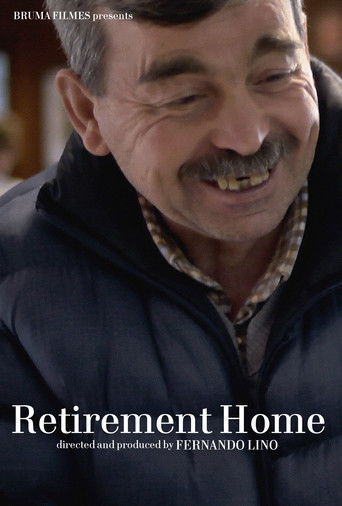
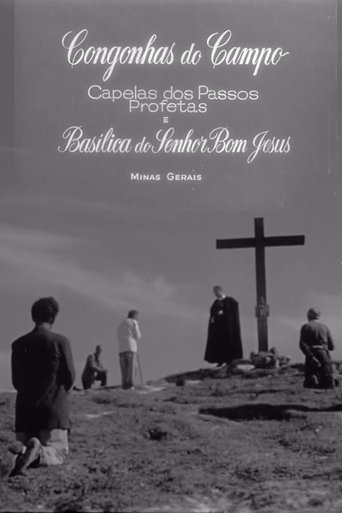
"About four great architectural moments in Portugal"
Documentary about 4 large architectural landmarks that projected Portugal abroad.
Social & External
Amongst the contemplative static shots of decaying architecture weaves an abstract narrative unveiling the life-cycle of a higher perception, too large to perceive. Shot at various sites across south-east England, INFRASTRATA is a study on the concept of super-organisms, and the relationship between structure and nature.
The architect André Ravéreau spent a large part of his life in Algeria, he is today an essential reference for Algerian builders of several generations. His daughter Maya, an architect herself, accompanies us to the places of his creations and his research, in the Mzab first where he lived, created, trained other architects in the "desert workshop" and had the oases of the Mzab classified as a UNESCO World Heritage Site. Inspired by tradition to better innovate as in the construction of the Ghardaïa post office, or in that of a very surprising villa... Then in Algiers where he worked to preserve the ancestral heritage of the Casbah, faithfully describing the principles of his construction in line with current concerns, such as the choice of environmentally friendly materials and avoiding energy waste, as testified by the architect Yasmine Terki, a great specialist in earth materials.
Catalan architect Antonio Gaudí (1852-1926) designed some of the world's most astonishing buildings, interiors, and parks; Japanese director Hiroshi Teshigahara constructed some of the most aesthetically audacious films ever made. With camera work as bold and sensual as the curves of his subject's organic structures, Teshigahara immortalizes Gaudí on film.
In 1989, a woman writes a letter to her mentor. She reminisces about a life-changing campaign they spearheaded to save a historic home, Irving Gill's Walter Luther Dodge House in Los Angeles, twenty years prior.
Synthesis of the first 110 years of the history of Portuguese cinema, made almost exclusively with archive material from the series of eight episodes History of Portuguese Cinema, produced by Pedro Efe in 1998, and combining excerpts from films with testimonies from some of the most prominent actors of the same story. It is attempted to relate it chronologically, and in spite of certain gaps, in an accessible, concise and didactic way.
Thousands of tourists come to Barcelona from far and wide to admire the work of the great architect, Antoni Gaudí. What they don't know is that many of the photographs they take home with them are of works by Josep Mª Jujol, a forgotten architect and the other great genius of Catalan Modernisme.
For most of America's history, sacred buildings represented our greatest feats of innovative engineering and artistic design. Unlock the elements of design that make these structures so fascinating and unveil the meaning in religious architecture, ranging from grand cathedrals and simple country churches to synagogues and mosques.
"Chair Times" charts a course through an ocean of chairs. In the focus are 125 objects from the Collection of the Vitra Design Museum. Arranged according to their year of production, they illustrate development from 1807 to the very latest designs straight off the 3D printer, forming a timeline to modern seating design. The film features many people whose vocations involve design and who are experts in the field, such as designers Hella Jongerius, Antonio Citterio and Ronan Bouroullec, architects and collectors Arthur Rüegg and Ruggero Tropeano, architect David Chipperfield, Director Emeritus of MAK Vienna/Los Angeles Peter Noever, Mateo Kries, Director of the Vitra Design Museum, Vitra Design Museum curators Amelie Klein, Jochen Eisenbrand and collection curator Serge Mauduit. And your guide through the history of chairs is Rolf Fehlbaum, Chairman Emeritus of Vitra.
Famed Swiss architect and artist Robert Maillart was renowned for his concrete bridges; this documentary examines the elegant design of his engineering masterpieces, which, the film argues, embrace both functionality and aesthetics. Instead of following a traditional journalistic structure, director Heinz Emigholz's spellbinding film reads more like ethereal visual poetry, allowing the beauty of Maillart's work to speak for itself.
A documentary film conceived as a virtual dialogue and musical journey in four acts, which investigates the responsibility of architects in building the society of tomorrow.
Architecture critic Patrick Nuttgens narrates a documentary on the 20th century architect Edwin Lutyns, exploring the plans and buildings of the man who designed Liverpool Metropolitan Cathederal and the city of New Delhi.
A story with almost 100 years told by the 95 years old woman Floripes.
The twelfth edition of the International Meeting of Collective Architectures was held in Palma de Mallorca, in the neighborhoods of La Soledat, Nou Llevant and Es Molinar, at the end of September 2019. The meeting focused on the imposition of false paradises and the description of the current mechanisms of urban transformation that expel people from their neighborhoods.
A documentary about the concrete sections of the Berlin Wall that have been acquired by institutions or individuals since 1989 and are now scattered across the USA. Cherished or abandoned, they have become silent witnesses to recent history.
Big Time gets up close with Danish architectural prodigy Bjarke Ingels over a period of six years while he is struggling to complete his largest projects yet, the Manhattan skyscraper W57 and Two World Trade Center.
In 1959, a government employee named Richard Oyler, living in the tiny desert town of Lone Pine, California, asked world-famous modern architect Richard Neutra to design his modest family home. To Oyler's surprise, Neutra agreed. Thus began an unlikely friendship that led to the design and construction of an iconic mid-century modern masterpiece.
Danish documentary about the disobedient schoolboy with a talent for painting, who became one of Denmark’s greatest architects. His ideas were ahead of their time and often received criticism, but today, 50 years after his death, Arne Jacobsen's schools, town halls and libraries are still with us, and they define modern Denmark.