Social & External
The documentary accompanies a group of soccer fans twice on a train ride to a soccer match - first in 1991 and then again in 2006. Have the fans learned something or are they still hooligans?
A disturbing collection of 1940s and 1950s United States government-issued propaganda films designed to reassure Americans that the atomic bomb was not a threat to their safety.
The US detonated 67 nuclear weapons over the Bikini Atoll in the Marshall Islands during the Cold War, the consequences of which still reverberate down four generations to today. "NUKED," is a timely new feature documentary focussing on the human victims of the nuclear arms race, tracing the displaced Bikinian's ongoing struggle for justice and survival even as climate change poses a new existential threat. Using carefully restored archival footage to resurrect contemporaneous islanders’ voices and juxtaposing these with the full, awesome fury of the nuclear detonations, NUKED starkly contrasts the official record with the lived experience of the Bikinians themselves, serving as an important counterpoint to this summer’s Oppenheimer.
A powerful drama of soaring ambition and shattered dreams that takes a provocative insider's look at the way the USA goes to war—as seen from inside the LBJ White House leading up to and during the Vietnam War.
For the first time in six years, Barbara Morgenstern, pioneer of German-style electronic intimate pop, works on a new album. Her laptop sits on a shoebox, in the privacy of her home she finds first lines and harmonies: “I like to be alone,” one song begins. One by one, musicians join her. Intuitive ideas take shape. A window has opened. Arrangements, rehearsals, recordings follow. Step by step, the music enters public space, images are produced, videos, narratives. Questions arise: New beginning or back to the roots? New Biedermeier or tough political comment? The bigger the band, the riskier the booking. The more crisis-ridden the environment, the more comforting the music-making.
2019 marks the 30th year since the fall of the Berlin Wall and the end of the Cold War. Rich Hall examines the relationship between the West and the USSR in his inimitable fashion.
This documentary shows how the Berliner workers lived in 1930. The director Slatan Dudow shows through images: a) the workers leaving the factory; b) the raise of the rents; c) the "unpleasant" guest, meaning the justice officer that brings the eviction notice; d) the fight of classes of the houses of capitalists and working classes; e) the parks of the working class; f) the houses of the working class, origin of the tuberculosis and the victims; g) the playground of the working class; h) the swimming pool for the working class, ironically called the "Baltic Sea" of the working class; i) the effects of humidity of basement where a family lives, with one member deaf; j) one working class family having dinner while the capitalist baths his dog; k) the eviction notice received from an unemployed family and their eviction.
As the 2024 elections approach, Russian interference in American politics – through spies or agents of influence – is a troubling reality. Vladimir Putin is counting on Donald Trump’s victory to weaken support for Ukraine. Why does Trump almost always support Russia? Is he compromised? During his presidency, did he betray the United States in favor of the Kremlin? And why has the Republican Party shifted its stance toward Russia? Answering these questions means shedding light on a labyrinthine espionage and manipulation operation. Still ongoing, it began forty years ago, during the final years of the Cold War. Back then, Trump was merely a real estate developer, and Putin was a young KGB agent. This operation contains many dark areas, but some hold pieces of the puzzle. A former KGB leader, infiltrated “illegals,” a former Trump advisor, and former senior officials from the CIA and FBI, as well as a former prosecutor, provide testimony. . . . [taken from Nilaya Productions]
Stella, grows up in Berlin during the rule of the Nazi regime. She dreams of a career as a jazz singer, despite all the repressive measures she is forced to go into hiding with her parents in 1944, her life turns into a culpable tragedy.
Journey with the musicians of the Berlin Philharmonic and their conductor Sir Simon Rattle on a breakneck concert tour of six metropolises across Asia: Beijing, Seoul, Shanghai, Hong Kong, Taipei and Tokyo. Their artistic triumph onstage belies a dynamic and dramatic life backstage. The orchestra is a closed society that observes its own laws and traditions, and in the words of one of its musicians is, “an island, a democratic microcosm – almost without precedent in the music world - whose social structure and cohesion is not only founded on a common love for music but also informed by competition, compulsion and the pressure to perform to a high pitch of excellence... .” Never before has the Berlin Philharmonic allowed such intimate and exclusive access into its private world.
A Texas congressman sets a series of events in motion when he conspires with a CIA operative to aid Afghan mujahideen rebels fighting the Soviets.
At the dawn of the Space Race, seven test pilots set out to become the first American astronauts to enter space. However, the road to making history brings momentous challenges.
The Tet Offensive during the Vietnam War, the Civil Rights Movement, the May events in France, the assassinations of Martin Luther King and Robert F. Kennedy, the Prague Spring, the Chicago riots, the Mexico Summer Olympics, the presidential election of Richard Nixon, the Apollo 8 space mission, the hippies and the Yippies, Bullitt and the living dead. Once upon a time the year 1968.
A Neukölln family of choice is pursuing its vision of creating a magical cultural and community garden above the rooftops of Berlin: the Klunkerkranich.
Experience the fall of the Third Reich like never before, the last year of the war and the liberation of Europe from Nazi rule. Documented up close by the most courageous cameramen of their time and uniquely edited. The most authentic documentary about the fall of Hitler's Germany, over ninety minutes of brilliant HD color footage with impressive original commentary from the time.
When Russia's first nuclear submarine malfunctions on its maiden voyage, the crew must race to save the ship and prevent a nuclear disaster.
An exhaustive explanation of how the military occupation of an invaded territory occurs and its consequences, using as a paradigmatic example the recent history of Israel and the Palestinian territories, the West Bank and the Gaza Strip, from 1967, when the Six-Day War took place, to the present day; an account by filmmaker Avi Mograbi enriched by the testimonies of Israeli army veterans.
In August 1962, director Leslie Woodhead made a two-minute film in Liverpool's Cavern Club with a raw and unrecorded group of rockers called the Beatles. He arranged their first live TV appearances on a local show in Manchester and watched as the Fab Four phenomenon swept the world. Twenty-five years later while making films in Russia, Woodhead became aware of how, even though they were never able to play in the Soviet Union, the Beatles' legend had soaked into the lives of a generation of kids. This film meets the Soviet Beatles generation and hears their stories about how the Fab Four changed their lives, including Putin's deputy premier Sergei Ivanov, who explains how the Beatles helped him learn English and showed him another life. (Storyville)
At the Wannsee Conference on January 20, 1942, senior Nazi officials meet to determine the manner in which the so-called "Final Solution to the Jewish Question" can be best implemented.
A keen chronicle of the unlikely rise to power of Adolf Hitler (1889-1945) and a dissection of the Third Reich (1933-1945), but also an analysis of mass psychology and how the desperate crowd can be deceived and shepherded to the slaughterhouse.
Oliver Stone charts the history of the United States from the Second World War to the present.
The history of cinematic sound, told by legendary sound designers and visionary filmmakers.
During the Cold War, an American scientist appears to defect to East Germany as part of a cloak and dagger mission to find the formula for a resin solution—but the plan goes awry when his fiancee, unaware of his motivation, follows him across the border.
Diaries, audiotapes, videotapes and testimonials from friends and colleagues offer insight into the life and career of Gilda Radner -- the beloved comic and actress who became an icon on Saturday Night Live.
A day in the city of Berlin, which experienced an industrial boom in the 1920s, and still provides an insight into the living and working conditions at that time. Germany had just recovered a little from the worst consequences of the First World War, the great economic crisis was still a few years away and Hitler was not yet an issue at the time.
Experience the events of September 11, 2001 through the eyes of President Bush and his closest advisors as they personally detail the crucial hours and key decisions from that historic day.
The wild West Berlin of the 1980s became the creative melting pot of pop subcultures: music, art and chaos. Before the Iron Curtain fell, anything and everything seemed possible.
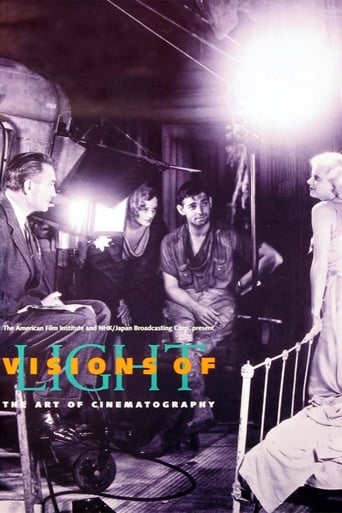
Cameramen and women discuss the craft and art of cinematography and of the "DP" (the director of photography), illustrating their points with clips from 100 films, from Birth of a Nation to Do the Right Thing. Themes: the DP tells people where to look; changes in movies (the arrival of sound, color, and wide screens) required creative responses from DPs; and, these artisans constantly invent new equipment and try new things, with wonderful results. The narration takes us through the identifiable studio styles of the 30s, the emergence of noir, the New York look, and the impact of Europeans. Citizen Kane, The Conformist, and Gordon Willis get special attention.
A documentary on the expletive's origin, why it offends some people so deeply, and what can be gained from its use.
Colonel Stok, a Soviet intelligence officer responsible for security at the Berlin Wall, appears to want to defect but the evidence is contradictory. Stok wants the British to handle his defection and asks for one of their agents, Harry Palmer, to smuggle him out of East Germany.
A documentary highlighting the Soviet Union's legendary and enigmatic hockey training culture and world-dominating team through the eyes of the team's Captain Slava Fetisov, following his shift from hockey star and celebrated national hero to political enemy.
When Allied forces liberated the Nazi concentration camps in 1944-45, their terrible discoveries were recorded by army and newsreel cameramen, revealing for the first time the full horror of what had happened. Making use of British, Soviet and American footage, the Ministry of Information’s Sidney Bernstein (later founder of Granada Television) aimed to create a documentary that would provide lasting, undeniable evidence of the Nazis’ unspeakable crimes. He commissioned a wealth of British talent, including editor Stewart McAllister, writer and future cabinet minister Richard Crossman – and, as treatment advisor, his friend Alfred Hitchcock. Yet, despite initial support from the British and US Governments, the film was shelved, and only now, 70 years on, has it been restored and completed by Imperial War Museums under its original title "German Concentration Camps Factual Survey".
Former United States Secretary of Defense, Donald Rumsfeld, discusses his career in Washington D.C. from his days as a congressman in the early 1960s to planning the invasion of Iraq in 2003.
A behind-the-scenes documentary about the Clinton for President campaign, focusing on the adventures of spin doctors James Carville and George Stephanopoulos.
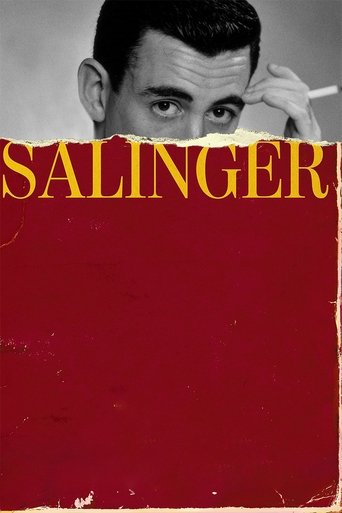
An in-depth investigation into the private world of the American writer J. D. Salinger (1919-2010), who lived most of his life behind the impenetrable wall of a self-imposed seclusion: how his dramatic experiences during World War II influenced his life and work, his relationships with very young women, his obsessive writing methods, his many literary secrets.
Set both in Latin America and the United States, the film explores the historic and current relationship of Washington with countries such as Venezuela, Bolivia and Chile. Pilger says that the film "...tells a universal story... analysing and revealing, through vivid testimony, the story of great power behind its venerable myths. It allows us to understand the true nature of the so-called "war on terror". According to Pilger, the film’s message is that the greed and power of empire is not invincible and that people power is always the "seed beneath the snow".
This documentary brings to life the stories of four people believed by their family and friends to be “DB Cooper,” a man who hijacked a 727 flying out of Seattle and jumped from the plane over the wilds of Washington State with a parachute and $200,000, never to be heard from again.
Documentary about the art of film editing. Clips are shown from many groundbreaking films with innovative editing styles.
A visual montage portrait of our contemporary world dominated by globalized technology and violence.