Anne Bean, John McKeon, Stuart Brisley, Rita Donagh, Jamie Reid and Jimmy Boyle are interviewed about their artistic practice and the legacy of Surrealism on their work.
Social & External
Unknown Role
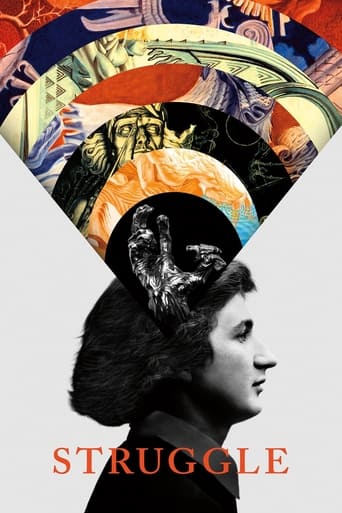
Cinema and painting establish a fluid dialogue and begins with introspection in the themes and forms of the plastic work of a woman tormented by the elongated specters, originating from her obsessions and nightmares.
Minor Threat played one of its last shows at Washington DC's 930 Club in June of 1983; they would only play once more in DC. Two years later, the tapes from the 930 show were edited together and Dischord Records released them as the Minor Threat Live VHS video in 1986. Along with the 40 minute 930 performance, the DVD includes a 1982 Minor Threat show in Camden, NJ, a clip of Minor Threat's 2nd ever show at DC Space in December 1980, and excerpts from a 1983 interview with vocalist, Ian MacKaye.
An anthology of one-minute films created by 51 international filmmakers on the theme of the death of cinema. Intended as an ode to 35mm, the film was screened one time only on a purpose-built 20x12 meter public cinema screen in the Port of Tallinn, Estonia, on 22 December 2011. A special projector was constructed for the event which allowed the actual filmstrip to be burnt at the same time as the film was shown.
The Greek island of Syros is visited by a series of unexpected guests. Immutable forms, outside of time, aloof observants to human conditions.
This film is depicts early lesbian sexuality, using reenacted scenes from the experience of a 12-year old girl as the platform for a meditation on forbidden desire, transgression, and Lacanian psychoanalytic concepts of identity formation. Raw adolescent memories counterpoint staged scenes, exploring mechanisms of power and submission.
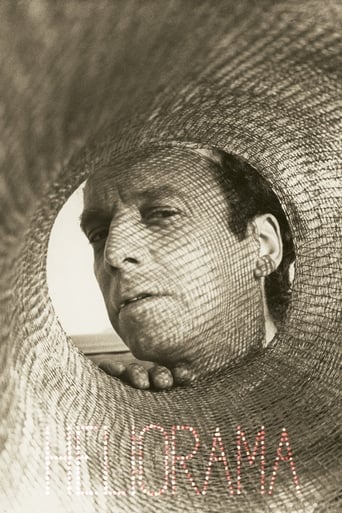
A collage of newsreels, trailers, clips and other visionary and unseen fragments of sight and sound regarding the late plastic artist Helio Oititica.
Joe died young. But his and "The Clash's" memory live on in the programme as it seeks to explore and identify the music and the reasons behind the split of one of the most iconic punk rock groups of the day. We follow the life of one of the original members of "The Clash". Told through interviews of Joe's involvement in the ground breaking group from other band members including Mick Jones and 'Topper' Headon, we tell the story as it was.
Drawing on VHS tapes of a programme hosted by her mother on Bulgaria’s national television, the filmmaker gives a pop-style and in-depth chronicle of the gentle – even “over-gentle” – 1989 revolution.
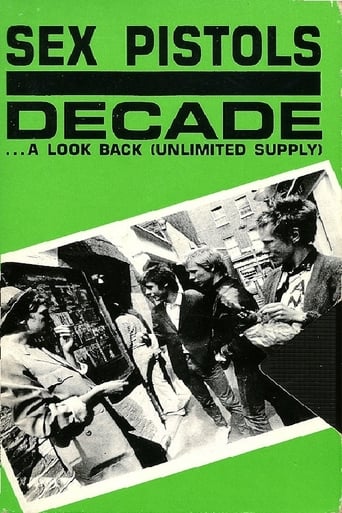
Featuring portions of over a dozen songs, humorous British 'punk' ads, opinions, Ronnie Biggs, Malcolm McLaren (of course!), and a fantastic not-so-candid Lydon interview.
The rare short film presents a curious dialogue between filmmaker Julio Bressane and actor Grande Otelo, where, in a mixture of decorated and improvised text, we discover a little manifesto to the Brazilian experimental cinema. Also called "Belair's last film," Chinese Viola reveals the first partnership between photographer Walter Carvalho and Bressane.
This film describes a psychological state "kin to moonstruck, its images emblems (not quite symbols) of suspension-of-self within consciousness and then that feeling of falling away from conscious thought. The film can only be said to describe or be emblematic of this state because I cannot imagine symbolizing or otherwise representing an equivalent of thoughtlessness itself. Thus the actors in the film, Jane Brakhage, Tom and Gloria Bartek, Williams Burroughs, Allen Ginsberg, Peter Olovsky and Phillip Whalen are figments of this 'Thought-Fallen Process', as are their images in the film to find themselves being photographed."
A self portrait filmed with a modified PXL 2000 Camcorder. The camcorder itself records on to audio cassette tape. The tapes themselves are recycled which means I have recorded over them several causing them to slowly degrade.
In 2007, 11 years after one of the most influential American punk bands, Jawbreaker, called it quits, the three members, Blake Schwarzenbach, Chris Bauermeister, and Adam Pfahler reconnect in a San Francisco recording studio to listen back to their albums, reminisce and even perform together one last time. Follow the band as they retell their "rags to riches to rags" story writhe with inner band turmoil, health issues, and the aftermath of signing to a major label. Featuring interviews with Billy Joe Armstrong, Steve Albini, Jessica Hopper, Graham Elliot, Chris Shifflet, Josh Caterer and more.
Made on a wind-up Bolex camera, The Sound of Seeing announced the arrival of 21-year-old filmmaker Tony Williams. Based around a painter and a composer wandering the city (and beyond), the film meshes music and imagery to show the duo taking inspiration from their surroundings.
As the first all-female band to play their instruments, write their songs and have a No. 1 album, The Go-Go’s made history. Underpinned by candid testimonies, this film chronicles the meteoric rise to fame of a band born in the LA punk scene who became a pop phenomenon.
Largely ignored and left to their own devices, a group of unassuming teenagers in late 80s and early 90s Sioux Falls, South Dakota created their own culture, community, and economy. And when they moved out into the world at large, they brought what they learned along with them. I Really Get Into It: The Underage Architects of Sioux Falls Punk is a story about the tenacity and ingenuity of youth, finding and following your convictions, and how the kids you least expect often make the most noise. Shot on location in eight cities and assembled from dozens of hours of archival video and hundreds of photos, the documentary features interviews with Larry Livermore (Lookout. Records), Ian MacKaye (Fugazi), Mike Park (Skankin' Pickle), Rebecca Hanten (Cadillac Blindside), Terry Taylor (Hammerlord), and dozens of current and former members of the Sioux Falls all ages music scene.
An experimental ethnographic documentary that criticizes the colonizer view of anthropology.
In 1967, experimental filmmaker Jorgen Leth created a striking short film, The Perfect Human, starring a man and women sitting in a box while a narrator poses questions about their relationship and humanity. Years later, Danish director Lars von Trier made a deal with Leth to remake his film five times, each under a different set of circumstances and with von Trier's strictly prescribed rules. As Leth completes each challenge, von Trier creates increasingly further elaborate stipulations.
A rather incoherent post-breakup Sex Pistols "documentary", told from the point of view of Pistols manager Malcolm McLaren, whose (arguable) position is that the Sex Pistols in particular and punk rock in general were an elaborate scam perpetrated by him in order to make "a million pounds."