The story of the railroad in Illinois and the train's role in moving product out of the states to the rest of America.
Social & External

A film that excavates layers of myth and memory, on an ancient Eritrean steam railway, to learn the elusive truth about Eritrea, its war-ridden history, and at the core of it all, a deep friendship that keeps it all going.
The film chronicles the remarkable saga of Mike Kirk, a devoted model train enthusiast, whose unwavering determination, along with the support of a dedicated circle of family and friends, spearheaded the decades-long restoration of the long-abandoned train depot nestled in the heart of rural Waupaca. Through Kirk's indomitable spirit and vision, the Waupaca Depot emerges as a phoenix rising from literal ashes, symbolizing resilience and community revival. "Back on Track" transcends the boundaries of a mere restoration project, delving deep into the rich tapestry of American history and the birth of rural communities. This film explores the intertwined narratives of Kirk's personal quest and the broader narrative of American heritage.
For the first time, survivors talk about life after the camps. How does one return to a life that was interrupted with such violence? How does one reconstruct oneself when all or most of one’s family were butchered? How does one resume studies and earn a living in a society that had cast you out a few years earlier?
A side-by-side analysis of Buster Keaton's Our Hospitality and S.S. Rajamouli's Maryada Ramanna.
Filmed in 1987, this documentary chronicles the journey of Via Rail's The Canadian as it makes its way across Canada.
In the 1870s Victorian politicians debated the virtues of constructing a 20km-long railway through Melbourne's east, simply to circumvent a privately-owned railway from South Yarra to Flinders Street Station. By 1878 the private railway had been purchased by the Victorian Government and there was no longer a need to build the orbital railway. But greedy politicians pushed legislation through parliament, authorising the construction of the railway through their own private land holdings. This is the story of Melbourne's Outer Circle Railway.

A family embarks on an annual tormenting journey along with 130 million other peasant workers to reunite with their distant family, and to revive their love and dignity as China soars as the world's next super power.
Experience one of the most spectacular train journeys in Norway from the orchestra stand. Join us minute by minute from high mountain to fjord. The journey starts at Myrdal station on the Bergen Railway and winds from 866 meters above sea level down to Flåm by the Sognefjord.
A colourful miscellany of footage from both sides of the Pennines.
Between February 4 and 11, 1945, three months before World War II ended in Europe, US President Roosevelt, British Prime Minister Churchill, and Soviet leader Stalin met in the Ukrainian city of Yalta to discuss how the continent should be politically reorganized after the imminent defeat of Nazi Germany.
A day in the city of Berlin, which experienced an industrial boom in the 1920s, and still provides an insight into the living and working conditions at that time. Germany had just recovered a little from the worst consequences of the First World War, the great economic crisis was still a few years away and Hitler was not yet an issue at the time.
A group of people are standing along the platform of a railway station in La Ciotat, waiting for a train. One is seen coming, at some distance, and eventually stops at the platform. Doors of the railway-cars open and attendants help passengers off and on. Popular legend has it that, when this film was shown, the first-night audience fled the café in terror, fearing being run over by the "approaching" train. This legend has since been identified as promotional embellishment, though there is evidence to suggest that people were astounded at the capabilities of the Lumières' cinématographe.
Take a breathtaking train a ride through Nothern Quebec and Labrador on Canada’s first First Nations-owned railway. Come for the celebration of the power of independence, the crucial importance of aboriginal owned businesses and stay for the beauty of the northern landscape.
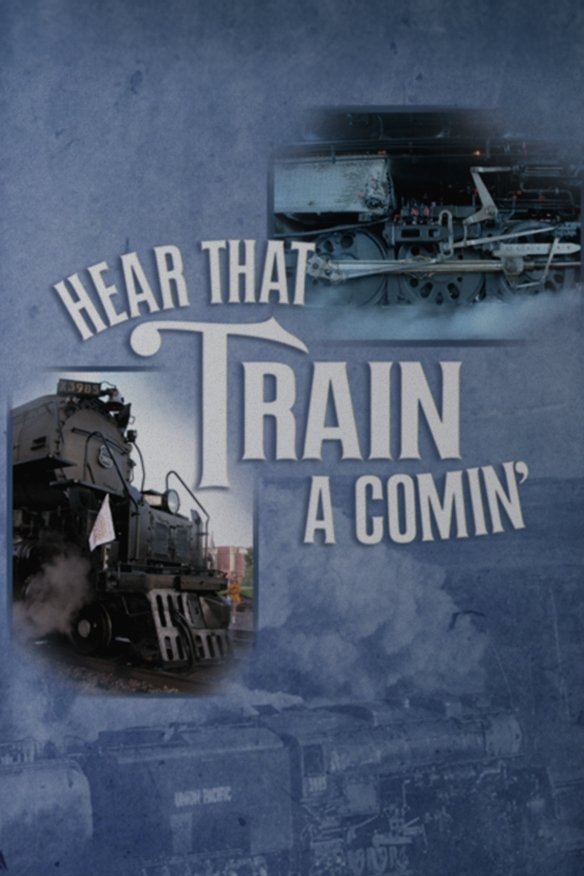
Meet the crew of the Union Pacific Challenger No. 3985, the largest and most powerful steam engine in the world. This colorful documentary is a behind-the-scenes look at the conductors, engineers and mechanics who keep this fickle train running, an engaging history of steam power, and a scenic tour the Great Plains -- from Cheyenne, Wyo., through Denver and across Nebraska to the Omaha headquarters of the Union Pacific.
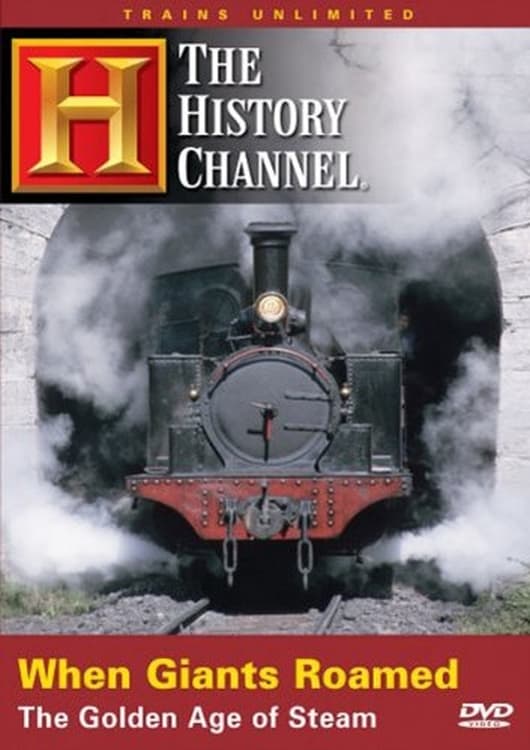
In the first half of the 20th century, America's railroads were radically transformed by the innovation of gargantuan steam locomotives. Pushed by the need to haul ever longer and heavier trains, the nation's locomotive works responded with the invention of awe-inspiring articulated engines. Delivering up to 7,500 horsepower, these steel behemoths could haul mile-long, 15,000-ton trains. In this riveting program, journey back to the golden age of steam for an up-close look at these legendary locomotives. See the Union Pacific's famed "Big Boy" in action and ride the rails of the Chesapeake & Ohio and Norfolk & Western railways. Meet the men who drove engines like the Allegheny and Yellowstone, and visit the museums and yards where the largest steamers ever built remain preserved in time. THE HISTORY CHANNEL' proudly presents this rollicking retrospective, sure to set any rail fan's heart pounding
What would your family reminiscences about dad sound like if he had been an early supporter of Hitler’s, a leader of the notorious SA and the Third Reich’s minister in charge of Slovakia, including its Final Solution? Executed as a war criminal in 1947, Hanns Ludin left behind a grieving widow and six young children, the youngest of whom became a filmmaker. It's a fascinating, maddening, sometimes even humorous look at what the director calls "a typical German story." (Film Forum)
The sinking of the German fleet interned at Scapa-Flow (Orkney Islands), June 21, 1919. We know that one of the stipulations of the armistice signed with Germany on November 11, 1918 was that that power's surface warships were to be "immediately decommissioned and interned in neutral or Allied ports, and remain there under the supervision of the Allies and the United States, guard detachments only being maintained on board". In fact, all the ships designated by the Allies - 11 battleships, 5 battlecruisers, 7 light cruisers and 50 destroyers - had, a few days after the armistice, been assembled in Scapa-Flow Bay, in the center of the Orkney archipelago, i.e. north of Scotland, and had remained there ever since, under the supervision of the English naval authorities, but under the effective authority of German Admiral von Reuter.
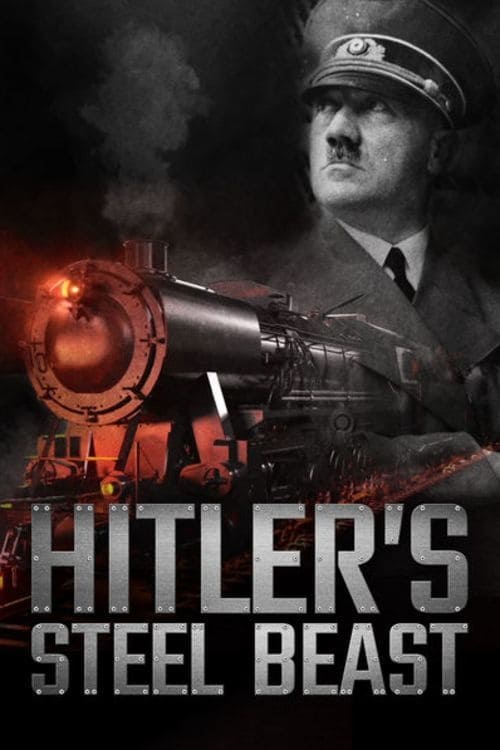
Trace the history of Hitler's armored private train, a 15-car mobile headquarters boasting state-of-the-art communications and anti-aircraft cannons.