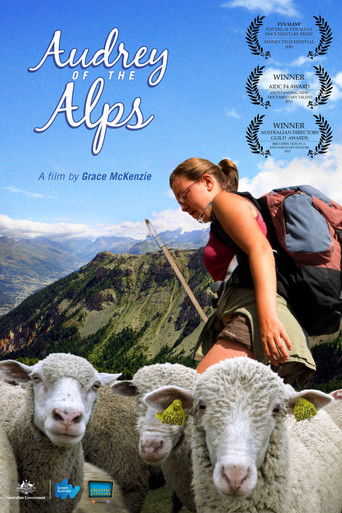
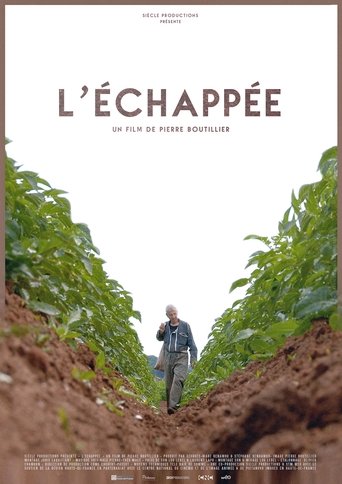
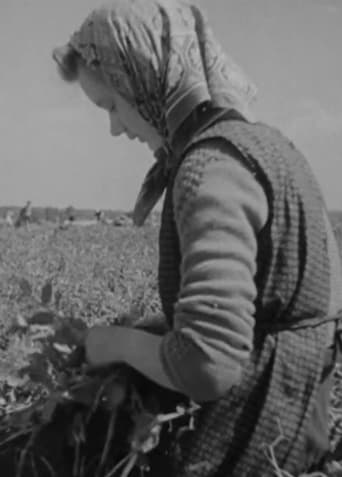
Family farmers in southwest France practice an ancestral way of life under threat in a world increasingly dominated by large-scale industrial agriculture.
Social & External
Self - Narrator (voice)
Herself
Himself
Local, organic, and sustainable are words we associate with food production today, but 40 years ago, when Fran and Tony McQuail started farming in Southwestern Ontario, they were barely spoken. Since 1973, the McQuails have been helping to build the organic farming community and support the next generation of organic farmers. This is a documentary about the McQuails that explores the very real ways their farm has contributed to the long term ecological viability of agriculture in Ontario. It is a call to action for all those who believe there is a better way to take care of our planet and feed the world.
Exposing the dark underbelly of modern animal agriculture through drones, hidden & handheld cameras, the feature-length film explores the morality and validity of our dominion over the animal kingdom.
For over 85 years, steamship Ste. Claire transported generations of Detroiters to Boblo Island, an amusement park nestled in the waters between the US and Canada. When the vessel comes under threat of ruin, a doctor, psychic and amusement park fanatic unite to save their beloved steamship from the scrapyard. Interweaving local lore and mythology, "Boblo Boats" explores the whitewashed history of amusement parks and one crew's crusade to bring back the memories.
In California’s Central Valley, tucked between the county jail and the shooting range, 100 Mexican-American farmworking families live, love and strive at the Artesi II Migrant Family Housing Center. Until every December, that is, when they’re asked to leave.
In 1980, Jack Shae and Allen Moore, two ethnographic filmmakers from Harvard University, moved their families to the island of Berneray in the Outer Hebrides. Over the course of 18 months they documented the everyday lives and struggles of the crofters they lived among, whom were even then a vanishing breed. The film is in English and Gaelic. This carefully observed documentary by filmmakers Jack Shae and Allen Moore is a poetic ethnographic film in the style of their mentor, Robert Gardner (“Dead Birds”). It follows the rhythm of life on a wind-swept island in the Outer Hebrides through the four seasons and in the filmmakers’ observation of the day-to-day struggles of a vanishing society we see the deep-time legacy of their kind. The film is in English and Gaelic.
The film traces two families, one of which is Jewish, who preserved the images for decades but hadn’t brought them to light. 80 years after their creation, the son of the photographer finds the forgotten negatives and launches an investigation. With a team of researchers, archivists, and animators who use near-forensic precision to reconstruct locations and contexts, they trace the circumstances of those tragic days and the lives captured in each frame.
Terry Wilson is a 70-year-old lifelong resident of Meadowvale Village, Ontario's first heritage district. As development looms and begins to destroy Terry's favourite place in the world, he recreates pieces of history in his backyard, crafting an oasis where it feels like nothing has changed. A beautiful tribute to his childhood, his mother, and his town, Terry passionately fights to preserve history in a world that's too anxious for change.
How did it come about that we no longer see living beings in farm animals, but objects? Every year, 70 billion farm animals are slaughtered for consumption around the world. 80 percent are kept on large farms. They live crammed together in overcrowded stables, are fattened and finally slaughtered without ever having been in nature. In less than two generations, intensive husbandry has become established worldwide. Researches in Poland, the USA, Germany and Vietnam gets to the bottom of the system and those responsible. The meat industry is subsidized by the state. Corporations, governments and consumers tacitly support a deregulated and dehumanized economic system that makes unlimited consumption of animal products the norm - and with it, animal cruelty. The documentary film describes the triumph of industrial agriculture, in which the animal has to endure unimaginable suffering, becomes a commodity, a raw material that is always available and can be slaughtered and processed at will.
During the Cultural Revolution in China in the late 20th century, ethnic Manchu people were persecuted and forced to give up such cultural traditions as the shaman dance (tiao tchin, meaning "spirit-jumping" or "god's dance"). However, on Changbai Mountain in Northeast China, a farmer named Guan Yunde decided to start designing and building traditional Manchu shaman drums. At age 70, he is one of a minority of ethnic Manchu people in China's Jilin province, and one of the few people keeping the Manchu shamanic tradition alive.
This Emmy award-winning documentary chronicles a vanishing piece of Americana: the last remaining agricultural encampment fair in the country, and the families who spend months preparing for this unique rural phenomenon.
Every year, a Kurdish family leaves Gaziantep (Anatolia) to work on the land near Ankara. This thankless life of seasonal labor turns upside down when the eldest son falls in love.
Documentary filmmaker Robert Kenner examines how mammoth corporations have taken over all aspects of the food chain in the United States, from the farms where our food is grown to the chain restaurants and supermarkets where it's sold. Narrated by author and activist Eric Schlosser, the film features interviews with average Americans about their dietary habits, commentary from food experts like Michael Pollan and unsettling footage shot inside large-scale animal processing plants.