Report on the town of San Pedro which exists in the middle of the desert and at over 2,430 meters above sea level. It also deals with the work of priest Gustavo Le Paige and the museum he helped develop.
Social & External
In the 1920s, former coal miner Harry Hoxsey claimed to have an herbal cure for cancer. Although scoffed at and ultimately banned by the medical establishment, by the 1950s, Hoxsey's formula had been used to treat thousands of patients, who testified to its efficacy. Was Hoxsey's recipe the work of a snake-oil charlatan or a legitimate treatment? Ken Ausubel directs this keen look into the forces that shape the policies of organized medicine.
On August 8, 1988, the world’s first and largest Satanic rally took place. Ripped from a video featuring Satanist talking about creating a New World Order and killing off the masses. The 8-8-88 ritual was conducted right at the heart of the Satanic Panic. The goal, further exploit and feed upon the energies produced by the fears of the ignorant general public and media. It was shown to a sold-out crowd of degenerates promising them, “A Bitter Message of Hopeless Grief,” “A Nightmare of TERROR!” and “An Evening of Apocalyptic Delight!”
Filmed to praise the work of the Spanish Ministry of Housing in solving the problem of shanty towns in Bilbao, it was made to be viewed by General Franco and not for public screening or distribution through the NO-DO newsreel. Although the short film was commissioned by the Ministry of Housing, director Jorge Grau produced a subtly critical work.
In November 1936, a few months since the beginning of the Spanish Civil War, the government of the Second Republic moves to Valencia. In this situation, several Valencian artists and intellectuals decide to build four fallas — satirical plasterboard sculptures created to be burnt — to mock fascism.
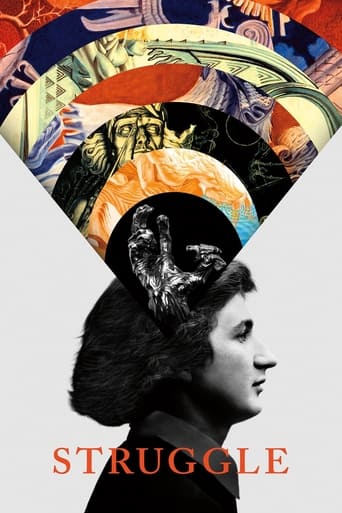
Cinema and painting establish a fluid dialogue and begins with introspection in the themes and forms of the plastic work of a woman tormented by the elongated specters, originating from her obsessions and nightmares.
Though Henry Kissinger is often giving short statements to the media, he refuses detailed interviews about his own life. Now he has agreed to answer questions about his person in an extensive documentary.
Twenty years ago, novelist Salman Rushdie was a wanted man with a million pound bounty on his head. His novel, The Satanic Verses, had sparked riots across the Muslim world. The ailing religious leader of Iran, the Ayatollah Khomeini, had invoked a little-known religious opinion - a fatwa - and effectively sentenced Rushdie to death. This film looks back on the extraordinary events which followed the publication of the book and the ten year campaign to get the fatwa lifted. Interviews with Rushdie's friends and family and testimony from leaders of Britain's Muslim community and the Government reveal the inside story of the affair.
The Pony Express delivered mail from coast to coast for only 18 months. Yet during its brief glory days, it became a legend of the American frontier. This fascinating and well-researched video recounts the history of the Pony Express, retraces the famous trail, and uncovers the reasons behind its demise and lasting legacy.
French Resistance's documentary during the liberation of Paris in August 1944.
A documentary film on the making of 'Close Encounters of the Third Kind'
Martin Scorsese is among those paying tribute to Gene Tierney, the Academy Award-nominated American actress who was a leading lady in Hollywood throughout the 1940s and '50s.
The rut of Dalmatian hinterland changes with the arrival of returning guest workers, and things they bring along: cars, radios and new way of life.
In 1939, just finished the Spanish Civil War, Spanish republican photographer Francesc Boix escapes from Spain; but is captured by the Nazis in 1940 and imprisoned in the Mauthausen concentration camp, in Austria, a year later. There, he works as a prisoner in the SS Photographic Service, hiding, between 1943 and 1945, around 20,000 negatives that later will be presented as evidence during several trials conducted against Nazi war criminals after World War II.
This documentary offers a behind-the-scenes look at Björk and her touring entourage for the 2001 Vespertine tour. It includes interviews with harpist Zeena Parkins, the Inuit choir from Greenland, electronic duo Matmos, and an ongoing conversation with Björk herself about her recordings and her tours. The documentary is interspersed with live footage of songs from the tour shot by Ragnheidur Gestsdóttir, which themselves correspond to the performances chosen for the Vespertine Live album.