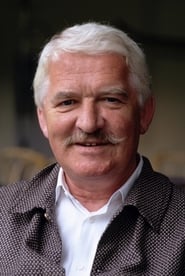
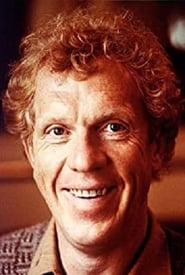
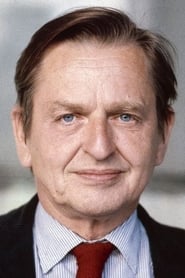
About the question of whether we should proceed in developing and using nuclear power and the breakdown at Three Mile Island, Harrisburg, Pennsylvania, in March 28, 1979.
Social & External
Writer/ comedian
Conservative politician
Unknown Role
Writer/comedian
Minster of Justice
Professor of Radiology
Professor of Nuclear Chemistry
Professor of Atomic Physics at MIT
Social democrate
Explores the consequences of uranium mining in Canada. Toxic and radioactive waste pose profound, long-term environmental hazards. Miners suffer a substantially increased risk of getting cancer. Most mining occurs on Indigenous People's land, violating their traditional economic and spiritual lives. Given our limited knowledge of the risks associated with uranium mining, why continue?
Ever heard of the Thorium molten salt reactor? That's hardly surprising, as for 70 years, it has been inexplicably kept under wraps by the nuclear industry, despite the fact it could revolutionise energy production. It offers the promise of nuclear energy without waste and without danger. The "green atom": fact or fiction? Research that was dropped without explanation in 1973, has now become a topic of lively discussion...
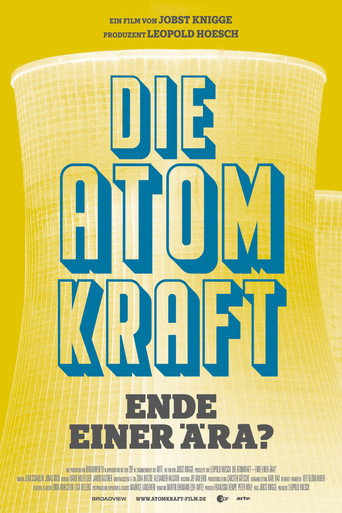
The climate crisis, Germany’s nuclear phase-out and Russia’s war against Ukraine are just three of the heavy pieces in the dramatic game about the future of energy. Caught in the middle are two small towns with barely a thousand residents each: Gundremmingen in Bavaria, home to a shuttered nuclear plant, and Choczewo on Poland’s Baltic coast, where the country’s first facility is now under construction. What do the good people on the ground think about it all?
With a wealth of fantastic archive footage and a series of revealing interviews with those who had first-hand experience, filmmaker Vicki Lesley tells the turbulent story of the West’s love-hate relationship with a nuclear power over the past seventy years. Capturing both the tantalising promise and the repeated disappointments of this singular technology, the film reveals how the post-war, romantic fantasy of an Atom-powered future developed into the stormy, on-off relationship still playing out today. A tale of scientific passion and political intrigue all wrapped up in the packaging of a sentimental screen melodrama.
On April 26, 1986, a 1,000 feet high flame rises into the sky of the Ukraine. The fourth reactor of the Chernobyl nuclear power plant just exploded. A battle begins in which 500,000 men are engaged throughout the Soviet Union to "liquidate" the radioactivity, build the "sarcophagus" of the damaged reactor and save the world from a second explosion that would have destroyed half of Europe. Become a reference film, this documentary combines testimonials and unseen footage, tells for the first time the Battle of Chernobyl.
Follows young advocates and business leaders as they fight to expand nuclear power in America. They must overcome the power source’s controversial past, as they tackle policy and financial challenges to unlock its transformative potential as a clean baseload energy source.
An initiative discusses a videotape in which a group of activists portrays themselves and their work against the "nuclear power mafia." After argumentatively and polemically confronting the economic and political power of the energy industry, the activists call for the shutdown of escalators to counteract people's electro-paralysis.
Dr. Helen Caldicott is the most prominent anti-nuclear activist in the world. She's been featured on CNN, 60 Minutes, CBC and Democracy Now. In the 80s, Helen Caldicott campaigned against nuclear weapons testing in the pacific (still responsible today for the majority of tritium we're exposed to), and against the notion of a winnable nuclear war. She was nominated for a Nobel Peace Prize for her efforts. She has always made inaccurate statements regarding civilian nuclear power. But, since the Fukushima-Diachii radiation release has caused (and is projected to cause) zero fatalities... http://www.unis.unvienna.org/unis/en/... ...her tone has changed when speaking to supporters. This has not been acknowledged by prime-time media, as they continue to use her as a source. Any person or media outlet should check Caldicott's history of statements (on any subject) against a domain expert before using her as a source.
With unprecedented access to the nuclear industry in France, Russia, and the United States, Nuclear Now explores the possibility for the global community to overcome the challenges of climate change and energy poverty to reach a brighter future through the power of nuclear energy. Beneath our feet, Uranium atoms in the Earth’s crust hold incredibly concentrated energy. Science unlocked this energy in the mid-20th century, first for bombs and then to power submarines. The United States led the effort to generate electricity from this new source. Yet in the mid-20th century as societies began the transition to nuclear power and away from fossil fuels, a long-term PR campaign to scare the public began, funded in part by coal and oil interests.
In April 1977, the small coastal town of Seabrook, New Hampshire became an international symbol in the battle over atomic energy. Concerned about the dangers of potential radioactive accidents, over 2,000 members of the Clamshell Alliance, a coalition of environmental groups, attempted to block construction of a nuclear power plant. 1,414 people were arrested in that civil disobedience protest and jailed en masse in National Guard armories for two weeks.
Thirteen years since the Fukushima Daiichi nuclear accident, the government's plan to decommission the plant is at a crossroads. We take a close look at the efforts to secure Fukushima's future.
Ben Fogle spends a week living inside the Chernobyl Exclusion Zone, gaining privileged access to the doomed Control Room 4 where the disaster first began to unfold.
In this thrilling documentary, indomitable women fight back against the nuclear industry to expose one of the biggest cover-ups in US history: the 1979 Three Mile Island meltdown and its aftermath. The film reveals the never-before-told stories of four intrepid homemakers who take their case all the way to the Supreme Court, and a young female journalist who's caught in the radioactive crossfire.
Farmers and parents of young children, who live in the Harrisburg, Pa., area, discuss their fears of radioactive contamination from the Three Mile Island nuclear reactor accident in 1979. Scientists and physicians also expound on the lethal dangers of nuclear power and the risks in containment processes.
A narrated account of Atomic Energy of Canada's plan to construct permanent nuclear waste storage facilities in the geological formations of the Canadian Shield. Commissioned to Westminster Films Limited by the National Film Board for Atomic Energy of Canada Limited, Whiteshell Nuclear Research Establishment.
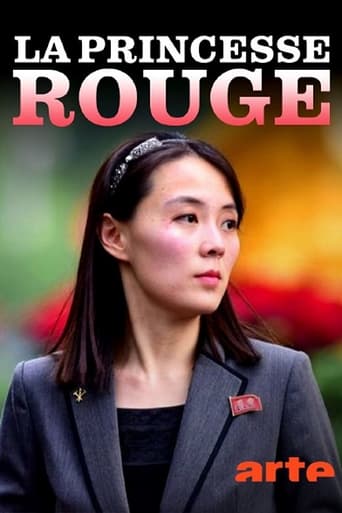
Who is Kim Yo-jong? In a context of maximum tensions between North Korea and the United States, Pierre Haski paints an unprecedented portrait of the little sister of Kim Jong-un, whose influence in Pyongyang is growing stronger day by day.
Using only archive film and a new musical score by the band Mogwai, Mark Cousins presents an impressionistic kaleidoscope of our nuclear times – protest marches, Cold War sabre-rattling, Chernobyl and Fukishima – but also the sublime beauty of the atomic world, and how x-rays and MRI scans have improved human lives. The nuclear age has been a nightmare, but dreamlike too.
This film does not deal with Chornobyl, but rather with the world of Chornobyl, about which we know very little. Eyewitness reports have survived: scientists, teachers, journalists, couples, children... They tell of their old daily lives, then of the catastrophe. Their voices form a long, terrible but necessary supplication which traverses borders and stimulates us to question our status quo.
A journey through several countries to find those who really know Kim Jong-un, North Korea's leader, in an attempt to profile a contradictory dictator who seems to rule his nation with both disturbing benevolence and cold cruelty while being worshipped as a living god by his subjects in exalted displays of ridiculous fanaticism.
Letter from Tokyo is a documentary film that looks at art, culture and politics in Tokyo, Japan. Shot over three months during the summer of 2018, and with a particular focus on grass roots arts initiatives, the use of public space, and queer politics, the film provides a snapshot of Japan’s capital in the run up to the 2020 olympics.
Penetrating the insular world of New York's Hasidic community, focusing on three individuals driven to break away despite threats of retaliation.
A documentary about ten very different lives connected by having appeared onscreen wearing masks or helmets in Star Wars.
Through deeply personal interviews with her siblings and an examination of the photographs, letters, and belongings left behind, Mariska assembles a new portrait of her mother Jayne Mansfield, an extraordinary and complex woman.
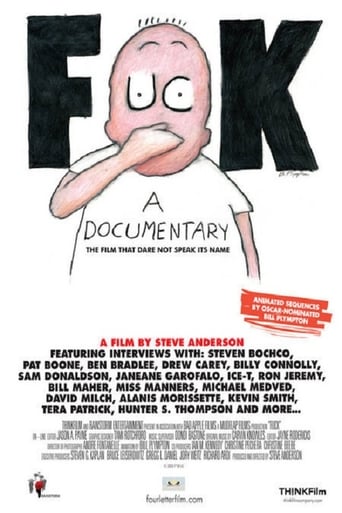
A documentary on the expletive's origin, why it offends some people so deeply, and what can be gained from its use.
Artists in LA discover the work of forgotten Polish sculptor Stanislav Szukalski, a mad genius whose true story unfolds chapter by astounding chapter.
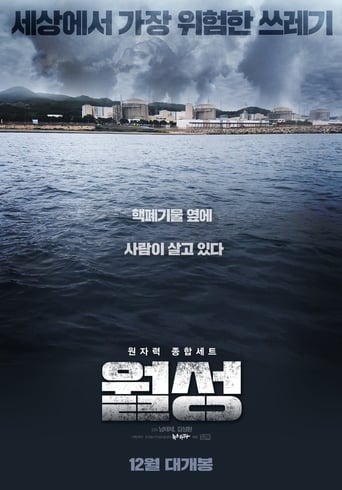
Every day, the world over, large amounts of high-level radioactive waste created by nuclear power plants is placed in interim storage, which is vulnerable to natural disasters, man-made disasters, and to societal changes. In Finland the world’s first permanent repository is being hewn out of solid rock – a huge system of underground tunnels - that must last 100,000 years as this is how long the waste remains hazardous.
Early Errol Morris documentary intersplices random chatter he captured on film of the genuinely eccentric residents of Vernon, Florida. A few examples? The preacher giving a sermon on the definition of the word "Therefore," and the obsessive turkey hunter who speaks reverentially of the "gobblers" he likes to track down and kill.
Documentary about the making of American Pie (1999), American Pie 2 (2001) and American Wedding (2003).
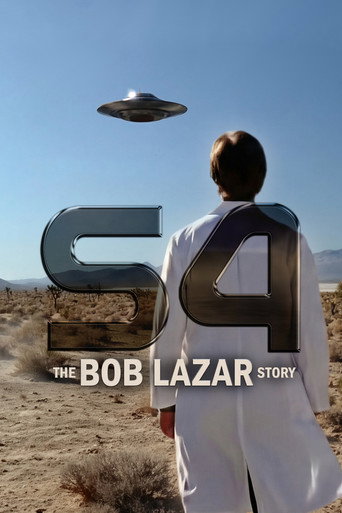
A look at the origins, history and conspiracies behind the "Majestic 12", a clandestine group of military and corporate figureheads charged with reverse-engineering extraterrestrial technology.
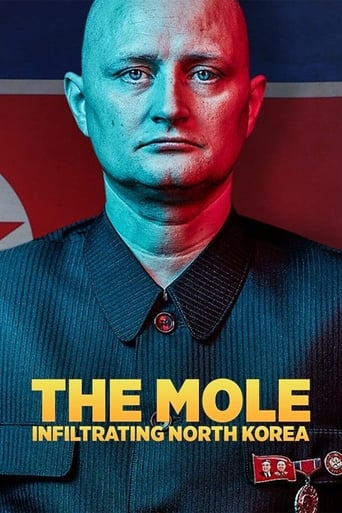
A real-life undercover thriller about two ordinary men who embark on an outrageously dangerous ten-year mission to penetrate the world's most secretive and brutal dictatorship: North Korea.
From the heights of her modeling fame to her tragic death, this documentary reveals Anna Nicole Smith through the eyes of the people closest to her.
Unravel the case of Utah therapist Jodi Hildebrandt, whose child abuse arrest with parenting YouTuber Ruby Franke exposed a twisted tale of manipulation.
In this genre-bending tale, Errol Morris explores the mysterious death of a U.S. scientist entangled in a secret Cold War program known as MK-Ultra.
The definitive documentary on the history of nudity in feature films from the early silent days to the present, studying the changes in morality that led to the use of nudity in films while emphasizing the political, sociological and artistic changes that shaped that history. Skin will also study the gender inequality in presenting nude images in motion pictures and will follow the revolution that has created nude gender equality in feature films today.
A subjective documentary that explores various theories about hidden meanings in Stanley Kubrick's classic film The Shining. Five very different points of view are illuminated through voice over, film clips, animation and dramatic reenactments.
In the 1980s, Andrew McCarthy was part of a young generation of actors who were set to take over Hollywood after a string of successful teen movies. However, when the New York magazine cover story in 1985 dubs them the Brat Pack, stars in the making suddenly find themselves losing control over the trajectory of their careers. Now, almost forty years later, McCarthy looks to reconnect with peers and co-stars so that together they can reflect on their respective legacies.
A documentary examining the decade of the 1970s as a turning point in American cinema. Some of today's best filmmakers interview the influential directors of that time.
This revealing documentary honors the legendary Sidney Poitier—iconic actor, filmmaker, and civil rights activist. Featuring interviews with Denzel Washington, Spike Lee, Halle Berry, and more.
The documentary recounts the world's first nuclear attack and examines the alarming repercussions. Covering a three-week period from the Trinity test to the atomic bombing of Hiroshima, the program chronicles America's political gamble and the planning for the momentous event. Archival film, dramatizations, and special effects feature what occurred aboard the Enola Gay (the aircraft that dropped the bomb) and inside the exploding bomb.
In 1996, electric cars began to appear on roads all over California. They were quiet and fast, produced no exhaust, and ran without gasoline... Ten years later, these cars were destroyed.