Canadas contemporary dance group La La La Human Steps performs Édouard Lock's "Human Sex" .
Social & External
Unknown Role
dancer, musician
Dance educator LIN Ssu-tuan is the first professional nude model in Taiwan in the 1950s and the 1960s, the muse for painters and sculptors in the art world, and the face for photographers’ salons around the world; in the end, she reversed the dynamics of the subject vs. the object and went on to perform her first solo modern dance in 1975, turning herself from the state of passiveness to an active educator of the art of dance. LIN is over 80 years old, but she still fervently pursues her ideals and passions with her body; her path of life is indeed a book of female art history that communicates with the society in Taiwan.
Markku Lehmuskallio has devoted a large part of his documentary work to the indigenous people of the Arctic Circle. In this latest film, co-directed with his son Johannes Lehmuskallio, he composes a fascinating poetic ethnography inspired by the singing, dancing, forms of contemporary existence and, above all, the vital breath of these nomad communities mistreated by History.
This VHS video includes two short documentaries by Elda Hartley. In the first, THE ART OF MEDITATION, Alan Watts gives us techniques and advice for meditating. Elda Hartley herself narrates the second film, MEDITATION: THE JOURNEY INWARD, which exposes viewers to different cultural approaches to meditation. Hartley then discusses how meditation enriches one's life, and what it can reveal to us.
A brief history of the emergence and artistic innovations of tango in 19th-century Argentina and Europe. The film offers a mosaic of tango melodies, art works, dance performances, historical footage, photographs of Buenos Aires at the turn of the 20th century, and texts by Celedonio Flores and Enrique Santos Discépolo.
Ge Ningning performs a series of solo dances.
While most of Ken Russell's documentaries for the BBC's Monitor arts strand focused on a single creative figure, he would also occasionally make more wide-ranging surveys of the state of a particular art. The Light Fantastic (BBC, tx. 18/12/1960) was written and presented by Ron Hitchins, a Cockney barrow boy who has long been interested in a great many dance forms, and who has recently taken up Spanish dancing. Hitchins participates in some of the dance sequences, but his main contribution is an enthusiastic commentary that helps personalise what could have been simply a disparate collection of dance footage. He's not shy about expressing likes and dislikes, being none too keen on ballroom dancing (too choreographed), rock'n'roll (too monotonous) and Morris dancing (just doesn't like it), though anything genuinely spontaneous gets a thumbs up, even if it's a room full of people dressed in black swaying to the sound of a gong.
The tendency in the world is right-wing, neo-liberal, and people are more controlled. We have less liberty even if we think we have more. The last territory where we can be ourselves and where we can have full freedom is our own body. The documentary "BARE" focuses on male nudity in the modern dance. The story follows a well-known Belgian choreographer Thierry Smits through a process of building his new creation with a group of male dancers performing bare naked.
Habana Shakes takes us on a rhythm-filled odyssey spanning ten vibrant days in Havana, a pulsating island city teetering on the edge of transformation. Infused with a lyrical heart, this is not just an homage to Cuba's spirited culture but also provides an intimate window into the dynamic worlds of Cuban youth. Through the eyes of a skater, a tattoo artist, an actor, a ballerina and an electronica DJ, we find ourselves asking: What aspirations do these young Cubans hold for their nation and future, and how might these differ from or echo the dreams and hopes of their parent’s generation?
An Austrian director followed five successful African music and dance artists with his camera and followed their lives for a year. The artists, from villages in Ghana, Gambia and Congo, were the subjects of Africa! Africa! touring across Europe, but they have unbreakable roots to their homeland and their families. Schmiderer lovingly portrays his heroes, who tell their stories about themselves, their art and what it means to them to be African with captivating honesty. The interviews are interwoven with dance scenes and colourful vignettes set to authentic music.
The Rosie Kay Dance Company present a piece about the strange history and pop-cultural aftermath of CIA mind control experiments during the Cold War, with documentary segments by Adam Curtis.
A document of Tatsumi Hijikata's Butoh dance with Kazuo Ohno as the guest dancer shot in Hijikata's early period when he was emerging as the originator of Butoh. All of the male dancers are dressed up with evening suits and move gracefully, yet an intruder breaks up the whole scene abruptly. The film is worth seeing, even if just to see a memorable gay duet of Hijikata and Ohno. Overexposed, washed out images are sandwiched among normal ones.
A group of actors gather in a workshop performance. Its aim is to research, create and develop the drama of a future film. With an unfinished script, a story of love and bullfighting background, the TeatroLab actors with director Gabriel Olivares, we are immersed in the passion for the craft of storytelling from the emotion and truth.
Follows the young people of Selma, Alabama's RATCo (Random Acts of Theatre Company) as they journey to New York City to share their story of hope, resilience, and overcoming.
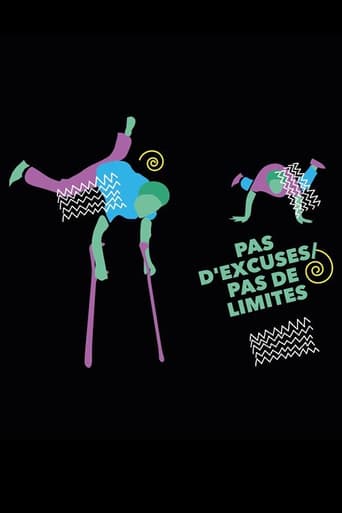
Luca Patuelli is an internationally renown Bboy dancer known as LazyLegz. He born with Arthrogryposis, a disorder that makes the use of his legs almost impossible. For the past few years, he has been the head of a Hip Hop dance program: Projet RAD, an urban dance program in which he gives people with disabilities a chance to follow inclusive classes in a safe environment adapted to their needs.
After celebrated careers , legendary dancers Marge Champion and Donald Saddler became friends while performing together in the Broadway Show Follies (2001) . When the show closed, they decided to rent a private studio together where they have been choreographing and rehearsing original dances ever since. They are both 90 years old. KEEP DANCING seamlessly blends 9 decades of archival film and photographs with present day footage to tell a story through dance of the passing of time and the process of aging.
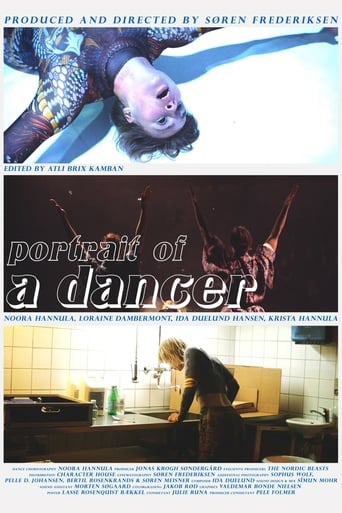
The Finnish modern dancer Noora Hannula dances through this documentary film in her own explosive style. Noora’s life has always been very connected to the artist environment with her grandfather, Simo Hannula, who throughout his entire life dedicated him fully to his art. Noora and her grandfather crossed paths when Noora used a picture of his dead body in her show and now we meet Noora working on her newest show: The Era of No Talent Rising, while she is trying to figure out where her own limits are.
Terpsichore is a captivating exploration of dance as an art form, illuminating the passion, discipline, and vulnerability that transform movement into poetry. The documentary follows three distinct yet interconnected artists: Cece Trapani, an Irish dancer; Aurora Maur, a burlesque performer; and the Dayton Contemporary Dance Company (DCDC), a renowned contemporary dance ensemble. Through their stories, Terpsichore reveals the universal language of dance—one that transcends genre and speaks to the depths of human emotion. Intimate interviews and behind-the-scenes rehearsal footage offer a raw, unfiltered look at the artistry behind each performance, capturing the essence of dance as both personal expression and a bridge between artist and audience. More than a showcase of technique, Terpsichore delves into the soul of movement, celebrating its power to connect, inspire, and reveal the unspoken truths of the human spirit.
Released on DVD as part of The Criterion Collection's "Martha Graham: Dance on Film" collection.
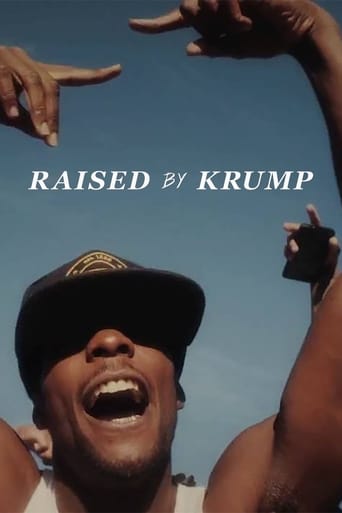
A documentary film that highlights two street derived dance styles, Clowning and Krumping, that came out of the low income neighborhoods of L.A.. Director David LaChapelle interviews each dance crew about how their unique dances evolved. A new and positive activity away from the drugs, guns, and gangs that ruled their neighborhood. A raw film about a growing sub-culture movements in America.
A documentary following the conscious evolution of electronic music culture and the spiritual movement that has awakened within.