"Take the journey. Experience it by yourself. Don't rely on words."
A cinematic journey through the world. Non-verbal.
Social & External
Unknown Role
Could our mounting modern problems have ancient solutions? Travel to the depths of China to find out.
A scientist explains how the savagery and efficiency of the insect world could result in their taking over the world.
The true story of the birth, growth and coming of age of a leopard cub in Africa's Serengeti plain. The journey of "The Leopard Son" begins at his mother's side where he discovers, through play, essential skills for survival in the wild. As it is with humans, there inevitably comes the day when a child must leave his mother to go out on his own.
The story of the evolution of tropical rain forests, their recent and rapid destruction, and the intense efforts of scientists to understand them even as they disappear. This film gives viewers a better appreciation of the importance of tropical rain forests on a global scale.
Coral Reef Adventure follows the real-life expedition of ocean explorers and underwater filmmakers Howard and Michele Hall. Using large-format cameras, the Halls guide us to the islands and sun-drenched waters of the South Pacific to document the health and beauty of coral reefs. Featuring songs written and recorded by Crosby, Stills & Nash.
A view of the religious tensions between Muslims and Buddhist through the portrait of the Buddhist monk Ashin Wirathu, leader of anti-Muslim movement in Myanmar.
In today's climate debate, there is only one factor that cannot be calculated in climate models - humans. How can we nevertheless understand our role in the climate system and manage the crisis? Climate change is a complex global problem. Increasingly extreme weather events, rising sea levels, and more difficult living conditions - including for us humans - are already the order of the day. Global society has never faced such a complex challenge. For young people in particular, the frightening climate scenarios will be a reality in the future. For the global south, it is already today. To overcome this crisis, different perspectives are needed. "THE UNPREDICTABLE FACTOR" goes back to the origins of the German environmental movement, accompanies today's activists in the Rhineland in their fight against the coal industry and gives a voice to scientists from climate research, ethnology and psychology.
In the 1820s, a frontiersman, Hugh Glass, sets out on a path of vengeance against those who left him for dead after a bear mauling.
While the aliens in this film may seem to be quite human, one must realize that we're dealing with close encounters of the fourth kind. An inner space journey triggered by the drug culture and rebellion of the 1960s, and the non-violent search for self that continues among people in today's culture. Could this be due to some influence from a higher spiritual consciousness? The world's alien leaders are well represented in this film: Baba Muktananda, Swami Satchidananda, A. C. Bhaktivedanta, Guru Maharaj Ji, Yoga Bhahan, Sri Sathya, Sai Baba, Maharishi Mahesh Yogi, Father Yod, Baba Ram Das, and well-known personalities who present their views on seeking their own terrestrial individuality.
After World War II a group of young writers, outsiders and friends who were disillusioned by the pursuit of the American dream met in New York City. Associated through mutual friendships, these cultural dissidents looked for new ways and means to express themselves. Soon their writings found an audience and the American media took notice, dubbing them the Beat Generation. Members of this group included writers Jack Kerouac, William Burroughs, Allen Ginsberg. a trinity that would ultimately influence the works of others during that era, including the "hippie" movement of the '60s. In this 55-minute video narrated by Allen Ginsberg, members of the Beat Generation (including the aforementioned Burroughs, Anne Waldman, Peter Orlovsky, Amiri Baraka, Diane Di Prima, and Timothy Leary) are reunited at Naropa University in Boulder, CO during the late 1970's to share their works and influence a new generation of young American bohemians.
A meditation on memory around Iceland's famous Ring Road.
Comedy legends Bob Odenkirk and David Cross tackle one of the world's toughest hikes — and each other — in this high-altitude, coca-fueled meditation on friendship, mortality, and profoundly absurd comedy from two icons still magnificently in sync.
In one of the most tragic face-offs in the history of law enforcement, the deadly debacle at Waco pitted the Branch Davidian sect against the FBI in an all-out war. This documentary makes the most of footage and recordings to examine how the events that led to the tragedy of April 19, 1993, unfolded, and how the FBI's unrelenting approach made what was already a bad situation much worse.
The Kabul National Museum, once known as the "face of Afghanistan," was destroyed in 1993. We filmed the most important cultural treasures of the still-intact museum in 1988: ancient Greco-Roman art and antiquitied of Hellenistic civilization, as well as Buddhist sculpture that was said to have mythology--the art of Gandhara, Bamiyan, and Shotorak among them. After the fall of the Democratic Republic of Afghanistan in 1992, some seventy percent of the contents of the museum was destroyed, stolen, or smuggled overseas to Japan and other countries. The movement to return these items is also touched upon. The footage in this video represents that only film documentation of the Kabul Museum ever made.
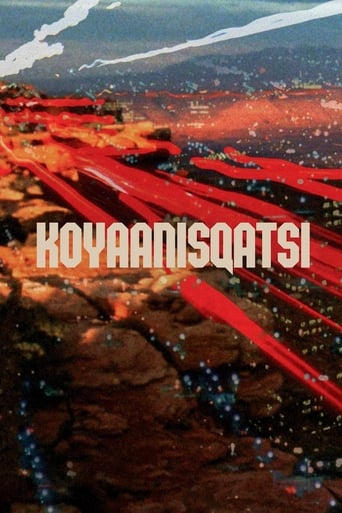
An exploration of technologically developing nations and the effect the transition to Western-style modernization has had on them.
A contemplation of art and adventure in the southern wilds of New Zealand by both a landscape photographer and an adventure filmmaker. This film is the unexpected result of their two unique perspectives.
Roughly chronological, from 3/96 to 11/96, with a coda in spring of 1997: inside compounds of Aum Shinrikyo, a Buddhist sect led by Shoko Asahara. (Members confessed to a murderous sarin attack in the Tokyo subway in 1995.) We see what they eat, where they sleep, and how they respond to media scrutiny, on-going trials, the shrinking of their fortunes, and the criticism of society. Central focus is placed on Hiroshi Araki, a young man who finds himself elevated to chief spokesman for Aum after its leaders are arrested. Araki faces extreme hostility from the Japanese public, who find it hard to believe that most followers of the cult had no idea of the attacks and even harder to understand why these followers remain devoted to the religion, if not the violence.
For two-thirds of the year, the Little Rann is a desert. Suddenly, in August, monsoon winds whip up the Arabian Sea and carry it 100 km inland. The desert and these mounds soon become islands and homes to high concentrations of rarely-seen, endangered and spectacular wildlife.
Art has always investigated nature and man's connection with the world. Several contemporary artists have questioned the issues of climate change and environmental sustainability and have tried to amplify our ecological consciousness. Through the testimonies of artists of different generations such as Olafur Eliasson, Christo, Michelangelo Pistoletto and the gaze of critics such as Germano Celant and Carolyn Christov-Bakargiev, we retrace some of the most significant works.
Set 15 years after "Twentieth Century Boys," Kanna (Airi Taira) reunites with several main characters from the first film in an attempt to stop Friend's increasing influence over the world and continued plans to eliminate humanity, as detailed in the New Book of Prophecy.
A celebration of the universe, displaying the whole of time, from its start to its final collapse. This film examines all that occurred to prepare the world that stands before us now: science and spirit, birth and death, the grand cosmos and the minute life systems of our planet.
A paralysingly beautiful documentary with a global vision—an odyssey through landscape and time—that attempts to capture the essence of life.
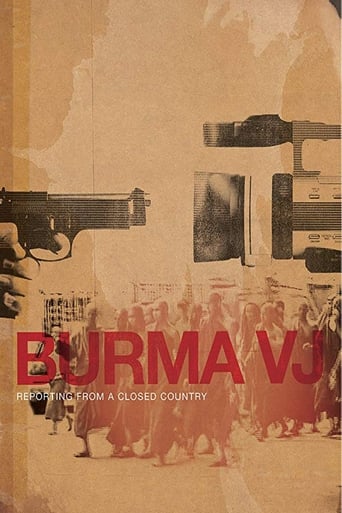
Going beyond the occasional news clip from Burma, the acclaimed filmmaker, Anders Østergaard, brings us close to the video journalists who deliver the footage. Though risking torture and life in jail, courageous young citizens of Burma live the essence of journalism as they insist on keeping up the flow of news from their closed country.
Ram Dass is one of the most important cultural figures from the 1960s and 70s. A pyschedelic pioneer, author of Be Here Now, beloved spiritual teacher, and outspoken advocate for death-and-dying awareness, Ram Dass is now himself approaching the end of life. Since suffering a life-changing stroke twenty years ago, he has been living at his home on Maui and deepening his spiritual practice — which is centered on love and his idea of merging with his surroundings and all living things. Shot in a nuanced cinematic style, the film is an intimate summary of his life learning and awareness, and is ultimately a poetic meditation on life, death, and the soul’s journey home.
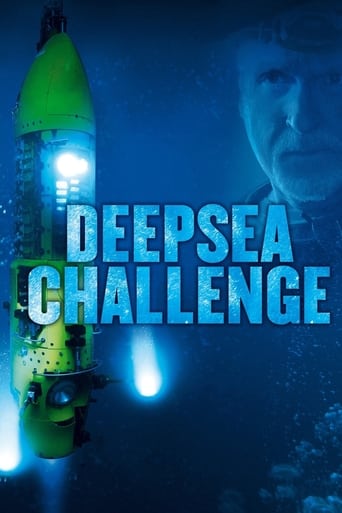
Described as being a film about determination, danger and the ocean’s greatest depths, James Cameron's "Deepsea Challenge 3D" tells the story of Cameron’s journey to fulfill his boyhood dream of becoming an explorer. The movie offers a unique insight into Cameron's world as he makes that dream reality – and makes history – by becoming the first person to travel solo to the deepest point on the planet.
Filmed and edited in intimate vérité style, this movie follows visionary medical practitioners who are working on the cutting edge of life and death and are dedicated to changing our thinking about both.
A look behind the lens of Christopher Nolan's space epic.
Lyrical and powerfully personal essay film that reflects on the deaths of her husband Lou Reed, her mother, her beloved dog, and such diverse subjects as family memories, surveillance, and Buddhist teachings.
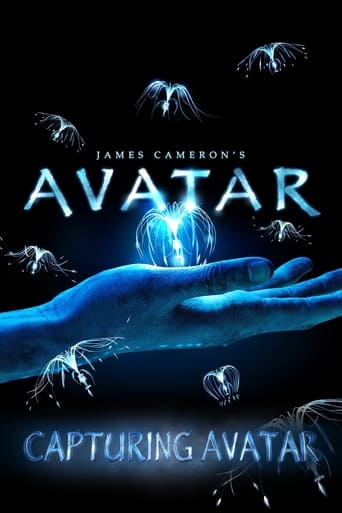
Capturing Avatar is a feature length behind-the-scenes documentary about the making of Avatar. It uses footage from the film's development, as well as stock footage from as far back as the production of Titanic in 1995. Also included are numerous interviews with cast, artists, and other crew members. The documentary was released as a bonus feature on the extended collector's edition of Avatar.
Nine filmmakers each profile a young girl from a different part of the world to weave a global tapestry of youth in the 21st century.
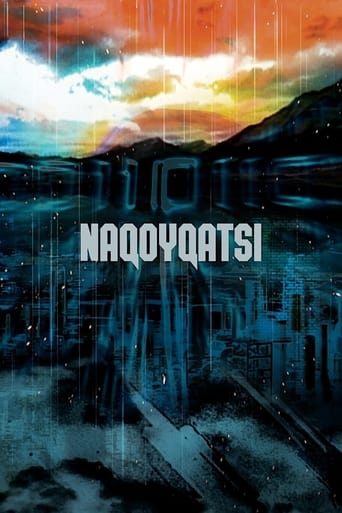
Takes us to locations all around the US and shows us the heavy toll that modern technology is having on humans and the earth. The visual tone poem contains neither dialogue nor a vocalized narration: its tone is set by the juxtaposition of images and the exceptional music by Philip Glass.
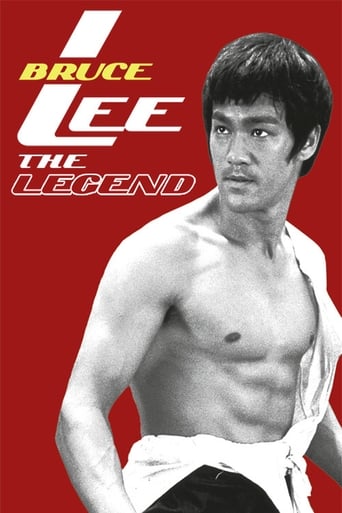
Documentary on the legendary martial artist Bruce Lee, with a focus on the production of his unfinished film Game of Death. Using interviews and behind-the-scenes footage, Lee aficionado John Little paints a portrait of the world's most famous action hero, concluding with a new cut of Game of Death's action finale, reconstructed from Lee's notes and recently-recovered footage.
An aging Chinese immigrant is swept up in an insane adventure, where she alone can save what's important to her by connecting with the lives she could have led in other universes.
The Official Golden Harvest tribute to the Master of the Martial Arts Film, Bruce Lee.
During World War II in North Africa, a group of British commandos disguised as Italian soldiers must travel behind enemy lines and destroy a vital Nazi oil depot.
Bryan Konietzko and Michael Dante DiMartino, co-creators of the hit television series, Avatar: The Last Airbender, reflect on the creation of the masterful series.
Narrated by Benedict Cumberbatch, Walk With Me is a cinematic journey into the world of a monastic community who practice the art of mindfulness with Zen Buddhist master Thich Nhat Hanh.
A visual montage portrait of our contemporary world dominated by globalized technology and violence.
Martin Scorsese, Robert De Niro, Joe Pesci, and Al Pacino in conversation about The Irishman.