STEP INTO THE RINK WITH YU-NA KIM AS SHE AIMS TO MAKE HISTORY AS ONE OF THE WORLD'S GREATEST FIGURE SKATERS
Social & External
main character
herself
narrator
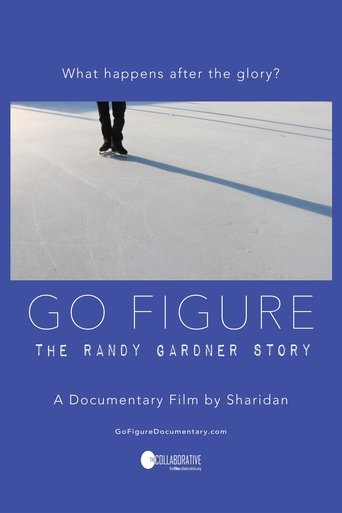
Two-time Olympian and World Champion, the legendary Randy Gardner, explores his true identity through figure skating and his one man show. With his skating partner of over fifty years, Tai Babilonia, the pair experienced the heights of worldwide glory and devastating personal tragedy. Now that the intense glare of the public spotlight softens, he is free to finally reveal his untold magical and meaningful journey... on and off the ice.
Journey with the musicians of the Berlin Philharmonic and their conductor Sir Simon Rattle on a breakneck concert tour of six metropolises across Asia: Beijing, Seoul, Shanghai, Hong Kong, Taipei and Tokyo. Their artistic triumph onstage belies a dynamic and dramatic life backstage. The orchestra is a closed society that observes its own laws and traditions, and in the words of one of its musicians is, “an island, a democratic microcosm – almost without precedent in the music world - whose social structure and cohesion is not only founded on a common love for music but also informed by competition, compulsion and the pressure to perform to a high pitch of excellence... .” Never before has the Berlin Philharmonic allowed such intimate and exclusive access into its private world.
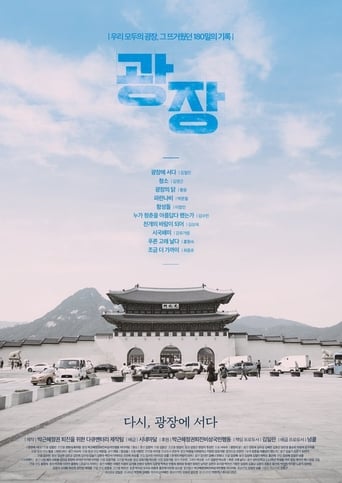
Project 1 _ Hong Hyung-sook The children who are enthusiastically painting and cutting a doll. What stories will be told at the Square? - Project 10 _ Kim Jeong-geun The janitorial worker from the Busan Subway Station, Kim Young-ja talks about how she hopes to see a clean world, just like how she cleans everywhere in the subway.
South Korean cinema is in the throes of a creative explosion where mavericks are encouraged and masters are venerated. But from where has this phenomenon emerged? What is the culture that has yielded this range of filmmakers? With The Nine Lives of Korean Cinema, French critic, writer and documentarian Hubert Niogret provides a broad overview but, nevertheless, an excellent entry point into this unique type of national cinema that still remains a mystery for many people. The product of a troubled social and political history, Korean cinema sports an identity that is unique in much modern film. Niogret's documentary tells of the country's cinematic history - the ups along with the downs - and gives further voice to the artists striving to express their concerns, fears and aspirations.
Over 98 days from August 20th to November 25th 2013, 2821 people from around the world sent 11,852 video featuring many different faces of Seoul. 154 were selected, edited, and made into a movie.
IJswee is a documentary film about an ice club, a village and the warm winters. In the film we follow Oringers, the inhabitants of Odoorn, through the winter. The Oringers all experience IJswee in their own way. You will also see the Icecounter (Rafael van der Ziel), who builds ice sculptures and drinks frozen milk. You see the Drenthe countryside changing with the weather. You see animations, archive material and you hear the mysterious sounds of IJswee in the music of Wietse de Haan. And there are two trumpet players, who welcome winter with their music and say goodbye to it.
The church is the body of Christ. In Greece, the church embodied a philosophy. Then in Rome, it became an institution. Spreading throughout Europe, it became one with the culture there. Traveling to the US, the church became a business. And when it arrived in Korea, it became a conglomerate. The top five largest churches in the world are located in Korea. However, Christ has long been absent in the nation. So then, what is the church? Who is Jesus Christ? What kind of world do Christians want? If the church is indeed the body of Christ, then we must ask the questions point-blank. Where do we stand in all this? And where exactly are we headed? Korean churches—“Quo Vadis?” Korean society—“Quo Vadis?”
An investigative reporter seeks to expose the whereabouts of a slush fund belonging to the former president of South Korea, Lee Myung-bak.
Interpreting an event of ROKS Cheonan corvette, torpedoed and sunken by North Korea, this documentary rebuilds the event with a different insight. No one can tell if the investigation of Cheonan has reached compelling conclusion. But the film tells and reveals how unreasonable Korean society is.
The public yearns for a hero who will solve the economic crisis, and MB bursts onto the scene. However, what made voters excited now makes them disappointed. How the then voters were seen from the MB’s perspective? A political documentary that makes people laugh and cry.
In our 3-year marriage, we have fought on every holiday, on parents' birthdays, during ancestral rituals, and even on Christmas. We argue all the time. The tension between my wife and my mother is killing me.
This Pete Smith Sports Champion short visits Southern California where it quickly moves from orange orchards to the mountain snow playground at Big Pines L.A. County Camp for some winter sports including sledding, skating, and ski jumping.
My parents were real estate developers and dealers in the 1980s. They achieved the ‘middle class dream’ thanks to the development boom. However, the Asian financial crisis swept everything away.
Cheonggyecheon is a small industrial area in the city of Seoul where small metal workshops are located. Cheonggyecheon had played a key role in the industrialization of South Korea from the remnants of colonialism and war. Following the liberation of the country from Japanese rule in 1945, many industrial complexes became abandoned, resulting in a flood of scavenged machine parts on the market.. In the 1960s, Vietnam War veterans brought many machines into Cheonggyecheon, initiating small-scale production and what’s now considered “copy” production unique to the economies of developing nations. In the past five years, the business on Cheonggyecheon has declined as the surrounding neighborhood is in the process of renovation and gentrification, as part of a beautification initiative by the Seoul Metropolitan Government.
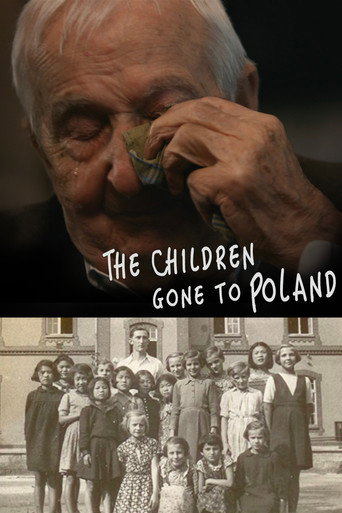
Tracing the footsteps of North Korean orphans who went to Poland during the Korean War, two women, one from the North and the other from the South, bond through the solidarity of wound and forge together a path toward healing.
At the eastern end of Seoul, in a huge apartment complex, it has long been a paradise for cats and people to run around and give love and joy together. However, there are people who are worried about cats who are not leaving the place which will be demolished soon, ahead of reconstruction. "I want to ask. Do you want to keep living here?" For the happy farewell of cats and people, a beautiful struggle begins!
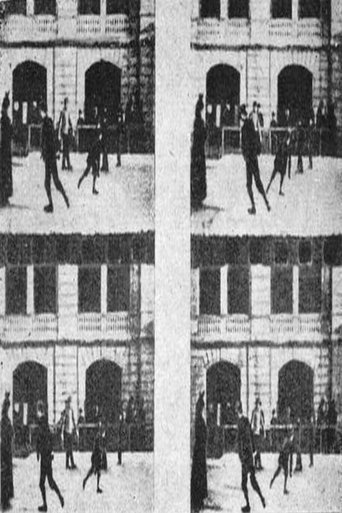
The film was about a group of Polish ice skaters at the slide of the Warsaw Ice Skating Society. The film was filmed using a pleograph which was an early type of the movie camera invented by Kazimierz Prószyński.
In 1992, political prisoners from North Korea settled in the South Korean town where filmmaker Dong-won Kim lived. Sent to South Korea as spies during the war, they spent 30 years in jail. How did they endure the many years of torture? What will become of them now that they have been released? Twelve years in the making, Repatriation is a very personal view of a country divided by an ongoing cold war.