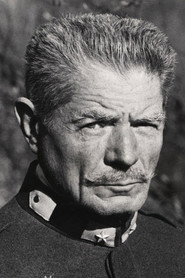
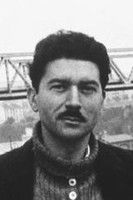
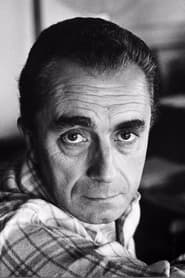
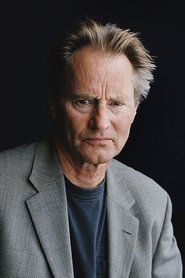
A documentary portrait of Michangelo Antonioni based on Roland Barthes' essay.
Social & External
Self
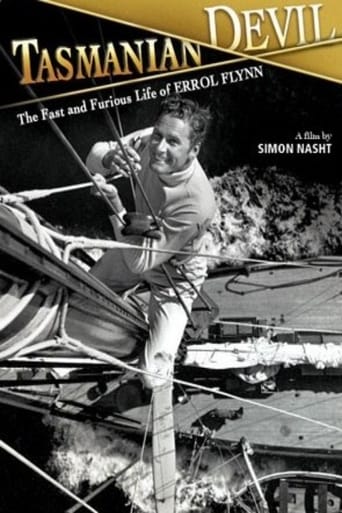
The story of Tasmanian-born actor Errol Flynn whose short & flamboyant life, full of scandals, adventures, loves and excess was largely played out in front of the camera - either making movies or filling the newsreels and gossip magazines. Tragically he was dead from the effects of drugs and alcohol by the time he was only 50 & the myths live on. But there is another side of Flynn that is less well known - his ambitions to be a serious writer and newspaper correspondent, his documentary films and his interest in the Spanish Civil War and Castro's Cuba
Film journalist and critic Rüdiger Suchsland examines German cinema from 1919, when the Republic of Weimar is born, to 1933, when the Nazis come into power. (Followed by Hitler's Hollywood, 2017.)
In 1967, experimental filmmaker Jorgen Leth created a striking short film, The Perfect Human, starring a man and women sitting in a box while a narrator poses questions about their relationship and humanity. Years later, Danish director Lars von Trier made a deal with Leth to remake his film five times, each under a different set of circumstances and with von Trier's strictly prescribed rules. As Leth completes each challenge, von Trier creates increasingly further elaborate stipulations.
A documentary about the career of legendary production designer Joe Alves and his four decades in Hollywood.
A look at the roller coaster life of Sam J. Jones since his role as Flash Gordon, his struggles and successes, and the aftermath of when he went up against one of the most powerful producers in Hollywood.
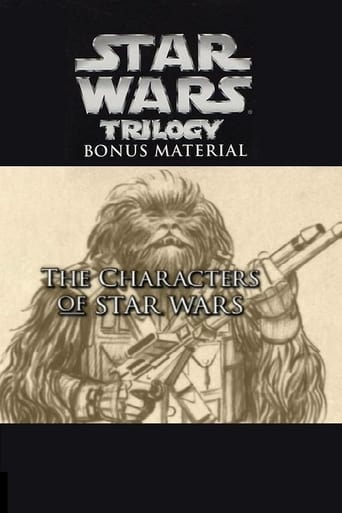
The Characters of Star Wars is a Video Documentary included in the 2004 DVD release of the Star Wars Original Trilogy. It explained the Mythos of many of the "Star Wars" Characters.
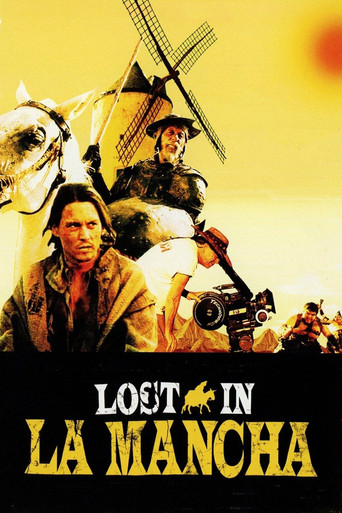
Fulton and Pepe's 2000 documentary captures Terry Gilliam's attempt to get The Man Who Killed Don Quixote off the ground. Back injuries, freakish storms, and more zoom in to sabotage the project.
Clint Eastwood made his mark on cinema by abandoning violent action films to turn his attention, behind the camera, to more substantial productions that were praised by critics.
Documentary relating Ingmar Bergman's life, from his high school graduation up until he became an established filmmaker in the latter half of the 40's.
Kevin Smith interacts in Q&A sessions throughout various college stops in the USA.
If cinema is the art of time, Linklater is one of its most thoughtful and engaged directors. Unlike other filmmakers identified as auteurs, Linklater’s distinction is not found on the surface of his films, in a visual style or signature shot, but rather in their DNA, as ongoing conversations with cinema, which is to say, with time itself. A visual essay produced by Sight and Sound.
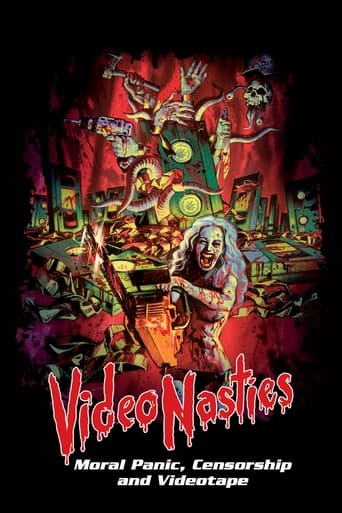
A documentary analyzing the furore which so-called "video nasties" caused in Britain during the 1980s.
An introspective insight into the life and artistic journey of William Friedkin, an extraordinary and offbeat director of cult films such as The French Connection, The Exorcist, Sorcerer, Cruising, To Live and Die in L.A. and Killer Joe. For the first time Friedkin opens up, guiding the audience on a fascinating journey through the themes and the stories that have influenced his life and his artistic career.
Story of a director Stanley Donen, king of Hollywood musicals and man behind such classics as "Singin' in the Rain".
A documentary made on the set of "The Learning Tree." Narrated by Gordon Parks Jr., and featuring interviews with Gordon Parks Sr. and members of the cast and crew.
Overview of director King Vidor's filmography.
Video art of sculpture is the real life story of Rumi (Mevlana) and Shams Tabrizi. Rumi and Shams are well known international poets of Persian language. One day, Rumi invites Shams Tabrizi to his house, Shams throws the book into the pool of water and Rumi is worried and Shams returns the book to Rumi without any trace of water. The lost half of the sculpture in the film is a representation of the same concept. "Sculpture" has won more than 69 International Awards, third place (semi-final) in called Flickers' Rhode Island International Film Festival (Academy Award ® Qualifying, BAFTA Qualifying, Canadian Screen Award Qualifying) , Winner of the 2025 Jury Award for Best Short Documentary – Toronto International Nollywood Film Festival (TINFF) – A Canadian Screen Award-Qualifying Festival , Crown Point International Film Festival(Chicago),(US),Gold Star Movie Awards (US),One-Reeler Short Film Competition (US),Accolade Competition (US), and many other events.
'Giallo' is Italian for 'yellow', the color of the lurid pulp novels that inspired one of the most intense, extreme and influential genres in movie history. In this unprecedented collection, experience the full chronological evolution of giallo with more than 100 rare and classic trailers from such masters as Mario Bava, Dario Argento, Lucio Fulci, Sergio Martino, Antonio Margheriti, Umberto Lenzi and many more. Then slip on black leather gloves and set the mood with a Bonus CD of legendary soundtrack music from composers that include Ennio Morricone, Riz Ortolani, Bruno Nicolai, Stelvio Cipriani and others, along with all-new featurettes that thrust even deeper into the genre. "But be warned," says Gizmodo.com, "Once you start going down the blood- slicked giallo rabbit hole, you may become dangerously obsessed."
Roland Emmerich himself and many of his companions provide insights into his life. With films such as Independence Day, 2012, and The Day After Tomorrow, he probably became the most successful director of disaster movies. But there were also failures.
Richly illustrated with film clips and interviews, OUR TIME, OUR STORY tells the still-evolving story of the Taiwanese "new wave," from its rise in the early 1980s, as the island was democratizing after decades under martial law, through growing international recognition and domestic debate in the 1990s. Spearheaded in its early years by such filmmakers as Edward Yang, Ko I-cheng, Hou Hsiao-hsien and Wan Jen, the movement revitalized Taiwan cinema through low-budget experiments that emphasized personal stories, political reflection and stylistic invention. Said filmmakers, writers and actors like Wu Nien-jen and Sylvia Chang, even "second wave" directors Tsai Ming-liang and Lin Cheng-sheng provide fond reminiscences and retrospective insights in this compelling account of one of the most distinctive national cinemas of the last quarter-century.