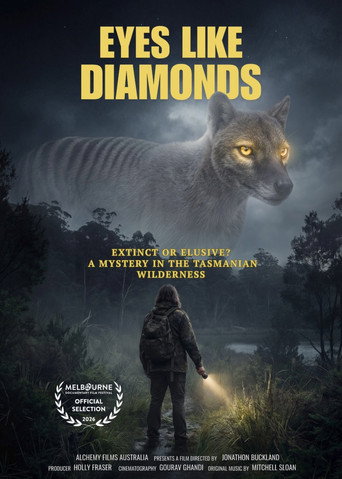
A trio of experts venture into Tasmania's undeveloped wilderness in search of the Tasmanian Tiger, one of the most terrifying predators ever to walk the earth.
Social & External
Unknown Role
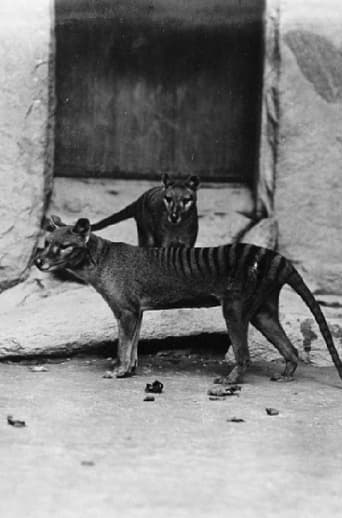
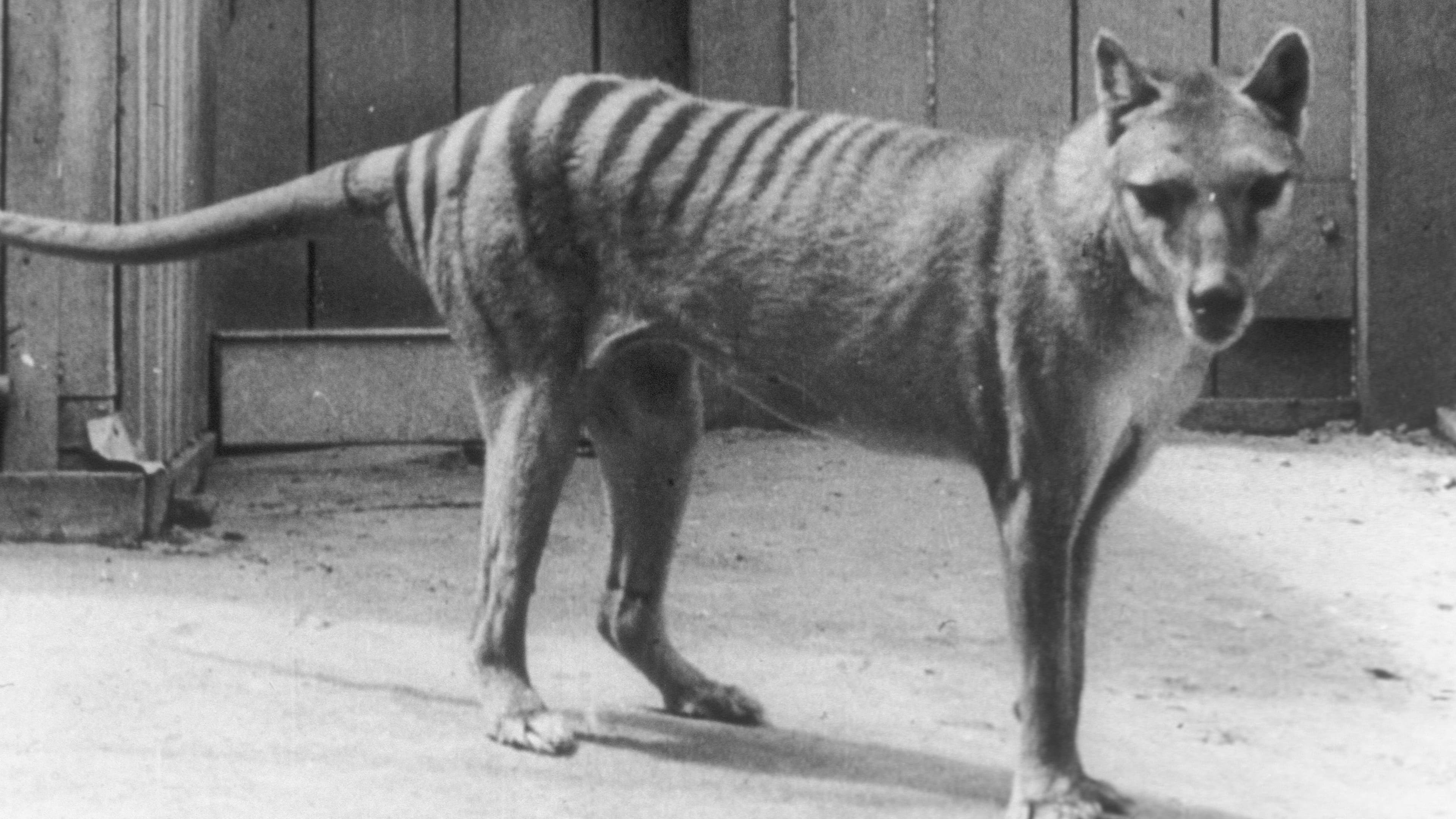
The original film of the Tasmanian tiger (also known as the thylacine) was shot by Australian zoologist David Fleay in 1933 on black-and-white film. Recently, this historic footage has been colorized and digitized by a team of international experts. You can watch the remastered footage of the last-known surviving Tasmanian tiger here. The thylacine, which resembled a medium-to-large-sized canid, had dark transverse stripes radiating from the top of its back. Sadly, the last known thylacine died in 1936 at the Hobart Zoo in Tasmania.
Recorded by pioneers as far back as 1805, the Tasmanian tiger has become an intensely mystifying Australian icon, whose entire existence has become the stuff of both fable and legend. This program investigates a chequered past and puts the speculation into perspective, taking into account the tragic culling and ‘bounty era’ where the carnivorous creatures were thought to be solely responsible for a considerable loss of farmers’ livestock. Balancing the facts with personal reflections from Tasmanian locals, scientists and other informed practitioners, The Tasmanian Tiger is a thought-provoking and revealing look at the extraordinary life and death of one of Australia’s most mysterious marsupials.
The Last Bumblebee is a solution-based documentary featuring interviews with scientists, and environmentalists discussing the importance of bumblebees as pollinators and the various threats they face.
Original 35mm nitrate negative film shot by naturalist David Fleay at Beaumaris Zoo, Hobart in December 1933. Colorized by Samuel François-Steininger at the Paris-based, Composite Films, from a 4K scan of the negative by the National Film and Sound Archive Australia.
Tim Noonan investigates the ultimate wildlife mystery to find out if the Tasmanian tiger, the world's rarest, most elusive animal, is gone for good or just very good at hiding.
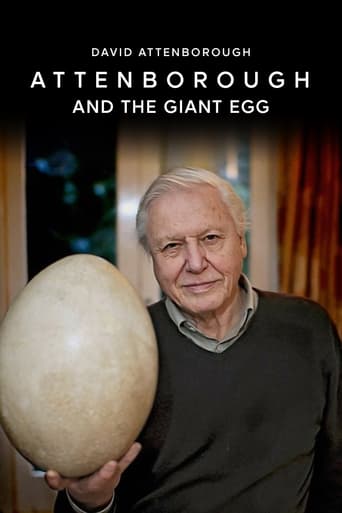
David Attenborough returns to the island of Madagascar on a very personal quest. In 1960 he visited the island to film one of his first ever wildlife series, Zoo Quest. Whilst he was there, he acquired a giant egg. It was the egg of an extinct bird known as the 'elephant bird' - the largest bird that ever lived. It has been one of his most treasured possessions ever since. Fifty years older, he now returns to the island to find out more about this amazing creature and to see how the island has changed. Could the elephant bird's fate provide lessons that may help protect Madagascar's remaining wildlife? Using Zoo Quest archive and specially shot location footage, this film follows David as he revisits scenes from his youth and meets people at the front line of wildlife protection. On his return, scientists at Oxford University are able to reveal for the first time how old David's egg actually is - and what that might tell us about the legendary elephant bird.
There are about 250 people with a unique ancestry. Livonians – one of the smallest and most endangered nations. Each of Livonians has a duty to preserve their identity and the great history of their ancestors. Trillium follows the footsteps of a poet and researcher Valts Ernštreits, who is one of 20 people able to speak fluent Livonian – an indigenous language related to Estonian and Finnish – in his efforts to look after the language and culture of these ancient settlers of the Baltic Sea coast.
An extinct species, the Tasmanian tiger. A long-forgotten legend, “The Pieman” aka Alexander Pearce, who was hanged for cannibalism in 1824. Both had a desperate need to survive; both could have living descendants within the Tasmanian bush. Four hikers venture deep into isolated territory to find one of these legends, but which one will they come upon first?
Adopted by a big, lively and spirited kangaroo family of traveling wrestlers, Teo’s life is pretty great. But when mysterious visions lead him to a faraway land, Teo is forced to rediscover his roots and embark on an epic journey to save his homeland from impending destruction.
A Tasmanian tiger wanders around in his zoo enclosure. A glacier is slowly melting. Facing its predicted disappearance, nature exerts its fury, bursts over the frame and resists its extinction by transformation.
A strange race of human-like marsupials appear suddenly in Australia, and a sociologist who studies these creatures falls in love with a female one. Is this a dangerous combination?
Martin, a mercenary, is sent from Europe by an anonymous biotech company to the Tasmanian wilderness on a hunt for the last Tasmanian tiger.
Collage film juxtaposing footage of Nazi Germany and the occupation with contemporary Yugoslavia.
This is the story of the MP3, an audio breakthrough that brought a billion dollar industry to the brink of collapse, but also paved the way for our modern digital lives. Germany 1995, a PhD student makes a technological breakthrough when he discovers how to compress audio without losing sound quality. He calls his new file type an "MP3". Within just a few years, and with the help of a nascent tech community, illegal MP3s begin filling up the hard drives of millions of computers around the world. It's the beginning of our modern digital age and internet culture. Featuring interviews with infamous music executives, artists, and techies, System Shock chronicles how the MP3 crushed the music industry and gave rise to the billion-dollar sharing economy.
A record of the unveiling of the monument to the victims of December '70 that took place in front of gate 2 of the Gdańsk Shipyard. Witnesses to the December events describe their experiences.
The first documentary realized by Danuta Halladin after her studies announces one of the main themes of her future films: children and childhood. Alone in the World is a story about orphanages.
A portrait of a working man - Stefan Piętowski, a craftsman who, at the age of 85, sums up his professional life. In order to do so, he organizes "The History of One Working Life" exhibition.
Young people with disabilities are provided with health care and vocational training. Is it enough to prepare them for their independent life? We get to know some charges of the Rehabilitation Center in Konstancin.