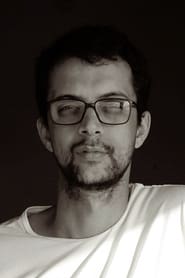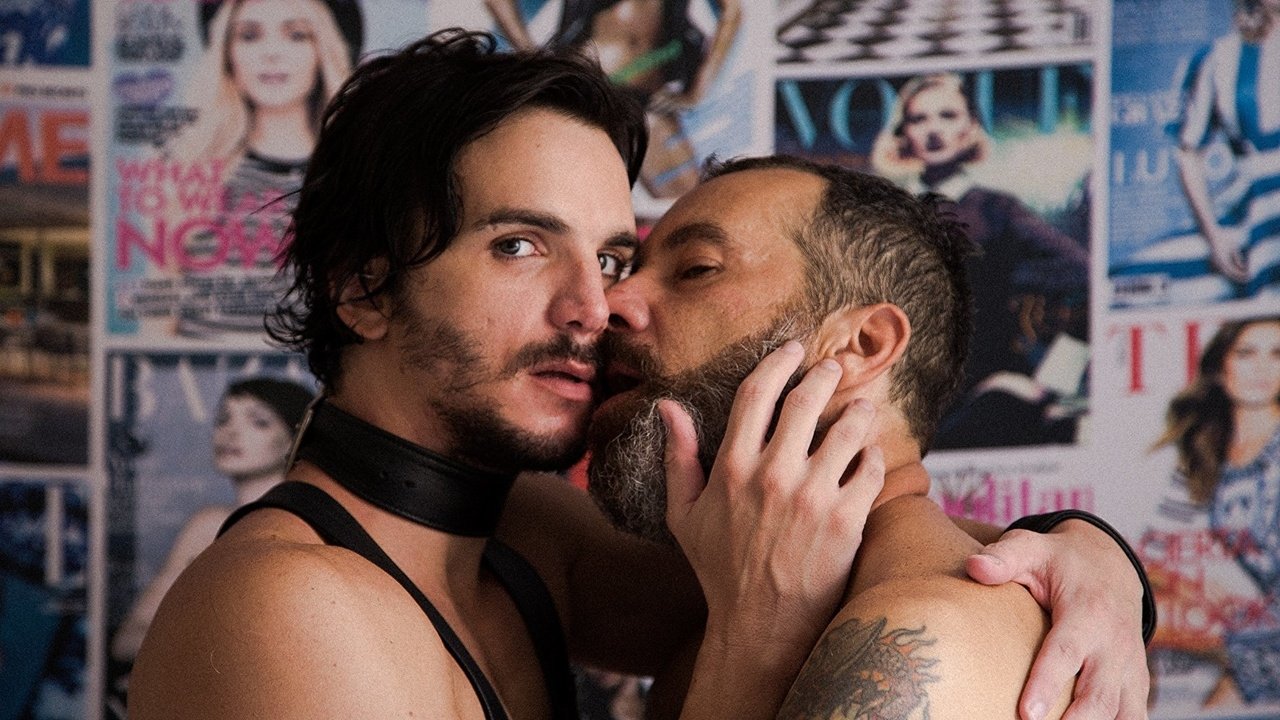
Sr. Raposo is a staged documentary about the daily life of Acácio, who found out he was HIV+ in 1995.
Social & External
Acacio
Unknown Role
Displaying the faces and voices of transgender youth, the documentary short shows the authenticity of queer and trans people living in Toronto, while simultaneously discussing the struggles for self-acceptance that people who do not conform to cisgender and heteronormative ideals of gender face. Andy Nguyen, trans director and film student, captures his trans friends in their natural state on 16mm film shot on a Bolex h16 camera. Accompanied by narration written and recited by Salem Rao, this film represents that trans people exist and this is what we look like. Regardless of the obvious everyday transphobia, trans people find community and uniqueness within each other and themselves.
A man must express his true passion of music and rhythm in a world where it is repressed and outlawed.
After years of bitter separation, Quinn learns that his brother Ray is gone for good. Seeking closure, he attends the funeral where he meets Daphne and discovers the shocking truth about Ray’s final hours.
“Let’s describe it as a desire to be outward followed by a fear of being seen,” The 1975’s Matty Healy tells Apple Music. “I think that is the conversation that happens in this record.” This short film finds Healy reflecting on his motivations and complexities as he and his bandmates reveal the ideas that fuelled their fourth album, Notes on a Conditional Form. It’s a unique and unguarded look at one of Britain’s most venturous bands.
Lester Burnham, a depressed suburban father in a mid-life crisis, decides to turn his hectic life around after developing an infatuation with his daughter's attractive friend.
5-year-old Robert lives in a newly built suburban area where all houses look exactly the same.
Singing and dreaming together, a talented singer-songwriter and a same-aged keyboardist add harmony and love to each other's lives.
A college student waits at a bus stop, anxious for a night out. When a young woman breaks up with her boyfriend in front of him, the two wait together.
A man finds out that his wife is going to meet her new lover and it drives him crazy.
Paparazzi explores the relationship between Brigitte Bardot and groups of invasive photographers attempting to photograph her while she works on the set of Jean-Luc Godard's film Le Mépris (Contempt). Through video footage of Bardot, interviews with the paparazzi, and still photos of Bardot from magazine covers and elsewhere, director Rozier investigates some of the ramifications of international movie stardom, specifically the loss of privacy to the paparazzi. The film explains the shooting of the film on the island of Capri, and the photographers' valiant, even foolishly dangerous, attempts to get a photograph of Bardot.
A band of displaced untouchables in Western Ghats of India embrace Buddhism in order to escape from caste oppression.
Narrated by Linda Hunt, this documentary examines the life of the late author and gay rights activist Paul Monette. Born in 1945 to a well-off Massachusetts family, Monette grows up unable to accept his homosexuality, for years hiding it from his loved ones while struggling to develop as a writer. In 1978, Monette publishes his first novel, which allows him to come out to his parents. After losing one lover to AIDS in 1986, he becomes a ferocious advocate for awareness of the disease.
Invited by the conductor Premil Petrovic to stage Arnold Schoenberg’s Pierrot Lunaire, a musical theater work from 1912 based on the poems of Albert Giraud, LaBruce transposed a strange and tragic episode of true crime onto the composition. Complementing the original atonal score is a narrative about a trans man who is outed by his girlfriend’s father and forbidden from seeing the young woman again. Crestfallen, the protagonist decides to prove the fact of his manhood by castrating a taxi driver and then revealing his newly transplanted member to the two of them. This story, which for LaBruce “serves as a kind of allegory for all gender radicals and outcasts driven to extremes by the disapproval and hostility of the dominant order,” is rendered in a visual style that nods to the era of Schoenberg’s melodrama. LaBruce cheekily appropriates the formal vocabulary of silent cinema with black-and-white photography, irises, and intertitles like “A cock, a cock, my kingdom for a cock!”
On Christmas Day, 15 year old David finds out that his boyfriend, Jonathan has taken another lover. The discovery leads him on the brink of depression making him think of ways to have him back at all cost. He has invited Jonathan to see him on this day for the last time.
A Twilight Zone-inspired cautionary tale about a young mother forced to come face-to-face with her deepest desire.
In the vicious slums of Colombia, where prosperity is dictated by brutality, a conflicted kid seeks membership in a brutal gang, with the hope of one day having the power to determine his own destiny.
An alcoholic ex-football player drinks his days away, having failed to come to terms with his sexuality and his real feelings for his football buddy who died after an ambiguous accident. His wife is crucified by her desperation to make him desire her: but he resists the affections of his wife. His reunion with his father—who is dying of cancer—jogs a host of memories and revelations for both father and son.
Against a plain, unchanging blue screen, a densely interwoven soundtrack of voices, sound effects and music attempt to convey a portrait of Derek Jarman's experiences with AIDS, both literally and allegorically, together with an exploration of the meanings associated with the colour blue.
This searing investigative work shadows a group of activists risking unimaginable peril to confront the ongoing anti-LGBTQ program raging in the repressive and closed Russian republic. Unfettered access and a remarkable approach to protecting anonymity exposes this under-reported atrocity–and an extraordinary group of people confronting evil.
A story of two coalitions – ACT UP and TAG (Treatment Action Group) – whose activism and innovation turned AIDS from a death sentence into a manageable condition. Despite having no scientific training, these self-made activists infiltrated the pharmaceutical industry and helped identify promising new drugs, moving them from experimental trials to patients in record time.
In a warehouse in the heart of Los Angeles, a dwindling handful of devoted craftspeople maintain more than 80,000 student musical instruments, the largest remaining workshop in America of its kind. Meet four unforgettable characters whose broken-and-repaired lives have been dedicated to bringing so much more than music to the schoolchildren of this city.
Fourteen-year-old Mo is a lonely, sensitive boy whose hunger for the rant and banter of buddies makes him prone to tread dangerous territories. He idolizes his handsome older brother, Rashid, a charismatic, well-respected member of a local gang, whose drug dealing enables “Rash” to provide for his family. Aching to be seen as a tough guy himself, Mo takes a job that unlocks a fateful turn of events and forces the brothers to confront their inner demons. It turns out that hate is easy. It is love and understanding that take real courage.
Though legendary lyricist Howard Ashman died far too young, his impact on Broadway, movies, and the culture at large were incalculable. Told entirely through rare archival footage and interviews with Ashman’s family, friends, associates, and longtime partner Bill Lauch, Howard is an intimate tribute to a once-in-a-generation talent and a rousing celebration of musical storytelling itself.
The story of the discovery of the AIDS epidemic and the political infighting of the scientific community hampering the early fight with it.
A celebration of the universe, displaying the whole of time, from its start to its final collapse. This film examines all that occurred to prepare the world that stands before us now: science and spirit, birth and death, the grand cosmos and the minute life systems of our planet.
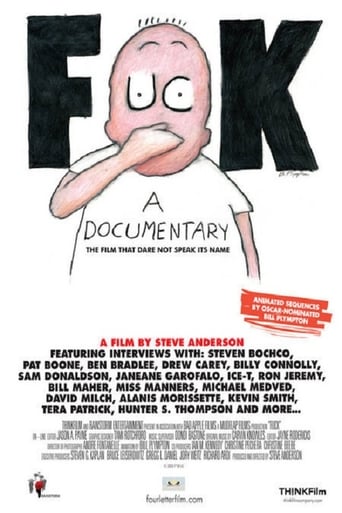
A documentary on the expletive's origin, why it offends some people so deeply, and what can be gained from its use.
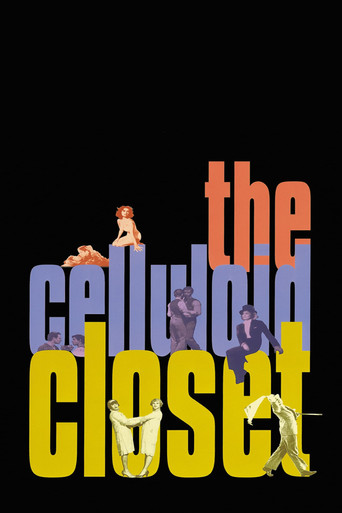
Exuberant, eye-opening movie that serves up a dazzling hundred-year history of the role of gay men and lesbians have had on the silver screen. Film contains fabulous footage from 120 films showing the changing face of cinema sexuality, from cruel stereotypes to covert love to the activist triumphs of the 1990s.
In this Oscar-winning short film, grieving parents journey through an emotional void as they mourn the loss of a child after a tragic school shooting.
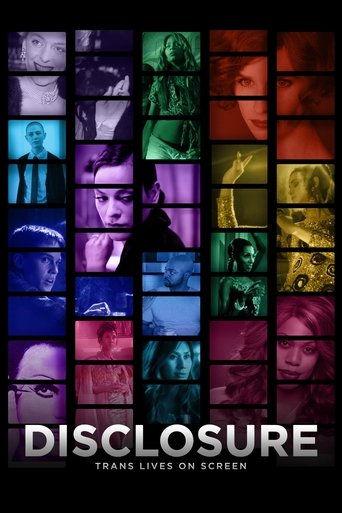
An investigation of how Hollywood's fabled stories have deeply influenced how Americans feel about transgender people, and how transgender people have been taught to feel about themselves.
Biographical drama based on the last 20 years of Crisp's life. The literary figure and gay iconoclast emigrated to New York in 1981 and lived there until his death. The film observes Crisp in both his public and private lives, from his seemingly cavalier response to the outbreak of AIDS to his tender relationship with his friend Patrick Angus and his own response to growing old.
A group of bored, disaffected New York City teenagers spend a day skating, smoking, drinking, partying, deflowering virgins, and getting into fights.
A group of gay friends spend summer weekends together at a lakeside house in upstate New York. As the season progresses and secrets begin to surface, the complex relationships within the group are sometimes strained and sometimes strengthened.
The story of the onset of the HIV-AIDS crisis in New York City in the early 1980s, taking an unflinching look at the nation's sexual politics as gay activists and their allies in the medical community fight to expose the truth about the burgeoning epidemic to a city and nation in denial.
The story of several friends in New York City facing financial poverty, homophobia, AIDS, and, of course, rent.
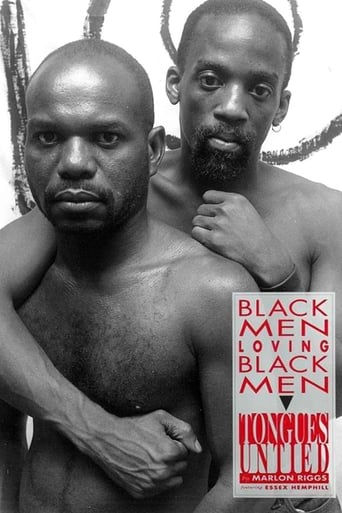
Marlon Riggs, with assistance from other gay Black men, especially poet Essex Hemphill, celebrates Black men loving Black men as a revolutionary act. The film intercuts footage of Hemphill reciting his poetry, Riggs telling the story of his growing up, scenes of men in social intercourse and dance, and various comic riffs, including a visit to the "Institute of Snap!thology," where men take lessons in how to snap their fingers: the sling snap, the point snap, the diva snap.
Davey Gordon, a New York City boxer at the end of his career, falls for dancer Gloria Price. However, their budding relationship is interrupted by Gloria's violent boss, Vincent Rapallo, who has eyes for Gloria. The two decide to skip town, but before they can, Vincent and his thugs abduct Gloria, and Davey is forced to search for her among the most squalid corners of the city, with his enemy hiding in the shadows.
At a birthday party in 1968 New York, a surprise guest and a drunken game leave seven gay friends reckoning with unspoken feelings and buried truths.