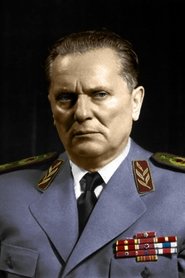
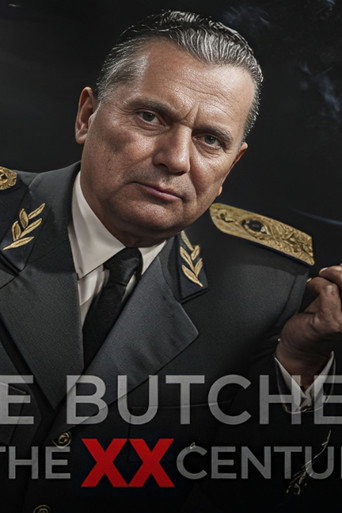
Little known facts about Yugoslavian president-for-life.
Social & External
Himself (archive footage)
Filmed in Belgrade in 1962, Parade documents the city’s engagement with the annual May Day celebration by largely ignoring the formal procession. Instead, Dušan Makavejev records the informal moments surrounding it: workers, officials, wanderers, and organizers negotiating space, hierarchy, and appearance. Shot with a detached, humorous eye, the film assembles a mosaic of everyday behavior that reveals the contrast between official ceremony and lived social reality.
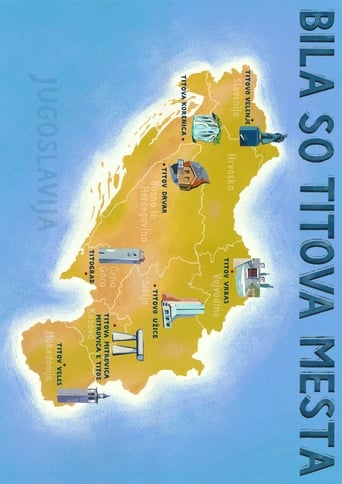
Following the death of Josip Broz Tito (1892–1980), one city in each of the six republics and two autonomous regions of the Socialist Federal Republic of Yugoslavia had the honour to be named after the long-serving president. Having been chosen due to leftist ideas, proletarian character, industrialisation, urbanisation and modernity, they were often privileged. Now located across seven countries, not one of these cities is still named after Tito. We learn the stories of these cities from their residents who look back at the period under Tito’s name. Many of these stories are tragic since the majority of cities have been touched by war.
At his school, 10-year-old Zoran wins the competition for the best essay about Tito. His reward is participation in the march "Revolutionary trails" to Tito's hometown of Kumrovec.
The lives of many people in one Serbian town are changed after Tito's breakup with Stalin.
In former Yugoslavia, following Tito's break-up with Stalin, the rocky island of Goli Otok was the camp site for political prisoners. From that officially non-existant yet dreaded place a young man escapes and seeks refuge on a nearby island. The nuns from the local convent find him unconscious and decide to give him shelter. A relentless secret policeman comes to the island and starts making life miserable for its inhabitants, hoping to find his prey...
Blue Train is Serbian atipic teenage comedy. Just before Tito's death a high school graduates in Belgrade live their normal life before the end of the school year. Spring is relaxed and they organize the election "Princess Of Spring" for the most beautiful girl in school. Vojislav is in love with Anica, friend from class. While his best friend, convinces him that the organization of the miss elections is the best way to win Anica's heart. Milena has crush in Vojislav, and she want to spoil his plan. After the death of professor of Marxism, in the school comes a new, very young and ambitious professor Božičković, a former pupil of the school. His charm and informal dress manages to win the sympathy of students, especially girls. Professor Božičković like Anica, and he shows that in front of the class. Anica and Vojislav do not appritiate that.
A young man by the name of Atif Kurtovic goes into a mine for the first time in his life to become a miner and to continue exactly where his now retired grandfather had left off. However, his fate is soon completely changed when he is picked as the face for the most valuable banknote in the country, the bill in the amount of one thousand dinars. Because of this, Atif soon finds himself on his way to Belgrade where Tito's personal photographer takes his picture and thus allows Atif to become a part of history. Into this story enters a young girl whose nickname, "Hiljadarka / A Thousand", is no accident and with whom Atif falls in love. When Tito announces his personal visit to Atif's hometown, there begins an adventure that they will all remember for the rest of their lives.
Based on a true story of a meeting in June 1945 between two powerful men with very opposite philosophies and perspectives on the future of their country.
Stipan is a policeman who comes to small Adriatic island off the Croatian coast in order to investigate reported strange phenomena that had frightened the whole population. At first, nobody wants to co-operate with him, but he finally finds that the island is being allegedly haunted by the ghost of Josip Broz Tito, Communist leader of former Yugoslavia. For Luka, the mayor, this is the opportunity to turn entire island into Tito-themed amusement park. Tito's WW2 veterans, on the other hand, don't believe in ghosts; for them, the apparition is actually Tito himself, who had returned in order to lead them into a new revolution which would restore Communism. Written by Anonymous
The film is about why Fedor Chalyapin was actually expelled from his native country and left Russia forever.
A film about an artist who was not destined to become an artist. A film about a father told by his son.
Made in Japan, Last Room is both fiction and documentary. The occupants of the love-hotels and capsule-hotels tell their own intimate, dreamlike stories, interspersed with journeys through the archipelago's landscapes. Soon, these personal stories resonate with a collective history: that of Gunkanjima, the abandoned ghost island of Nagasaki, and then that of Japan as a whole.
Drawing on a wealth of unseen archival material and unpublished notebooks, the film weaves a complex and personal portrait of Margaret’s life, from the perspective of a fellow artist sensitive to the potential Margaret envisaged for film as a poetic medium.
The opening of The Vasulka Effect couldn’t be more apt: Steina Vasulka addresses her husband Woody through various TV screens. He does the same and replies. A perfect image of the relationship between the free-spirited, groundbreaking pioneers of video art. After meeting in Prague in the early 1960s, they relocated from Czechoslovakia to New York, where they later founded The Kitchen, their legendary art and performance gallery.
Documentary about aviation
What is true and what is false in the hideous stories spread about the controversial figure of the Roman emperor Gaius Julius Caesar Augustus Germanicus (12-41), nicknamed Caligula? Professor Mary Beard explains what is accurate and what is mythical in the historical accounts that portray him as an unbalanced despot. Was he a sadistic tyrant, as Roman historians have told, or perhaps the truth about him was manipulated because of political interests?
Five years in the making, this brave and level-headed documentary exposes paramilitary activity in present day Northern Ireland during a supposed time of peace.
Some 20 years ago, two sex workers were murdered in an upper-class Brussels neighborhood. Celebrated Belgian magistrate Anne Gurwez decides to revisit this cold case, pouring over the evidence with the use of new technologies and tracking down then-suspects.