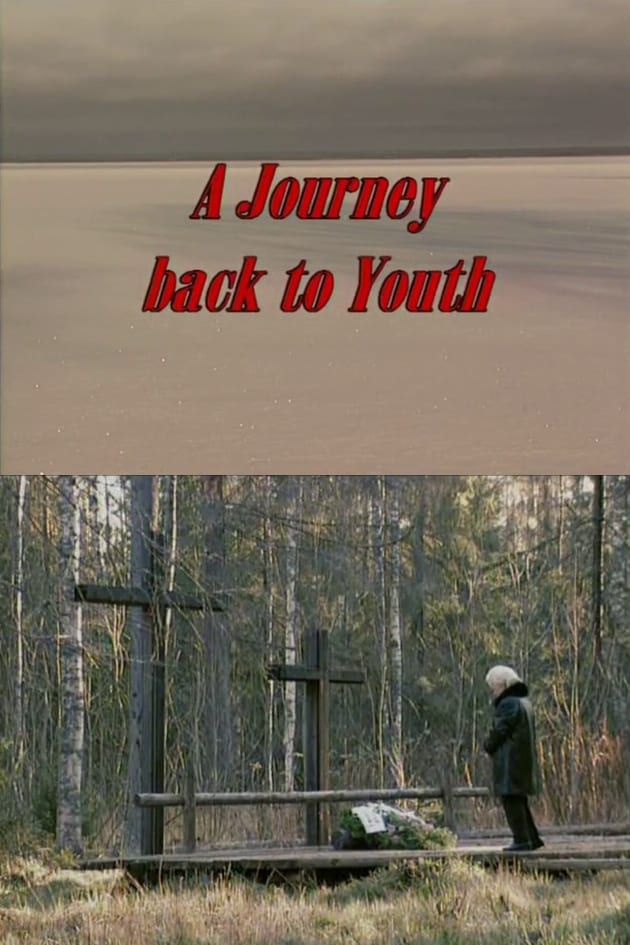
Based around the testimonies of four German women, this documentary details the abuse women suffered during after WWII at the hands of the Soviet forces, particularly during their forced labour.
Social & External
Herself
See Kenneth W. Rendell's collection of over 6,000 artifacts that range from the end of World War I and the rise of Nazism to the start of World War II and the fight in Europe and the Pacific.
Easy Company, the 2nd Battalion of the 506th Parachute Infantry Regiment of the 101st Airborne Division, fought their way through Europe, liberated concentration camps, and drank a victory toast in April 1945 at Hitler's hideout. Veterans from Easy Company, along with the families of three deceased others, recount their horrors and victories, bonds they made and the friends they lost.
A remarkable film that takes a special look at the first war to be truly reported and recorded by one of the more unsung heroes of World War II: the combat photographer. Through the unflinching eye of their camera's lenses, these courageous soldiers continually risked their lives in their brave attempts to capture history.
An epic family saga told by the women around the famous architect Ludwig Mies van der Rohe.
The story of Hitler’s final hours told by people who were there. This special features exclusive forgotten interviews, believed lost for 65 years, with members of Hitler’s inner circle who were trapped with him in his bunker as the Russians fought to take Berlin. These unique interviews from figures such as the leader of the Hitler Youth Artur Axmann and Hitler’s secretary Traudl Junge, have never before been seen outside Germany. Using rarely seen archive footage and dramatic reconstruction, this special tells the story of Adolf Hitler’s final days in his Berlin bunker.
Unpublished testimonies from freed hostages, survivors, and members of first responders regarding the attacks perpetrated on Israeli territory on October 7, 2023, by the terrorist gang Hamas reveal the repugnant extent of the crimes committed by the so-called Palestinian freedom fighters.
Six men who were sexually abused by Catholic clergy as boys find empowerment by creating short films inspired by their trauma.
While serving with the African Union, former Marine Capt. Brian Steidle documents the brutal ethnic cleansing occuring in Darfur. Determined that the Western public should know about the atrocities he is witnessing, Steidle contacts New York Times reporter Nicholas Kristof, who publishes some of Steidle's photographic evidence.

A documentary examining possible historical and modern conspiracies surrounding Christianity, the 9/11 terrorist attacks, and the Federal Reserve bank.
Five young women who survived unimaginable abuse and rape tell their stories of a gang grooming spanning 20 years. Failures of police and social services continue to this day.
The filmmaker's father and uncle, Norm and Stan, are third generation Japanese Americans. They are "all American" guys who love bowling, cards and pinball. Placed in the Amache internment camp as children during World War II, they don't think the experience affected them that much. But in the course of navigating the maze of her father's and uncle's pursuits while simultaneously trying to inquire about their past, the filmmaker is able to find connections between their lives now and the history that was left behind.
The Katyn massacre, carried out by the Soviet NKVD in 1940, was only one of many unspeakable crimes committed by Stalin's ruthless executioners over three decades. The mass murder of thousands of Polish officers was part of a relentless purge, the secrets and details of which have only recently been partially revealed.
Live footage from concentration camps after the liberation, and the complex transport and lodging of masses of prisoners of war and other deported people back to their home countries, at the end of World War II. A 45min 35mm print also exists (shown at Cinémathèque française in 2023).
This short documentary produced by the University of Oregon Multimedia Journalism graduate program explores memories of Portland's Japantown – Nihonmachi – and the thriving Japanese American community in Oregon prior to World War II. The film features Chisao Hata, an artist, teacher and activist, and Jean Matsumoto, who was incarcerated at the Portland Assembly Center and in the Minidoka concentration camp as a child.
Lithuania, 1941, during World War II. Hundreds of thousands of texts on Jewish culture, stolen by the Germans, are gathered in Vilnius to be classified, either to be stored or to be destroyed. A group of Jewish scholars and writers, commissioned by the invaders to carry out the sorting operations, but reluctant to collaborate and determined to save their legacy, hide many books in the ghetto where they are confined. This is the epic story of the Paper Brigade.
A documentary chronicling the adolescent years of Elie Wiesel and the history of his sufferings. Eliezer was fifteen when Fascism brutally altered his life forever. Fifty years later, he returns to Sighetu Marmatiei, the town where he was born, to walk the painful road of remembrance - but is it possible to speak of the unspeakable? Or does Auschwitz lie beyond the capacity of any human language - the place where words and stories run out?
The SS chief Heinrich Himmler wanted to exchange Jews against so-called German Reich abroad, against arms sales or for cash - with the express approval of Hitler.
Using never-before-seen footage, Japan's War In Colour tells a previously untold story. It recounts the history of the Second World War from a Japanese perspective, combining original colour film with letters and diaries written by Japanese people. It tells the story of a nation at war from the diverse perspectives of those who lived through it: the leaders and the ordinary people, the oppressors and the victims, the guilty and the innocent. Until recently, it was believed that no colour film of Japan existed prior to 1945. But specialist research has now unearthed a remarkable colour record from as early as the 1930s. For eight years the Japanese fought what they believed was a Holy War that became a fight to the death. Japan's War In Colour shows how militarism took hold of the Japanese people; describes why Japan felt compelled to attack the West; explains what drove the Japanese to resist the Allies for so long; and, finally, reveals how they dealt with the shame of defeat.