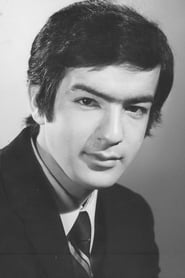
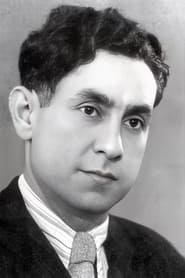
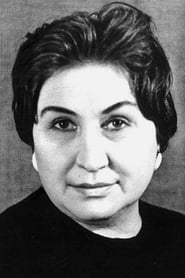
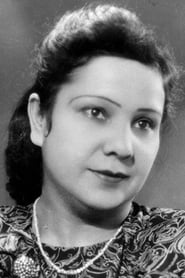
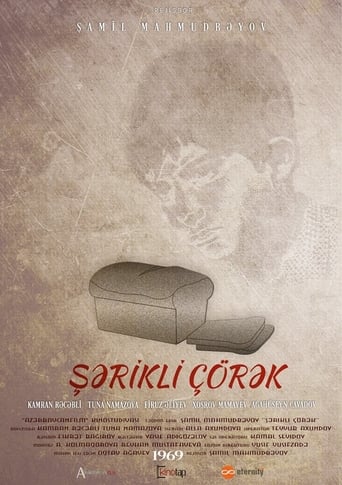
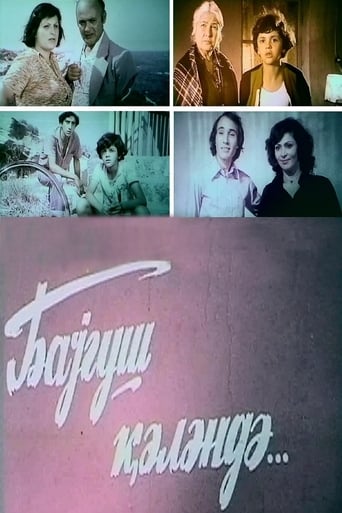
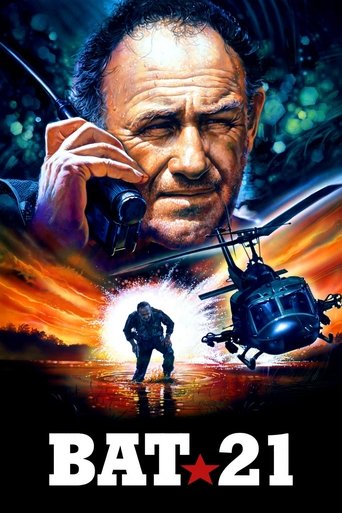
After the novelette of the same name of Huseyn Abbaszadeh. The film is about friends' meeting who fought together as a partisans in Belorussian detached force.
Social & External
Nijat
Badir
Jalal
Seyran
Pavel Chipurin
Murad
Asad
Jamila
Bilgeyis
Badir's Daughter
Sona
Sevda
Kamil
Unknown Role
A journalist is investigating a group of poachers who are illegally selling the huge amounts of fish
Film exposes the corruption and the decadence of the late Soviet bureaucracy in Azerbaijan SSR through the eyes of a naive Azerbaijani adult man, Hatem.
A young girl is trying to save an island which is endangered by nearby construction.
Inspired by Anton Chekhov's The Cherry Orchard, the film follows a prodigal son who returns after 12 years. His reappearance at the family home in rural Azerbaijan significantly alters their way of life.
War breaks out in the Caucasus. 75-year-old Maria loses her son in the war. She and her daughter-in-law Sofia have been living in the Caucasus for 12 years. When famine strikes, they want to move to Russia. The women decide that they must go to Moscow. Maria takes her little dog and Sofia her small suitcase, gets on the train and sets off. In the next compartment, photojournalist Alexander is also traveling. Sofia and Alexander love each other. Maria realizes at one of the stations near Volgograd that she cannot live without the Caucasus. She writes a letter to Sofia and leaves the train with her dog...
In a Azerbaijan, in the beginning of this century, the first films made in the history of cinema are shown.The characters meet each other in a room. Three characters who will witness the linking up of their destinies through their common love for this new captivating art.
This film was based on Samad Vurgun's "Komsomol poem". Seven sons, like seven samurai become the seven komsomols (communist leaders) who were sent to a village to establish Soviet power. Seven sons become the romanticized images of people's heroes ready to take revenge.
During the late 1980s and early 1990s the Armenian minority in Nagorono-Karabakh attempted to break away from Azerbaijan, one of the former Soviet republics. Overnight these former neighbors became enemies, and simple village folk were suddenly made hostages in a complex power game. One of the Azerbaijani villages right on the border is home to the family of the peasant farmer Kerim, who has just been captured by the Armenians. The village council decides to take an Armenian in order to arrange a hostage exchange. They imprison the wounded man in the barn next to Kerim's house, where his wife and three children desperately await the husband's return. The captive from the other side of the border finds himself in exactly the same situation - he, too, has three children, he finds it hard to scrape a living together, he has never done anything to harm anyone and, like Kerim, he just wants to go back home. But life in Karabakh is far more complex now. Blood calls for blood.
After World War II, a group of young “robbers” redistributes the wealth of the rich to the poor while protecting the honor of women, especially the wives and sisters of soldiers at the front. Though branded outlaws by the law, their criminal yet benevolent deeds win the tacit approval of the local community.
The film is about village boy who became an enlisment officer and came back to Garabagh and fell in love with bey's daughter.
The fim is about the village driver's mistake.
After the novel of the same name of Vidadi Babanli. Rashid, a young man, fails the entrance exam to the Institute and started to live by independent life, about people round him.
A man goes to prison for years for a crime his cousin committed. After his release he moves to his native village and lives a simple life. But when his cousin comes to visit, his old thoughts of revenge return.
A drama about a film crew making a movie in an isolated mountain town famous for its ancient fortress, and what happens when the town is threatened by a modern-day foreign invasion.
After the play of the same name of Anar.
The film chronicles the ordeals faced by Azerbaijan’s intellectuals - from the Red Terror to the present day - depicting how, amid shifting social and political upheavals, they endure physical and moral persecution. It also explores human betrayal and the ways people adapt their identities to survive changing circumstances.
After many years of effort and patience, she failed to save her family. She watched with pain as her husband, an architect by training, was ruining his life with idleness and melancholy. Unable to bear the boredom of life together, she leaves home...
January 1990, Baku. The Soviet Union hasn't collapsed yet. Around 300 thousand Azeri have been forsed out from their homes in Armenia and Daghlig Garabagh. Rallies of protest, political meetings spring up in Baku. The old patriarch, Ismail gathers under his roof distant relatives, people of different nationalities, beliefs, and ideas. The old man is tortured by everything happening around him: unrest in the city as well as discord and discarder in his own overpopulated apartment. All his efforts to preserve the family are in vain. People want to live separately. Former friends become bitter enemies because of the senseless aggression.
The film is about war in Garabagh and when we look at wounded solider we see our son, brother or father.
Dedicated to the development of the oil industry of Soviet Azerbaijan in the background of the first half of the twentieth century, including their selfless work in strengthening the economic and military might of the USSR.