Social & External
With unprecedented access to the nuclear industry in France, Russia, and the United States, Nuclear Now explores the possibility for the global community to overcome the challenges of climate change and energy poverty to reach a brighter future through the power of nuclear energy. Beneath our feet, Uranium atoms in the Earth’s crust hold incredibly concentrated energy. Science unlocked this energy in the mid-20th century, first for bombs and then to power submarines. The United States led the effort to generate electricity from this new source. Yet in the mid-20th century as societies began the transition to nuclear power and away from fossil fuels, a long-term PR campaign to scare the public began, funded in part by coal and oil interests.
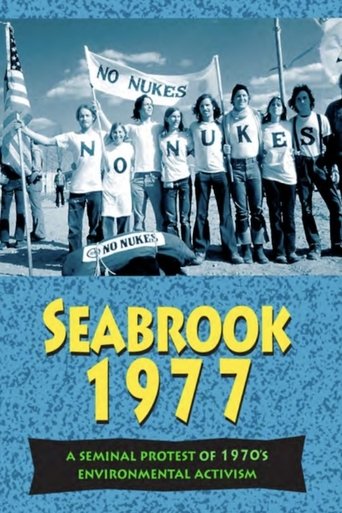
In April 1977, the small coastal town of Seabrook, New Hampshire became an international symbol in the battle over atomic energy. Concerned about the dangers of potential radioactive accidents, over 2,000 members of the Clamshell Alliance, a coalition of environmental groups, attempted to block construction of a nuclear power plant. 1,414 people were arrested in that civil disobedience protest and jailed en masse in National Guard armories for two weeks.
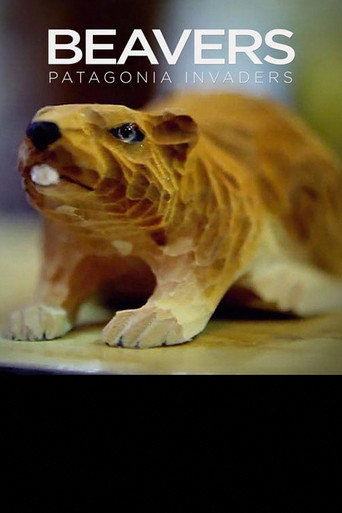
In 1940 twenty Canadian Beavers were brought to 'Tierra del Fuego' island in southern Patagonia for commercial fur production. However, beavers having no natural predators, quickly spread throughout the island, causing massive destruction of trees threatening the entire Patagonian forests rivers and species. Why wildlife conservationist are convinced that 150.000 beavers must be killed? Why some of the most recognized specialist are convinced that an eradication is not possible? Meanwhile truism is capitalizing on the situation: a man dressed as a beaver passes out flyers promoting a famous sky resort: 'Cerro Castor' - Beaver Hill. Hunters claim for subsidies, scientists are researching, rangers do what they can and restaurants tray to offer beaver meat to tourist.
As societies grapple with the escalating concern of environmental pollution, the imperative for collective consciousness and concerted action becomes ever more pronounced. The impact of human activities on the environment demands heightened awareness and proactive measures. In this context, the utilization of First Person View (FPV) drone technology emerges as a compelling and immersive tool for capturing the essence of our surroundings. The allure of FPV drone footage lies in its ability to provide a unique and genuine perspective of various landscapes, ranging from pristine beaches to meandering valleys and flowing river currents. This immersive visual medium not only serves as a means of documentation but also as a potent catalyst for instigating dialogue and inspiring environmental stewardship.
In June 2010, French actress Marion Cotillard spent a week in the heart of the tropical forests of the Democratic Republic of Congo with members of Greenpeace France and Greenpeace Africa. She delivers in video a strong testimony on the looting of Congolese forests which benefits a few industrial groups, often European.
A surrealistic look at the future if man does not learn to control pollution.
Everyone has heard about bee declines, but with so much attention focused on domesticated honeybees, someone has to speak up for the 4,000 species of native bees in North America. Natural history photographer Clay Bolt is on a multi-year quest to tell the stories of our native bees, and one elusive species – the Rusty-patched Bumble Bee – has become his white whale. Traveling from state to state in search of the Rusty-patched, he meets the scientists and conservationists working tirelessly to preserve it. Clay’s journey finally brings him to Wisconsin, where he comes face to face with his quarry and discovers an answer to the question that has been nagging him: why save a species?
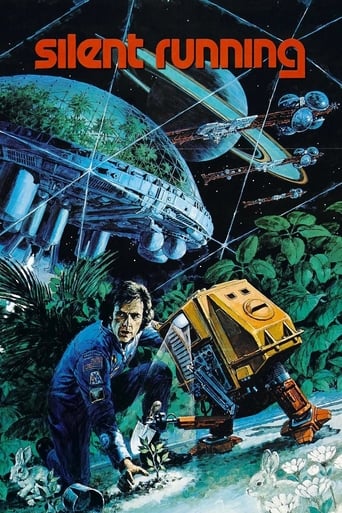
After the entire flora goes extinct, ecologist Lowell maintains a greenhouse aboard a space station for the future with his android companions. However, he rebels after being ordered to destroy the greenhouse in favor of carrying cargo, a decision that puts him at odds with everyone but his mechanical companions.
Carol White, a Los Angeles housewife in the late 1980s, comes down with a debilitating illness with no clear diagnosis.
In this prequel to FERN, Bill Verne attempts to climb the cut-throat corporate ladder of Mammon Incorporated, only to find that his pursuit of wealth and success comes at a devastating cost to both his loved ones and the world around him.
Greenpeace brings the rampant destruction of rainforest habitat in Indonesia to grow palm oil into the spotlight.
After Mallory disrupts nature, nature begins disrupting her.
A group of people are standing along the platform of a railway station in La Ciotat, waiting for a train. One is seen coming, at some distance, and eventually stops at the platform. Doors of the railway-cars open and attendants help passengers off and on. Popular legend has it that, when this film was shown, the first-night audience fled the café in terror, fearing being run over by the "approaching" train. This legend has since been identified as promotional embellishment, though there is evidence to suggest that people were astounded at the capabilities of the Lumières' cinématographe.
A day in the city of Berlin, which experienced an industrial boom in the 1920s, and still provides an insight into the living and working conditions at that time. Germany had just recovered a little from the worst consequences of the First World War, the great economic crisis was still a few years away and Hitler was not yet an issue at the time.
Hip Hip Parade! was a primetime special promoting the Macy's Thanksgiving Day Parade, originally broadcast on PBS stations throughout Thanksgiving week 1978. Hosting the special were Kermit the Frog and Fozzie Bear, of The Muppet Show fame.
The boys compete to see who could stay within the branches of a Christmas tree the longest, intermingled with sketches and other surprises.
Diamond Road is a three-part series and 96 minute feature documentary exploring the historical, cultural and socio-political facets of the world's most intriguing gem. Boring deep into the diamond world, the series seeks to understand the multiple meanings of an object that is as old as the earth itself.