Social & External
Unknown Role
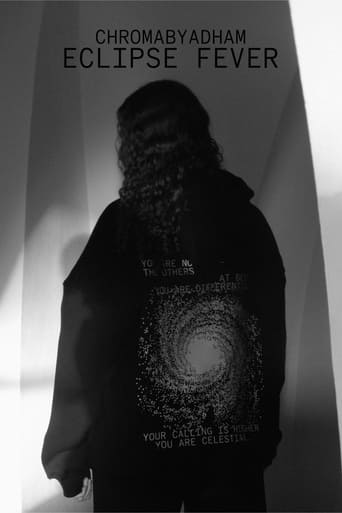
Inspired by the small enterprise, CHROMABYADHAM, a colourblind inclusive clothing wear line. ECLIPSE FEVER, the third collection, encompasses the visual representation of the brand and features themes of growth and remembrance, while coherently showcasing the new collection — a celebration of nighttime and nightlife.
This film presents a series of extemporaneous interviews with teenagers and young adults who have taken narcotics for "kicks," "association," or "curiosity." Residents of the California Rehabilitation Center relate how they were introduced to narcotics, why they wished they had not used drugs or narcotics, and what the future holds for them. Film is shot in Hollywood, Calif.
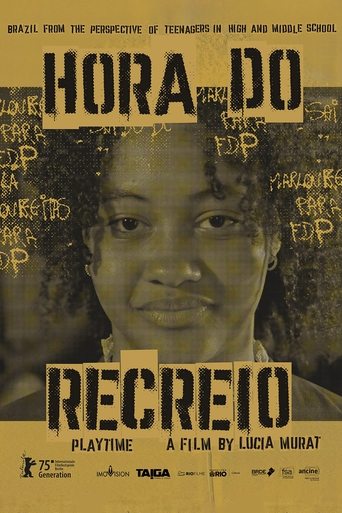
In this feature-length documentary, six teenage girls, aged 14 to 16, agree to open up and have their private worlds invaded by the camera. They have to face problems that they intend to take on "to the end": early experience of sexuality, belonging to a gang, relationships with parents, social tolerance, friendship... They live tender and pure lives in their own way.
Three working-class teenage girls in a port city in Bangladesh escape daily hardships and stifling family lives by riding waves on their surfboards and grabbing hold of the fleeting and thrilling sense of freedom that brings.
Documentary footage from various sources, set to music. Showing the whole of human life, from birth to death and beyond.
Kafia, a young girl on the brink of adulthood, has to leave behind a lot of what defined her Somalian life as she tries to adapt to her new existence in Hungary. As the family’s cultural values and taboos start to fall apart, Kafia tries to explain and make sense of all these changes to her mother left behind.
Five boys and five girls ages 13 to 19 live on a farm for ten weeks, to be filmed, and to see what might emerge for each of them personally.
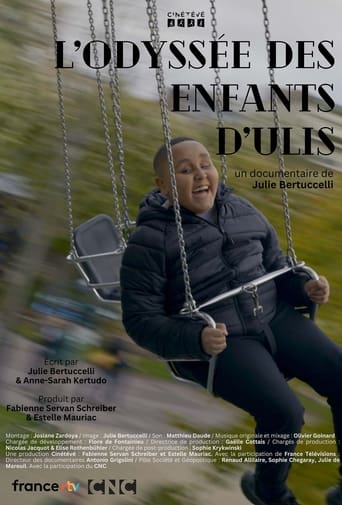
In the industrial and maritime city of Le Havre, Soren and Karving, two 14-year-old friends, are passionate about fishing. In conflict with authority and failing at school, fishing has become their space of freedom and a unique way to project themselves into the future: more than anything, Soren wants to become a fisherman and Karving a fisherman-reporter. As the pressure of their exams mounts, and without their diploma they can kiss their dream life goodbye, they will have to compromise between their passion and reality.
In this French Canadian film, the lives of teenagers are examined in fantasy sequences and through the use of documentary interviews. Prompted by the filmmaker, nine teenagers individually act out their secret dreams and, between times, talk about their world as they see it. The fantasy sequences make creative use of animation, unusual film-development techniques, and stills. Babette conceives of herself as an abbess defending her fortress, a convent; Michelle is transported in a dream of love where all time ceases; Philippe is the revolutionary, defeating all the institutions that plague him, and so on, through all their fantasies. All the actual preoccupations of youth are raised: authority, drugs, social conflict, sex. Jutra's style in "Wow" exhibits his innovative approach to storytelling and filmmaking, showcasing his talents as a director during that period. With English subtitles.
A major figure in contemporary feminism and the first Frenchwoman to win the Nobel Prize for Literature, Annie Ernaux is seen by many as a source of individual and collective emancipation, blending the intimate with the universal. Filmmaker Claire Simon has devoted an original portrait to her, giving students and teachers a voice.
In Saint Pierre et Miquelon, a tiny French archipelago in the North Atlantic, a group of teenagers have just graduated from high school. Urged to continue their studies, it's time to leave for mainland France and Canada. Manon, Evie, Enguerrand and their friends are about to spend their last summer on the islands together. In the turmoil that precedes this leap into the void, these budding adults, like previous generations, are confronted with this particular moment in their lives. They'll have to leave. But they are islanders, and this departure has the air of exile, of uprooting with no certainty of return. As they leave adolescence, they will be uprooted from their land, crossing a border that is both symbolic and physical. The idea is that something happens here that is more observable than elsewhere, something that concentrates and accelerates the transformations of the teenagers' personalities.
Mixes documentary interviews of memories of lesbian adolescence with the story of the 12-year-old girl Lou discovering her sexuality in 1960s America.
In this powerful new film based on his bestselling book, sociologist Michael Kimmel maps the troubling social world where boys become men -- a new stage of development he calls "Guyland." Arguing that the traditional adult signposts and cultural signals that once helped boys navigate their way to manhood are no longer clear, Kimmel provides an astonishing glimpse into a world where more and more young men are trying desperately to prove their masculinity to other young men -- with frequently disastrous consequences for young women and other young men. Guyland offers a way for all of us -- parents, young men and women, community members, and professors and administrators -- to envision new ways to support young men as they navigate this often perilous world.
Due to the measures taken by the government, students have fewer and fewer prospects for a meaningful future. Life is on pause and society is kept in fear. The confidence in a bright future is gone. Even after 18 months, there is still no light at the end of the tunnel. The many promises have not yet changed this situation. In this moving documentary, young people give an idea of the impact of the measures on their lives. Is there still hope or has the damage already been done?