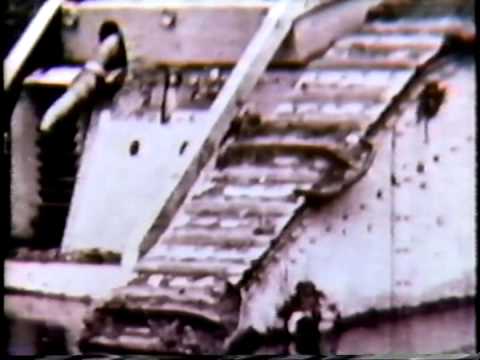
1988 CBC docudrama on Canada's role in WW1. Terence McKenna tours the Battlefields of Ypres, the Somme, Vimy Ridge and Paschendaele. Actors portray several Canadian soldiers in WW1 in re-enactments based on their memoirs, diaries and letters.
Social & External
The people behind it
Terence McKenna
Matilde’s world is turned upside from the death of her beloved grandfather. As his primary caregiver towards the end of his life, Matilde inherits Avo’s store in Toronto's Kensington Market, to the dismay of his two children. Desperate to hold on to her connection with her grandfather, Matilde attempts the stress of business ownership. With Matilde’s mother and uncle disapproving, and her relationship with Annie beginning to take a turn, Matilde has to make some hard choices about what matters most.
A two-hour documentary which recreates for the viewer one of the greatest battles in Canadian military history. The film was made to show that Canadian character at its best, forging an identity for a country that before the First World War had been seen only as a British colony - an identity and a character that became recognized and respected throughout Europe.
Canadian military accomplishments in the last hundred days of World War I, when the German Army was destroyed, surpassed those of any other army. The Canadian success was, in no small measure, due to Arthur Currie, whom a recent British historian describes as "the most successful Allied General and one of the least well known."
Canada was led to war by a bigoted, ignorant, self-obsessed Minister of Militia, who may well have been clinically insane, but the importance of Canada's contribution in that war owes a great deal to him. The man of course, was Colonel - later made Lieutenant General by his own hand - Sam Hughes. Sam's Army is a compelling portrait of a complex man and the formidable military he built. Sam Hughes was not your standard-issue military leader. Canada's World War I Minister of Militia and Defence concentrated power in his own hands, insisted that the Canadian military use the ill-conceived Ross rifle and liberally promoted his cronies. But there was no denying Hughes was a visionary. He assembled the world's largest-ever volunteer army and bucked superiors to keep his ferocious fighting force together in one Canadian Corps.
Sam, an aspiring stand-up comedian and au pair struggling with PTSD, weighs whether to join the search for Brooke, a missing teenage girl she used to nanny. As she fights to recover from her trauma and return to the stage, memories of her deep bond with Brooke rush back—making it impossible to ignore her disappearance.
Nathan Forge, romantic son of a cruel businessman, publishes in a local newspaper a poem about a girl who once befriended him. The girl, a student in a nearby school, reads the poem and recognizes herself. Years pass, and Nathan goes through various hardships, including an unhappy marriage, imprisonment, and the war. Then in Siberia, working for the International Red Cross, he meets the girl who is the subject of his poem and thus achieves happiness. A lost film.
The dashing but arrogant Prince Michael Fedor Lubimoff has to flee Tsarist Russia after falling into disgrace and settles in Monte Carlo, where he resumes his life of debauchery while World War I ravages the fields of Europe… (Partially lost film; reels 3 and 9 of a total of 11 are missing.)
During a theatrical performance featuring puppets glorifying war, a wounded soldier is taken backstage where he unveils the truth about war.
Three US sailors aboard a decoy ship fight German U-boats in World War I and try to win Sally who works on the Coney Island midway.
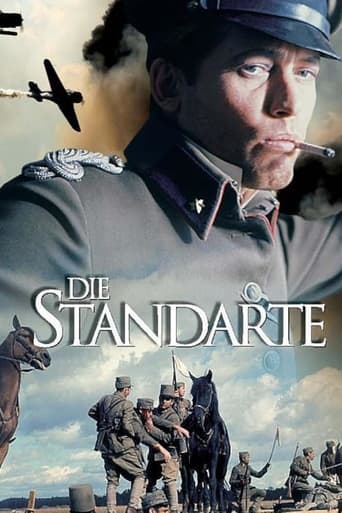
During the final days of the First World War, Officer Menis does his duty in defending the battle flag of the defeated Austro-Hungarian empire, while his fellow troops, a motley gang recruited from several different countries not loyal to the royal family, simply try to survive by any means possible.
In the final days of WWI a shell-shocked soldier must lead a mission deep beneath the trenches to stop a German plot that could turn the tide of the war.
102 Years in the Heart of Europe: A Portrait of Ernst Jünger (Swedish: 102 år i hjärtat av Europa) is a Swedish documentary film from 1998 directed by Jesper Wachtmeister. It consists of an interview by the journalist Björn Cederberg with the German writer, philosopher and war veteran Ernst Jünger (1895-1998). Jünger talks about his life, his authorship, his interests and ideas. The actor Mikael Persbrandt reads passages from some of Jünger's works, such as Storm of Steel, The Worker, On the Marble Cliffs and The Glass Bees.
Mata Hari, die rote Tänzerin (English: Mata Hari: The Red Dancer), often shortened on release to Mata Hari, is a 1927 German silent drama film directed by Friedrich Feher and starring Magda Sonja, Wolfgang Zilzer and Fritz Kortner. It depicts the life and death of the German World War I spy Mata Hari. It was the first feature-length portrayal of Hari.
In a Belgian village during the start of World War I, the Lambert family finds themselves thrust into the heart of the conflict in The Last Front. Leonard Lambert, a devoted husband and father, grapples with protecting his family as German forces advance to their village. Amidst the war, a tender love story blossoms between Adrien Lambert, Leonard's son, and Louise Janssen, a local villager.
Hosted by actor and historian Sir Tony Robinson, this one-off special tells the powerful and moving story of five men, all members of a unique volunteer army – the Sheffield City battalion – as it recounts the soldiers’ last days, leaving their homes and loved ones to go and serve alongside their friends and neighbours, completely unaware of what lay ahead of them. Central to the programme is the story of Private Frank Meakin, who recorded his unique personal testimony of the war. Frank and his friends could never have anticipated what they would experience, but 100 years on we know in detail, thanks to his diary – an account that shouldn’t have existed, because keeping one was forbidden for servicemen on active duty on the Western Front. Frank’s diary, which was smuggled back from the Front, reveals the intimate details and dramatic stories of one battalion – and one British city – in the words of one man.
A young filmmaker is commissioned to write a documentary about the First World War. He tries to find a way to tell the story of the war. What is to be done with all these films waiting in the archives to be shown again? He tries his hand at different styles of writing and editing, keeping in mind the question: can you make a montage film without transforming the images?
A vibrant kaleidoscopic tribute to the guitar that meshes dance, mime, visual art, and virtuoso performances to create a spectacular yet intimate celebration of the instrument. For one exciting week the city of Toronto plays host to the International Guitar Festival. The streets echo with the sounds of the instrument as the great masters from every tradition gather to play for each other -- John Williams from England, Leo Brouwer from Cuba (classical), Turibio Santos from Brazil (folk), Vladimir Mikulka from Czechoslovakia (avant-garde), Rik Emmett and Kim Mitchell from Canada, Steve Morse from the USA (rock).
When an English cartographer arrives in Wales to tell the residents of the Welsh village of Ffynnon Garw that their 'mountain' is only a hill, the offended community sets out to remedy the situation.
Part of the documentary series looking at the course of the First World War. This volume examines the events of 1917, when the Allies launched desperate attacks on the German lines with huge casualties, but with little result. By the end of the year, the Russians had withdrawn from the conflict following the Revolution, while the Americans were slowly becoming involved.
A documentary about World War I with never-before-seen footage to commemorate the centennial of Armistice Day, and the end of the war.
Amid the failing counteroffensive, a journalist follows a Ukrainian platoon on their mission to traverse one mile of heavily fortified forest and liberate a strategic village from Russian occupation. But the farther they advance through their destroyed homeland, the more they realize that this war may never end.
When Sgt. First Class Brian Eisch is critically wounded in Afghanistan, it sets him and his sons on a journey of love, loss, redemption and legacy.
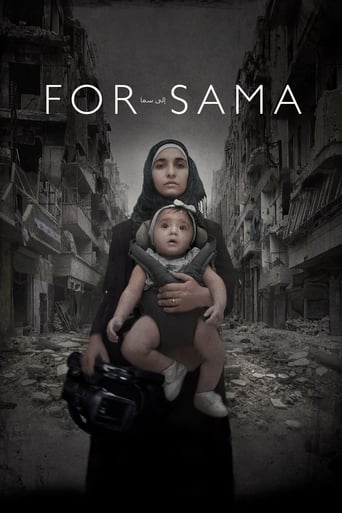
A love letter from a young mother to her daughter, the film tells the story of Waad al-Kateab’s life through five years of the uprising in Aleppo, Syria as she falls in love, gets married and gives birth to Sama, all while cataclysmic conflict rises around her. Her camera captures incredible stories of loss, laughter and survival as Waad wrestles with an impossible choice– whether or not to flee the city to protect her daughter’s life, when leaving means abandoning the struggle for freedom for which she has already sacrificed so much.
Prelude to War was the first film of Frank Capra's Why We Fight propaganda film series, commissioned by the Pentagon and George C. Marshall. It was made to convince American troops of the necessity of combating the Axis Powers during World War II. This film examines the differences between democratic and fascist states.
“The Soviet Story” is a story of an Allied power, which helped the Nazis to fight Jews and which slaughtered its own people on an industrial scale. Assisted by the West, this power triumphed on May 9th, 1945. Its crimes were made taboo, and the complete story of Europe’s most murderous regime has never been told. Until now...
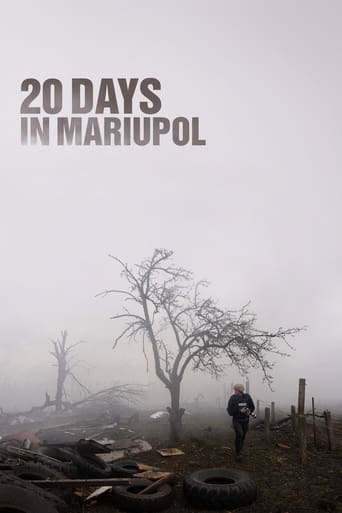
As the Russian invasion begins, a team of Ukrainian journalists trapped in the besieged city of Mariupol struggle to continue their work documenting the war's atrocities.
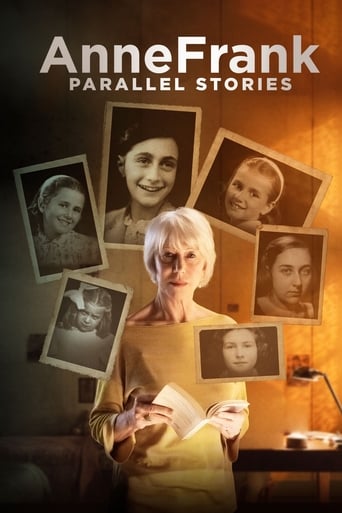
One single Anne Frank moves us more than the countless others who suffered just as she did but whose faces have remained in the shadows-Primo Levi. The Oscar®-winning Helen Mirren will introduce audiences to Anne Frank's story through the words in her diary. The set will be her room in the secret refuge in Amsterdam, reconstructed in every detail by set designers from the Piccolo Theatre in Milan. Anne Frank this year would have been 90 years old. Anne's story is intertwined with that of five Holocaust survivors, teenage girls just like her, with the same ideals, the same desire to live: Arianna Szörenyi, Sarah Lichtsztejn-Montard, Helga Weiss and sisters Andra and Tatiana Bucci. Their testimonies alternate with those of their children and grandchildren.
With unprecedented access, this documentary follows the extraordinary journey of “Raqqa is Being Slaughtered Silently”—a group of anonymous citizen journalists who banded together after their homeland was overtaken by ISIS—as they risk their lives to stand up against one of the greatest evils in the world today.
Set both in Latin America and the United States, the film explores the historic and current relationship of Washington with countries such as Venezuela, Bolivia and Chile. Pilger says that the film "...tells a universal story... analysing and revealing, through vivid testimony, the story of great power behind its venerable myths. It allows us to understand the true nature of the so-called "war on terror". According to Pilger, the film’s message is that the greed and power of empire is not invincible and that people power is always the "seed beneath the snow".
Over a period of two years, Mark Cowen and his crew travelled to thirty U.S. states and ten European cities, to interview the veterans of Easy Company. The stories told by the veterans themselves, create a history of the Second World War from the point of view of this heroic company of men, made famous in the mini-series Band of Brothers.
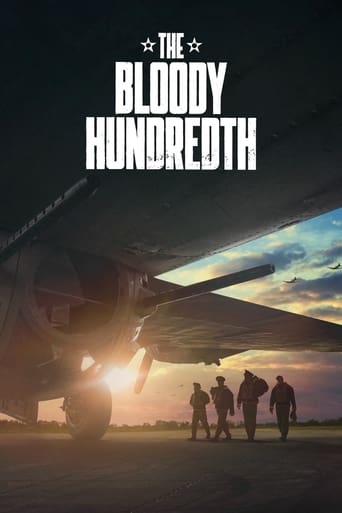
Meet the real-life airmen who inspired Masters of the Air as they share the harrowing and transformative events of the 100th Bomb Group.
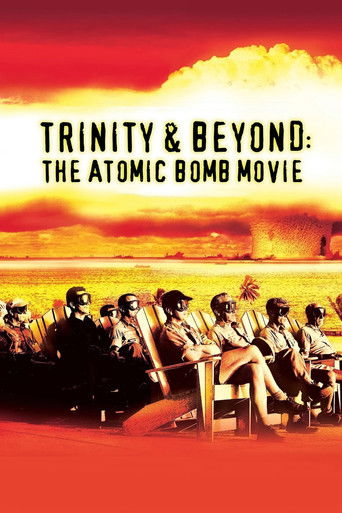
"Trinity and Beyond" is an unsettling yet visually fascinating documentary presenting the history of nuclear weapons development and testing between 1945-1963. Narrated by William Shatner and featuring an original score performed by the Moscow Symphony Orchestra, this award-winning documentary reveals previously unreleased and classified government footage from several countries.
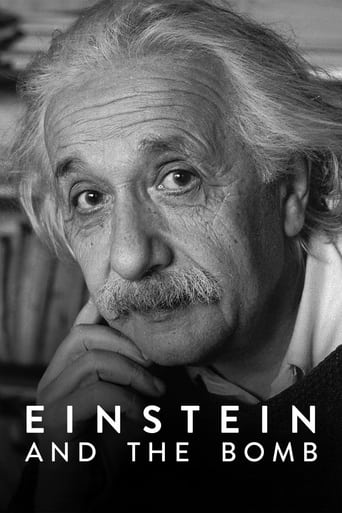
What happened after Einstein fled Nazi Germany? Using archival footage and his own words, this docudrama dives into the mind of a tortured genius.
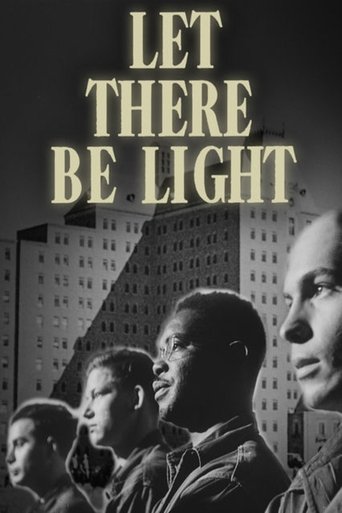
The final entry in a trilogy of films produced for the U.S. government by John Huston. Some returning combat veterans suffer scars that are more psychological than physical. This film follows patients and staff during their treatment. It deals with what would now be called PTSD, but at the time was categorised as psychoneurosis or shell-shock. Government officials deemed this 1946 film counterproductive to postwar efforts; it was not shown publicly until 1981.
Against the darkening backdrop of New Delhi's apocalyptic air and escalating violence, two brothers devote their lives to protecting one casualty of the turbulent times: the bird known as the black kite.
This documentary movie is about the battle of San Pietro, a small village in Italy. Over 1,100 US soldiers were killed while trying to take this location, that blocked the way for the Allied forces from the Germans. Preserved by the Academy Film Archive in 2005.
Korengal picks up where Restrepo left off; the same men, the same valley, the same commanders, but a very different look at the experience of war.
Director James Toback takes an unflinching, uncompromising look at the life of Mike Tyson--almost solely from the perspective of the man himself. TYSON alternates between the controversial boxer addressing the camera and shots of the champion's fights to create an arresting picture of the man.
The documentary recounts the world's first nuclear attack and examines the alarming repercussions. Covering a three-week period from the Trinity test to the atomic bombing of Hiroshima, the program chronicles America's political gamble and the planning for the momentous event. Archival film, dramatizations, and special effects feature what occurred aboard the Enola Gay (the aircraft that dropped the bomb) and inside the exploding bomb.