Social & External
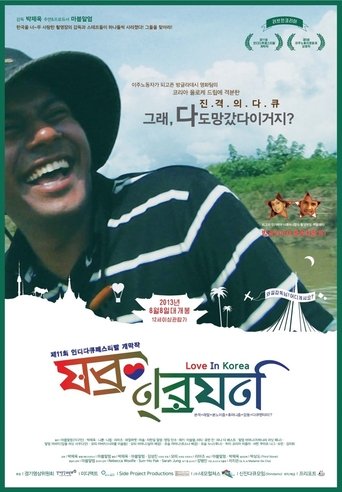
The director's father, who did not know how to use a computer, left her an autobiography via email. It includes his whole life through many notable events such as the Korean War, the Vietnam War, 88's Seoul Olympic, New Town Development, etc.
Following the tradition of military service in her family, Alene Duerk enlisted as a Navy nurse in 1943. During her eventful 32 year career, she served in WWII on a hospital ship in the Sea of Japan, and trained others in the Korean War. She became the Director of the Navy Nursing Corps during the Vietnam War before finally attaining the rank of Admiral in the U.S. Navy. Despite having no other women as mentors (or peers), Admiral Duerk always looked for challenging opportunities that women had not previously held. Her consistently high level of performance led to her ultimate rise to become the first woman Admiral.
According to a survey by the U.S. military government in 1946, 78% of the South Korean people wanted socialism and only 14% capitalism. By appointing the pro-Japanese collaborators and the rightists, Rhee Syngman, who had not received the people's support, massacred those groups and civilians that were political stumbling blocks. In dealing with the Jeju 4.3 uprising in 1947 and the Yeosun incident in 1948 and The Korean War having broken out, massive civilian massacre became regularized.
Documentary about the struggle of the people of Jeju Island, South Korea. Set in the context of the U.S. presence in Korea after World War II, the film reveals horrible atrocities at the hands of the U.S. Military Government of Korea.
One year after the Korean War, the conflict had reached a stalemate. The two opposing forces began to search for a way to end the grueling war of attrition, eventually settling on a modest village called ‘Pan Mun Jom’ near Gaeseong as the designated site for negotiations. Despite initial hopes for a quick resolution, the negotiating parties encountered obstacles that prevented an agreement. Disputes over the military demarcation line and the repatriation of prisoners of war thwarted their efforts. The film peels back the layers to reveal the untold story of Pan Mun Jom, shedding light on a history that has remained hidden until now.
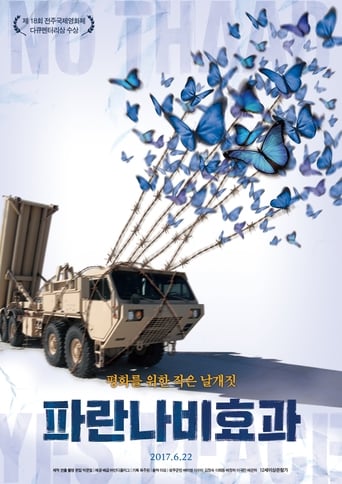
The small county of Seongju staged protests against the THAAD. Young mothers led protests from concerns about their kids and the exposure to radiation. Gradually, they learn the system is faulty.
Let's look back at the 18th presidential vote. The 13,500 ballot boxes were taken to 251 ballot count locations and were sorted by 1,300 automatic ballot openers. The chairman announced the sorted data and soon it was announced to the public. But something strange happened. The 251 ballot count locations found 'a number' that have the same pattern. Scientists, mathematicians, statistician and hackers from all over the country start looking into the secret of 'this number'. The result is tremendously shocking...
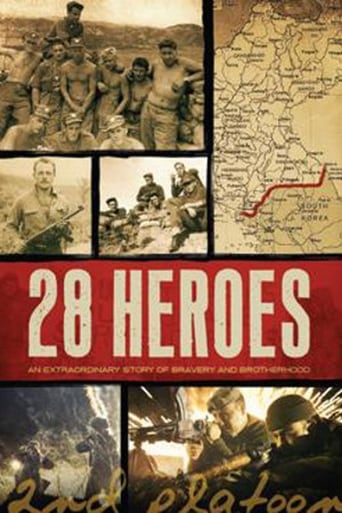
An amazingly harrowing story of the 17 day engagement of bloody combat and heroic survival in subartic temperatures. UN forces largely outnumbered and surrounded, due to a surprise attack led by 120,000 Chinese troops.
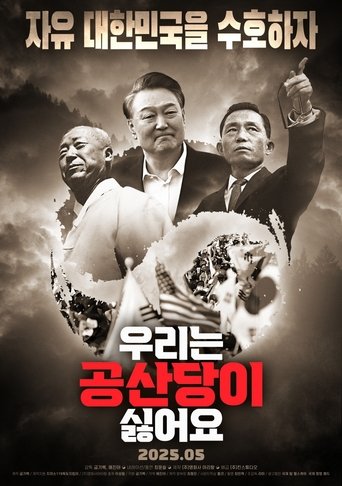
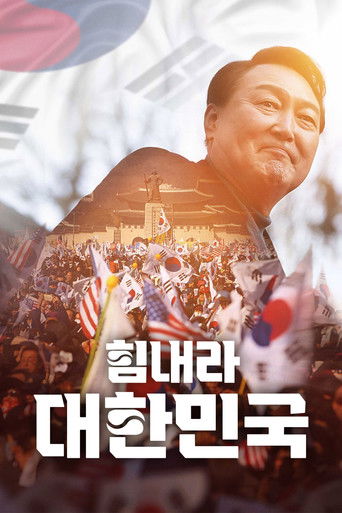
Since South and North Korea's liberation in 1945, North Korea, a communist dictatorship that suppresses freedom and oppresses human rights, and South Korea, which has entered the path of economic prosperity and advanced countries based on freedom and democracy, have taken different paths. How did the two countries with the same language, history, and race, become divided into two extreme countries? A work that highlights the sacrifices and struggles of President Syngman Rhee and the first generation of founding members who worked to create and protect today's Republic of Korea over the past 70 years of history.
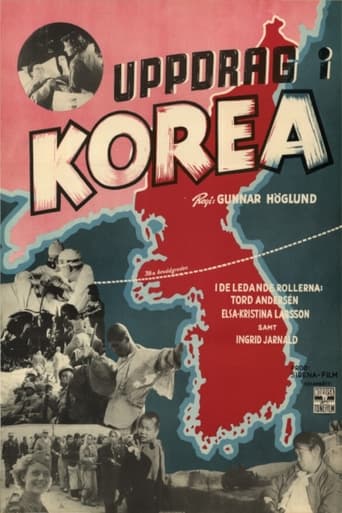
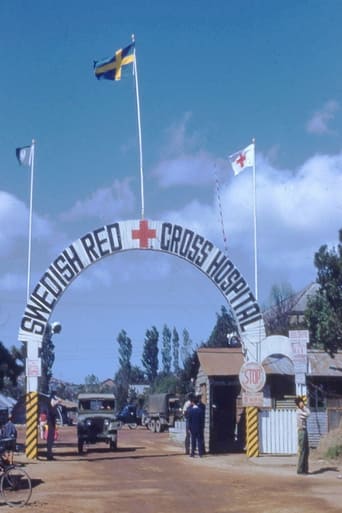
Swedish journalist visits Korea to report on the situation during the war
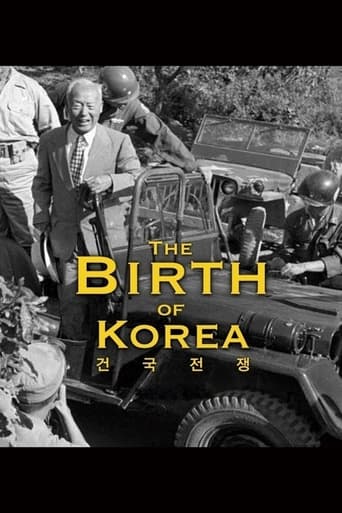
A documentary film covering the life of President Syngman Rhee and the contributions he made to the Republic of Korea, spanning his childhood, focusing on his independence movement, the founding of the nation, the process of leading to victory in the Korean War, and the process of laying the foundation for Korea's industrialization.
After my grandfather 's Baek-su (age 99’s birthday party) banquet, asking me to write an autobiography for him. Two years later, he passed away and left his favor as homework to me. I discovered the history of the past that I could not associate with his name. As a filmmaker, I frequently attended burials that were far from my life. I have been living in the United States for a while, and I have often come to think about the country and nationality.
Eunmi, a woman who underwent intense anti-communist education while she grew up in South Korea, lives a normal life in America. However, after going on a trip to North Korea with her husband, her life begins to change. During an open forum event in South Korea, where she was invited to speak, she suffers the unimaginable, and the more she tries to escape from the situation, the worse and worse it gets.
Explore the history of the world's most famous battleship, the USS Missouri, with this revealing documentary that chronicles the ship's distinguished career that spanned more than 50 years of service. Narrated by decorated Navy officer Wes Carey, this portrait combines archival film footage, photographs and personal accounts to paint a vivid picture of the celebrated ship, affectionately known as "Mighty Mo."
On April 24, 1951, following a rout of the South Korean army, the Chinese People Volunteer Army pursued their enemy to the lines of Australian and Canadian troops still digging fall-back defences, 39 kilometres to the rear. Here, sometimes at the length of a bayonet, often in total darkness, individual was pitted against individual in a struggle between a superpower and a cluster of other nations from across the world. They fought for a valley, the ancient and traditional invasion route to Seoul. If it fell the southern capital and the war, was lost. The United Nations troops had the military advantage of the high ground and artillery support: the Chinese relied entirely on vastly superior numbers. As a result, young men from both sides found a battle which was very close and very personal. The Battle of Kapyong became the turning point of China's Fifth Offensive in that Korea spring... Written by John Lewis
They speak the same language, share a similar culture and once belonged to a single nation. When the Korean War ended in 1953, ten million families were torn apart. By the early 90s, as the rest of the world celebrated the end of the Cold War, Koreans remain separated between North and South, fearing the threat of mutual destruction. Beginning with one man's journey to reunite with his sister in North Korea, filmmakers Takagi and Choy reveal the personal, social and political dimensions of one of the last divided nations on earth. The film was also the first US project to get permission to film in both South & North Korea.
The movie, which seemed likely to be a video study by a local researcher on comfort women in the military camp town, is becoming an increasingly fictional world, including visits by the dead, resulting in historical, fantastic and allegorical results.
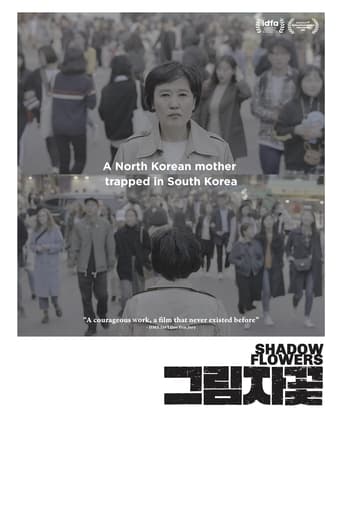
Ryun-hee Kim, a North Korean housewife, was forced to come to South Korea and became its citizen against her will. As her seven years of struggle to go back to her family in North Korea continues, the political absurdity hinders her journey back to her loved ones. The life of her family in the North goes on in emptiness, and she fears that she might become someone, like a shadow, who exists only in the fading memory of her family.
When Allied forces liberated the Nazi concentration camps in 1944-45, their terrible discoveries were recorded by army and newsreel cameramen, revealing for the first time the full horror of what had happened. Making use of British, Soviet and American footage, the Ministry of Information’s Sidney Bernstein (later founder of Granada Television) aimed to create a documentary that would provide lasting, undeniable evidence of the Nazis’ unspeakable crimes. He commissioned a wealth of British talent, including editor Stewart McAllister, writer and future cabinet minister Richard Crossman – and, as treatment advisor, his friend Alfred Hitchcock. Yet, despite initial support from the British and US Governments, the film was shelved, and only now, 70 years on, has it been restored and completed by Imperial War Museums under its original title "German Concentration Camps Factual Survey".
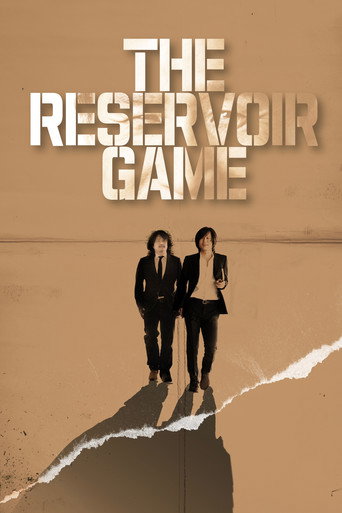
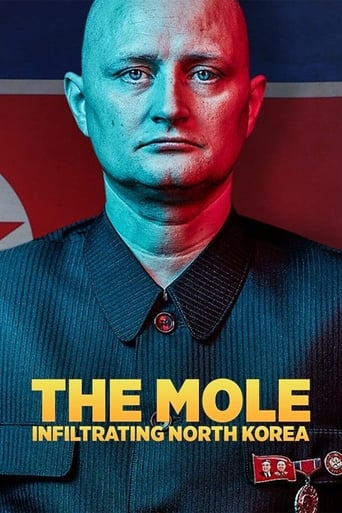
A real-life undercover thriller about two ordinary men who embark on an outrageously dangerous ten-year mission to penetrate the world's most secretive and brutal dictatorship: North Korea.
A documentary that explores the downloading revolution; the kids that created it, the bands and the businesses that were affected by it, and its impact on the world at large.
From set designs to character arcs, get exclusive cast and director interviews on how Season 2 of the globally most-watched series was brought to life.
JB Smoove and Martin Starr host a celebration of 20 years of "Spider-Man" movies, from the Sam Raimi trilogy to Marc Webb's movies and the trio from Jon Watts.
The life and career of one of comedy's most inimitable modern voices, Mr. Gilbert Gottfried.
Brilliant, long in-the-works story of the life and art of the world's greatest comedian and the cinema's first genius, Charlie Chaplin. Produced, written and directed by renowned film critic Richard Schickel.
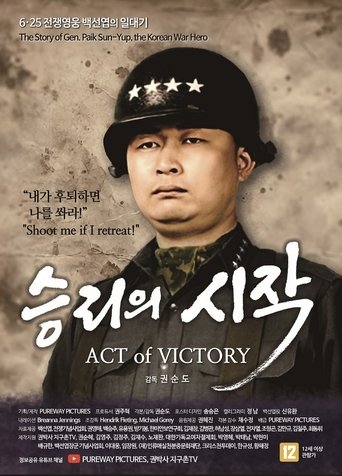
In August 1950, waiting for UN troops to arrive, the South Korean army assembled to protect Nakdong River. Only 71 student-soldiers are left behind to guard the city of Pohang. Now they are on a mission to defend the country from North Korean troops.
Alex Gibney explores the charged issue of pedophilia in the Catholic Church, following a trail from the first known protest against clerical sexual abuse in the United States and all way to the Vatican.
In this true story from 2002, South Korean patrol boats engaged in a deadly battle with North Korean patrol boats who crossed the maritime border known the Northern Limit Line and attacked.
A documentary focused on plastic pollution in the world's oceans.
“Showrunners” is the first ever feature length documentary film to explore the fascinating world of US television showrunners and the creative forces aligned around them. These are the people responsible for creating, writing and overseeing every element of production on one of the United State’s biggest exports – television drama and comedy series. Often described as the most complex job in the entertainment business, a showrunner is the chief writer / producer on a TV series and, in most instances, the show’s creator. Battling daily between art and commerce, showrunners manage every aspect of a TV show’s development and production: creative, financial and logistical.
A documentary about the making of season five of the acclaimed AMC series Breaking Bad.
The most comprehensive retrospective of the '80s action film genre ever made.
Al Pacino's deeply-felt rumination on Shakespeare's significance and relevance to the modern world through interviews and an in-depth analysis of "Richard III."
When Sgt. First Class Brian Eisch is critically wounded in Afghanistan, it sets him and his sons on a journey of love, loss, redemption and legacy.
Those who knew iconic funnyman John Candy best share his story, in their own words, through never-before-seen archival footage, imagery, and interviews.
Documentary of the making of the sequel to the popular Schwarzenegger film, The Terminator.
Prelude to War was the first film of Frank Capra's Why We Fight propaganda film series, commissioned by the Pentagon and George C. Marshall. It was made to convince American troops of the necessity of combating the Axis Powers during World War II. This film examines the differences between democratic and fascist states.
Jung-yoon was approached by a random stranger named Jun-woo, who told her she'd be dead in six hours. As she follows him for answers, she begins to question whether he's her savior or the one trying to put her in danger.