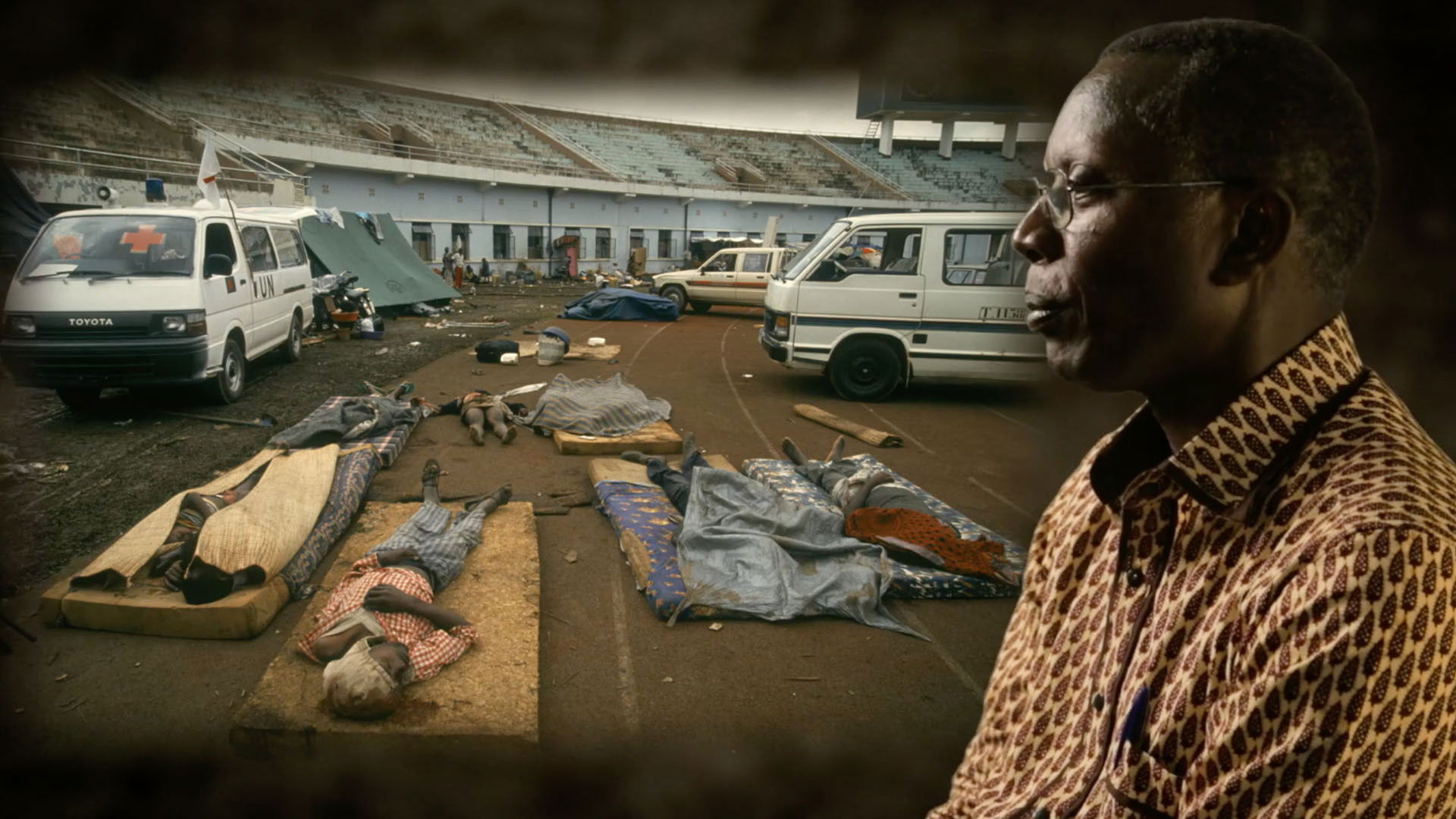
The story of 600 men who protected and rescued civilians during the Rwandan genocide before helping to liberate their country in 1994.
Social & External
A documentary on the ecological consequences of warfare in Bosnia, Sudan and Iraq.
Register a popular celebration related to a battle fought in the city of Irani, starting point of Contestado War at Santa Catarina State, Brazil in 1912.
Born in Austria in 1903, Jacob Rosenfeld was imprisoned in Dachau. He manages to flee and takes refuge in Shanghai, like 30,000 other people. He exercised his profession there and sought to get involved in 1941 alongside the revolutionaries of the Chinese Communist Party. Rosenfeld becomes a surgeon on the war front between China and Japan. Thanks to his talents as a doctor and an organizer, he soon became close to Mao Tsé-Toung. In 1945, he was appointed general, responsible for the health of the armies and the entire liberated area. He is now called General Luo. Later, he became the Minister of Health of the first communist government. Thanks to his journal found in 2001, this documentary traces its extraordinary destiny.
An anti-war film about the personal suffering behind the hard statistics, which show that more than four million Vietnamese died during the Vietnam War, as opposed to 58,000 Americans. We hear South and North Vietnamese, including émigrés to the United States, describing how huge numbers of friends met their deaths, caught as they were between government forces, the Vietcong, and the Americans; how political boundaries divided not only the country, but also families; how mothers deserted their children because their fathers were American soldiers; and how the war cruelly lingers on long after hostilities ceased, in the lives of children born crippled by chemical weapons.
For many, the name Malvinas/Falklands evokes an absurd war between England and Argentina in 1982. For Julieta Vitullo, the protagonist of this film, this tragic history becomes deeply personal 25 years later when she suffers a loss associated with her search to uncover that past, unfolding into a life-affirming struggle for renewal and rebirth. This film tells the story of two trips, one made in 2006 and the other in 2010. In the space between one trip and the next, between past and present, between the public and the private, between what can and cannot be told, the movie reflects on the possibilities of conveying extreme life experiences, presenting landscapes and sounds that suggest subtle contours of that shape, 'The Exact Shape of the Islands.'
In 2010 the Freedom Flotilla attempts to break the Israeli blockade of Gaza. In international waters the flotilla is attacked by the Israeli army and 9 people are killed. 9 anonymous people. But the dead still have a name. In 2014 Gaza is attacked by Israel. 2131 Palestinians are killed, among them 513 children. 513 dead children. But the dead children still have names. The film is about a Jewish person who has made a political journey from the Vietnam war to Gaza. This person is the paediatrician Henry Ascher, who lost his fathers entire family in the Holocaust.
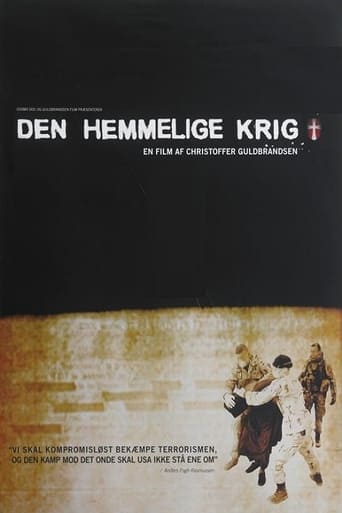
Controversal documentary focusing on events in Afghanistan in 2002 in which Danish soldiers handed over prisoners to the US Army even though USA no longer treated prisoners of war according to the Geneva Convention. Further, the film questions the Danish Prime Minister's reasons for getting Denmark involved in the so-called War Against Terrorism in Afghanistan in the first place.
One of our biggest music stars Gary Barlow faces his toughest gig when he heads to the harsh terrain of Afghanistan to perform an exclusive concert for British troops.
A poignant documentary about the history of a family haunted by World War II. On the basis of archive material, documents left behind by her great-aunt Ro Miller and stories told by her father Eli Asser, Hella de Jonge reconstructs what happened to her family during, before and after the war. How they became aware of the danger, how they fled, how they hid, how they survived and how they died. And how, after the war was over, it continued to weigh on their lives. In Hella’s words, “The doctor advised my mother to have children, to help cope with the incredible loss.” A portrait of her grandmother, who died in the war, still hangs in her father’s living room. The filmmaker’s relationship with him has always been difficult. Fragments of memory never before discussed run together during an emotional journey embarked upon together by father and daughter to places of significance in the history of their family.
Music elates, touches the soul and bypasses reason. Music is magic. But precisely this magic can turn it into an insidious weapon for music and violence belong together. The brutal power of African war dances, the ferocity of Maori Hakas, the earth-shattering roar of US sound guns blasting Metallica at Taliban hideouts the principle is always the same: Aggressive sounds demoralise the enemy and whip the allies into a frenzy. In Songs of War, director Tristan Chytroschek explores the extraordinary harmony between music and violence. Sesame Street composer, Christopher Cerf, always wanted his music to be fun and entertaining. But then he learned that his songs had been used to torture prisoners in Guantanamo and Abu Ghraib. He is stunned by this abuse of his work and wants to find out how this could happen.
This documentary tries to capture the fresh sense of triumph in the eyes of the Egyptian soldiers after the 1973 war with Israel.
Journalists Johan Persson and Martin Schibbye talk about the horrendous days in the desert, rail executions and false terror charges. They were arrested before they could report on the violence in the closed state of Ogaden. But the Ethiopian regime failed to silence them. With the help of never-before-seen video material and testimonies smuggled out of the country by a high ranking official, the whole story can finally be told. About Johan and Martin. About the violence in Ogaden. And about the prisoners of dictatorship.
As an unwavering natural force, Maj Wechselmann produces at least one film a year, which is guaranteed to show troublesome connections between established power structures and maladjustments for people further down the hierarchy of society; this time through the Swedish Television photographer Claes-Göran Bjernér's fascinating fate of life. Bjernér, who reported from 23 wars in 83 countries, had his lungs injured for life in the poison gas disaster in Bhopal, India in 1984. The film begins with him almost dying several times, but miraculously returning to life. In interviews and archival photos, he shares his unique first-hand experiences of war, violence and corruption. A glowing agitation to never stop demanding responsibility for the world's tragedies.
Two years after the Six Day War (1967), doctors at an Israeli hospital try to save the lives of an Arab terrorist and Israeli officer just brought in after a border clash.
What is it really like to go to war? Filled with terror, pain, and grief, it also brings exhilaration, and a profound sense of purpose. Renowned authors Karl Marlantes and Sebastian Junger help us make sense of this paradox and get to the heart of what it’s like to be a soldier at war. Veterans of various conflicts reveal some universal truths of combat with unflinching candor.
News from the troubled Korean peninsula comes frequently and often deals with the risks of new fighting between North and South Korea. But between the two there is a zone where the wild got a chance and where rare animals can live on in the shadow of all weapons.
For two decades, the victims of the Six-Day War have been fighting in Kisangani for the recognition of this bloody conflict and demanding compensation. Tired of unsuccessful pleas, they have finally decided to voice their claims in Kinshasa, after a long journey on the Congo River.