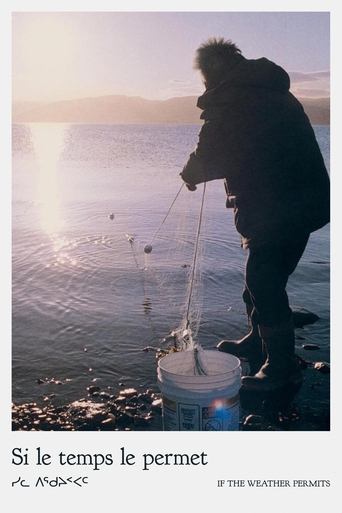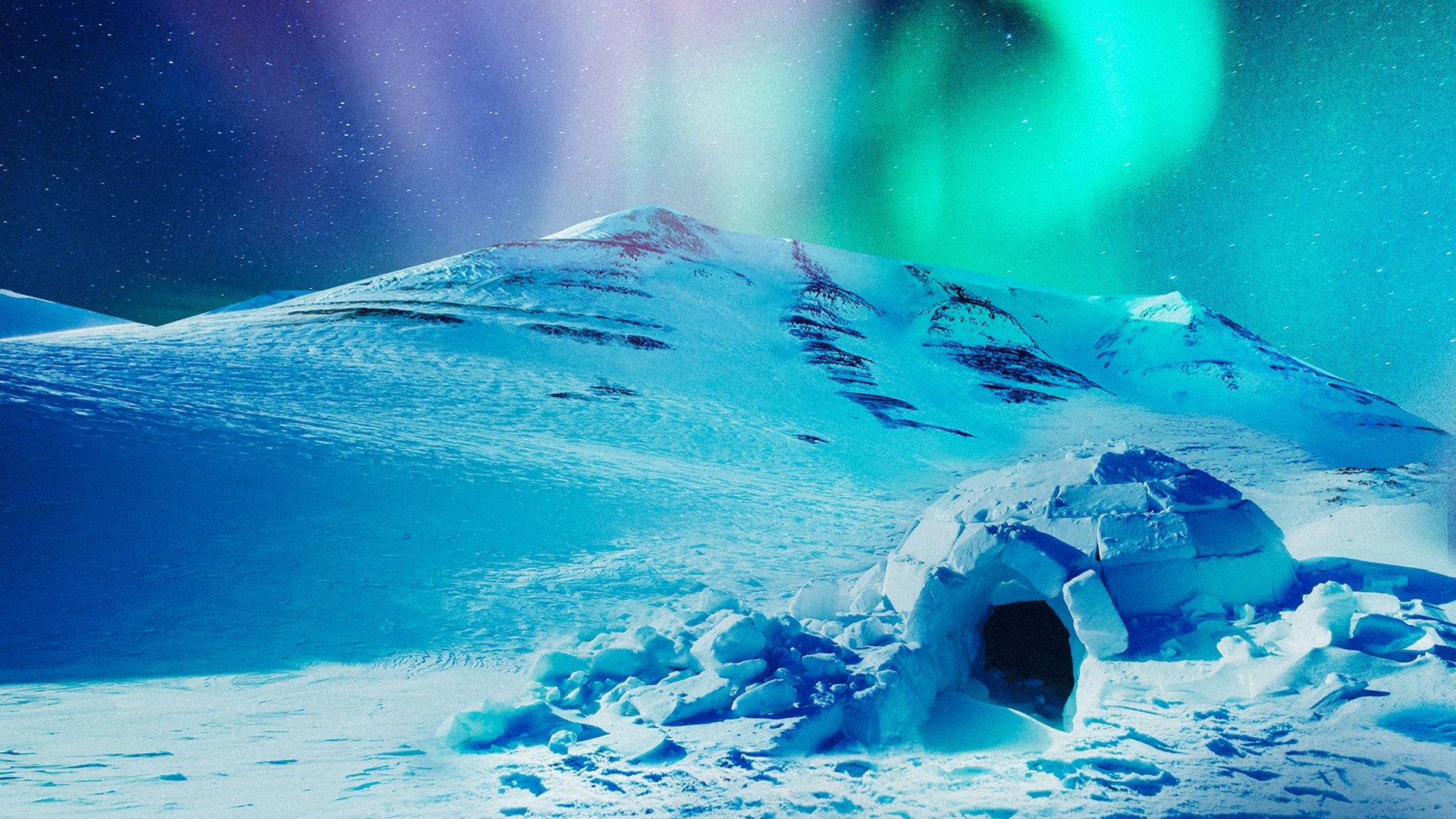
Documentary that follows a lone Inuit as he hunts, fishes and constructs an igloo, a way of life threatened by climate change.
Social & External
This pioneering documentary film depicts the lives of the indigenous Inuit people of Canada's northern Quebec region. Although the production contains some fictional elements, it vividly shows how its resourceful subjects survive in such a harsh climate, revealing how they construct their igloo homes and find food by hunting and fishing. The film also captures the beautiful, if unforgiving, frozen landscape of the Great White North, far removed from conventional civilization.
One day in the lives of an average Greenlandic family, which happens to be of great importance for 8-year old Kali - he's about to catch his first prey with the harpoon. The whole family is looking forward for the huge step in boy's maturation.
The first of two coproductions by the British Broadcasting Corporation and the National Film Board of Canada, People of the Seal, Part 1: Eskimo Summer is compiled from some of the most vivid footage ever filmed of the life of the Netsilik Inuit in the Kugaaruk region (formerly Pelly Bay) of the Canadian Arctic. The original films of the Netsilik series attempted to recreate the traditional lifestyle of Netsilingmiut living there. They show the incredible resourcefulness of the Netsilik (People of the Seal) who have adapted to one of the world's harshest environments. Part 1: Eskimo Summer shows how Inuit families prepare for winter by hunting seal, birds and caribou and by fishing for Arctic Char during the extended hours of daylight.
"Melting Lives - Victims of the New Weather" is a six-part documentary series in which the viewers meet people in the Arctic region who live close to and depend on nature for survival, and who struggle to maintain their way of life. Their tales are being heard and testimonies about how life is changing as the world gets ever warmer. The host, Samuel Idivuoma, is from northern Sweden. He visits Inuits on Greenland and in Alaska, aboriginal people in Canada and Nenets from the Siberian tundra in Russia
Every winter for decades, the Northwest Territories, in the Canadian Far North, changes its face. While the landscape is covered with snow and lakes of a thick layer of ice, blocking land transport, ice roads are converted to frozen expanses as far as the eye can see.
This short documentary depicts the formation in 1959 of the first successful co-operative in an Inuit community in Northern Québec. The film describes how, with other Inuit of the George River community, the Annanacks formed a joint venture that included a sawmill, a fish-freezing plant and a small boat-building industry.
This short documentary looks at the government relocation of the Labrador Inuit and the effects on their culture and social structures.
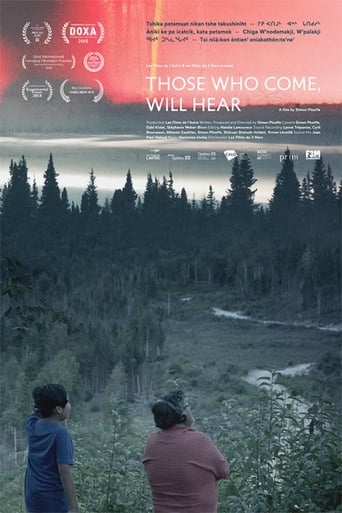
The documentary proposes a unique meeting with the speakers of several indigenous and inuit languages of Quebec – all threatened with extinction. The film starts with the discovery of these unsung tongues through listening to the daily life of those who still speak them today. Buttressed by an exploration and creation of archives, the film allows us to better understand the musicality of these languages and reveals the cultural and human importance of these venerable oral traditions by nourishing a collective reflection on the consequences of their disappearance.
In the early 1960s the Canadian government conducted an experiment in social engineering. Three young Inuit boys were separated from their families in the Arctic and were sent to Ottawa, the nation's capital, to live with white families and to be educated in white schools. The consequences the experiment would have on the boys, their identity and culture was brushed aside. The bureaucrats did not anticipate the outcome. The three grow up to be political activists and leaders - often at odds with the government that brought them south. They establish aboriginal rights in Canada and are instrumental in the creation of Nunavut, the world's largest self-governed aboriginal territory. But it all comes at a tremendous personal cost. Peter Ittinuar, Zebedee Nungak, and Eric Tagoona recount their stories, achievements and challenges in this film about an attempt at assimilation, empowerment, and the triumph of the human spirit.
Inuit traditional face tattoos have been forbidden for a century, and almost forgotten. Director Alethea Arnaquq-Baril, together with long-time friend and activist Aaju Peter, is determined to uncover the mystery and meaning behind this beautiful ancient tradition. Together they embark on an adventure through Arctic communities, speaking with elders and recording the stories of a once popularized female artform. Central to the film is Arnaquq-Baril’s personal debate over whether or not to get tattood herself. With candour and humour, she welcomes us into her world, to experience firsthand the complex emotions that accompany her struggle. Past meets present in this intimate account of one woman’s journey towards self-empowerment and cultural understanding.
Greenland, a semi-autonomous territory of Denmark, is currently at the center of international covetousness and tensions. In his rivalry with China for technological supremacy, Donald Trump has made the acquisition of this Arctic territory a priority in order to secure American control over rare earth elements, of which Greenland is believed to hold one of the world's largest reserves.
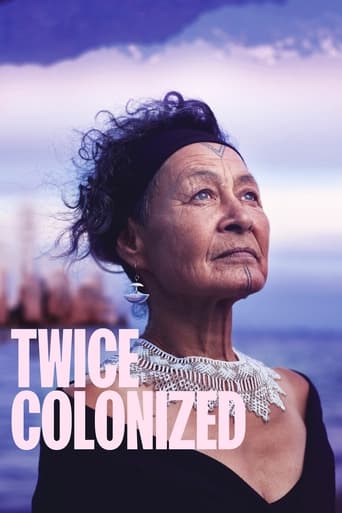
Renowned Inuit lawyer Aaju Peter has long fought for the rights of her people. When her son suddenly dies, Aaju embarks on a journey to reclaim her language and culture after a lifetime of whitewashing and forced assimilation. But can she both change the world and mend her own wounds?
Red Fever is a witty and entertaining feature documentary about the profound -- yet hidden -- Indigenous influence on Western culture and identity. The film follows Cree co-director Neil Diamond as he asks, “Why do they love us so much?!” and sets out on a journey to find out why the world is so fascinated with the stereotypical imagery of Native people that is all over pop culture. Why have Indigenous cultures been revered, romanticized, and appropriated for so long, and to this day? Red Fever uncovers the surprising truths behind the imagery -- so buried in history that even most Native people don't know about them.
The world knows the image of the good Canadian. But what if there was a dark secret behind a national identity? THE GOOD CANADIAN exposes the truth behind the idea of a True North strong and free. In this unflinching and eye-opening documentary, directors Leena Minifie and David Paperny move us through the corridors of systemic inequity, from the Indian Act to residential schools, to modern-day family separation. Fusing shocking footage with detailed interviews with experts, advocates, whistleblowers and politicians, THE GOOD CANADIAN challenges national myth-making, while offering Canadians the chance to forge a new identity from the truth.
Nearly forty years after the moon landing the men on the mission reveal what really happened. On how close the mission came to disaster.
This short documentary studies life in the village of Kangirsujuaq, Nunavik. In this community on the edge of the Arctic Ocean, children’s laughter fills the streets while the old people ponder the passage of time. They are nomads of the wide-open spaces who are trying to get used to the strange feeling of staying put. While the teenagers lap up Southern culture and play golf on the tundra to kill time, the Elders are slowly dying, as their entire culture seems to fade away. Elisapie Isaac, a filmmaker born in Nunavik, decides to return to her roots on this breathtaking land. To bridge the growing gap between the young and the old, she speaks to her grandfather, now deceased, and confides in him her hopes and fears. Grappling with isolation, family relationships, resource extraction, land-based knowledges, the influence of Southern culture and the ongoing impacts of colonialism on Inuit ways of life, Elisapie Isaac offers a nuanced portrait of the North.
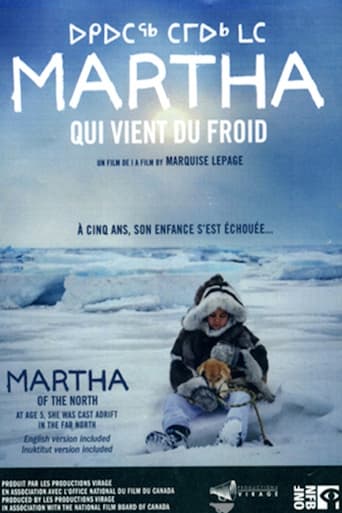
In the mid-1950s, lured by false promises of a better life, Inuit families were displaced by the Canadian government and left to their own devices in the Far North. In this icy desert realm, Martha Flaherty and her family lived through one of Canadian history’s most sombre and little-known episodes.
Through the unrelenting winter in the north of Japan, a small group of workers must brave unusual working conditions to bring to life a 2,000-year-old tradition known as sake. A cinematic documentary, The Birth of Sake is a visually immersive experience of an almost-secret world in which large sacrifices must be made for the survival of a time-honored brew.
After traveling the globe to highlight low-tech, Corentin de Chatelperron has set himself a new challenge: to live independently, alone for four months, on a bamboo raft floating in Phang Nga Bay, Thailand. On his 70 square meter platform, the engineer, passionate about ecology and system D, puts into practice what he has learned in order to feed himself and produce his own energy.
Dick Proenneke retired at age 50 in 1967 and decided to build his own cabin in the wilderness at the base of the Aleutian Peninsula, in what is now Lake Clark National Park. Using color footage he shot himself, Proenneke traces how he came to this remote area, selected a homestead site and built his log cabin completely by himself. The documentary covers his first year in-country, showing his day-to-day activities and the passing of the seasons as he sought to scratch out a living alone in the wilderness.
A detailing of the rise to prominence and global sporting superstardom of six supremely talented young Manchester United football players (David Beckham, Nicky Butt, Ryan Giggs, Paul Scholes, Phil and Gary Neville). The film covers the period 1992-1999, culminating in Manchester United's European Cup triumph.
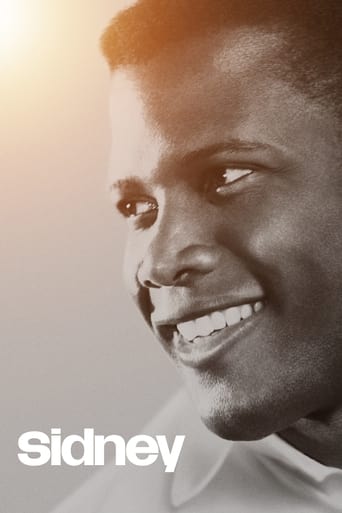
This revealing documentary honors the legendary Sidney Poitier—iconic actor, filmmaker, and civil rights activist. Featuring interviews with Denzel Washington, Spike Lee, Halle Berry, and more.
Lyrical and powerfully personal essay film that reflects on the deaths of her husband Lou Reed, her mother, her beloved dog, and such diverse subjects as family memories, surveillance, and Buddhist teachings.
A journey inside the world of real life caped crusaders. From all over America, these self-proclaimed crime fighters, don masks, homemade costumes and elaborate utility belts in an attempt to bring justice to evildoers everywhere.
The true history of a collection of some 500 films dating from 1910s to 1920s, which were lost for over 50 years until being discovered buried in a sub-arctic swimming pool deep in the Yukon Territory, in Dawson City, located about 350 miles south of the Arctic Circle.
The Captains is a feature-length documentary film written and directed by William Shatner. The film follows Shatner as he interviews the other actors who have portrayed starship captains in the Star Trek franchise.
A Victorian gentleman hopes to find his long-lost son, who vanished while searching for a mysterious Viking community in a volcanic valley somewhere in uncharted Arctic regions. The gentleman puts together an expedition team to go on the search, but when they reach their destination they must escape from some Viking descendants who will kill to keep their existence a secret.
Adventure awaits 12 year old Brendan who must fight Vikings and a serpent god to find a crystal and complete the legendary Book of Kells. In order to finish Brother Aiden's book, Brendan must overcome his deepest fears on a secret quest that will take him beyond the abbey walls and into the enchanted forest where dangerous mythical creatures hide. Will Brendan succeed in his quest?
A presentation of a case for a needed transition out of the current socioeconomic monetary paradigm which governs the entire world society. This subject matter will transcend the issues of cultural relativism and traditional ideology and move to relate the core, empirical 'life ground' attributes of human and social survival, extrapolating those immutable natural laws into a new sustainable social paradigm called a 'Resource-Based Economy'.
An exploration of technologically developing nations and the effect the transition to Western-style modernization has had on them.
Interviews with leading authors, philosophers and scientists, with an in-depth discussion of the Law of Attraction. The audience is shown how they can learn and use 'The Secret' in their everyday lives.
Roddy McDowall takes you, film by film, from production meetings to make-up sessions, then right onto the movie set to see the actual filming of the science fiction masterpiece. The most comprehensive history of Planet of the Apes ever created, this fascinating 127-minute documentary explores one of the most imaginative and influential series in movie history.
A young Viking must come to terms with the realization that he may be the King's son, who was switched at birth, but not before others try to take his rightful place.
As the Earth wrestles with its agonizing birth, the peoples of this barren and desolate world struggle to survive. Driven by animal instinct they compete against the harsh conditions, their giant predators, and warring tribes. When two people from opposing clans fall in love, existing conventions are shattered forever as each tribe struggles for supremacy and Man embarks on his tortuous voyage of civilization.
A woman is forced to go on the run when her superhuman abilities are discovered. Years after having abandoned her family, the only place she has left to hide is home.
A documentary that explores the downloading revolution; the kids that created it, the bands and the businesses that were affected by it, and its impact on the world at large.
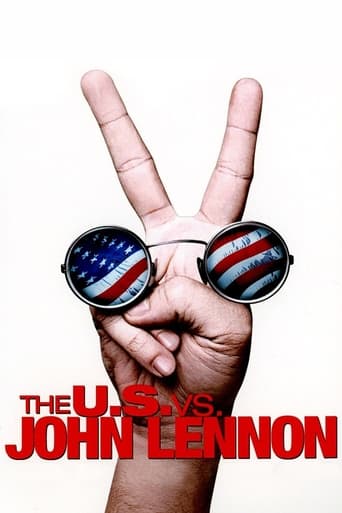
A documentary on the life of John Lennon, with a focus on the time in his life when he transformed from a musician into an antiwar activist.
Over four decades, Motorhead frontman Lemmy Kilmister has registered an immeasurable impact on music history. Nearly 65, he remains the living embodiment of the rock and roll lifestyle, and this feature-length documentary tells his story, one of a hard-living rock icon who continues to enjoy the life of a man half his age.
Sam Burton's second wife is a Kiowa, and their son is therefore born mixed-race. When a struggle starts between the whites and the native Kiowas, the Burton family is split between loyalties.