This documentary talks with the descendants of families affected by the sinking of the Titanic in 1912. It includes stories from the builders, the passengers, the rescuers and even some who ignored the call for help.
Social & External
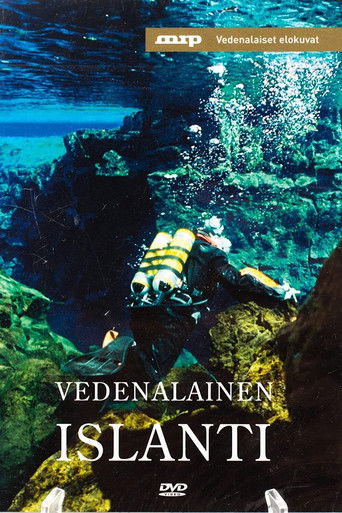
Marko Röhr's film crew takes the viewer to Europe's last unexplored area: Iceland's unique underwater world. We explore the geysers of boiling waters and the crystal clear lakes off the coast of Iceland. We dive under the icebergs, into the tears between the continental plates and into the deep caves.
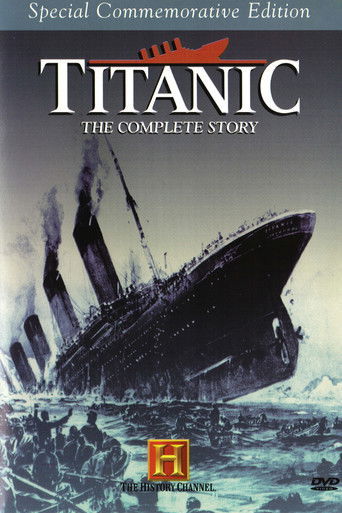
The "unsinkable" Titanic was a dream come true: four city blocks long and a passenger list worth 250 million dollars. But on her maiden voyage in April 1912, that dream became a nightmare when the giant ship struck an iceberg and sunk in the cold North Atlantic. More than 1,500 lives were lost in one of the greatest disasters of the 20th century. Now, using newsreels, stills, diaries, and exclusive interviews with survivors, Titanic: The Complete Story recounts the sensational history of the premier liner. In Part I: Death of a Dream, the largest ship ever built is christened in Ireland before a cheering crowd of 100,000. Witness the disaster this trek becomes as numerous iceberg warnings go unheeded and the ship sinks in the icy North Atlantic. In Part II: The Legend Lives On, over-packed lifeboats edge away from the crippled liner as a futile SOS signals flare into the night--leaving 1,500 passengers to a watery grave.
At the start of World War II, Cmdr. Ericson is assigned to convoy escort HMS Compass Rose with inexperienced officers and men just out of training. The winter seas make life miserable enough, but the men must also harden themselves to rescuing survivors of U-Boat attacks, while seldom able to strike back. Traumatic events afloat and ashore create a warm bond between the skipper and his first officer
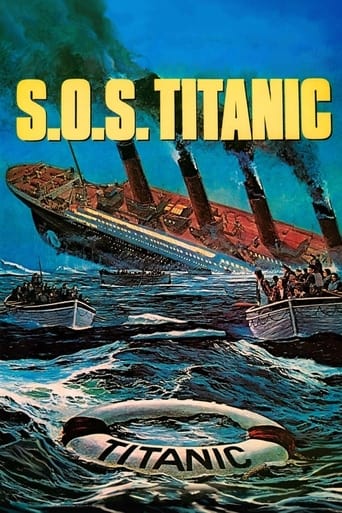
The sinking of the Titanic is presented in a highly realistic fashion in this tense British drama. The disaster is portrayed largely from the perspective of the ocean liner's second officer, Charles Lightoller. Despite numerous warnings about ice, the ship sails on, with Capt. Edward John Smith keeping it going at a steady clip. When the doomed vessel finally hits an iceberg, the crew and passengers discover that they lack enough lifeboats, and tragedy follows.
In 1912, the Titanic embarks on its inevitable collision course with history. In the wake of the over-spending required to build the largest luxury ship in the world, White Star Line executive Sir Bruce Ismay schemes to reverse the direction of his company's plummeting stock value. Onboard the Titanic, brave German 1st Officer Petersen struggles to convince his self-important British superiors not to overexert the ship's engines.
Documentary originally produced for BBC's television series "Natural World".
Herzog and cinematographer Peter Zeitlinger go to Antarctica to meet people who live and work there, and to capture footage of the continent's unique locations. Herzog's voiceover narration explains that his film will not be a typical Antarctica film about "fluffy penguins", but will explore the dreams of the people and the landscape.
The story of the sinking of the Lusitania in 1915 after she was torpedoed off the Irish coast. The story is told from the perspective of Prof. Holbourn (a passenger), the German U-boat and its captain and crew, and other passengers, crew and Admiralty staff
The sinking of the Lusitania and the impact it had in determining the fate of World War I is widely known. But few know the stories of the passengers and crew aboard the doomed luxury liner, or the German commander who ordered the deadly attack on May 7, 1915. Follow the final voyage of the massive ship, from her celebrated exit from New York's Pier 54 to her 18-minute plummet off the coast of Ireland. Through firsthand accounts, meet the men, women, and children who rode the "Greyhound of the Seas" into a war zone, and into history.
Two families, cotton merchants in England and America, with branches in France and Prussia swear to stand by each other in a belief that a great business firmly established in four countries will be able to withstand even such another calamity as the Napoleonic Wars from which Europe is slowly recovering. Then many years later, along comes World War One and the years that follow, to test the businesses.
It was the sister ship of the infamous Titanic... and its final destiny was the same. Experience the true untold story of Britannic, a tumultuous, epic voyage of human passion, courage and betrayal aboard an ill-fated ocean liner bound for a shattering demise. With the world at war, an undercover British agent (Amanda Ryan), embarks the Britannic in search of a German spy believed to be on board to sabotage the ship. Posing as a governess, the undercover agent finds herself falling in love with the ship's chaplain (Edward Atterton). In a stunning discovery, the lovers suddenly find themselves enemies of war. And when a massive explosion deals a deathblow to the ship, their battle becomes one for their own survival. With a dynamic, international cast and a story line that hosts a chilling tale of espionage, politics and romance, Britannic brings one of history's most devastating events to riveting, new life.
The Titanic disaster as seen through the eyes of one couple in each of the three classes on board.
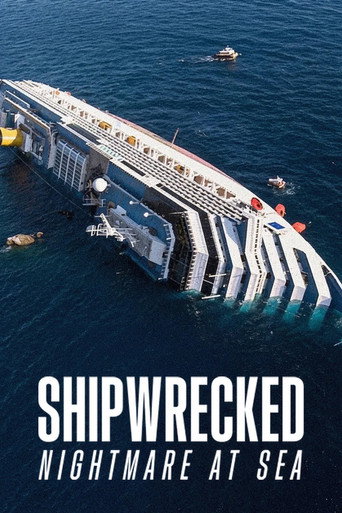
A reconstruction of the shipwreck of Costa Concordia, occurred on the night of 13 January 2012 in front of the Island of Giglio. A tragic night, full of emotions, that changed the life of those who were on board and the history of tourist navigation.
Arktis is a poetic approach to the bizarre landscape of ice, rock, and water; a journey to the arctic ocean and surroundings, with images and sounds. Seventy one-second scenes of the arctic serve as the original material, which is then transformed in its texture, time lapse, color and light qualities to create a material reminiscent of landscape painting. The sound collage uses fragments from sounds of nature and samples from a piece of music for violin and song, which are also transformed in a manner similar to that of the visual pictures. (Jürgen Reble)
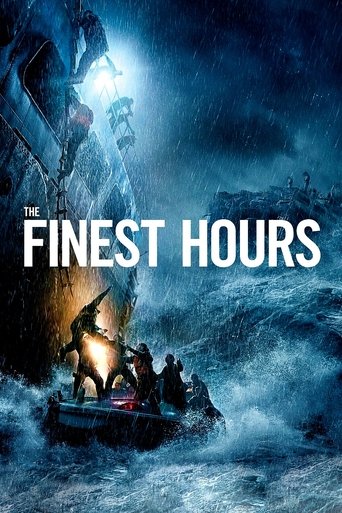
The Coast Guard makes a daring rescue attempt off the coast of Cape Cod after a pair of oil tankers are destroyed during a blizzard in 1952.
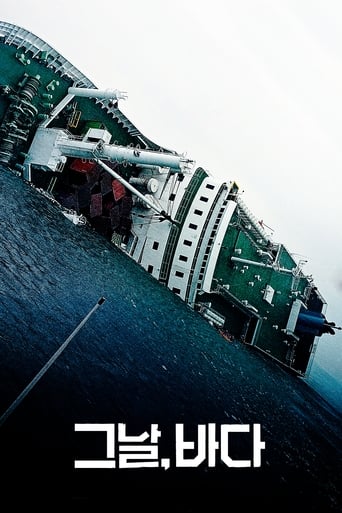
A documentary that scientifically analyses and tracks down the route of the Sewol Ferry that sank on the 16th of April in 2014 using its AIS to discover the cause of the unconfirmed sinking.
On April 10, 1912, the RMS Titanic embarked on its maiden voyage, sailing from Southampton, England, to New York City. One of the largest and most luxurious passenger liners at the time, the Titanic was also equipped with watertight compartments, which led many to consider the ship unsinkable; an anonymous deckhand famously claimed that “God himself could not sink this ship.” On April 14, however, the ship struck an iceberg, and early the next day it sank. Some 1,500 people perished.
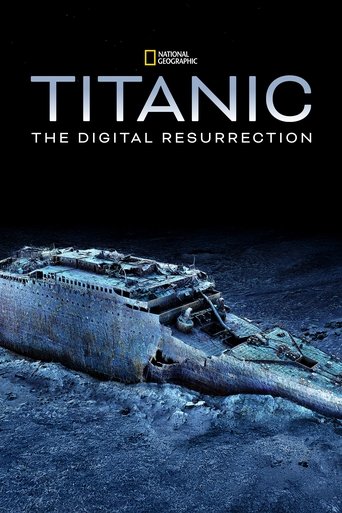
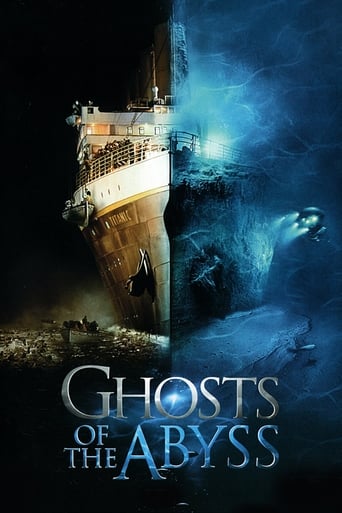
Computer-generated imagery and other visualization techniques reveal how it would look if all the water was removed from RMS Titanic's final resting place.
101-year-old Rose DeWitt Bukater tells the story of her life aboard the Titanic, 84 years later. A young Rose boards the ship with her mother and fiancé. Meanwhile, Jack Dawson and Fabrizio De Rossi win third-class tickets aboard the ship. Rose tells the whole story from Titanic's departure through to its death—on its first and last voyage—on April 15, 1912.
Filmmaker Alain Resnais documents the atrocities behind the walls of Hitler's concentration camps.
A day in the city of Berlin, which experienced an industrial boom in the 1920s, and still provides an insight into the living and working conditions at that time. Germany had just recovered a little from the worst consequences of the First World War, the great economic crisis was still a few years away and Hitler was not yet an issue at the time.
A woman narrates the thoughts of a world traveler, meditations on time and memory expressed in words and images from places as far-flung as Japan, Guinea-Bissau, Iceland, and San Francisco.
In Warsaw in 1980, the Communist Party sends disgruntled radio reporter Winkel to Gdańsk to dig up dirt on the shipyard strikers - particularly on Maciek Tomczyk, an independent labour union leader whose father was killed in the December 1970 protests. Posing as sympathetic, Winkel interviews the people surrounding Tomczyk, including his detained wife, Agnieszka.
The film tells the story of Russian emigree and the only survivor from ship crash Yanko Goorall and servant Amy Foster in the end of 19th century. When Yanko enters a farm sick and hungry after the shipwreck, everyone is afraid of him, except for Amy, who is very kind and helps him. Soon he becomes like a son for Dr. James Kennedy and romance between Yanko and Amy follows.
A documentary about the closure of General Motors' plant at Flint, Michigan, which resulted in the loss of 30,000 jobs. Details the attempts of filmmaker Michael Moore to get an interview with GM CEO Roger Smith.
John Shepherd spent 30 years trying to contact extraterrestrials by broadcasting music millions of miles into space. After giving up the search, he makes a different connection here on earth.
Embark on an epic journey through time and faith with 'The Apocalypse of Saint John.' Join the Apostle John in a stunning visual narrative that unravels the visions of the End Times. Experience each vision like never before, with striking visual effects and epic scenes that immerse you in the apocalyptic narrative.
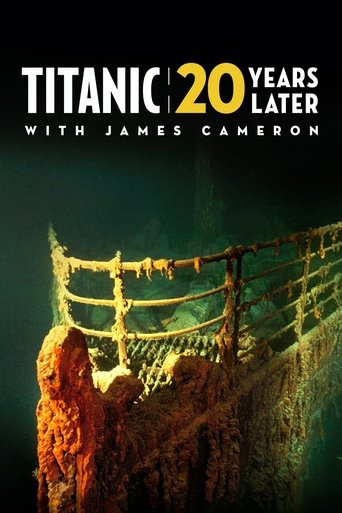
For the 20th anniversary of "Titanic," James Cameron reopens the file on the disaster.
With a team of the world's foremost historic and marine experts as well as friend Bill Paxton, James Cameron embarks on an unscripted adventure back to the wreck of the Titanic where nearly 1,500 souls lost their lives almost a century ago.
Oliver Stone charts the history of the United States from the Second World War to the present.
In this chilling and groundbreaking documentary, former Indonesian death squad leaders reenact their real-life mass killings in the style of various film genres. As they recreate their past atrocities, the line between reality and performance blurs, exposing the lingering impact of Indonesia's 1965-66 anti-communist purge and the unsettling psychology of its perpetrators.
The story is based on the real events of 1985. The team of a Russian polar icebreaker “Mikhail Gromov” discovered a giant iceberg. The ship came into collision while attempting to take cover from the weather and is forced to drift with ice along the Amundsen Sea coast. The crew of “Gromov” spent 133 days of polar night trying to find a way out of their icy trap. They have no room for mistakes; one wrong move and the vessel is crushed by ice.
A documentary highlighting the Soviet Union's legendary and enigmatic hockey training culture and world-dominating team through the eyes of the team's Captain Slava Fetisov, following his shift from hockey star and celebrated national hero to political enemy.
Director Claude Lanzmann spent 11 years on this sprawling documentary about the Holocaust, conducting his own interviews and refusing to use a single frame of archival footage. Dividing Holocaust witnesses into three categories – survivors, bystanders, and perpetrators – Lanzmann presents testimonies from survivors of the Chelmno concentration camp, an Auschwitz escapee, and witnesses of the Warsaw Ghetto Uprising, as well as a chilling report of gas chambers from an SS officer at Treblinka.
This film tells the story of three defeats: Berlusconi’s political and human defeat in his “twilight”, the one of Ciccio Mirra, Berlusconi’s unconditional supporter, deeply rooted in an ancient culture that dies hard, and the director’s artistic defeat in an Italy that recognised itself in this “Berlusconian culture” for a long time, and probably still does.
Former United States Secretary of Defense, Donald Rumsfeld, discusses his career in Washington D.C. from his days as a congressman in the early 1960s to planning the invasion of Iraq in 2003.