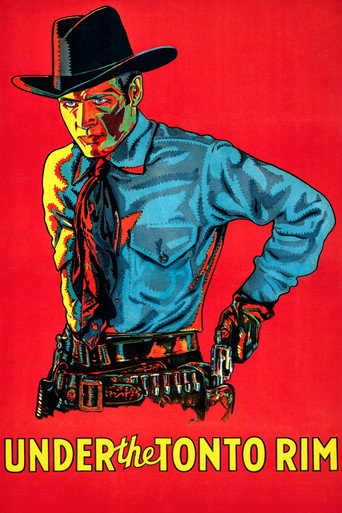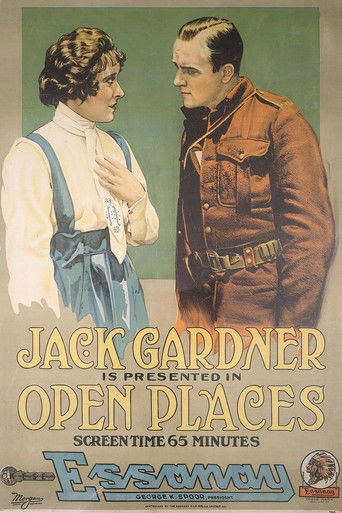
"A fighting man's hopeless love and heroic sacrifice for a woman!"
An outlaw with a Heart of Gold sacrificing his own life for the happiness of two young people in love.
Social & External
Lacey
Ruth Hutt
Adam Wansfell (as Phillips R. Holmes)
Boss Stone
Tim
Sheriff Collishaw
Babe
Stage Driver
Waiter (as Clarence L. Sherwood)
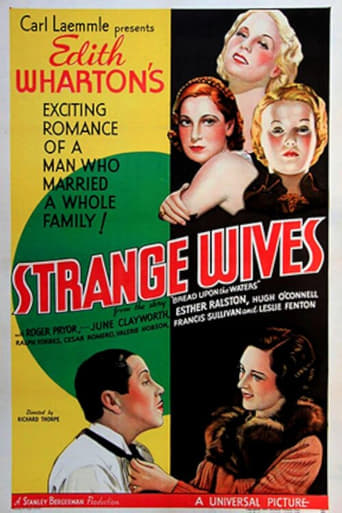
Four sisters come of age in America in the aftermath of the Civil War.
Curley Smith, a lieutenant of the Texas Rangers, gets chased by a band of smugglers after getting caught spying on them and becomes injured. Anita, the daughter of the chief smuggler tends to him and the two of them fall in love. Dean, a member of the renegade, becomes jealous of their romance, and will do whatever he can to get rid of Curley - fair or foul.
It was April weather on Lloyd's ranch, but all was not sunshine. The mortgage was due, and while there were enough cattle to sell to pay it, they were woefully short of men to handle them. Finally Lloyd decided to entrust the job to his son, Hal, and detailed El Paso Pete, one of his trusted men, to accompany the boy to Waco. The cattle were rounded up and shipped. Hal sold them to advantage and collected the money and was on his way to settle the mortgage, when he ran into an adventure. Jim Dempsey, a rough gambler, was having an altercation with his daughter, Rose. A Texan will ever respond to the call of beauty in distress and, regardless of the relationship, Hal interfered and followed them to see it safely through. He was led to a dance hall and was surprised and somewhat disappointed to see that Rose was a dancer there, but discovered that her father forced her to thus earn her living.
Robert Burton was an only son and his indulgent mother had spoiled him. Bob was not all bad, but he was woefully weak and could not stick long at any one task. Also he paid more attention to rolling cigarettes than he did to his work. One day he was discharged by the foreman of the crockery store where he worked and appeared at home disgusted and sullen. His mother tried to comfort him, but the boy was anxious to have his way and announced his intention of going west, where he thought there would be better opportunities for him.
John Burton, a railroad clerk from the east, was spending his vacation hunting in the wild lands about John Walsh's shack. One morning, as he was eagerly following a large hawk, which he had already wounded, he lost his balance on the edge of a cliff and plunged down to the stony ground below. His cries for help attracted Walsh's attention and he was taken to the latter's cabin, where he was tenderly cared for by Walsh and his wife, until he was able to return to his duties in the east. Walsh's wife was the apple of his eye, but, like most things that we love, she did not last, and twenty years later we find him a broken old man, living in the days that are gone.
After graduating from an Indian school where he has acquired an education and schooling in the ways of the white man. Ta-wa-wa, a young Indian, returns to his native territory and far western home. On the way to the tribe's encampment he stops at Vail's ranch, meets Kawista, his boyhood sweetheart, who greets him cordially and with a frank admiration for his gentlemanly appearance. While they are exchanging greetings the postman enters and hands a letter to Mr. Vail from Col. Leigh, an Englishman, stating that he will visit the ranch with Lord Wyndham, an English lord who expresses a desire to see a real Indian powwow.
Denton, a young easterner, arrives in the gold-fields, looks about for a "find" and a partner. Entering a saloon, he partakes of some refreshment, watches the patrons of the place and studies their characters, while thus engaged a young miner, named Harper, somewhat prejudiced against easterners, engages in a quarrel with a Mexican who is about to plunge a knife into the miner when Denton seizes his wrist and wrenches the weapon from his grasp. Harper thanks Denton, and after learning the eastern man's desire to find a prospecting partner, Denton loins forces with him and they start in to work a lead and strike paying dirt.
A short silent film produced by Gaston Mèliès in San Antonio.
A short silent western produced by Gaston Mèliès in San Antonio.
"A senorita. With whom two young matadors, Jose and Pepe, are in love, tries in keep both on the string. She lends each to believe that he is the chosen one, creating a strong jealousy between them. Pepe calls to see the girl and she receives him with a show of great affection and preferment. While they are courting, a caballero, friendly to the other lover, Jose, tells him of the girl's duplicity. In a rage he goes to his inamorata and, demanding an explanation, accuses her of harboring his rival in the house. She cajoles him, and playfully stealing his dagger from him without his knowing it, endeavors to hold his attention by caresses as Pepe tries to make his escape. Unfortunately he is seen and pursued by the enraged Jose, who, coming up with him as he seeks the protection of a priest busy pruning trees in the grounds of the monastery, engages in a terrible struggle in which the priest Is powerless to interfere." - Moving Picture World synopsis excerpt
"Swift Arrow, a lithe and willowy Indian, leaving the encampment of his fellow braves, is well on his journey when he is thrown from his horse and receives a broken leg and injuries from which he is disabled and lies helpless and alone." -Moving Picture World Synopsis excerpt
In the farewell beams of evening the pioneer with his wife and child stop the prairie-schooner and strike stakes for the night. Sounds of the Indian war cry disturb the quiet calm, and seen approaching in the distance is a band of savage red men. Terror-stricken, the settler seizes his gun and stands ready to defend his family. At the first volley from the Indians' rifles he falls dead. The brave wife makes a desperate resistance to protect her child. The poor woman is quickly slain by the hostile savages, leaving the helpless babe to their mercy.
Padre Dominguis, the village priest of a quiet little spot in old Mexico, has been on a visit to the daughter of his dead sister and is about to return to his charges. He is much surprised and more than a little pleased to find that his niece is in love with John Brown, a progressive American, who has settled among them, for the Padre is a broad-minded man and knows that Mexico needs the influx of American energy to make her a great country.
It is a beautiful morning in Indian Summer, and White Doe is out in her birch bark canoe, engaged in a fishing expedition for food. She paddles home under the overhanging trees and vines, lights the small fire in front of her tepee and cooks her primitive breakfast. The air is bracing, the birds are singing, life is free and good. Also White Doe is happy for she had caught a gleam of admiration in the eyes of a stalwart cowboy, when she visited a ranch a few days before with her offering of plaited baskets and the famous blankets of her Navajo tribe. She begins her work of basket weaving, dreaming the love dreams of her people and her heart singing with coquetry and the happiness of conquest, for she is also loved by a brave of her tribe, a wealthy son of a chief with a hundred horses.
Tony Valero, a lusty young vaquero, is enamored of Clarita Montes, whose father is fairly well off, as the middle class Mexicans figure. Clarita prefers Tony to her numerous admirers, but the father has selected, for his future son-in-law, a young dandy called Jose Rodreguis, who has a certain amount of money which allows him more ease than his neighbors. Jose trades upon this fact and presses his attentions upon Clarita. He bitterly resents her preference for Tony and does all in his power to belittle his rival.
A Navajo Indian has crossed the great desert, and his water bottle has been emptied. He is in a frenzy from thirst and sees mirages of water everywhere. He comes upon Nat Perry, a young settler, who is conveying his household goods across the burning sands. Perry has just taken a drink from his precious canteen when the Indian falls at his feet and implores a little water. The young pioneer heartlessly turns him over with his foot and leaves him to die.
From force of habit, some might call him a "Greaser," true, he is a Mexicano; he is no more, a man of noble instinct and chivalrous nature. He falls in love with the American ranchman's daughter, and while she appreciates his sincerity, she does not return his affection for her. Tony not only loves, he respects her, and will not inflict his attentions upon her, and will not inflict his attentions upon her, neither seeking recognition nor reward.
"I do hate learnin', but oh! you schoolmarm!" is what the boys at the gulch said when Mary came to town; and, from "Big Bill" down to Hop Lee, the Chink, they all took to study, and to courtship. The rivalry is friendly until the new foreman blows in and takes the inside track, then "Big Bill" gets jealous. At the swell (?) reception the foreman cuts Bill out and Bill decides to "lay for him." The foreman soon discharged a greaser who later robs the paymaster and contrives to fix the blame on the foreman.
Bill Sanders, sheriff of Alkali County, gets a warrant for Red Rube, the tough. He gives it to his deputies to serve, but Rube gets busy with the strong arm and makes them look like monkeys. When several installments of deputies have failed, Bill Sanders gets on the job himself. Bill not only knows how to juggle the 44 Colts, but he keeps gray matter in his skull. In going after Red Rube, he decides to rely on his brains instead of his hardware. He disguises himself as a tenderfoot, arms himself with a camera, and gets on Rube's trail. Things are warm and lively thereafter, but Sanders gets his man, and the honor of Alkali County is preserved.
Mary is only the assistant housekeeper of the ranch, but she has a heart as big and faithful as a queen's. Bob, who has been turned from home by his uncle because he has his own notions of marriage, comes to the ranch and Mary falls in love with him. Bill Rank, the foreman, contrives to ruin Bob's good name and make him "do time." Mary is faithful to Bob and makes a big sacrifice to help him in his trouble. Times are dark for a while, but Fate works things out at last. Bill Rank is hurt in a runaway, and, looking death to the face, he confesses the truth. Bob's good name is restored, he marries Mary, and, to cap the climax, he falls heir to a fortune.