Social & External
Herself
Himself
A long and thoughtful look at those desperate days of October 1970, when Montréal awaited the outcome of FLQ terrorist acts. This film puts the October Crisis in the long perspective of history. Compiled from news and other films, it shows independence movements past and present, and their leaders; it reflects the mingled relief, dismay, defiance, when the Canadian army came to Montréal; and it shows how political leaders viewed the intervention.
Through poetic cinematography and stories of teachers sharing their wisdom with children from a range of backgrounds, the film showcases the benefits of mindfulness as a way out of violence and suffering, and as an attainable solution for younger generations.
Through the eyes of a Quebec Jewish activist, Lea Roback, feminist, unionist, pacifist and communist, A VISION IN THE DARKNESS proposes a modernist vision of Quebec history, from the beginning of the twentieth century to the period knows as « La Grande Noirceur », the Great Darkness.
A study of life at Christmastime in Moose Factory, an old settlement mainly composed of Cree families on the shore of James Bay, composed entirely of children's crayon drawings and narrated by children.
This short film delves into the Peking Opera club of the Fourth Primary School of Donggaodi in Fengtai District, Beijing, to explore what Peking Opera is like in the eyes of children. When sweat flows over the oil paint and the tender voices sing in the old tunes, what we witness is not only the inheritance of national treasures, but also the unique journey of a little soul growing between its role and itself.
Ute Vecchio has two years to prepare children who have just arrived from other countries for the German school system. The challenges she faces are just as diverse as the cultures the children originate from.
This film is about the francization of Québec that has taken place since the Parti Québécois won power from the Liberals in 1976. It shows how the once powerful anglophone community is now questioning its very survival. It discusses some of the motivating forces behind Québécois nationalism. The film concludes by asking if the Canadian nation can survive if neither of its major language groups is welcome in the territory of the other.
A news special about a year after the shootings at the Quebec City mosque
This feature-length documentary brings together six of the rare television interviews given by Gilles Groulx between 1966 and 1983. Through these interviews, the filmmaker's ethical and aesthetic concerns are revealed. A striking coherence emerges in his thinking regarding his conception of cinema and the role the filmmaker should play in his culture and society.
This short documentary film is a fascinating portrait of urban and rural Quebec in the late 1960s, as the province entered modernity. The collective work produced for the Quebec Ministry of Industry and Commerce calls on several major Quebec figures.
This documentary depicts a vivid example of America's current culture war. It shows a rural community, Philomath, Oregon, that is making a large transition from once being a dominant force through an "old time" profession, the timber industry, to one that is dominated by professionals and techies, the "information age". This is shown by the drastic decline of lumber mills in the area. In 1980, there were twelve mills around Philomath, but twenty-five years later there were only two. The largest employers are no longer the lumber mills but Oregon State University in Corvallis, which is about six miles from Philomath, and a Hewlett-Packard center involved in engineering ink-jet components.
The Columbine shootings were a tragic event in American history and have proved a lasting influence in continued acts of violence ever since. In this harrowing account, student and faculty survivors of Columbine, Amy, Gus, Jaimi, Zach, Mr. Leyba and Principal DeAngelis, reflect on the event that has both shaped them and created an unbreakable spirit shared between them. This is not the story of death, but of the process of healing in the face of the unspeakable.
In 2001, the government of Quebec announced a new program to issue permits for the construction of private hydroelectric dams at specific sites. Upset, the population took things into their own hands and decided to act. Citizens formed collectives to protect their waterways, among the most beautiful in the province. This documentary follows several artist and citizen groups who led a crusade to force the Québec government to abandon private hydro-electrical production. It is a thorough inquiry on the environmental impact and other repercussions of such projects.
Matimekush is landlocked in the former mining town of Schefferville, 700 km north of Sept-Îles. It was founded in the 1950s, when the Canadian government and Iron Or forced the Innu to settle down. In Canada’s Far North, there is a dire labour shortage. At Kanatamat School, the heart of the community, most of the high school teachers are from Africa.
Education specialist Sofie is starting a class to offer gifted children education at their own level. But will Sofie be able to overcome the resistance to her way of working? Explora, a special class for gifted children, was started in Breda, set up by Sofie on behalf of two schools. She is a specialist in giftedness in children and notices that this group is often not recognized, even though they have the same problems as children who cannot cope with the educational level, such as dropout, boredom and depression.
At 16, Max left with dreams and a GoPro slung over his shoulder for an exchange program at a high school in Oklahoma. Since then, Donald Trump has become president, the Capitol has been stormed, and abortion bans have gained ground. On the eve of Trump’s second term, Max goes back to see his friends to understand what their journeys reveal about the evolution of American society
The three teachers Svetlana, Sandrine and Taslima teach children and young people in places that are hardly accessible for “normal” lessons - in a nomad tent under the snow cover of Siberia, in a hut in the bushland of Burkina Faso and on a school boat in Bangladesh. They share a common goal: to enable their students to have a better future through education.
Finland’s education system has consistently ranked among the best in the world for more than a decade. The puzzle is, why Finland? Documentary filmmaker, Bob Compton, along with Harvard researcher, Dr. Tony Wagner, decided to find out. The result of their research is captured in a new film, "The Finland Phenomenon: Inside the World’s Most Surprising School System". In the 60-minute film, Dr. Wagner guides the viewer through an inside look at the world’s finest secondary education system. A life-long educator and author of the best-selling book "The Global Achievement Gap," Dr. Wagner is uniquely qualified to explore and explain Finland’s success. From within classrooms and through interviews with students, teachers, parents, administrators and government officials, Dr. Wagner reveals the surprising factors accounting for Finland’s rank as the #1 education system in the world.
What remains of the 2012 Quebec student protests? Little has changed in the decade that ensued. Rodrigue Jean and Arnaud Valade exhume images of the battles, recorded live and relayed through the mass media, that flared up as anger and indignation went head-to-head with the rhetoric of power. Against these divisive images, the filmmakers overlay a historical perspective of the state and its police in Montreal, Quebec and Canada, delving into the roots of sanctioned violence. Their compelling glance at the past is, of course, a cry that continues to echo in the present day. While the voices have been silenced, revolt still brews. All it takes is a spark...
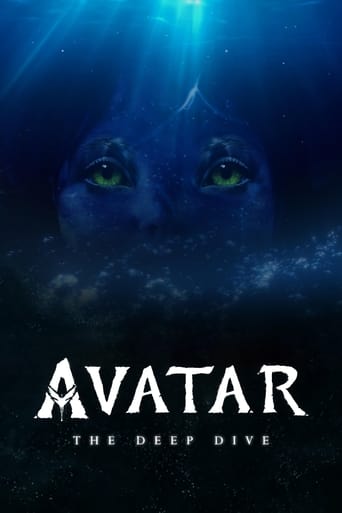
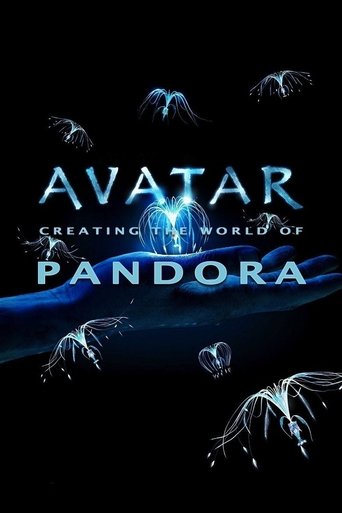
An inside look at one of the most anticipated movie sequels ever with James Cameron and cast.
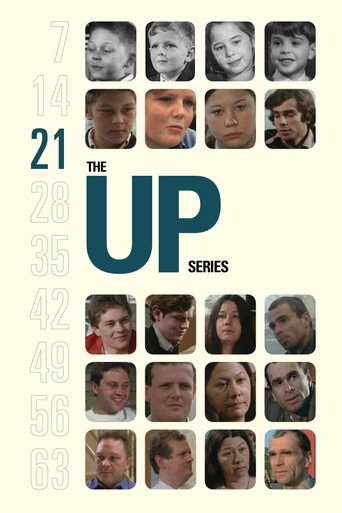
After another 7 year wait, director Michael Apted revisits the same group of British-born children from Seven Up! and 7 Plus Seven. The subjects are interviewed as to the changes that have occurred in their lives during the last seven years.
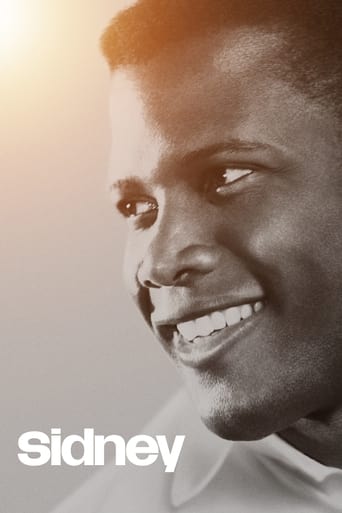
This revealing documentary honors the legendary Sidney Poitier—iconic actor, filmmaker, and civil rights activist. Featuring interviews with Denzel Washington, Spike Lee, Halle Berry, and more.
In the heart of the tranquil Vosges forests, where lynxes, bears and deer roam freely, Vincent Munier accompanies his father on his expeditions. He not only seeks to capture the visual wonders of this forest kingdom, but also aims to make its sounds audible. Every whisper of the forest is a reminder of the knowledge of nature that his father once imbued in him – knowledge that Vincent now passes on to his own son. Vincent Munier combines breathtaking footage of nature and its sounds to create a fairytale-like cinematic experience that slows time down.
Revolutionary French New Wave director Jean-Luc Godard conducts a twenty-five minute interview with influential and acclaimed American director Woody Allen on the cultural radiation, the ubiquity and significance of Television, and how Television compares with cinema as a medium and form of expression.
These children live in the four corners of the earth, but share the same thirst for learning. They understand that only education will allow them a better future and that is why, every day, they must set out on the long and perilous journey that will lead them to knowledge. Jackson and his younger sister from Kenya walk 15 kilometres each way through a savannah populated by wild animals; Carlito rides more than 18 kilometres twice a day with his younger sister, across the plains of Argentina; Zahira lives in the Moroccan Atlas Mountains who has an exhausting 22 kilometres walk along punishing mountain paths before she reaches her boarding school; Samuel from India sits in a clumsy DIY wheelchair and the 4 kilometres journey is an ordeal each day, as his two younger brothers have to push him all the way to school…
A behind the scenes look into George Romero's groundbreaking horror classic Night of the Living Dead.
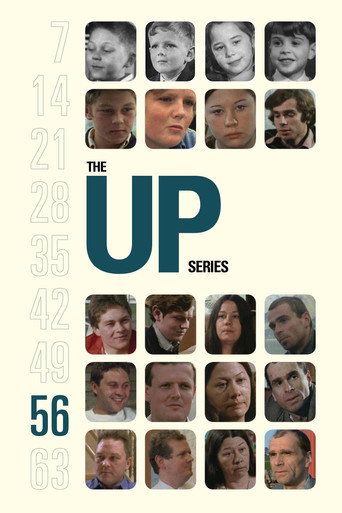
When a cross-section of seven-year-olds were interviewed for 7 Up in 1964 it was immediately evident that their social backgrounds influenced their attitudes towards life. While the upper class children were confident and self-assured, those from middle and working class backgrounds were resigned to a challenging life of hard work. This premise was put to the test every seven years when the same group were interviewed about the progression of their lives. 49 years in the making, the changes that occurred to the original 14 make for fascinating television and are in many ways the stories of all our lives. From success and disappointment, marriage and childbirth, to poverty and illness, nearly every facet of life has been captured on film. Now, at the age of 56, the group are once more brought together and, with the benefit of hindsight, assess whether their lives have been ruled by circumstance or self-determination.
Lyrical and powerfully personal essay film that reflects on the deaths of her husband Lou Reed, her mother, her beloved dog, and such diverse subjects as family memories, surveillance, and Buddhist teachings.
A look at the origins, history and conspiracies behind the "Majestic 12", a clandestine group of military and corporate figureheads charged with reverse-engineering extraterrestrial technology.
Those who knew iconic funnyman John Candy best share his story, in their own words, through never-before-seen archival footage, imagery, and interviews.
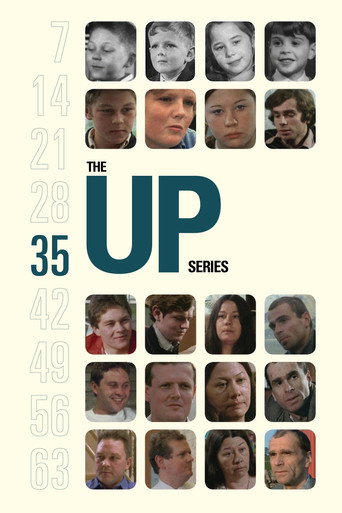
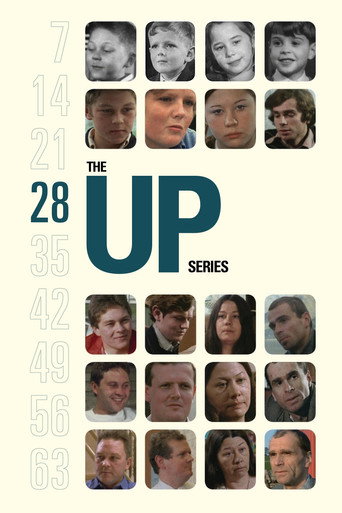
Just two years away from turning 30, participants in Michael Apted's documentary series are facing serious questions of identity and purpose, wondering whether they've found their place in the world.
Alex Gibney explores the charged issue of pedophilia in the Catholic Church, following a trail from the first known protest against clerical sexual abuse in the United States and all way to the Vatican.
Al Pacino's deeply-felt rumination on Shakespeare's significance and relevance to the modern world through interviews and an in-depth analysis of "Richard III."
Director Michael Apted revisits the same group of British-born adults after a 7 year wait. The subjects are interviewed as to the changes that have occurred in their lives during the last seven years.
This documentary focuses on the actors and their journey over two summers to create the remake to the original IT, by Stephen King. The documentary originally released as bonus material, bundled with IT: Chapter Two.
A documentary examining the decade of the 1970s as a turning point in American cinema. Some of today's best filmmakers interview the influential directors of that time.
Photographer Estevan Oriol and artist Mister Cartoon turned their Chicano roots into gritty art, impacting street culture, hip hop and beyond.
The life and career of an actor, artist, and icon. His own journey through his own camera.
A documentary about the life and films of director John Ford.