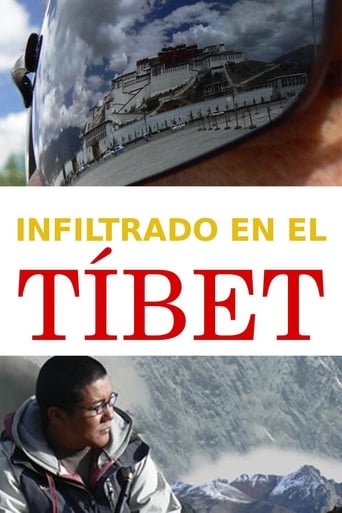
The accumulated history of Tibet and other issues contributing to the current situation in the region as it relates to China.
Social & External
Narration
It's 1974. Muhammad Ali is 32 and thought by many to be past his prime. George Foreman is ten years younger and the heavyweight champion of the world. Promoter Don King wants to make a name for himself and offers both fighters five million dollars apiece to fight one another, and when they accept, King has only to come up with the money. He finds a willing backer in Mobutu Sese Suko, the dictator of Zaire, and the "Rumble in the Jungle" is set, including a musical festival featuring some of America's top black performers, like James Brown and B.B. King.
In this hour-long documentary, Oxford academic Janina Ramirez tours the country in search of Anglo-Saxon art treasures. Her basic thesis - and it is a plausible one - is that we should not look upon their era as a "dark age" as compared, for example, to Roman times, but rather celebrate it as an age in which creativity flowered, especially in terms of artistic design as well as symbolism. She shows plenty of good examples, ranging from the Franks Casket to the Staffordshire Hoard, and the Lindisfarne Gospels.
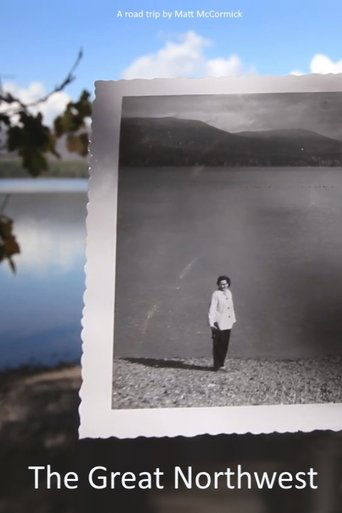
The Great Northwest is a documentary film based on the re-creation of a 3,200 mile road-trip made in 1958 by four Seattle women who thoroughly documented their journey in an elaborate scrapbook. Fifty years later, Portland artist Matt McCormick found that scrapbook in a thrift store, and in 2010 set out on the road, following their route as precisely as possible and searching out every stop in which the ladies had documented. Patiently shot with an observational, cinema-vérité approach, The Great Northwest is a lyrical time- capsule that explores how the landscape, architecture, and culture of the Pacific Northwest has changed over the past fifty years.
The Tea Explorer documentary follows the journey of tea enthusiast Jeff Fuchs along the Tea Horse Road, a 1300-year-old trade route in the Himalayas. It combines the author's passion for both tea and mountains, tracing the route's history, meeting the people who live along it, and exploring the significance of tea in the region.
In a quiet village in southern China, Fang Xiuying is sixty-seven years old. Having suffered from Alzheimer's for several years, with advanced symptoms and ineffective treatment, she was sent back home. Now, bedridden, she is surrounded by her relatives and neighbors, as they witness and accompany her through her last days.
The opening of The Vasulka Effect couldn’t be more apt: Steina Vasulka addresses her husband Woody through various TV screens. He does the same and replies. A perfect image of the relationship between the free-spirited, groundbreaking pioneers of video art. After meeting in Prague in the early 1960s, they relocated from Czechoslovakia to New York, where they later founded The Kitchen, their legendary art and performance gallery.
Documentary about Ilyich Ramírez Sánchez, aka "Carlos the Jackal", international terrorist.
Using home videos recorded by her voice coach, Diana takes us through the story of her life.
A fascinating compilation tracing the development of British trains throughout the 20th century. This program provides a record of the greatest days of steam; the magnificent express engines developed by the 'Big Four' - the GWR, SR, LNER, and LMS; many famous named trains like the Golden Arrow and the Brighton Belle, the War and Nationalism; and the amazing variety of elder locos from the 1950's.
This short-form documentary focuses on the true story of Alfons Heck, who as an impressionable 10-year-old boy became a high-ranking member of the Hitler youth movement during World War II. The story is told in his own words. This film originally aired as part of the "America Undercover" series on HBO.
Railroad of Hope consists of interviews and footage collected over three days by Ning Ying of migrant agricultural workers traveling from Sichuan in China's interior, to the Xinjiang Autonomous Region, China's northwest frontier.[1] Through informal interviews aboard the cramped rail cars, Ning Ying explores the hopes and dreams of the workers, many of whom have never left their homes before.
Documentary looking at a century of cycling. Commissioned to mark the arrival of the 2014 Tour de France in Yorkshire, the film makes full use of stunning British Film Institute footage to transport the audience on a journey from the invention of the modern bike, through the rise of recreational cycling, to gruelling competitive races. Award-winning director Daisy Asquith artfully combines the richly-diverse archive with a hypnotic soundtrack from cult composer Bill Nelson in a joyful, absorbing watch for both cycling and archive fans.
Mark Gatiss explores and celebrates Dracula, an icon of popular culture, asking just why we keep coming back to the count.
James May presents a celebration of the toys which have survived across the decades, including Meccano, Lego, Scalextric and Airfix. James's all-time number one is the train set.
How do you reconcile a commitment to non-violence when faced with violence? Why do the poor often seem happier than the rich? Must a society lose its traditions in order to move into the future? These are some of the questions posed to His Holiness the Dalai Lama by filmmaker and explorer Rick Ray. Ray examines some of the fundamental questions of our time by weaving together observations from his own journeys throughout India and the Middle East, and the wisdom of an extraordinary spiritual leader. This is his story, as told and filmed by Rick Ray during a private visit to his monastery in Dharamsala, India over the course of several months. Also included is rare historical footage as well as footage supplied by individuals who at great personal risk, filmed with hidden cameras within Tibet.