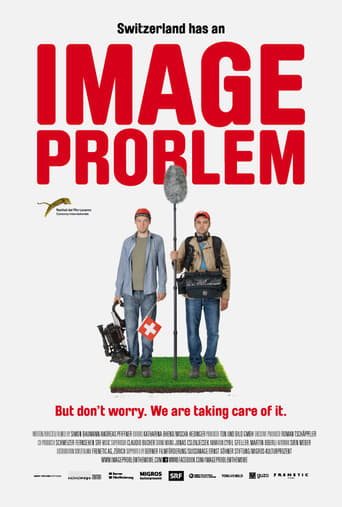
A cinematic time capsule with over 1,400 hours of submitted material from all regions of Switzerland gives unknown insights about the life of Swiss people in the politically and socially turbulent summer of 2019.
Social & External
The people behind it
When Ellen Johnson Sirleaf became Africa's first ever elected female head of state, filmmakers Siatta Scott-Johnson and Daniel Junge were there to follow her. It was the start of an extraordinary year they spent with the Liberian president as she struggled to take control of a country devastated by years of civil war. Together with her 'iron ladies' (the finance minister and police chief are also formidable females), she takes a firm hold on the government, trying to root out corruption and spend the tiny annual budget carefully. But it is not an easy task, and everything seems to be against her - even her presidential mansion burns down. (Storyville)
This two-hour special looks back at Dec. 7, 1941 - the date that has indeed lived in infamy, as President Franklin Roosevelt promised - when imperial Japan attacked the U.S. naval forces in Hawaii, ushering America into World War II. The attack killed more than 2,400 people, wounded 1,000 and damaged or destroyed nearly 20 American ships and over 300 airplanes.
Mike Porcel is the lost member of the Cuban Nueva Trova musical movement. His lack of “revolutionary spirit” condemned him to the scorn of his peers and made him a pariah for a decade, until he managed to go into exile. Without resentment, but without forgetting, the film reconstructs his story and revives a forgotten brilliance.
Director Anna Broinowski explores how Pauline Hanson's speech in 1996 and the decades of debate that followed has influenced Australia today; the impact of her political career on modern multicultural Australia, and the people who have helped her transition from local fish shop owner to Member for Oxley. Featuring many of Hanson's critics, opponents, advisors and commentators, from former Prime Minister John Howard, to current members of the media, including Margo Kingston and Alan Jones; and leading Indigenous commentator, Professor Marcia Langton.
We received this bootleg of the ESB Spike broadcast in Times Square. Since there was no audio, %20 added fourteen fan commentary or ESB 30th anniversary podcasts which were sync'd up at the starting point of the crawl. Since a DVD can only have eight audio tracks, each of the commentaries were mono'd and shifted to the left or right channel. Use this disc to practice your audio shifting and commentary channel switching abilities, while you get an in-depth listen to the public's continued fascination with this movie sequel.
Edward Said, Professor of English & Comparative Literature at Columbia University, was a prominent literary critic of the late 20th century and a leading spokesperson for the Palestinian cause in the US. Born to a Palestinian family in Al-Quds (Jerusalem) in 1935, he and his family were dispossessed in 1948 and settled in Cairo. Educated in the US, he lived in New York for many years. Said was a member of the Palestine National Council. After resigning from the PNC in 1991, Said wrote critically about the post-Oslo peace process, the political failures of Yasser Arafat and the PLO. Said was diagnosed with leukemia in 1991 and struggled with the disease while continuing to write and teach. He stopped giving interviews but made an exception less than a year before his death in 2003, speaking about his illness, work, Palestine, politics, life, and education. The last interview is the final testament of this passionately committed intellectual.
Five women veterans who have endured unimaginable trauma in service create a shared sisterhood to help the rising number of stranded homeless women veterans by entering a competition that unexpectedly catalyzes moving events in their own lives.
An analysis of the causes, social, political, and economic that caused the rise of Hugo Chávez as president of Venezuela; his abuse of power and the response of civil society, including the student movement; his political fall as well as the secrecy that surrounded his illness and the succession of Nicolás Maduro.
Tom Mangold's inside story of the scandal that rocked Britain, showing what it was really like to live with Stephen Ward as he became the scapegoat for the Profumo affair.
Intimate portrait of Marie-Jo Gobron, belgian poet and the director's mother. 20 years after the release of a film about his father's paintings, the filmmaker continues the description of the artistic universe of his parents. Born in 1916 in Flanders near the French border, Marie-Jo writes mostly in French. Aged 85, she starts an autobiographical novel about her youth, its many events, and about her daring emancipation in art and love, which she confides here.
Masao Adachi, the author and director of experimental works and pinku-eiga in the 1960s, was a member of the Japanese New Left that shifted from being a filmmaker to a guerrilla fighter. In 1974, he joined the Japanese Red Army in Lebanon, which worked closely with the Popular Front for the Liberation of Palestine. Filmmaker Lutz Dammbeck met Adachi in Tokyo in 2018 and talked with him about a wide range of topics, including art, revolution, the influence of western avant-garde art and American underground; the Japanese Red Army; collaboration with secret services; the role of the Left after 1968; and the reasons for failures of leftist ideas and strategies.
A close-up look at the New Yorkers who took to the streets during the 2024 Presidential Election.
"The Voice of Innocence" is a documentary that shows how, starting in 1959, the Cuban Revolution put into practice a comprehensive and universal policy of safeguarding the rights of the child, even under the multiple difficulties resulting from the economic, commercial and financial blockade imposed by the United States more than six decades ago. Cuba is one of the main signatories of the Convention on the Rights of the Child, signed on 20 November 1989, when the country had already made extraordinary progress in protecting the rights of the child, in comparison to developed countries, such as the United States, which as of today hasn't yet ratified the Convention.
Amid the civil-military dictatorship implanted with the 1964 coup, Sergio Muniz had the idea of making a documentary about the action of the Death Squad. At the time, the press still had some freedom to disseminate the work of these death squads formed by police officers of various ranks, and that he acted on the outskirts of cities like Sao Paulo and Rio de Janeiro. The victims of police repression (as today) were men, poor and black, and this condition is supposed criminals.
A video compilation that reveals the true nature of U.S. foreign policy.
This documentary profiles economist and writer Marilyn Waring. In extensive interviews, Waring details her feminist approach to finances and challenges commonly accepted truths about the global economy. The filmmakers detail Waring's early rise to political prominence and her successful protests against nuclear arms. Waring also speaks candidly about wartime economies, suggesting that government policies tend to marginalize the fiscal contributions of women.
A love letter from a young mother to her daughter, the film tells the story of Waad al-Kateab’s life through five years of the uprising in Aleppo, Syria as she falls in love, gets married and gives birth to Sama, all while cataclysmic conflict rises around her. Her camera captures incredible stories of loss, laughter and survival as Waad wrestles with an impossible choice– whether or not to flee the city to protect her daughter’s life, when leaving means abandoning the struggle for freedom for which she has already sacrificed so much.
A string of threatening emails escalates into a revenge plot involving a newly married US marshal and his ex-girlfriend.
A subjective documentary that explores various theories about hidden meanings in Stanley Kubrick's classic film The Shining. Five very different points of view are illuminated through voice over, film clips, animation and dramatic reenactments.
Documentary about legendary Paramount producer Robert Evans, based on his famous 1994 autobiography.
A detailed account of the life and artistic career of legendary filmmaker Quentin Tarantino, from his early days as a video club manager to the scandalous fall in disgrace of producer Harvey Weinstein. A story about how to shoot eight great movies and become an icon of modern pop culture.
In 1972, a seemingly typical shoestring budget pornographic film was made in a Florida hotel: "Deep Throat," starring Linda Lovelace. This film would surpass the wildest expectation of everyone involved to become one of the most successful independent films of all time. It caught the public imagination which met the spirit of the times, even as the self-appointed guardians of public morality struggled to suppress it, and created, for a brief moment, a possible future where sexuality in film had a bold artistic potential. This film covers the story of the making of this controversial film, its stunning success, its hysterical opposition along with its dark side of mob influence and allegations of the on set mistreatment of the film's star.
This searing investigative work shadows a group of activists risking unimaginable peril to confront the ongoing anti-LGBTQ program raging in the repressive and closed Russian republic. Unfettered access and a remarkable approach to protecting anonymity exposes this under-reported atrocity–and an extraordinary group of people confronting evil.
Drawn from a never before seen cache of personal footage spanning decades, this is an intimate portrait of the Sri Lankan artist and musician who continues to shatter conventions.
In 1968, art students Storm Thorgerson and Aubrey “Po” Powell made a trippy photo collage for their musician friends Syd, David and Roger. The resulting album and album cover, A Saucerful of Secrets, helped launch two careers: that of Pink Floyd, one of the 70s megabands, and of Hipgnosis, which, over the course of the next 25 years, designed a stream of iconic album covers.
50 years after the legendary fest, Barak Goodman’s electric retelling of Woodstock, from the point of view of those who were on the ground, evokes the freedom, passion, community, and joy the three-day music festival created.
An exploration of the heavy metal scene in Los Angeles, with particular emphasis on glam metal. It features concert footage and interviews of legendary heavy metal and hard rock bands and artists such as Aerosmith, Alice Cooper, Kiss, Megadeth, Motörhead, Ozzy Osbourne and W.A.S.P..
Deep beneath the surface in the Syrian province of Ghouta, a group of female doctors have established an underground field hospital. Under the supervision of paediatrician Dr. Amani and her staff of doctors and nurses, hope is restored for some of the thousands of children and civilian victims of the ruthless Syrian civil war.
When Steve Jobs died the world wept. But what accounted for the grief of millions of people who didn’t know him? This evocative film navigates Jobs' path from a small house in the suburbs, to zen temples in Japan, to the CEO's office of the world's richest company, exploring how Jobs’ life and work shaped our relationship with the computer. The Man in the Machine is a provocative and sometimes startling re-evaluation of the legacy of an icon.
The courtroom and publicity battles between the superstar wrestler and the notorious website explode in a sensational trial all about the limits of the First Amendment and the new no holds barred nature of celebrity life in an internet dominated society.
Using previously unheard audiotapes recorded shortly after John Belushi’s death, director R.J. Cutler’s documentary feature examines the too-short life of the once-in-a-generation talent who captured the hearts and funny bones of devoted audiences.
A funny, intimate and heartbreaking portrait of one of the world’s most beloved and inventive comedians, Robin Williams, told largely through his own words. Celebrates what he brought to comedy and to the culture at large, from the wild days of late-1970s L.A. to his death in 2014.
Alex Gibney explores the phenomenon of Stuxnet, a self-replicating computer virus discovered in 2010 by international IT experts. Evidently commissioned by the US and Israeli governments, this malware was designed to specifically sabotage Iran’s nuclear programme. However, the complex computer worm ended up not only infecting its intended target but also spreading uncontrollably.
An intimate, behind-the-scenes look at how an anonymous chef became a world-renowned cultural icon. This unflinching look at Anthony Bourdain reverberates with his presence, in his own voice and in the way he indelibly impacted the world around him.
Filmmaker Ulrich Seidl explores of the dark underside of the human psyche by entering Austrian basements fitted out as private domains for secrets and fetishes.
An investigation of how Hollywood's fabled stories have deeply influenced how Americans feel about transgender people, and how transgender people have been taught to feel about themselves.