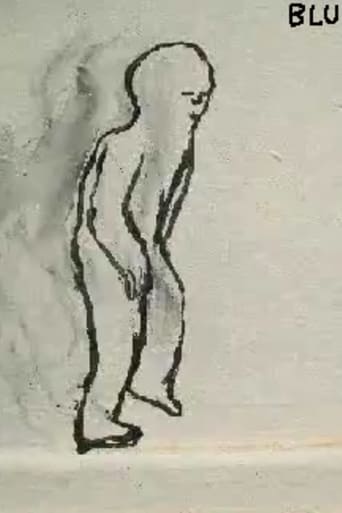
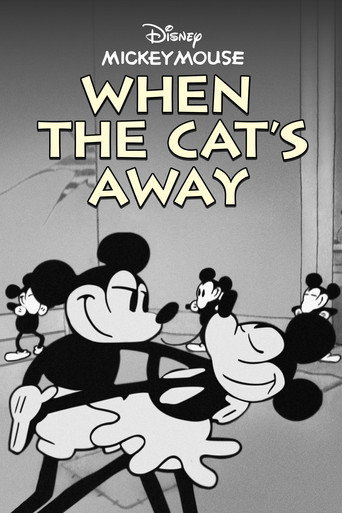
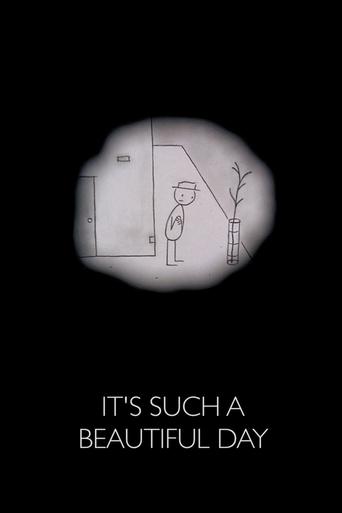
"An animated silent self portrait."
Commissioned by Harald Inhülsen for MasterclassFilm. A companion piece to Stefano Miraglia's Self-portrait, also part of the same commission.
Social & External
During World War Two, Daffy Duck owns a junkyard which collects scrap metal to use in building weapons to continue the Allied fight against the Axis powers. Hitler reads about Daffy's scrap pile and about Daffy's stated intent to win the war with junk and, after throwing a fit and chewing a carpet like a mad dog, orders Daffy's scrap pile destroyed.
Porky Pig works hard on his farm all year. On a neighboring farm, a bear lazes around and allows his animals to be idle. The winter comes, and he has nothing to eat.
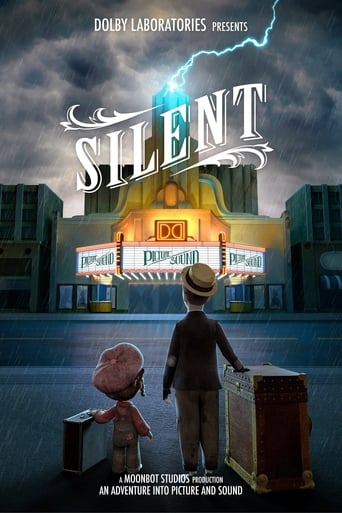
A duo of street performers learns how sound and picture work together to create amazing cinema experiences.
In this child's game, a live-action boy and girl draw characters and compete who is better. The girl draws a flower and the boy draws a car that runs it over. Then a drawn lion chases a drawn girl, until it all becomes frightfully serious.
In Happy-Go-Luckies a pair of ukulele-strumming railroad hoboes fake their way into a dog show and make off with the prize loot. “Two heads are better than one” is the moral. To modern eyes, our trickster duo may look like two dogs—in the show they pretend to be one long dog—but audiences of the ’20s would have recognized a dog-and-cat team. The black body, white face, and sharp ears would have been most familiar from the greatest jazz-era trickster cat, Felix. Dogs and cats—much easier to animate than humans—were everywhere in silent cartoons. Terry, like most early film animators, had begun as a newspaper cartoonist, and his first strip, working with his brother as a teenager for the San Francisco Call, was about the adventures of a dog named Alonzo.
Using an array of gloves in different styles and from different historical periods, the film is a short history of the cinema - from silent movies via pastiches of Buñuel and Fellini and Close Encounters of the Third Kind to a futurist junkyard where tin cans become animated police cars in a city of urban decay.
Mr Plastimime is a funny and moving story about a man who faithfully practices a dying art, a man whose timing is a bit off, a man whose skills aren’t recognized, a man who is unlucky in love; But this is a man who keeps moving forward, faithfully believing he will one day be finally ‘seen’. That day has come…but he never expected it to be like this.
Life drums the playfulness out of a boy as he grows up.
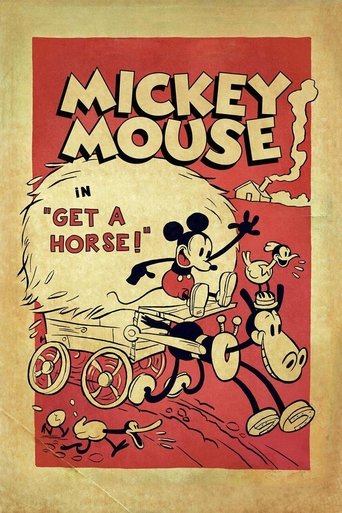
Mickey, Minnie, Horace Horsecollar, and Clarabelle Cow go on a musical wagon ride until Peg-Leg Pete tries to run them off the road.
Norman McLaren made Scherzo early after his arrival in North America in 1939, but the film was subsequently lost. In 1984 the original materials were found and the hand-drawn images and sound were reconstituted. Picture and sound dance triple-quick in this animated version of a musical scherzo. A film without words.
Trnka brings to life a surrealist circus of tightrope-walking fish, musical monkeys, balancing bears, and high-flying acrobatics in this whimsical feat of cutout animation made in collaboration with leading Czech painters of the era.
When snow comes, winter sports are back and all the animals rush to the frozen lake.
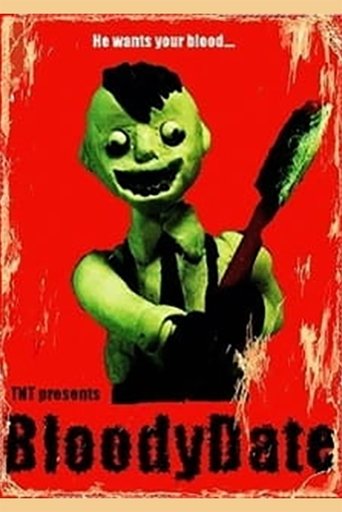
Your first date becomes your worst nightmare...
Filmmakers use archival footage and animation to explore the culture surrounding nuclear weapons, the fascination they inspire and the perverse appeal they still exert.
This is a story of love seen from a square, in which a couple gets united, separated and rearranged again. A special kind of puzzle.
A lonely dog's friendship with his robot companion takes a sad turn when an unexpected malfunction forces him to abandon Robot at the beach. Will Dog ever meet Robot again?
A classic Soviet, black-and-white, animated film by the sisters Brumberg, "grandmothers of the Russian animation". Its plot differs slightly from the original fairy tale.
"My last image of Jonas."—Ken Jacobs
Mary and Eva are best friends, although they couldn't be more different. Armand, Mary's fiancee, falls in love with the seductive Eva, who is busy becoming a revue star. When Eva fails and loses her money, Armand tries to help her out.
Kiko, a Japanese illustrator on assignment in France, gets suddenly overwhelmed by a strange new inspiration, while she realizes she's been spying on a gay couple on the beach next to the chapel where she's working. Obsessed by such a vision, she will continue spying on those men and drawing them secretly. These drawings will slowly push her towards an encounter that will change her life and break the barriers she created around her.
In 1960s Tokyo, Gonda owns a bar in which the gay, cross-dresser, and trans scenes meet. Gonda is in a relationship with the madam of the bar, Leda. As the younger Eddie starts a passionate affair with Gonda, she ignites the jealousy of Leda, unaware of another kind of history between them.
Un Chien Andalou is an European avant-garde surrealist film, a collaboration between director Luis Buñuel and Salvador Dali.
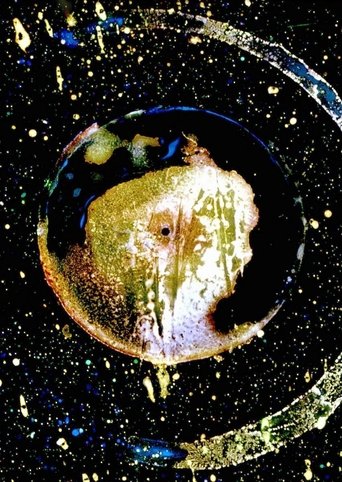
This is a hand-painted film which has been photographically step-printed to achieve various effects of brief fades and fluidity-of-motion, and makes partial use of painted frames in repetition (for "close-up" of textures). The tone of the film is primarily dark blue, and the paint is composed (and rephotographed microscopically) to suggest galactic forms in a space of stars.
A cartoonist defies reality when he draws objects that become three-dimensional after he lifts them off his sketch pad.
A static camera observes a room as it slowly fills with thirty-six characters from different stages of life, looping further through an absurd dance of social disconnection as each character moves in.
A playful exercise in intermittent animation and spasmodic imagery. Playing with the laws relating to persistence of vision and after-image on the retina of the eye, McLaren engraves pictures on blank film creating vivid, percussive effects.
Short animation of a Russian folk tale, made in 1981. A parody of the fable by Ivan Krylov "The Crow and the Fox".
A fine day in the life of a fly presented completely from the fly's point of view. A fine day until something dreary happens, that is.
A visual representation, in four parts, of one man's internalization of "The Divine Comedy." Hell is a series of multicolored brush strokes against a white background; the speed of the changing images varies. "Hell Spit Flexion," or springing out of Hell, is on smaller film stock, taking the center of the frame. Montages of color move rapidly with a star and the edge of a lighted moon briefly visible. Purgation is back to full frame; blurs of color occasionally slow down then freeze. From time to time, an image, such as a window or a face, is distinguishable for a moment. In "existence is song," colors swirl then flash in and out of view. Behind the vivid colors are momentary glimpses of volcanic activity.
Mother, father and daughter go to the park. The women doze off on a bench while the father plays a hide-and-seek game with a girl, blindfolded. Charlie leads him into a lake. Both dozing ladies on the bench fall for Charlie and invite him for dinner. The father returns home with a friend. Charlie rushes upstairs and dresses like a woman, shaving his mustache. Both men fall for Charlie.
A hand drawn animated short by Studio Ghibli.
While changing clothes in a getaway car, escaped convicts Stan and Ollie mistakenly put on each other's pants. They spend the rest of the film trying to exchange pants in various unlikely settings.
Animated shapes dance to Cuban music. This was one of the first animations to be painted directly onto the film.
I made this film especially for you. I needed to check in with you. I needed to tell you how I feel.
An elegant and humorous film—in the guise of a serious anthropological treatise—spotlights "The Perfect Human," a model of the modern Dane created by our wishful thinking.
To escape neglect and abuse from his parents, a young boy plants some strange seeds and they grow into a grandmother.
Distant, well-worn memories of childhood are inhabited by a little gray wolf. Through astonishing imagery, the memory of all of Russia is depicted.
In this powerful abstract film with a soundtrack of African drum music, Lye scratched "white ziggle-zag-splutter scratches" on to black leader, using a variety of tools from saw teeth to arrow heads. The first version of the film won a major award at the International Experimental Film Festival Held in Brussels in 1958 in association with the World's Fair. Stan Brakhage described the film as "an almost unbelievably immense masterpiece".
A narrator sings the opening stanzas of the classic poem while we see the house at rest. Santa lands on the roof, comes down the chimney, and opens his bag. The toys march out and decorate the tree, with the toy soldiers shooting balls from their cannon, a toy airplane stringing a garland like skywriting, and the toy firemen applying snow. A blimp delivers the star to the top. Meanwhile, Santa fills the stockings. His laughter awakens the children, who sneak out. The toys rush to their places, and Santa escapes up the chimney just in time.