"Bold Solutions for Urban Challenges"
World in a City is a portrait of Toronto and the steps Torontonians are taking to create a society that welcomes and encourages new immigrants to flourish
Social & External
Documentary devoted to the architectural and urban planning designs of Le Corbusier. The architect supports his in-depth reflection on the city and its necessary adaptation to modern life with plans, drawings and images, particularly Paris, whose revolutionary development dreamed of by Le Corbusier is exhibited here. Its first projects will remain at the stage of a model: the modernization plan for the city of Algiers. Some will be created by other architects: Ministry of Education in Rio de Janeiro, UN Palace in New York. From the post-war period in less than 10 years, Le Corbusier created large housing units in Marseille, Nantes, a chapel in Ronchamps, a factory in Saint-Dié, a town in Chandigarh in India. Through diagrams, the architect presents his theory of the "radiant city", the mathematical key modulor of his work as well as his project for reorganizing the countryside, industrial and urban cities into a grouping around a cooperative system.
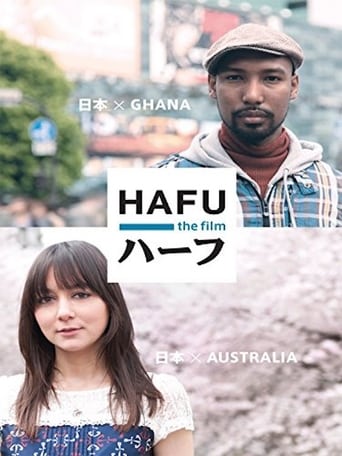
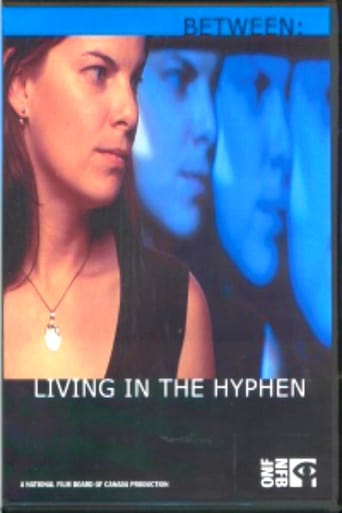
Anne Marie Nakagawa's documentary examines what it means to have a background of mixed ancestries that cannot be easily categorized. By focusing on 7 Canadians who have one parent from a European background and one of a visible minority, she attempts to get at the root of what it means to be multi-ethnic in a world that wants each person to fit into a single category.
The human side of town planning, as exemplified in Baltimore, Maryland. The Coldspring Project concerned a proposed housing development for lower and upper income levels on a three hundred-acre site adjoining a wildlife sanctuary. The film records the differences aired in meetings of various interest groups that tried to modify the plan according to their views, and the compromise reached, based on plans drawn up by Montréal architect Moshe Safdie.
This short documentary film is a fascinating portrait of urban and rural Quebec in the late 1960s, as the province entered modernity. The collective work produced for the Quebec Ministry of Industry and Commerce calls on several major Quebec figures.
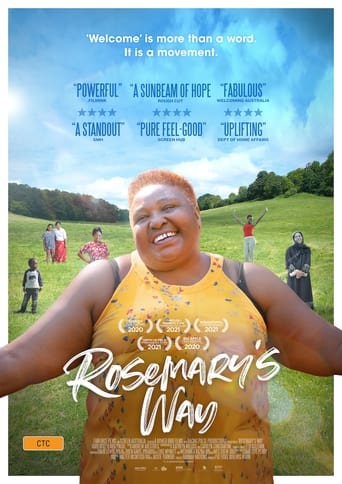
An effervescent facilitator and mother figure, Multicultural Liaison Officer Rosemary is undoubtedly a force of nature. Isolation in Auburn’s migrant community is a huge obstacle, and cultural norms mean that women are often tied to the house or a limited locale. Rosemary, with her larger-than-life spirit and generosity, works tirelessly to draw the women out of their homes and into society. She hosts a lively African Women’s Dinner Dance and takes them on a trip to the Blue Mountains and the NSW South Coast – introducing them to an Australia they’ve never seen before.
"Africa Light" - as white local citizens call Namibia. The name suggests romance, the beauty of nature and promises a life without any problems in a country where the difference between rich and poor could hardly be greater. Namibia does not give that impression of it. If you look at its surface it seems like Africa in its most innocent and civilized form. It is a country that is so inviting to dream by its spectacular landscape, stunning scenery and fascinating wildlife. It has a very strong tourism structure and the government gets a lot of money with its magical attraction. But despite its grandiose splendor it is an endless gray zone as well. It oscillates between tradition and modernity, between the cattle in the country and the slums in the city. It shuttles from colonial times, land property reform to minimum wage for everyone. It fluctuates between socialism and cold calculated market economy.
Director Mark Wexler embarks on a worldwide trek to investigate just what it means to grow old and what it could mean to really live forever. But whose advice should he take? Does 94-year-old exercise guru Jack LaLanne have all the answers, or does Buster, a 101-year-old chain-smoking, beer-drinking marathoner? What about futurist Ray Kurzweil, a laughter yoga expert, or an elder porn star? Wexler explores the viewpoints of delightfully unusual characters alongside those of health, fitness and life-extension experts in this engaging new documentary, which challenges our notions of youth and aging with comic poignancy. Begun as a study in life-extension, How To Live Forever evolves into a thought-provoking examination of what truly gives life meaning.
Exploration of the territory in a delirious time-space journey through the largest Megalopolis in America.
In the town of Xoco, the spirit of an old villager awakens in search of its lost home. Along its journey, the ghost discovers that the town still celebrates its most important festivities, but also learns that the construction of a new commercial complex called Mítikah will threaten the existence of both the traditions and the town itself.
Valérie Jouve is a weel-known photographer, and Grand Littoral is her first film. Out the outskirts of Marseille, in a landscape criss-crossed by motorways, railways and srubland paths, some figures that seem to be from her famous photos passby and bump into each other. They act as our guides in a tour without beginning or end. How do you look at a place without taking possession of it? How do you describe characters without confining them within a given plot? How do you make the transition from still shots to moving pictures? this brief, musical film leaves us asking these and other unresolved questions.
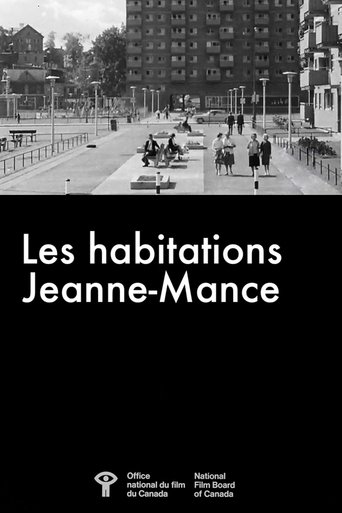
Documentary on the revitalization of a housing complex in a working class neighborhood of Montreal. Modern housing has now replaced the old, sagging and overcrowded houses. There is fresh air, light and hope. Habitations Jeanne-Mance, a bold way to renovate a city: a perfect example of the collaboration that can exist at the federal, provincial and municipal levels.
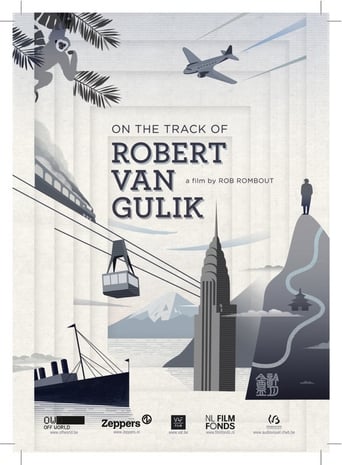
Robert van Gulik (1910-1967) is one of the world’s most read authors from the Netherlands. This diplomat, Sinologist and scholar is mainly known for his detective novels, starring 'Judge Dee'. Filmmaker Rob Rombout follows in his footsteps to discover the author’s legacy - via his diaries, the people he inspired and those who witnessed his extraordinary life.
A short documentary on the River Ouse, following it downstream from Lewes to Newhaven, meditating on the surrounding area.
This feature documentary takes a look at how the Halifax/Dartmouth community in Nova Scotia was stimulated by a week-long session held by a panel of specialists from different fields who met with members of this urban community to consider the future of the area and the responsibility of the citizens and government in planning the future.
Sundance award-winning director Julia Kwan’s documentary Everything Will Be captures the subtle nuances of a culturally diverse neighbourhood—Vancouver’s once thriving Chinatown—in the midst of transformation. The community’s oldest and newest members offer their intimate perspectives on the shifting landscape as they reflect on change, memory and legacy. Night and day, a neon sign that reads "EVERYTHING IS GOING TO BE ALRIGHT" looms over Chinatown. Everything is going to be alright, indeed, but the big question is for whom?
The war zone of a dystopian multiplayer shooting game is used to embark some urban explorers on a winter walk, avoiding the combats whenever possible, as peaceful observers, inhabitants of a digital world, which is a detailed replica of Midtown Manhattan.
This full-length documentary from the Challenge for Change program addresses housing issues affecting Montreal in the mid-1970s. As the city is restoring older apartments through direct action and government subsidies, new, low-rent housing is being integrated into old neighborhoods.
Amina, Sami and Jennyfer are high school students in the Paris suburbs, in 93. At the initiative of 3 of their teachers, they embark on an unexpected investigation into a gigantic leisure park project which involves concreting agricultural land near their homes. But can we have the power to act on a territory when we are 17 years old? Funny and intrepid, these new citizens take us to meet residents of their neighborhood, property developers, farmers and even elected officials of the National Assembly. A joyful quest that challenges conventional wisdom and revives our connection to the land!
Just a stone’s throw from downtown Montreal is the largest social housing complex in Quebec. Built in 1959 where the red-light district used to be, Les Habitations Jeanne-Mance have retained something of the area’s seedy reputation for poverty, prostitution, drugs and violence. But who really knows the projects and the people who live there? Delving beneath the prejudices and stereotypes, director Isabelle Longtin ventured inside the buildings and met the residents.