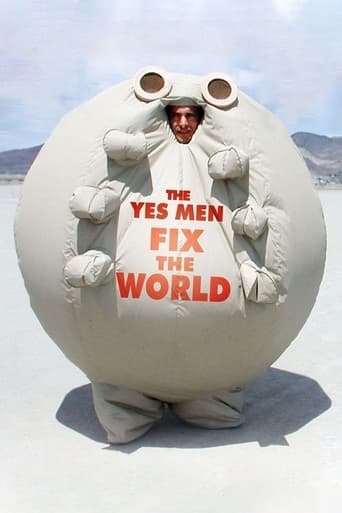
1999 documentary film, first broadcast in daily half-hour installments, about the November 1999 protests against the Ministerial Conference of the World Trade Organization (WTO) in Seattle, Washington.
Social & External
Self - Author
Margherita Sarfatti, Mussolini's lover and advisor, was a woman who exerted a great influence on the Duce and on Italian cultural life. Through archival documents, autobiographical texts and love letters, the documentary paints a portrait of the woman who helped create the myth of the Duce.
A video about Neo-Nazis originating in Sweden provides the starting point of an investigation of extremists' networks in Europe, Russia, and North America. Their propaganda is a message of hatred, war, and segregation.
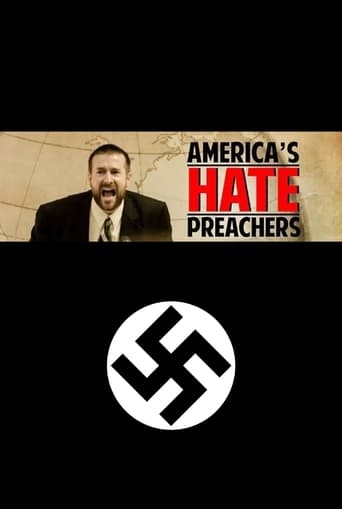
Director Hannah Livingston spends 6 months tracking two of America's most radical Christian hate groups - a notorious pastor from Arizona and a network of extremist preachers.
A brother and sister are torn apart when their parents die tragically in a tornado. While he moves to Seattle to be away from the memory, she devotes her life to studying storms and weather patterns. When she discovers the threat of a powerful series of tornadoes are heading for Seattle, she must convince her brother and the entire city that she is not crazy; and they are in grave danger
This year, the Seattle International Film Festival (SIFF) challenged five local production companies to create a love letter to Seattle in a compilation affectionately titled, 'Seattle, I Love You'. The five shorts within this omnibus production are: Sea Folk, Fresh Pair, Open Mouth, Hannah & Otto, Secret.
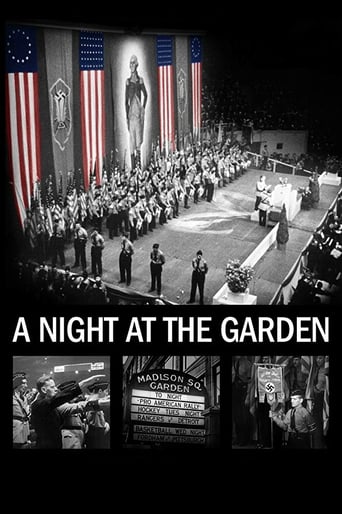
Archival footage of an American Nazi rally that attracted 20,000 people at Madison Square Garden in 1939, shortly before the beginning of World War II.
Eddie Vedder's soul-stirring Seattle benefit concert fuels this documentary about the race to cure the rare genetic disorder epidermolysis bullosa (EB).
Allonias decides that enough is enough. He works 12-13 hours driving his taxi every day and still has no money left to pay for rent and clothes for their three children. He begins a battle against Sweden’s largest taxi company owned by billionaire Rolf Karlsson. It leads to Rolf Karlsson selling the entire empire for around 2-3 billion SEK. But for Allonias it has a high price…
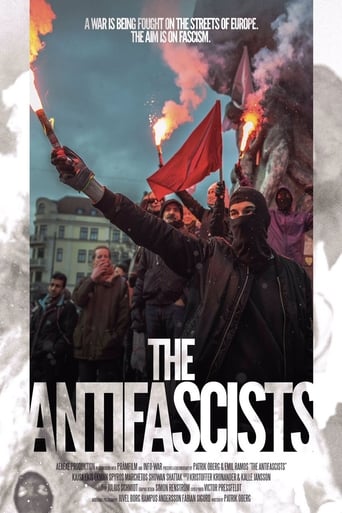
A low-intensity war is being fought on the streets of Europe and the aim is on fascism. This critically acclaimed documentary takes us behind the masks of the militants called antifascists. In 2013 a group of armed nazis attacks a peaceful demonstration in Stockholm where several people are injured. In Greece the neo-nazi party Golden Dawn becomes the third largest in the election and in Malmö the activist Showan Shattak and his friends are attacked by a group of nazis with knives and he ends up in a coma. In this portrait of the antifascists in Greece and Sweden we get to meet key figures that explain their view on their radical politics but also to question the level their own violence and militancy.
A big hearted community celebrates life by fronting up to death. Set against the stunning backdrop of the industrial seaside town of Port Kembla, a feisty and resilient community group have determined to take back the responsibility that most of us leave to someone else — to care for their own dead. Scattered throughout are stories that cut to the core revealing why this small band have decided to take on a practice that for most is taboo. As their plans for community-based funerals gather momentum one of their own is diagnosed with a life-threatening illness. Tender is at once a heartbreakingly beautiful and beautifully funny glimpse of an extraordinary community taking on one of the most essential challenges of human life … its end.
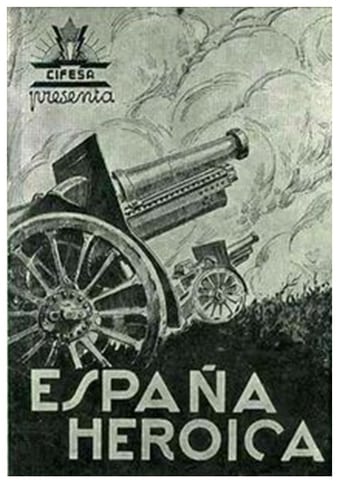
Documentary produced by Falange and edited in Berlin, in response to the international success of the Republican production "Spain 1936" (Le Chanois, 1937).
An epic documentary of rise and fall of Ustasha regime in Croatia.
After his father is murdered by the Nazis in 1938, a young Viennese Jew named Ferry Tobler flees to Prague, where he joins forces with another expatriate and a sympathetic Czech relief worker. Together with other Jewish refugees, the three make their way to Paris, and, after spending time in a French prison camp, eventually escape to Marseille, from where they hope to sail to a safe port.
After years of organizing fashion in the city, Lauren decides to move home. In exchange for her organizing services, mover Rob makes it his mission to help her see the beauty of Seattle.
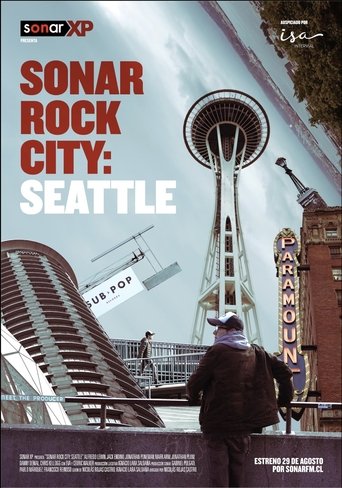
An extension of punk and the fury of the 70s, Grunge was built on the impossibility of living in this world without transforming it. On a categorical refusal to collaborate and the need to create your own rules. The subculture as a refuge. Grunge was a secret movement, a piracy that should never have become popular. A bubble whose epilogue was played out in 3 years, between 1991 and 1994. What happened to this rage?
What would your family reminiscences about dad sound like if he had been an early supporter of Hitler’s, a leader of the notorious SA and the Third Reich’s minister in charge of Slovakia, including its Final Solution? Executed as a war criminal in 1947, Hanns Ludin left behind a grieving widow and six young children, the youngest of whom became a filmmaker. It's a fascinating, maddening, sometimes even humorous look at what the director calls "a typical German story." (Film Forum)
After the World War I, Mussolini's perspective on life is severely altered; once a willful socialist reformer, now obsessed with the idea of power, he founds the National Fascist Party in 1921 and assumes political power in 1922, becoming the Duce, dictator of Italy. His success encourages Hitler to take power in Germany in 1933, opening the dark road to World War II. (Originally released as a two-part miniseries. Includes colorized archival footage.)
Filmed on location in Montana and Washington State, this 1976 biography of poet and teacher Richard Hugo features readings of some of his most famous poems as well as interviews with his family and friends.
Crossfire is Lauren Southern's third documentary film project focusing on the issues surrounding policing, brutality, race, law and order. A heated debate today which has led to a massive political divide between those supporting officers, those defending reform and even many rioting violently in the streets.
Upon the outbreak of the Spanish Civil War in July 1936, the anarchist union CNT socialized the film industry in Spain, so in Madrid and Barcelona film workers took over the production assets and, between 1936 and 1938, numerous films on a wide variety of topics were released, composing a varied mosaic that gives rise to one of the most unusual and original moments of Spanish cinematography.