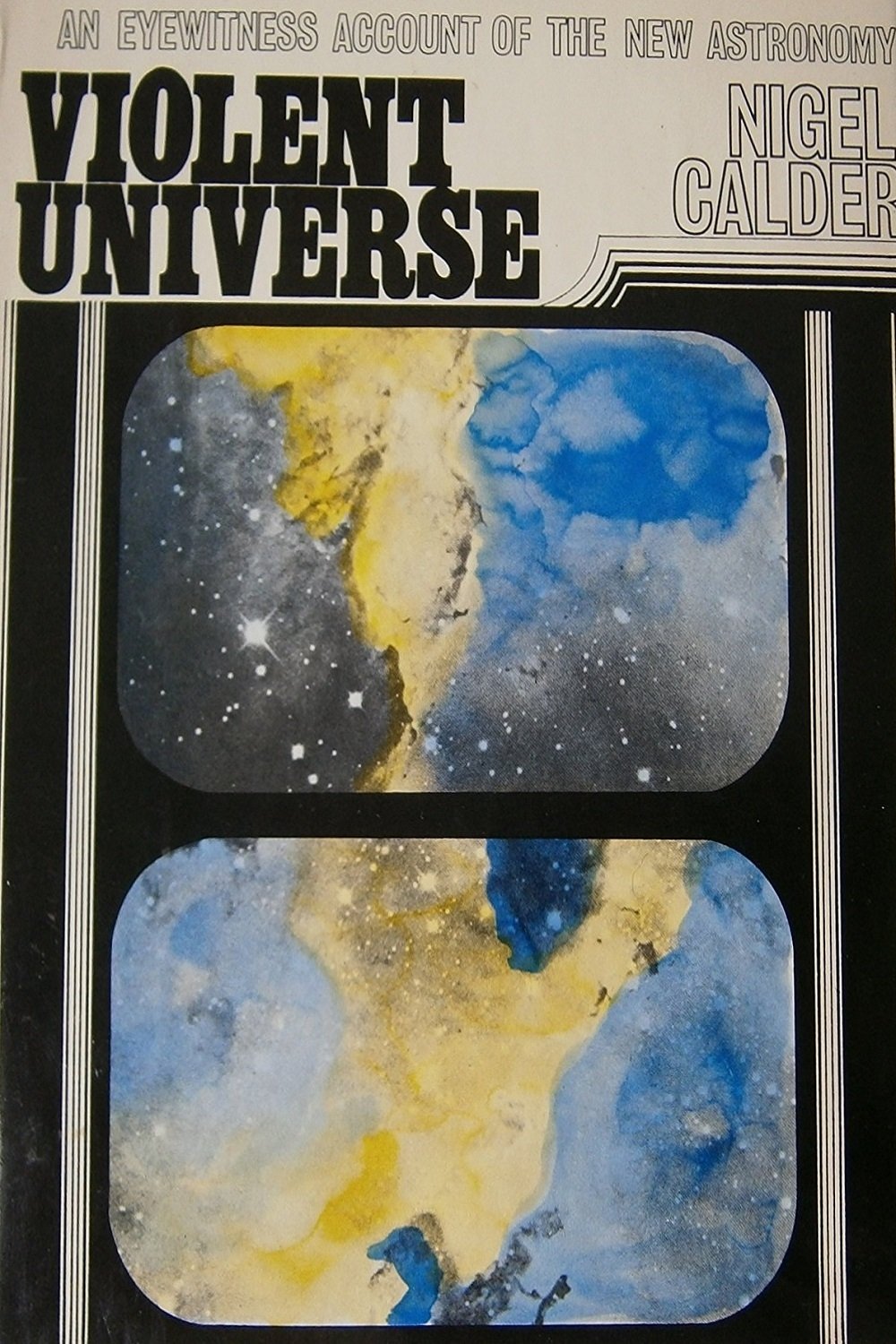
Thirty distinguished astronomers are visited at their observatories throughout the world in this comprehensive report of astronomical theories, research, and discoveries.
Social & External
Narrator
Host
Narrator - Verse Spoken
In the year 1957 the cold war expands to space. The Soviet-Union sends Sputnik as the first manmade object into earth-orbit. 3 years later Yuri Gagarin enters space as the first man in space. The so called "Space Race" seems to be decided. But in 1961 President Kennedy promised to send American Astronauts to the Moon. The Apollo Project was born. A space ship had to be built that is strong enough to escape earth's gravitation, land on the moon and bring the crew safely back to earth. Motion Designer Christian worked with his brother and Composer Wolfgang for 18 months on this shortfilm. The foundation were thousands original NASA photographies, taken from the Astronauts during the Apollo Missions, which were released in September 2015. It is an animated collage using different techniques to bring the stills to life.
Woolly Mammoth: Secrets from the Ice is a documentary presented by English anatomist Dr. Alice Roberts that reveals some of the secrets of one of the most widely known extinct animals ever. Humans have been transfixed by the Wolly Mammoth since the end of the last ice age when there were still herds of them roaming the continents of Asia and Europe. Despite many people knowing about the great Woolly Mammoth until recently very little was known about them despite ancient humans living along side them for so long; few documented accounts exist.
It was November 12, 2014, at 5:03pm. Humanity had just accomplished a feat that will forever mark its history. Philae, the miniature laboratory integrated into the Rosetta probe, landed softly on comet 67P Chourioumov-Guérassimenko, better known as Tchouri. The culmination of a project decided twenty-one years earlier, in 1993, by the European Space Agency - the first to display the immense ambition of landing on one of these bodies made of ice and dust, archives of the solar system's infancy. To achieve this, it took years of preparation, a decade-long flight, six billion kilometers flown, thousands of scientists and engineers involved... Astrophysicist Anny-Chantal Levasseur-Regourd sums it all up: "From this mission, we hope - and can reasonably expect - to understand the origin of the solar system and how life appeared on Earth.
Did Mars ever have life on it? To answer this question, Europe and Russia have launched a unique and ambitious 2-stage project: ExoMars 2016-2018. This documentary is a thrilling look behind the scenes of a magnificent human and scientific adventure. We will uncover the most fascinating aspects of this mission and the search for signs of life on Mars.
Comets pose one of the greatest threats to life on Earth - a threat that can only be countered if we find out more about them. In 2005, in an audacious bid to do just that, NASA scientists launched a space probe to collide with a comet in the emptiness of deep space. This film follows the amazing story of mission Deep Impact, from its inception through to the final nail-biting moments when the probe and comet Tempel 1 met head-on.
Meet Nikola Tesla, the genius engineer and tireless inventor whose technology revolutionized the electrical age of the 20th century. Although eclipsed in fame by Edison and Marconi, it was Tesla's vision that paved the way for today's wireless world. His fertile but undisciplined imagination was the source of his genius but also his downfall, as the image of Tesla as a mad scientist came to overshadow his reputation as a brilliant innovator.
This feature-length documentary is a portrait of eclipse chasers, people for whom solar eclipses - among nature's more spectacular phenomena – are a veritable obsession. The film follows 4 of them as they travel incredible distances to witness the last total eclipse of the millennium as it sweeps eastward across Europe to India. At various points along the way enthusiasts Alain Cirou in France, Paul Houde in Austria, Olivier Staiger in Germany and Debasis Sarkar in India offer their impressions of the historic event.
Of the Seven Wonders of the Ancient World, the Pyramid is the only one to survive. Many believe that even with our 21st-century technology, we could not build anything like it today. Based on the most up-to-date research and the latest archaeological discoveries, here is how the Pyramid came to be.
A Cambridge geneticist dispels misconceptions about living with obesity and explores why the epidemic continues to expand across the UK and America.
"All sounds travel in waves much the same as ripples in water." Educational film produced by Bray Studios New York, which was the dominant animation studio based in the United States in the years surrounding World War I.
A documentary on Al Gore's campaign to make the issue of global warming a recognized problem worldwide.
A filmmaker returns to a house from his past where a great tragedy happened, in order to find a closure within the space that already feels too foreign.
The first American space station Skylab is found in pieces scattered in Western Australia. Putting these pieces back together and re-tracing the Skylab program back to its very conception reveals the cornerstone of human space exploration.
Principles of Curiosity presents a general introduction to the foundations of scientific skepticism and critical thinking, focusing on a simple process we call the three Cs.
Experimental educational film reveals the emergence of some ideas of Biophysics in historical, philosophical and methodological aspects. The first film from the Biophysics Cycle (1982-1989).
Dr. Helen Caldicott is the most prominent anti-nuclear activist in the world. She's been featured on CNN, 60 Minutes, CBC and Democracy Now. In the 80s, Helen Caldicott campaigned against nuclear weapons testing in the pacific (still responsible today for the majority of tritium we're exposed to), and against the notion of a winnable nuclear war. She was nominated for a Nobel Peace Prize for her efforts. She has always made inaccurate statements regarding civilian nuclear power. But, since the Fukushima-Diachii radiation release has caused (and is projected to cause) zero fatalities... http://www.unis.unvienna.org/unis/en/... ...her tone has changed when speaking to supporters. This has not been acknowledged by prime-time media, as they continue to use her as a source. Any person or media outlet should check Caldicott's history of statements (on any subject) against a domain expert before using her as a source.
The 1960s was an extraordinary time for the United States. Unburdened by post-war reparations, Americans were preoccupied with other developments like NASA, the game-changing space programme that put Neil Armstrong on the moon. Yet it was astronauts like Eugene Cernan who paved the uneven, perilous path to lunar exploration. A test pilot who lived to court danger, he was recruited along with 14 other men in a secretive process that saw them become the closest of friends and adversaries. In this intensely competitive environment, Cernan was one of only three men who was sent twice to the moon, with his second trip also being NASA’s final lunar mission. As he looks back at what he loved and lost during the eight years in Houston, an incomparably eventful life emerges into view. Director Mark Craig crafts a quietly epic biography that combines the rare insight of the surviving former astronauts with archival footage and otherworldly moonscapes.
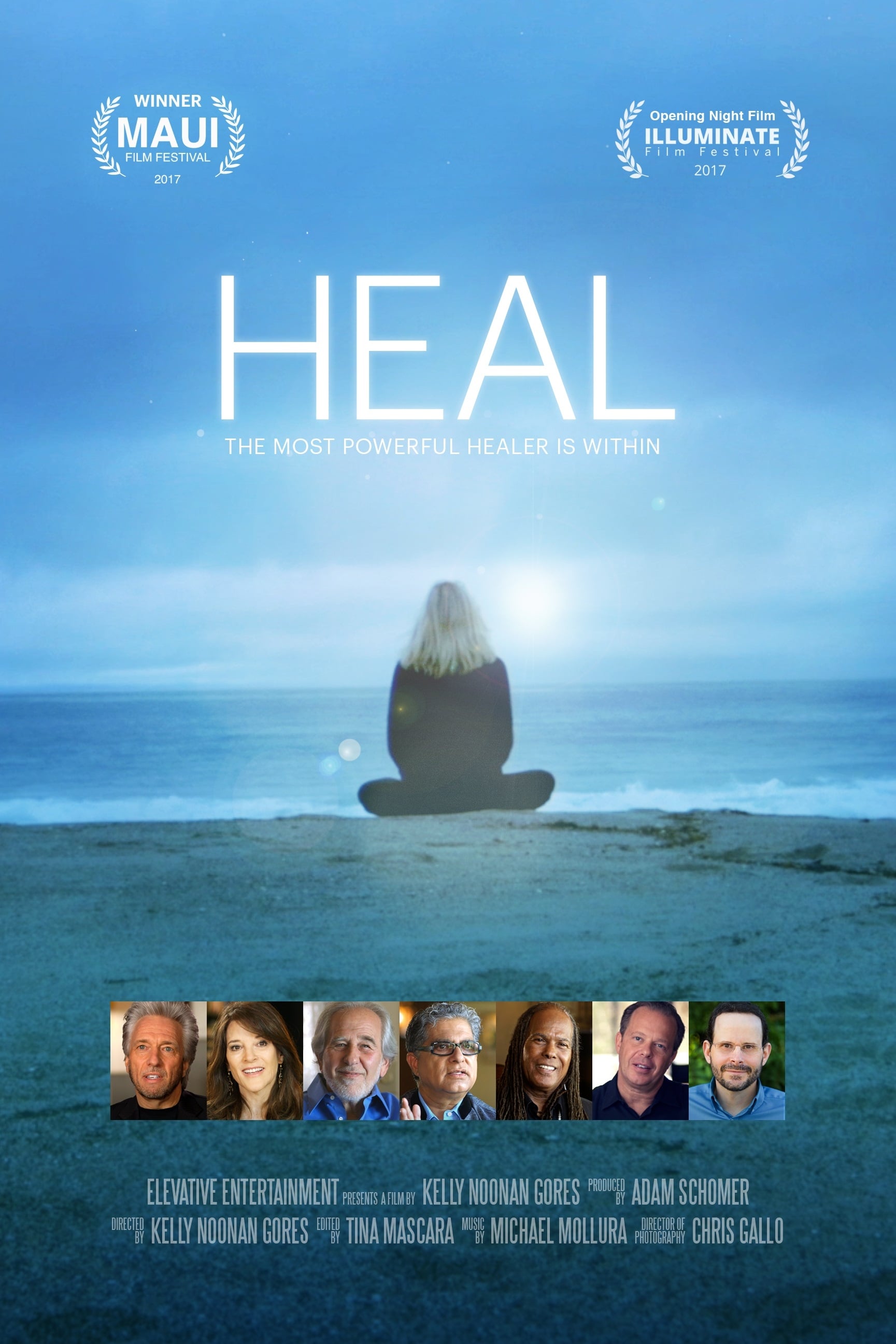
A documentary film that takes us on a scientific and spiritual journey where we discover that by changing one's perceptions, the human body can heal itself from any disease.
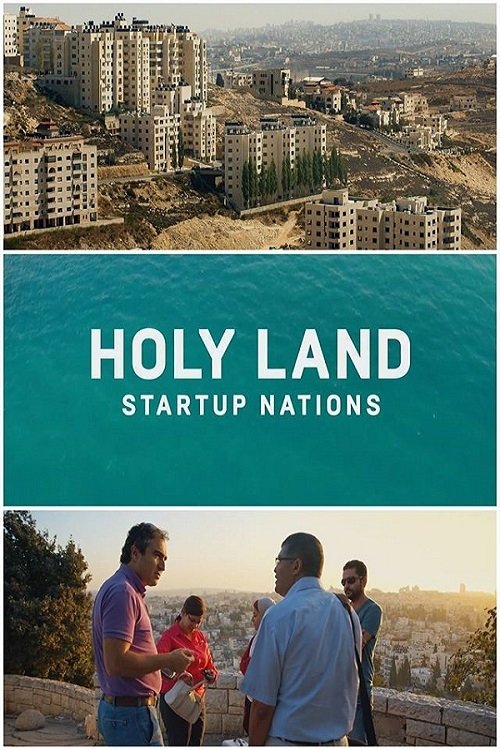
With the most tech startups and venture capital per capita in the world, Israel has long been hailed as The Startup Nation. WIRED’s feature-length documentary looks beyond Tel Aviv’s vibrant, liberal tech epicenter to the wider Holy Land region – the Palestinian territories, where a parallel Startup Nation story is emerging in East Jerusalem, Nazareth, Ramallah and other parts of the West Bank, as well as in the Israeli cybersecurity hub of Be’er Sheva. And we will learn how the fertile innovation ecosystem of Silicon Wadi has evolved as a result of its unique political, geographical and cultural situation and explore the future challenges – and solutions – these nations are facing.