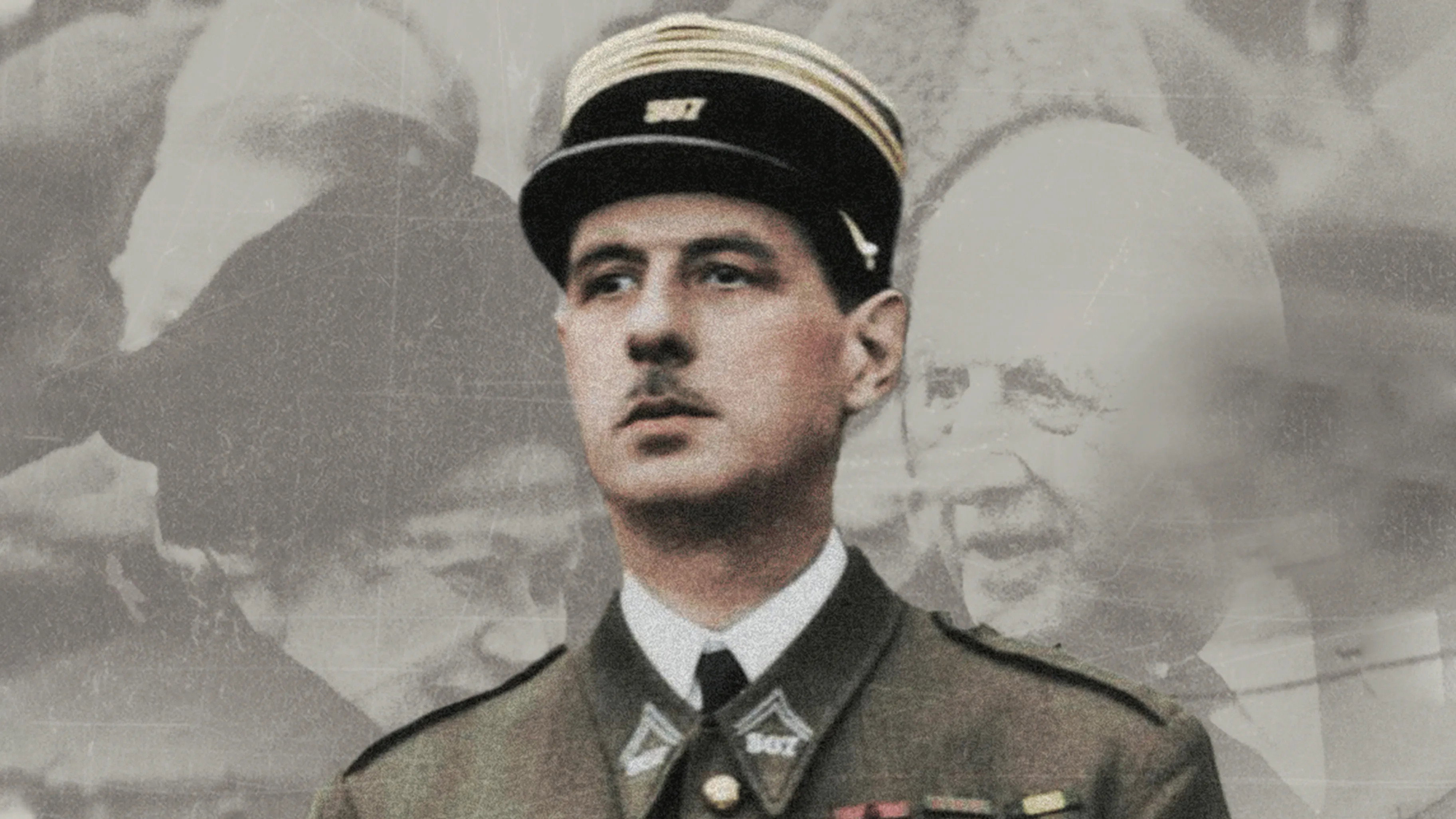
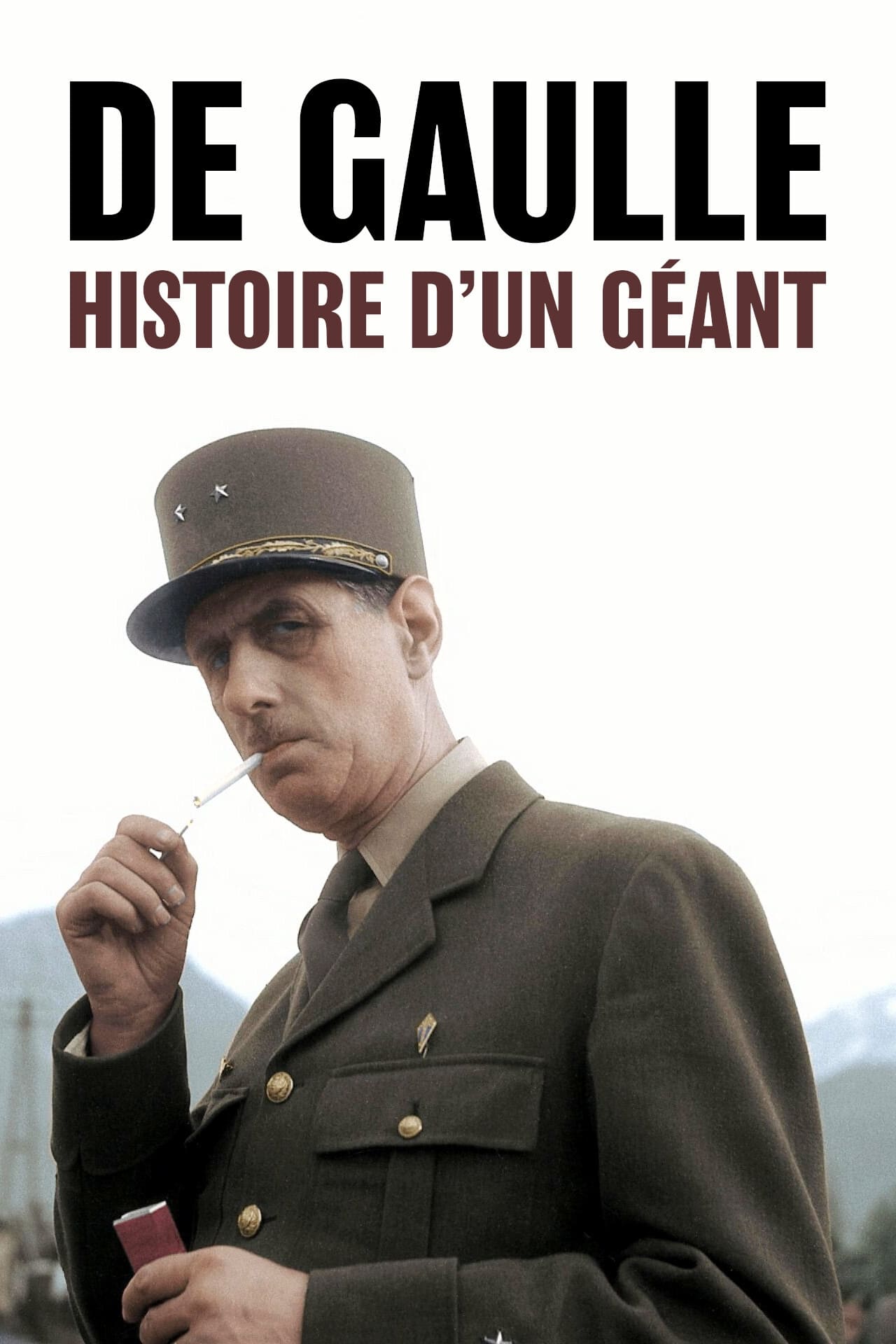
50 years after the death of General De Gaulle, this film retraces his life, from his birth in 1890 to his burial at Colombey-Les-Deux-Eglises in 1970.

Social & External
Charles de Gaulle
(voice)
This documentary follows the steps of the boys of H Company as they fight on the island of Iwo Jima.

A group of people are standing along the platform of a railway station in La Ciotat, waiting for a train. One is seen coming, at some distance, and eventually stops at the platform. Doors of the railway-cars open and attendants help passengers off and on. Popular legend has it that, when this film was shown, the first-night audience fled the café in terror, fearing being run over by the "approaching" train. This legend has since been identified as promotional embellishment, though there is evidence to suggest that people were astounded at the capabilities of the Lumières' cinématographe.
A look at the life of photographer Robert Mapplethorpe from his rise to fame in the 1970s to his untimely death in 1989.
Ronald Wilson Reagan, the 40th President of the United States, is credited by many with the greatest peacetime expansion in U.S. history. Twice winning the White House by a landslide, the former sports announcer, actor and California Governor worked with Congress to stimulate economic growth, curb inflation, increase employment and strengthen national defense. This two-disc boxed set takes a unique look at the Reagan presidency through the clips of more than 100 presidential appearances, rare newsreels and Hollywood footage. The set includes two hours of DVD extras that showcase memorable speeches and addresses throughout Reagan’s tenure as President. From the attempted assassination on his life, to his historic speech in Berlin, to his journey to the oval office, Ronald Reagan: The Great Communicator is a comprehensive look at one of the most influential world leaders of all time.
Ireland, June 1944. The crucial decision about the right time to start Operation Overlord on D-Day comes to depend on the readings taken by Maureen Flavin, a young girl who works at a post office, used as a weather station, in Blacksod, in County Mayo, the westernmost promontory of Europe, far from the many lands devastated by the iron storms of World War II.
When she was in high school, Ainun was known as a smart girl and became the target of many male students, including Habibie. In college, Ainun became a popular figure. Ahmad is a man who dared to express his love for Ainun.
71 years in the making, this feature documentary experience reveals the extraordinary life journey of Hollywood's most unlikely hero, Danny Trejo.
The mostly true story of the legendary "worst director of all time", who, with the help of his strange friends, filmed countless B-movies without ever becoming famous or successful.
The true story of how businessman Oskar Schindler saved over a thousand Jewish lives from the Nazis while they worked as slaves in his factory during World War II.
Follows the story of "Grizzly Man" Timothy Treadwell and what the thirteen summers in a National Park in Alaska were like in his attempt to protect the grizzly bears. The film is full of unique images and a look into the spirit of a man who sacrificed himself for nature.
Transcending cultural barriers and consistently going against the grain, female Nepali climber Pasang Lhamu Sherpa attempted to summit Everest four times in the early nineties. Although she was not allowed to attend school as a child, Pasang did not let that stop her from pursuing her dreams. After founding her own trekking company in Kathmandu, she blazed a trail for Nepali women via her efforts to summit Everest. Proving how big you can dream and how far you can go to achieve those dreams, she left a legacy not only for the family she has left behind, but for the myriad women following in her footsteps.
What happened after Einstein fled Nazi Germany? Using archival footage and his own words, this docudrama dives into the mind of a tortured genius.
In April of 1945, Germany stands at the brink of defeat with the Russian Army closing in from the east and the Allied Expeditionary Force attacking from the west. In Berlin, capital of the Third Reich, Adolf Hitler proclaims that Germany will still achieve victory and orders his generals and advisers to fight to the last man. When the end finally does come, and Hitler lies dead by his own hand, what is left of his military must find a way to end the killing that is the Battle of Berlin, and lay down their arms in surrender.
The true story of a Japanese man during World War II who survived the atomic blast at Hiroshima, got on a train to Nagasaki, and then survived the nuclear explosion in that city.
Elem Klimov's tribute to his late wife, director Larisa Shepitko, killed in a car accident a year earlier. Features excerpts from all of her films, and archival audio of her discussing life and art.
In 1987, a small film distributor from Frankfurt/Main brings the film "Dirty Dancing" to West German cinemas against all negative odds. The film becomes the hit of the year, in complete contrast to France, where foreign films have a hard time against the local film landscape.
1990 TV adaptation of a 1979 biographical play by Ned Sherrin & Caryl Brahms, based on the life of conductor and impresario Sir Thomas Beecham. With Timothy West as Beecham.
Documentary about the life and career of Italian film director Vittorio De Sica.
The life and work of stage designer ADOLPHE APPIA, originator of the most profound agitations in contemporary theatre. Through the dynamic alternation of animated drawings and choreographies specially conceived for the film, we discover the steps of his artistic evolution.
Director Claude Lanzmann spent 11 years on this sprawling documentary about the Holocaust, conducting his own interviews and refusing to use a single frame of archival footage. Dividing Holocaust witnesses into three categories – survivors, bystanders, and perpetrators – Lanzmann presents testimonies from survivors of the Chelmno concentration camp, an Auschwitz escapee, and witnesses of the Warsaw Ghetto Uprising, as well as a chilling report of gas chambers from an SS officer at Treblinka.
When a high-ranking war planner is captured and held in a German prisoner of war camp, a team of specialists take on the dangerous mission of trying to break him out. Trouble is, he doesn't want to be rescued.
After being freed from a Vietnamese war prison, French Lt. Col. Pierre Raspeguy is sent to help quell resistance forces in Algeria. With the help of the Capt. Esclavier, who has grown weary of war, and Capt. Boisfeuras, who lives for it, Raspeguy attempts to convert a rugged band of soldiers into a formidable fighting unit, with the promise of marrying a beautiful countess if he's made a general.
Over a period of two years, Mark Cowen and his crew travelled to thirty U.S. states and ten European cities, to interview the veterans of Easy Company. The stories told by the veterans themselves, create a history of the Second World War from the point of view of this heroic company of men, made famous in the mini-series Band of Brothers.
May 1944, a group of French servicewomen and resistance fighters are enlisted into the British Special Operations Executive commando group under the command of Louise Desfontaines and her brother Pierre. Their mission, to rescue a British army geologist caught reconnoitering the beaches at Normandy.
An account of the extraordinary life of film pioneer Georges Méliès (1861-1938) and the amazing story of the copy in color of his masterpiece A Trip to the Moon (1902), unexpectedly found in Spain and restored thanks to the heroic efforts of a group of true cinema lovers.
An account of the life and work of legendary Japanese actor Toshirō Mifune (1920-97), the most prominent actor of the Golden Age of Japanese cinema.
The history of cinematic sound, told by legendary sound designers and visionary filmmakers.
When Allied forces liberated the Nazi concentration camps in 1944-45, their terrible discoveries were recorded by army and newsreel cameramen, revealing for the first time the full horror of what had happened. Making use of British, Soviet and American footage, the Ministry of Information’s Sidney Bernstein (later founder of Granada Television) aimed to create a documentary that would provide lasting, undeniable evidence of the Nazis’ unspeakable crimes. He commissioned a wealth of British talent, including editor Stewart McAllister, writer and future cabinet minister Richard Crossman – and, as treatment advisor, his friend Alfred Hitchcock. Yet, despite initial support from the British and US Governments, the film was shelved, and only now, 70 years on, has it been restored and completed by Imperial War Museums under its original title "German Concentration Camps Factual Survey".
Alain Lefevre is a boxer paid by a Marseille mobster to take a dive. When he wins the fight he attempts to flee to America with the mobster's girlfriend Katrina. This plan fails and he seeks escape by joining the foreign legion. As part of the legion he tangles with abusive lieutenant Steinkampf and bonds with legionnaires Luther, Mackintosh and Rosetti.
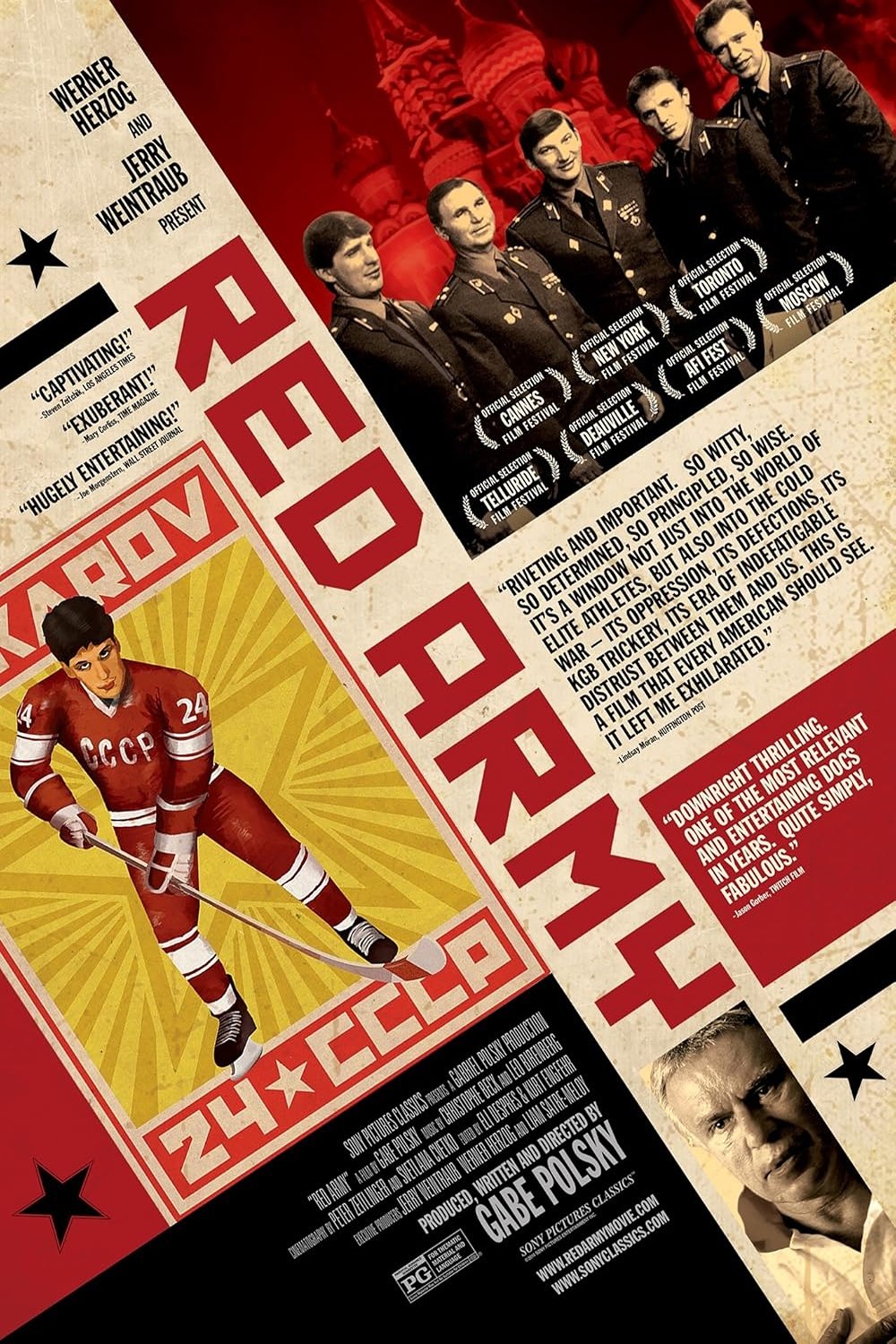
A documentary highlighting the Soviet Union's legendary and enigmatic hockey training culture and world-dominating team through the eyes of the team's Captain Slava Fetisov, following his shift from hockey star and celebrated national hero to political enemy.
The life story of ‘Zen Anarchist’ filmmaker John Milius, one of the most influential storytellers of his generation.
The life of Henri Grouès, known as Abbé Pierre, from his time in the Resistance in WWII to his fights against poverty and for the homeless.
The extraordinary story of how Hollywood changed World War II – and how World War II changed Hollywood, through the interwoven experiences of five legendary filmmakers who went to war to serve their country and bring the truth to the American people: John Ford, William Wyler, John Huston, Frank Capra, and George Stevens. Based on Mark Harris’ best-selling book, “Five Came Back: A Story of Hollywood and the Second World War.”
The full story of the 1972 Munich Olympics Massacre and the Israeli revenge operation 'Wrath of God.' The 1972 Munich Olympics were interrupted by Palestinian terrorists taking Israeli athletes hostage. Besides footage taken at the time, we see interviews with the surviving terrorist, Jamal Al Gashey, and various officials detailing exactly how the police, lacking an anti-terrorist squad and turning down help from the Israelis, botched the operation.
Prelude to War was the first film of Frank Capra's Why We Fight propaganda film series, commissioned by the Pentagon and George C. Marshall. It was made to convince American troops of the necessity of combating the Axis Powers during World War II. This film examines the differences between democratic and fascist states.
A documentary examining the decade of the 1970s as a turning point in American cinema. Some of today's best filmmakers interview the influential directors of that time.
When Sgt. First Class Brian Eisch is critically wounded in Afghanistan, it sets him and his sons on a journey of love, loss, redemption and legacy.
A documentary about World War I with never-before-seen footage to commemorate the centennial of Armistice Day, and the end of the war.
American filmmaker Stanley Kubrick (1928–1999), one of the greatest in history, but also one of the most reserved, gave few interviews throughout his long career, and none of them were filmed. A first-person journey through his life and work, based on a recorded conversation with French film critic Michel Climent.