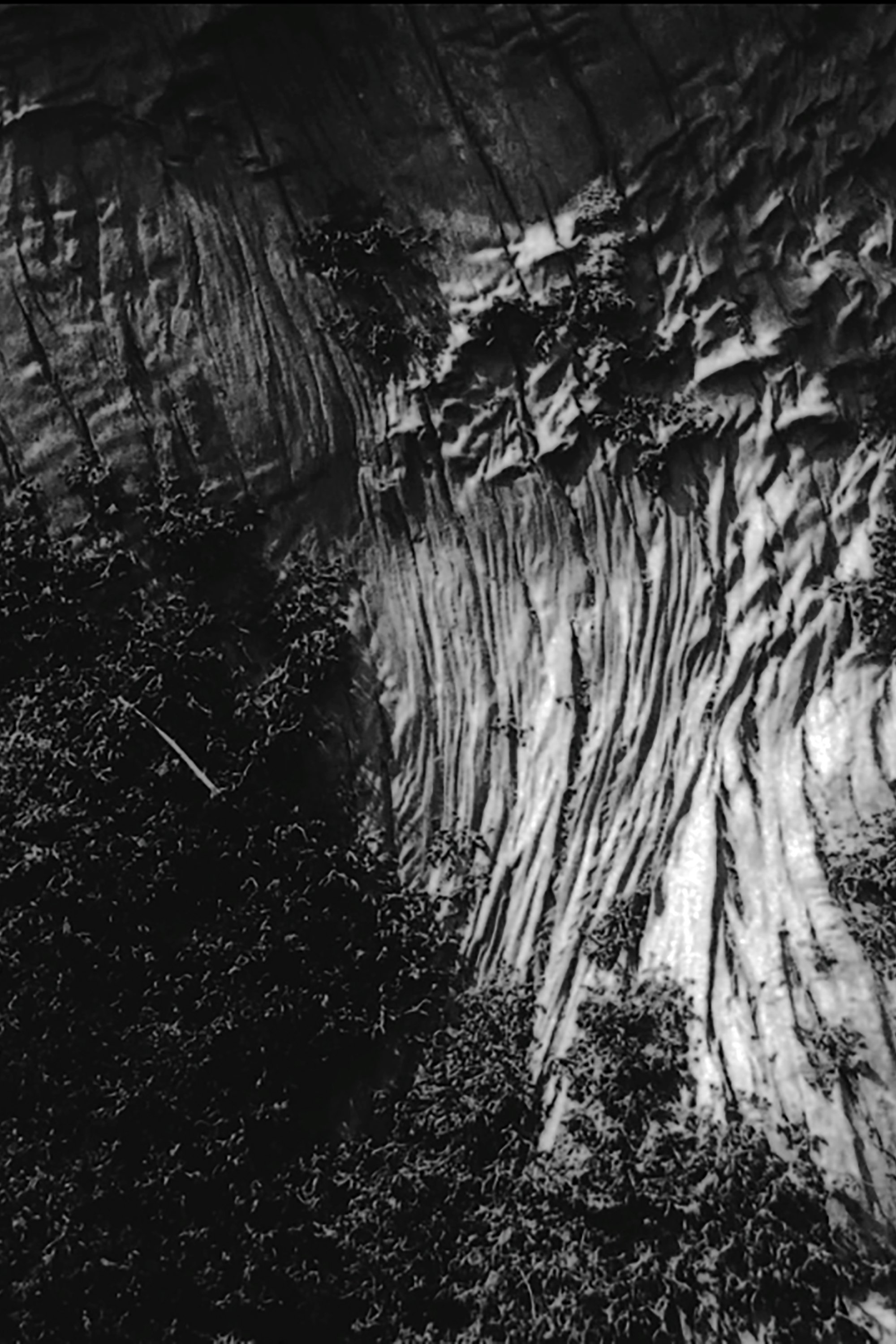
"Oldest trees east of the Rockies"
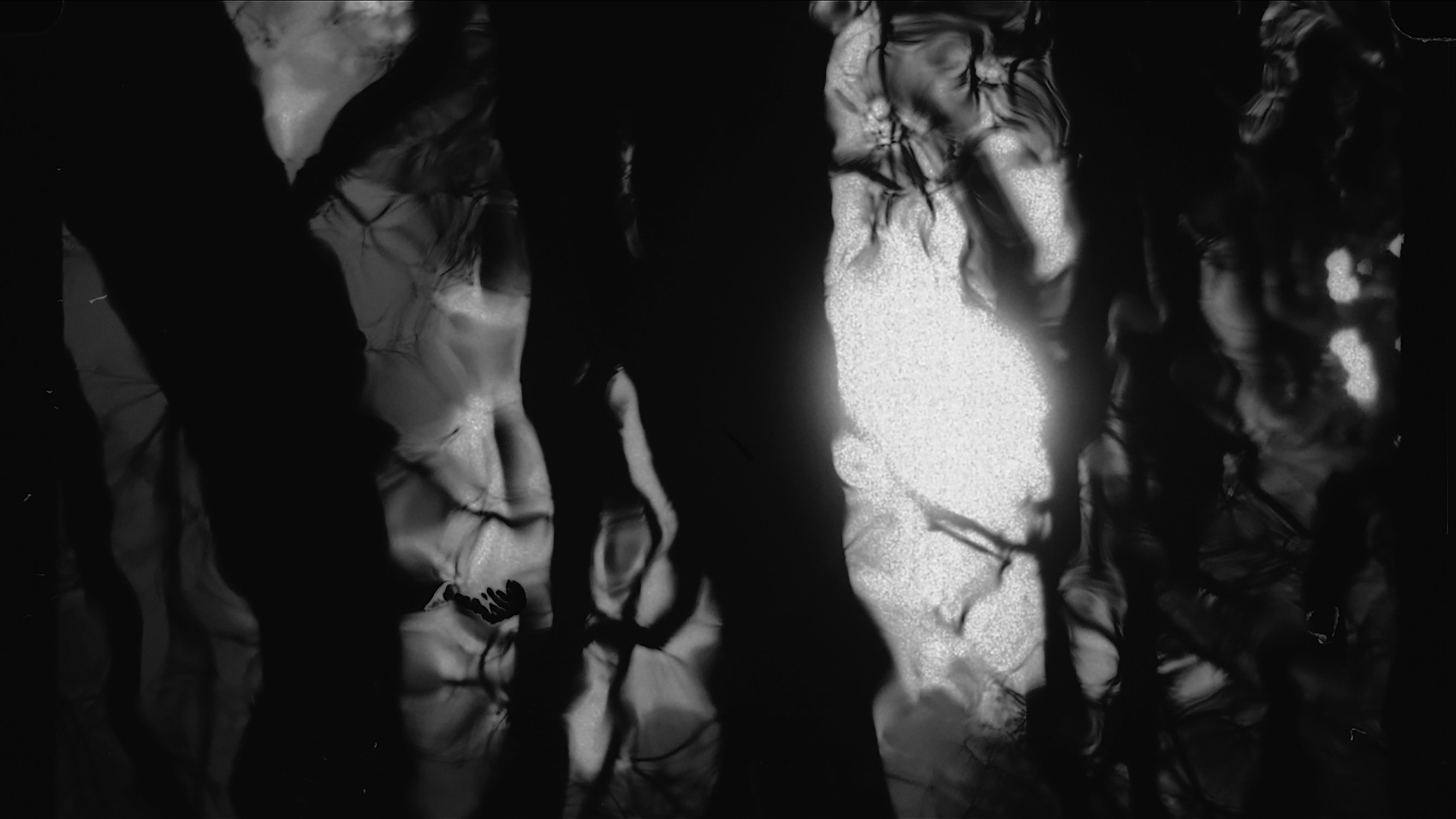
An observational documentary, shot on high-contrast black and white 16mm film, about a largely undeveloped river in southeastern North Carolina that is home to the oldest trees east of the Rocky Mountains.
Social & External
A cinematic impression of Vietnam, told through the eyes of Vietnamese immigrants.
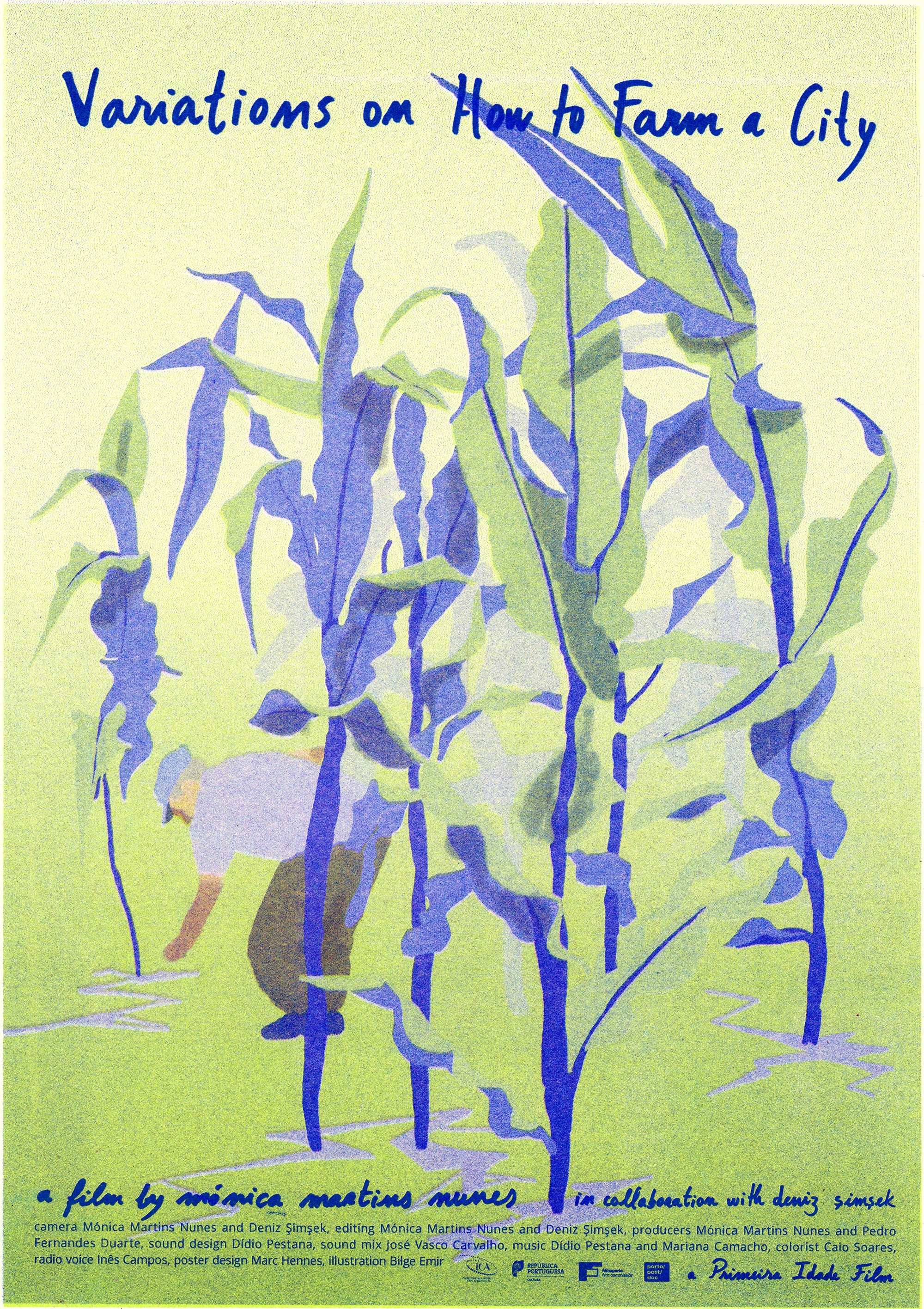
Three farming families in Hanyuan, China, strive to give their children a good life in the midst of an ecological crisis, as widespread use of pesticides leads to a dramatic decline in bees and other pollinating insects in the valley.
Missed connection regret at that one late-night spot—the kind you keep playing back in your head but not quite ever remembering right, until it starts to look like something else.
The film consists of video tapes made by the filmmaker’s father documenting daily scenes of family life, family celebrations, and holidays over the course of fifteen years. The tapes are a mixture of the personal and the political – the father was politically engaged in the revolutionary movement that brought Hugo Chávez to power. The family’s life becomes a backdrop for political and economic developments in Venezuela and their impact on the lives of ordinary citizens.
Set in the sparsely populated lobster fishing villages of southern Nova Scotia, Plains is a cinema vérité approach to documenting the curious lives of Jon and Cat, a young couple who are developing politically left-leaning virtual reality video games. Against the busy backdrop of their art practice, we sit in on their quiet rural life, which, in its proximity to nature and the vast green and oceanic spaces that surround, echoes the romanticism of a simpler time. As the decaying world of physical labour and the mechanical industry faces up to an expanding digital empire, Jon gradually retreats into the alternative realities of his own design.
In the town of Xoco, the spirit of an old villager awakens in search of its lost home. Along its journey, the ghost discovers that the town still celebrates its most important festivities, but also learns that the construction of a new commercial complex called Mítikah will threaten the existence of both the traditions and the town itself.
In the early 1900s commercial loggers cut down an old growth spruce tree growing on a small island surrounded by tide pools on the coast of Maine. Out of the trunk of this ancient tree grew two new trees, side by side.
An interconnected look at tradition, colonialism, property, faith, and science, as seen through labor practices that link an endangered salamander, mass-produced apples, and the evolving fields of genomics and machine learning.
From the first camera to 45 billion cameras worldwide today, the visual sociologist filmmakers widen their lens to expose both humanity's unique obsession with the camera's image and the social consequences that lay ahead.
“Tucaneira: Wooden Hands” is a captivating mini-documentary that takes us on a fascinating journey through the world of a skilled artisan who works with wood at an eco-solidarity fair held in a university environment. In this brief and inspiring portrait, we explore the life and craft of Manoel, a master craftsman whose hands transform tree trunks into true works of art. Through beautiful images, testimonials and captivating photographs, the documentary reveals Manoel's passion for his art. He shares his inspirations and motivations, highlighting how his work is deeply rooted in sustainability and respect for nature. “Tucaneira: Wooden Hands” is a mini-documentary that not only celebrates the talent and dedication of an exceptional artisan, but also reminds us of the importance of supporting initiatives and fairs that promote eco-solidarity, art and sustainability in a vibrant and inspiring university .
Neurobiology has shown in the recent years that contrary to the traditional boundaries between animal and plants, plants can feel, move and even think. Over the recent years, a small but growing group of researchers from Austria, Germany, Italy, UK, Japan, South Africa and the USA, has developed a new scientific field of research: the neurobiology of plants. Their discoveries question the traditional boundaries set between the animal and the vegetable kingdom: plants are capable to develop the cognitive process claimed by humans and animals. If plants can move, and feel... Could they possibly think ? In a creative and captivating scientific investigation style, through spectacular specialist photography and CGI, and re-creating scientific experiments, this documentary is bound to change your own perception of plants.
Fox Rich, indomitable matriarch and modern-day abolitionist, strives to keep her family together while fighting for the release of her incarcerated husband. An intimate, epic, and unconventional love story, filmed over two decades.
These are the dancing bodies in an agitated rapture: prelude to trance, invocation of the gods, consecration of intermittence. Here our point of view sparkles under the spell and trance of things gathered, fallen, yielding, pluvial, Mesoamerican wind, goddess breath, breeze of sticks. percussive woods. Here the audiovisual diagram that guides us, the kinetic breath that inspires us, the serpentine spear that snatches us away, the agitated plumes that trembles at us are the sound and rumbble of Teponaztli, a Mesoamerican percussive instrument: serpentine, dancing, bouncing sticks, trunks, branches and wood. Kinetic and audiovisual serialism from the embers of the Earth. This is the Earth in a Trance.
They come from all walks of life and have lived for almost a century. They have lived through the upheavals of history. They are funny, moving and rebellious. They surprise and amaze us. Yet we rarely hear their voices. This film is an invitation to travel across France and meet them: the Old People.
Experimental movie, where a man comes home and experiences LSD. His kaleidoscopic visions follow, with readings inspired by the Tibethan Book of the Dead.
Symphonic documentary exploring the Miami identity in six movements. It was performed and projected live by the New World Symphony, led by Michael Tilson Thomas on Feb 22, 2018. The film is made up of five separate and synchronized video channels, projected onto the walls of the New World Center concert hall, above a full symphony orchestra.
Why did the Roman Empire, which dominated Europe and the Mediterranean for five centuries, inexorably weaken until it disappeared? Archaeologists, specialists in ancient pathologies and climate historians are now accumulating clues converging on the same factors: a powerful cooling and pandemics. A disease, whose symptoms described by the Greek physician Galen are reminiscent of those of smallpox, struck Rome in 167, soon devastating its army. At the same time, a sudden climatic disorder that was underway as far as Eurasia caused agricultural yields to plummet and led to the westward migration of the Huns. Plagued by economic and military difficulties, attacked from all sides by barbarian tribes, the Roman edifice gradually cracked.